The King Of Staten Island Review: 6 Ups & 3 Downs
Judd Apatow's flawed dramedy mostly sings.
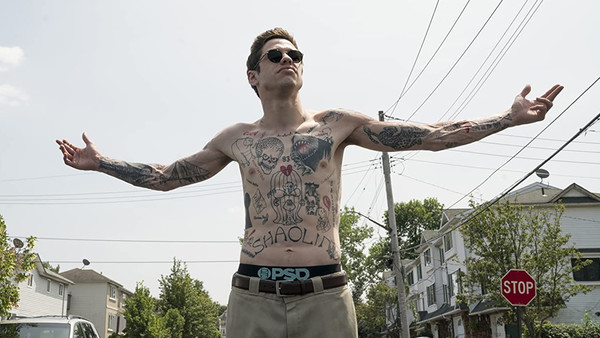
Judd Apatow's first feature film in five years, The King of Staten Island, is out now on VOD services everywhere, allowing Universal to once again test the viability of day-and-date streaming releases following the unexpected recent success of their movie Trolls World Tour.
And while hardly a revelatory effort from the esteemed comedy filmmaker, his latest nevertheless serves up a reliable fusion of heartfelt drama and uproarious laughs.
Mounted as something of a vehicle for star Pete Davidson, this richly personal character study truly comes alive in its more intimate moments, even if the usual Apatow issues are certainly still here in abundance.
Yes, it's self-indulgent, overbaked, and tonally inconsistent at times, but it also mostly blends its comedic aspirations well with its desire to be something more than your typical studio comedy.
In our challenging present, that may serve as a source of both comfort and amusement for many, even if it largely just delivers what both Apatow's fans and detractors will already expect.
And first, here's what doesn't work about Apatow's latest...
Downs...
3. The Ridiculously Padded Runtime

Surely the most common complaint about Apatow as a filmmaker is that the guy really hates making movies under two hours long, which given the decidedly shorter length of your average studio comedy is a bit of a problem.
Of Apatow's six features to date, only The 40-Year-Old Virgin has clocked in at less than two hours - and with an 116 minute runtime, only barely - while The King of Staten Island is a stonking 136 minutes long, and yet somehow still 10 minutes shorter than his longest film, Funny People.
Despite Apatow having a team of three editors working under him, the end result of his new project is still wildly self-indulgent and at least 20 minutes longer than it needs to be - if not more.
Though Apatow clearly loves letting scenes breathe and go on for as long as they have to, there are so many small subplots and relatively inconsequential scenes which surely should've been cut out of this, or at least saved for a Director's Cut in the future.
While hardly a slog, it's hard not to feel like Apatow could've made the exact same point in well under two hours. Instead, the film's many successes are pitted against a runtime that ultimately proves quite exhausting.
2. The Tonal Shifts Don't Always Work
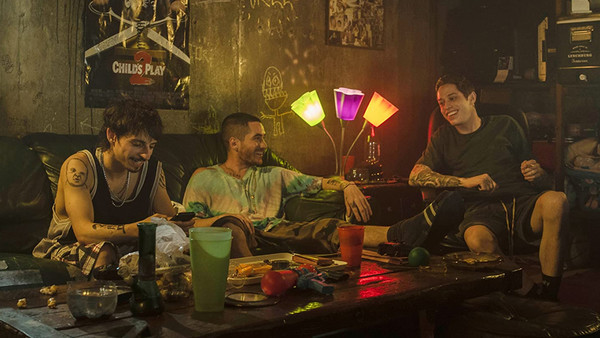
At this point in his career, Apatow is surely capable of sliding between conflicting tones in his sleep, and his trademark mix of crude hilarity and sweet sentiment has likely been the reason why his films have resonated across such a wide spectrum of audiences.
Though the director largely tows that line well once again, there are absolutely moments where he gets a little too adventurous with the meandering, uneven tone of his film.
This is especially the case with one genre-bending subplot introduced in the middle of the movie, which not only feels wildly out of place, but also whiffs of a transparent, lazy attempt to shift protagonist Scott's (Davidson) focus away from certain characters and towards others instead.
As bold as it is that Apatow even tries to go to far-out territory like this, it's ultimately a swing and a miss. The film would be better - and shorter - if this dramatic detour were removed entirely.
1. Too. Many. Characters.

Make no mistake, the cast for this film is huge, and though Apatow teases plenty of great work out of his expansive ensemble cast, there's a point where it ultimately gets a little overcrowded for its own good.
The cast of this movie would clearly be better-suited to a mini-series rather than a movie, given how Apatow strains to hurriedly force character development for literally dozens of characters, many of them entirely peripheral.
Scott's sister Claire (played by Apatow's daughter Maude) feels especially superfluous as characters go, while Scott probably has at least a buddy or two too many, and small supporting roles by the likes of Kevin Corrigan and Pamela Adlon - talented though they are - can't help but feel a bit like dead weight.
By ditching a handful of characters, Apatow's film would feel more focused and streamlined, rather than desperately overstuffed.
These issues aside, however, there's a lot to like about The King of Staten Island. And so, here's everything Apatow got right...
Ups...
6. Pete Davidson's Raw, Deeply Personal Performance
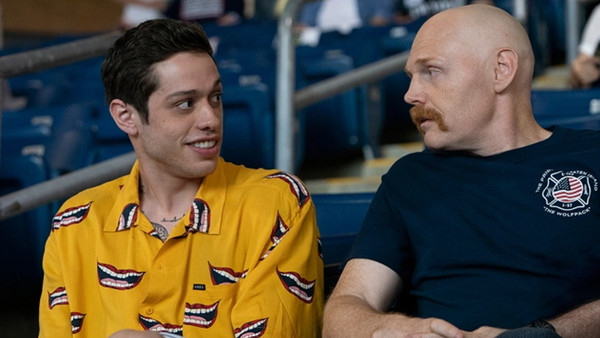
Though Pete Davidson is, to be kind, a bit of an acquired taste, he nevertheless delivers a nuanced and entertaining performance here as Scott, in a film that's nothing if not obviously semi-autobiographical (Davidson also co-wrote the script).
Watching this movie, it's honestly tough to tell where Scott ends and Pete begins, from their shared penchant for recreational drugs, to noted mental health issues, a mutual affliction with Chron's disease, and most importantly, the fact that both of their firefighter fathers died on the job.
It's painfully, poignantly clear throughout that Davidson is baring his soul to the audience as Scott speaks of his personal problems and particularly his father's death, lending an uncommonly lived-in and at times heartbreaking quality to his performance.
For those not particularly enthused about Davidson as a comedic performer, his work here impressively confirms he's got what it takes to dig down deep and in turn in something extremely human and relatable.
5. The Frequently Hilarious Dialogue
While few are likely to deem this the funniest movie of Apatow's career, it does absolutely provide some much-needed gut laughs in a year that's been understandably bereft of quality mainstream comedies.
Quite appropriately, much of the humour comes from dark places, centered in particular around mortality, with a brutal honesty that's occasionally as shocking as it is amusing.
But The King of Staten Island has far more to offer than mere edgy laughs in the comedy department: there are some killer, classic Apatow-style one-liners in this movie, from witty retorts about the toxicity of nepotism to an indignant rant about bedbugs that's hysterical precisely because it's true.
If you've been craving a new comedy to rouse some big laughs, Apatow's latest does just enough to deliver them, even if it's not always on the laugh-a-minute level of his broader work in the genre, as was seemingly intentional in this instance.
4. Marisa Tomei & Bill Burr Steal The Show
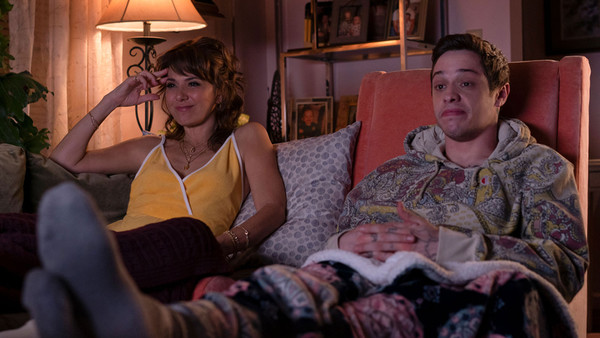
As strong as Pete Davidson's performance is, the film is categorically lifted away from him by the work of the two focal parental figures in his life.
Marisa Tomei gives one of her strongest performances in years as Scott's mother Margie, a sweet woman yet one who also won't allow herself to be pushed around, as she makes increasingly clear over the course of the movie.
Her chemistry with Davidson is spot-on, and she helps keep his expected excesses grounded to reality.
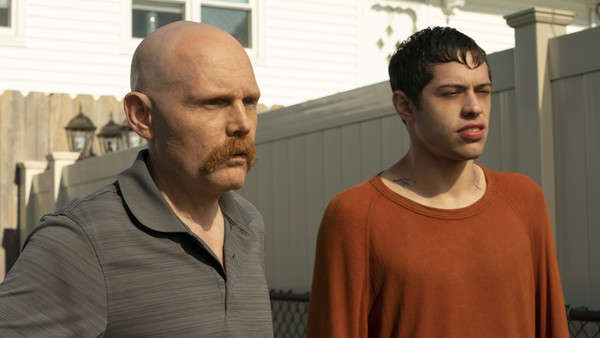
Then there's Bill Burr, who has a surprisingly substantial role as Margie's new partner Ray, a no-nonsense firefighter who hopes to whip Scott into shape.
It's hardly a stretch of a role for Burr, but one that fits him like a glove, and his difficult back-and-forth with Davidson ultimately results in some of the film's most well-earned pathos.
3. Its Timely Themes & Existential Tone
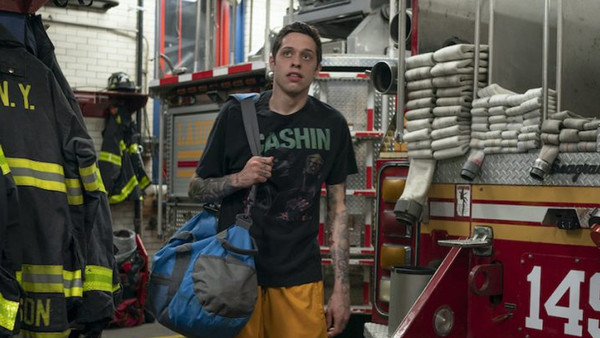
More than perhaps any prior Apatow film, The King of Staten Island has a lot on its mind about the state of the world today, and one of the few upsides of the movie's wide canvas is how free Apatow is to express his worldview.
As such, the script goes off on a number of adventurous and thoughtful tangents, passing commentary on hot-button subjects such as the #MeToo movement, generation clash, gentrification, mental health, and American work culture.
But best of all, it considers the poisonous tendency for human beings to mythologise the dead - often needlessly so.
In Scott's case, his refusal to see his father as anything less than a saintly saviour is holding him back in more ways than one, and for a studio comedy of this sort, it's an unexpected yet totally satisfying angle.
If it absolutely overextends itself in the end, you can't fault the film's desire to be so much more than just another star vehicle for an SNL comedian.
2. The Terrific Supporting Cast
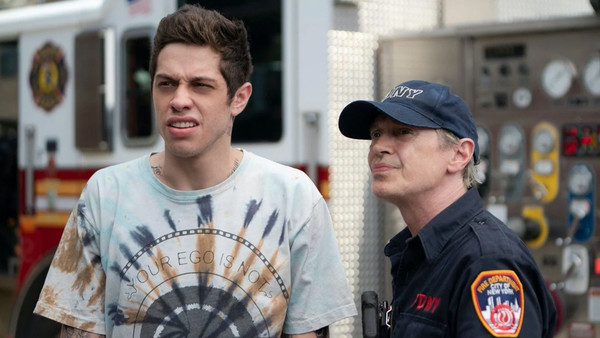
Though the movie undeniably suffers from trying to do justice to far too many characters, the supporting cast is nevertheless an embarrassment of riches.
Beyond Tomei and Burr, both of whom get tons of screen time here, there's a fantastic small role for Steve Buscemi as Papa, a firefighter who takes Scott under his wing and teaches him some life lessons.
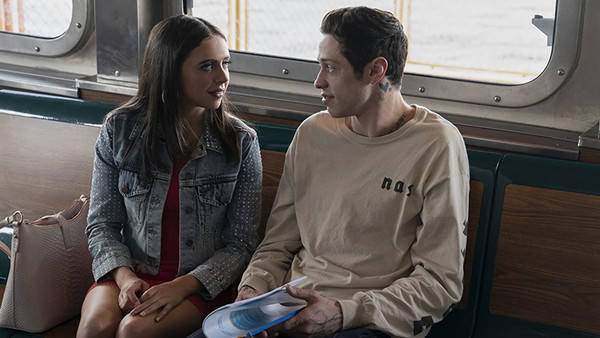
Elsewhere, on-the-rise Brit actress Bel Powley is hilarious as Scott's on-again-off-again lover Kelsey, demonstrating her incredible mastery of the New York accent yet also harbouring far more humanity underneath the surface than her superficial veneer might first suggest.
Ricky Velez, Moises Arias, and especially Lou Wilson are also good fun as Scott's stoner pals, and there's even an amusing cameo from Machine Gun Kelly as a dismissive tattooist Scott desperately wants to work with.
And so, even in the film's weakest and most unfocused moments, it's always shot through by the game efforts of a skilled cast.
1. It's Judd Apatow's Best Film In Years
With its more ambitious attempt to meld the sad with the riotous, and a deeply personal story to boot, The King of Staten Island is, on the balance of probabilities, Judd Apatow's best film since at least Funny People, if not Knocked Up.
While it's certainly not as funny as Trainwreck, it's also far less of a broad studio movie by design. It feels like something is actually being risked here, and it's a shame the movie never got to land in cinemas to see if audiences en masse would actually turn out for it.
Though in some respects it rakes over well-worn Apatow tropes, it also dares to explore some relatively fresh emotional concepts for the genre, and should prove at least somewhat relatable across a large cross-section of society.