The True Story Behind Wes Craven's Failed Doctor Strange Movie
From Wes Craven to Guillermo del Toro, Doctor Strange's road to the big screen has been madness.

In the five-and-a-half years since his first solo movie, Doctor Strange has gone from a B or even C-list Marvel Comics character to one of the most important heroes in the Marvel Cinematic Universe, bordering on a household name.
He was a key player in Avengers: Infinity War, Avengers: Endgame, and Spider-Man: No Way Home - three of the MCU's biggest entries - and his upcoming sequel looks set to have just as monumental an effect on the franchise at large.
It's a testament to Marvel Studios' movie-making prowess that Strange has become such a beloved figure, because for the 30 years prior to his MCU debut in 2016, countless studios and filmmakers tried (and failed) to make him work cinematically.
His first movie outing was envisioned way back in 1986, and since then, there's been a revolving door of writers and directors trying to get the project off the ground. Wes Craven, Guillermo del Toro, David S. Goyer, you name it: Doctor Strange's road to the big screen has been very long, very complicated, and very, well, strange.
So, let's go back to the beginning and chart that journey, starting with the radically different version of the MCU that almost came to be...
8. New World's Ambitious Marvel Cinematic Plans

Throughout the latter half of the 20th century, it was DC Comics that had much greater success with its movie adaptations, mainly thanks to Richard Donner's Superman and Tim Burton's Batman. Even Joel Schumacher's Batman films - widely-panned though they were - made a decent chunk of change at the box-office.
Marvel, on the other hand, struggled to crack the code, with stinkers like 1986's Howard the Duck and 1989's The Punisher (along with a spate of low-budget TV movies, including 1978's Dr. Strange, and 1979's Captain America) proving critically and commercially unsuccessful. However, this wasn't for lack of trying.
In 1986, New World Pictures purchased Marvel Entertainment, allowing the studio to make films based on Marvel Comics' roster of characters. Presumably seeing dollar signs, New World then attempted to kick-start a cinematic Marvel universe decades before it was cool, with films based on Ant-Man, Deathlok, Namor, and Wolverine.
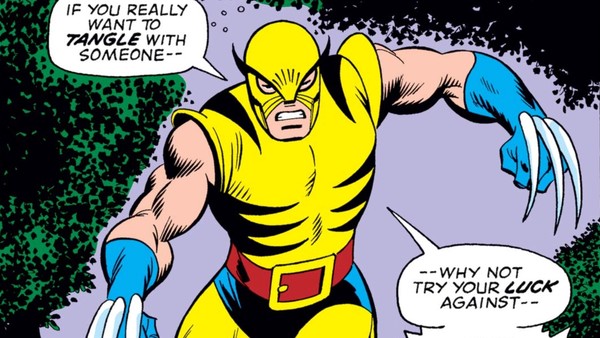
That last project would've ended with Wolverine joining the rest of the X-Men, obvious sequel bait that would've led to further movies.
Most relevant here though, New World's ambitious plans also included a theatrical Doctor Strange movie, which was set to be scripted by Back to the Future writer Bob Gale. However, Gale's script never went into production, and New World sold off Marvel Entertainment after hitting a financial slump.
This left the Doctor Strange movie rights to fall into other hands, allowing none other than Stan Lee himself to take a crack at the material.
7. Dormammu, The Fourth Dimension, And Easter Island

It was the LA-based production company Regency Enterprises that snagged those Doctor Strange film rights in the late 1980s, with the studio believing that the Sorcerer Supreme had strong big screen potential.
Not wasting any time in getting the project going, Regency tapped British filmmaker Alex Cox to write a script. At the time, Cox was fresh off the 1984 sci-fi comedy Repo Man and the 1986 Sid Vicious biopic Sid and Nancy, and though these movies weren't monster hits, they proved that Cox was a man with vision, with style - an interesting pick for a Marvel blockbuster.
Joining Cox on scriptwriting duties was Stan Lee, the man who had actually co-created Doctor Strange in 1963. His influence lent the script an extremely fantastical, "comic-book-y" flavour, with the story kicking off with a Stonehenge-set prologue where the wizard Merlin is struck by lightning. From here, the movie journeys to contemporary New York and the Fourth Dimension, before ending with a climactic showdown - against the mighty Dormammu - on Easter Island.

The script is available online in full, and it's definitely worth flicking through.
Cox would later call Doctor Strange his "favourite superhero" and Lee a "great writing partner", so there was clearly a lot of positive buzz around this script. Obviously though, it was never actually produced - problems arose because Regency had a distribution deal with Warner Bros. at the time, and Warner Bros., simultaneously, was caught in a merchandising dispute with Marvel Comics.
This led to Regency, Lee, and Cox's Doctor Strange dreams fading away, but Strange himself did actually make the jump to the movies - just not in the way you'd expect.
6. Doctor Strange Enters The Cinematic Realm (Sort Of)

With the Doctor Strange movie rights once again up for grabs, American film producer Charles Band decided to option the property. Band was known for cult horror favourites like Subspecies, Puppet Master, and Re-Animator, so a darker take on the Sorcerer Supreme was definitely on the cards here.
Band quickly set about developing the project with his company Full Moon Entertainment, but disaster struck when his license to use Doctor Strange expired, meaning that the movie could no longer go ahead. At this point, Band had two options: he could scrap all the work that had been done so far and move on to something else; or, he could take the Doctor Strange project and rework it.
He chose the latter.
The result was 1992's Doctor Mordrid, a superhero action film that, as you can probably tell from the above poster, bears many similarities to Doctor Strange. Jeffrey Combs - who had worked with Band on Re-Animator - played the title role of Anton Mordrid, a sorcerer who must stop the evil Kabal from destroying the Earth!
As early '90s B-movies go, Doctor Mordrid looks surprisingly impressive, although its scant 74-minute runtime does leave its story feeling underdeveloped. Still, it wasn't the absolute disaster its uniquely troubled production would leave you to believe.
Back to the proper Doctor Strange though, and with Band's option expired, another company landed the rights to make a Doctor Strange film - and this is where horror master Wes Craven entered the picture.
5. Savoy Uses Superheroes To Take On Disney

The early-to-mid '90s saw the rapid rise (and equally rapid fall) of Savoy Pictures, which was founded in 1992 by former Columbia and TriStar exec Victor Kaufman.
With all that studio experience under his belt, Kaufman set an ambitious roadmap for Savoy, aiming for his company's name to be mentioned in the same breath as Paramount, Warner Bros., and even Disney. And how would this be achieved? Simple: by splashing the cash on some A-list talent, and making a bunch of great movies.
Of course, that's easier said than done, but Savoy did get off to a good start by lining up Anthony Hopkins, Robert de Niro, and Cuba Gooding Jr to star in its projects. The studio also had Doctor Strange in its back pocket and soon hired Wes Craven to both write and direct, aiming to go before cameras in 1993 or early 1994.
Craven was known for bloody horror movies like The Last House on the Left, The Hills Have Eyes, and A Nightmare on Elm Street, so it's safe to assume that his take on Strange wouldn't have been breezy, comic-book schlock.

He doesn't seem like the most natural fit to direct Doctor Strange, but considering that Tim Burton's 1989 Batman movie had just demonstrated that darker superhero flicks can work, it's understandable why Savoy would want to give him a shot.
It's unclear what exactly caused Craven's movie to fall apart, but the fact that Savoy released a string of box-office bombs - like the 1994 double-whammy Serial Mom and No Escape - surely didn't help Strange's movie prospects.
4. Doctor Strange: Hollywood Hot Potato

In the years after Craven's involvement, Doctor Strange struggled to find a long-term home with a movie studio, bouncing between countless different companies, writers, and directors for the rest of the 1990s.
By 1995, future Batman Begins and Man of Steel scribe David S. Goyer had finished a Doctor Strange script for Columbia Pictures, but this project "didn't go very well", according to Goyer himself in a 2001 interview. In 1997, Columbia was at it again, tasking Happy Gilmore and The Cable Guy producers Brillstein-Grey with overseeing a Jeff Welch script, but this again went nowhere.
In 2000, Columbia dropped Doctor Strange altogether - a little odd, considering that the studio had Sam Raimi and Tobey Maguire's first Spider-Man movie in the pipeline - while Blade director Stephen Norrington was said to be interested in the project.
Then, Goyer re-joined the project in 2001 at Dimension Films, left again in 2002 (after Dimension lost the rights to Miramax), and in 2004, Marvel Studios CEO Avi Arad stated that "we are nowhere" with a Doctor Strange movie.
You don't say!
Fortunately, the Doctor Strange film started to find more secure footing in the mid-2000s, right as the Marvel Cinematic Universe was beginning to take shape.
3. Guillermo Del Toro And Neil Gaiman's $165 Million Pitch

Marvel Studios joining forces with Paramount Pictures was the beginning of the MCU we know today. Mickey Mouse might be the one in charge these days, but fans often forget that Paramount distributed those early MCU movies. To this day, the studio's logo remains in front of Iron Man, Thor, and others.
That relationship began in 2005, and it was around this time that the two parties mapped out a rough slate of movies. This initially included projects based on characters like Nick Fury, Cloak and Dagger, Power Pack, and, yes, Doctor Strange - but as we now know, not all of these heroes would make it to the big screen.

Each of these movies could have budgets as high as $165 million, so it was important that Marvel Studios got them right, because such a big investment required some big box-office returns.
This in mind, it's not surprising that surrealist creatives Guillermo del Toro and Neil Gaiman had their Doctor Strange pitch rejected in 2007. They're both brilliant minds, no doubt, but perhaps not the safest choices with so much money on the line. And remember, this was day-one MCU - Marvel Studios wasn't as open to taking risks as it is today.
Even without del Toro and Gaiman, Marvel Studios was keen to get a Doctor Strange movie off the ground, courting various writers, directors, and actors over the next couple of years...
2. Patrick Dempsey Is Stephen Strange?

With 2008's Iron Man proving such a massive success, Marvel Studios was emboldened to try and launch more lesser-known properties to big screen stardom.
One of those properties was Doctor Strange, and by 2009, Marvel Studios was actively looking for someone to write and develop the sorcerer's solo outing. The following year, Conan the Barbarian scribes Thomas Dean Donnelly and Joshua Oppenheimer were hired, and their script was reportedly sent out to directors in 2011. Around this time, there were even rumours that Doctor Strange could be an animated Pixar movie, which, thinking about it, we really want to see.
The early 2010s is also when actors' names started being bandied about for the project, with Grey's Anatomy star Patrick Dempsey going so far as to openly lobby for the role while promoting Transformers: Dark of the Moon:
"[I] would love to play Doctor Strange. It would be fantastic. It’d be a great TV show, especially for HBO or something like that.”
A short while later, Marvel Studios president Kevin Feige confirmed that Doctor Strange would be part of the MCU's Phase Three, and Brave director Mark Andrews, Warm Bodies director Jonathan Levine, and Project Almanac director Dean Israelite were said to be in the running to helm the movie.
Another candidate was Sinister director Scott Derrickson, and it was here where Strange's bumpy, decades-long path to Hollywood finally started to bear fruit.
1. The MCU Finds Its Sorcerer Supreme

Derrickson was hired after going above-and-beyond during the selection process.
In his own words, he spent an "obnoxious" amount of his own money to write and storyboard a 12-page scene with accompanying concept art, which then formed part of a 90-minute pitch to Marvel Studios' top brass.
His commitment paid off, and as an added bonus, the scene in question (Strange fighting in the astral plane while his physical body lies on a hospital bed) was bought by the studio and used in the movie. Neat.

The casting process was equally rigorous, with Tom Hardy, Oscar Isaac, Jared Leto, and Joaquin Phoenix all on Marvel Studios' wishlist to play the title role.
Phoenix came closest, with negotiations reportedly getting quite far along before the actor got cold feet, not wanting to commit to a multi-picture deal, and also having reservations about working in such a fast-paced, green-screen-heavy environment.
Marvel Studios then moved on to its other top pick: Sherlock and Star Trek Into Darkness star Benedict Cumberbatch. He was officially cast in December 2014 after months of rumours, including a rather funny interview with IGN, where he failed miserably at pretending he knew nothing about the role.
Fortunately, after all his years in the MCU, his lying has got much better.
Doctor Strange finally opened in cinemas on 25 October 2016 (4 November in the U.S.), receiving positive reviews from critics, and grossing $677 million against an estimated $165 million budget - an unqualified box-office success.
The character then joined his MCU colleagues in Thor: Ragnarok, Avengers: Infinity War, and Avengers: Endgame, proving a vital player in our heroes' mission to stop the mighty Thanos and save the universe. He also co-starred in Spider-Man: No Way Home, which grossed an astonishing $1.8 billion (making it the sixth highest-grossing movie of all time) during the pandemic recovery era.
As for what Strange's MCU future holds? Well, if the trailers for Multiverse of Madness are anything to go by, certainly a lot of chaos. With only a few weeks to go before that movie hits cinemas, we don't have long to wait to see it all play out.
MCU Quiz: How Well Do You REALLY Know Dr Strange?
