The Witches Review: 4 Ups & 6 Downs
Anne Hathaway carries a remake nobody asked for.

The latest big-budget blockbuster to forego a theatrical bow in favour of a streaming release, Robert Zemeckis' remake of 1990's legendary Nicolas Roeg-directed dark fantasy film The Witches is streaming now on HBO Max.
As a new adaptation of Roald Dahl's beloved 1983 novel, Zemeckis' take offers up a few tempting twists on the previous film's style and tone, but ultimately ends up feeling like a pale imitation of it, lacking the character and confidence which made Roeg's version an instant cult classic.
It is a textbook example of a movie which wasn't really begging to be remade, and though the cast certainly gives it their all, the end result is a mostly hollow, disappointingly pedestrian film that doesn't even offer up much in the style department.
And so it's somewhat fitting that The Witches 2020 has found a home on streaming, because it's honestly tough to see how its thoroughly mixed bag of visuals would be much elevated by the big-screen experience.
Unless you're really curious, you're better off sticking with the effortlessly superior Anjelica Huston-starring predecessor...
Downs...
6. It's Just Not Scary

The most immediate issue with this new adaptation is that it lacks the thick, unsettling mood of both Roeg's previous movie and the source novel.
Zemeckis has instead ironed out the tone and attempted to make a modern riff on the story that's more palatable for young children, in the process stripping away much of its personality.
The insanely creepy Norway-set flashback from the 1990 film has been replaced with a flat alternative, which rather than hauntingly imprison a young girl inside a painting, simply turns her into a giant CGI chicken.
Even once the hotel-set portion of the film kicks off, it's more goofy than scary, focused on relatively harmless gross-out gags, while also stripping away the disconcerting body horror aspects of Roeg's film, with the mouse transformations being almost instantaneous in this version.
The previous film had the bravery to fully commit to its bold ideas, but this take sadly feels largely gutless.
5. The AWFUL Visual Effects
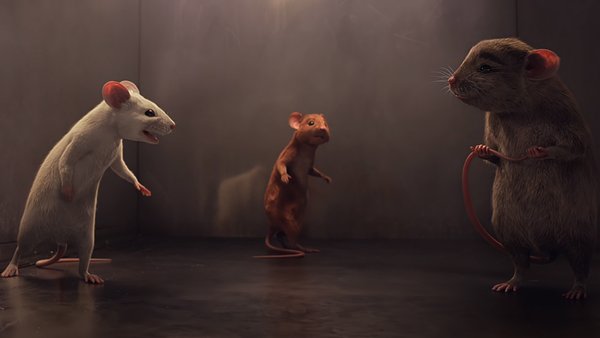
Robert Zemeckis' clear desire to push the bounds of filmmaking technology has often been his unfortunate undoing, and while you can at least appreciate the forward-thinking ambition of CGI-heavy films like The Polar Express, Beowulf, and even 2018's disastrous Welcome to Marwen, the same can't be said for The Witches.
Despite its effects-heavy nature, there's little that impresses about this film's VFX presentation, particularly the overabundance of mediocre-looking digital animals.
The central mice and also the Grand High Witch's (Anne Hathaway) pet cat all look wildly unconvincing, the mice embarrassingly inferior to the incredible Jim Henson puppetry work on the 1990 film.
But that's not to forget the equally garish decision to give the witches flapping maws for mouths, ensuring that whenever Hathaway opens her gob too wide, it transforms into a revolting CGI monstrosity. It's nightmare fuel, but absolutely not in the way Zemeckis intended.
Though the film's budget hasn't been publicly disclosed to date, it's painfully clear that some extra cash needed to be poured into the VFX coffers.
4. Stanley Tucci Is Completely Wasted
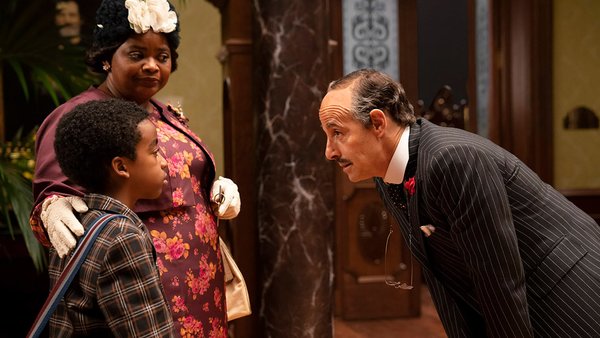
Stanley Tucci plays the supporting part of Mr. Stringer, the hotel's obnoxious manager, as was played with such wonderfully deadpan relish by Rowan Atkinson in the original film.
Sadly Tucci is barely in the movie until the third act, and even then, he gets depressingly little do.
Beyond one admittedly funny scene opposite Hathaway's Grand High Witch - where he attempts to parse her unique pronunciation of the word "garlic" - and another where he's bitten on the crotch by a rat, this is a film offering him precious little but a paycheck.
But really this speaks to a wider problem with the film, that it so thoroughly wastes most of its ensemble cast, preferring instead to prioritise gaudy CGI spectacle.
Unlike the Roeg movie, the supporting witches here have virtually no character whatsoever, nor do the parents of chocolate-loving young boy Bruno (Codie-Lei Eastick), barely figuring in this version of the story at all.
3. Robert Zemeckis' Weirdly Anonymous Direction
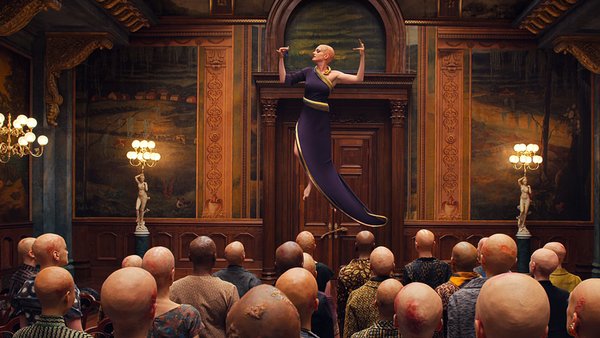
It's fair to say that Robert Zemeckis hasn't made an undeniably great movie since 2000's Cast Away, and his career since has been marked by maddening inconsistency, from the rock solid likes of Flight and The Walk to the forgettable mediocrity of A Christmas Carol and Allied.
The Witches marks another whatever effort from the Back to the Future filmmaker, and though not without its visually dazzling moments - often courtesy of the sharp production design - for the most part this feels like a generic fantasy film any competent director could've made.
Its overall lack of a personal stamp is made further evident by the fact that the 1990 film really couldn't have been made by anyone but Nicolas Roeg.
Roeg brought a distinct look and feel to his version of the story, creating an otherworldly dark fantasy vibe that couldn't easily be replicated by another artist.
Zemeckis' film, conversely, just feels like the sort of watchable yet uninspired hokum a decent jobbing director cranks out for a paycheck.
To call it a squandering of the man's talents is a colossal understatement.
2. The Lousy, Unconvincing Ending
The most divisive aspect of the 1990 movie is its rather rushed deus ex machina ending, in which Luke is miraculously transformed back into human form at the last minute.
Beyond being rushed, it also departed from the far darker climax in Dahl's book, a creative decision by Roeg which left Dahl distraught.
This was certainly the ripest area for Zemeckis' film to improve upon its predecessor, and though its ending hews closer to Dahl's written word, the family-friendly tone prevents Zemeckis from fully committing to Dahl's more somber ideas.
It very much feels like a "have your cake and eat it" ending, attempting to touch on the tragedy of the source material but without leaving kids upset.
That Zemeckis also throws a bizarre musical montage into the mix, as well as a baffling mid-credits scene, only makes the ending seem that much more lame, and that much more studio-mandated. Oof.
1. It's A Remake Which Never Justifies Its Existence
When it's all said and done, there is precious little reason for this film to exist, beyond the obvious motivation of making money off an established brand.
While Roeg's film continues to be enjoyed by kids and adults alike, it's tough to imagine many people fondly watching Zemeckis' version 30 years from now.
In that respect it feels like something of a happy accident that The Witches 2020 ended up going direct to streaming, because that's the place where it feels most at home, likely to be quickly forgotten in the high seas of streaming content as it is.
It would be overboard to call this a sacrilegious retelling, but it's also emblematic of studios' cynical instinct to rehash prior successes for a new generation.
The Witches isn't a good movie, then. But it's also not terrible, and so here's what it actually gets right...
Ups...
4. Anne Hathaway Goes Full-Ham As The Grand High Witch

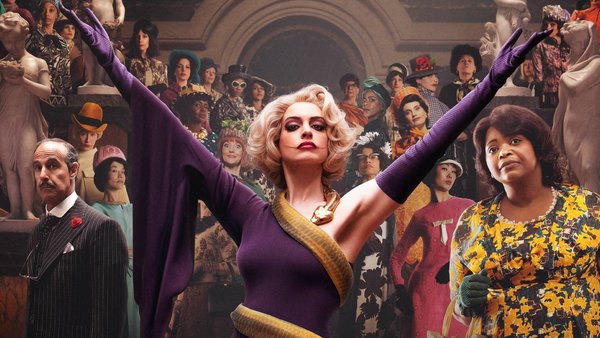
If there's any single reason to watch this new take on The Witches, it is unquestionably Anne Hathaway's totally bonkers, go-for-broke performance as the Grand High Witch.
Though very much indebted to Anjelica Huston's legendary performance in the original film - enough that at times it feels like a straight-up impersonation - Hathaway's clearly having a ton of fun snarling and gesturing for the cheap seats.
Despite her performance being constantly compromised by intrusive visual effects, she owns the film every moment she's in it, and really represents the only significant aspect of the project viewers are likely to remember for long.
She's battling the tepid script as is everyone else, but acquits herself well in a thankless role, even if she can't hope to match the sexy-scary brilliance of Huston's prior performance.
3. The Promising Social Commentary
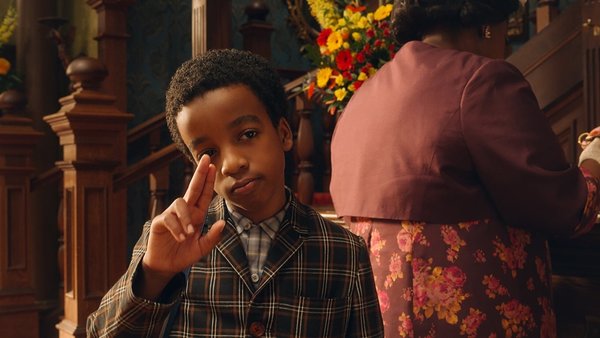
The one major change Zemeckis' version makes to the story is shifting the setting from 1980s England to 1960s Alabama, an inspired idea which if nothing else helps distinguish this take from what came before.
And for a time, it certainly opens up some ripe avenues for dishy social commentary.
Protagonist Charlie's (Jahzir Kadeem Bruno) grandmother Agatha (Octavia Spencer) mentions early on that the witches tend to prey on poor people, and that they're heading to the Grand Orleans Imperial Island Hotel for refuge because, in her own words, "there ain't nothing but rich white folks" at the hotel.
The implication is clear - the fact it's set in '60s southern America surely being no coincidence - and though Zemeckis doesn't linger on this aspect for long, it does lend the film its own unique flavour for a time.
Furthermore, countless scenes show that the hotel's maids, handymen, and bar staff are largely black people, implying the multi-faceted class dynamics at play in a world where the poor also have to worry about being preyed upon by witches.
2. Octavia Spencer's Soulful Central Performance
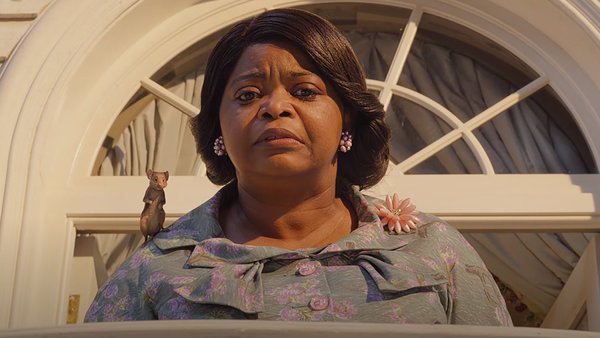
Another smart change the movie makes is beefing up the grandmother role considerably, as while the equivalent character in the Roeg movie spends a decent portion of it in bed and out of commission, for the most part Agatha plays an active role in how the story plays out.
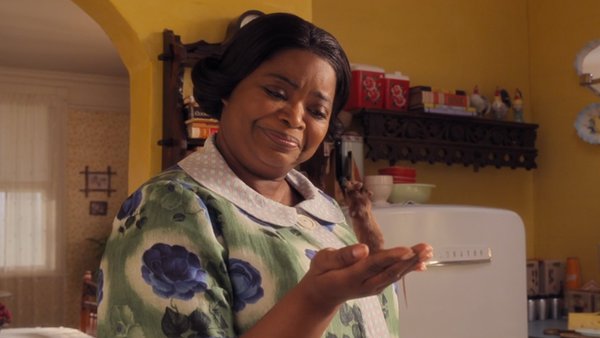
It's just as well, because Octavia Spencer is so perfectly cast as Charlie's kindly grandmother Agatha that it would've been a massive shame to sideline her for the latter-half of the film.
Instead, Spencer is on-hand throughout, delivering a charming and energetic performance quite different to that of Mai Zetterling's Helga from the previous film.
Spencer is such an effortlessly warm and likeable actress that she's near single-handedly responsible for the film's more sentimental moments landing as well as they do, no matter its many issues.
Like Hathaway, though, she deserved a better script and less workmanlike directorial approach to it.
1. Alan Silvestri's Terrific Musical Score

For the last 35 years, Zemeckis has had all of his movies scored by the brilliant Alan Silvestri, who is responsible for the memorable scores of the director's big hits such as Back to the Future, Forrest Gump, Who Framed Roger Rabbit, and Cast Away.
While Silvestri's compositions here doesn't get close to those masterworks, it is nevertheless a wonderfully jaunty and dynamic score which seems desperately in search of a better movie to support.
Silvestri's typical combination of swelling strings and bombastic brassiness evoke a nostalgic '80s adventure film vibe during set-pieces, with the composer doing his absolute best to elevate sequences which don't really measure up visually.
Without Silvestri's work on the movie's soundscape, it'd surely be even more forgettable.