Tony Scott - 15 Kick Ass Scenes To Remember Him By
The cinematic landscape would have been a far more boring place over the last 30 years if it wasn’t for Anthony David “Tony” Scott.
 The 19th of August 2012 was a sad day for the film industry when it was reported that film director Tony Scott had committed suicide. While mystery still surrounds the exact nature of his death, what is certain is his cinematic legacy and place in film history. Born in North Shields, England in 1944, in many ways Tony Scott represented the rock n roll of the film industry. His movies were often loud, occasionally dumb, relied heavily on spectacle and were never really the critics favourites, but they consistently packed out cinemas and DVD shelves, thrilled punter upon punter and always left the audience cheering for more. Coming from a background as an advertisement director, Scotts movies were often criticised as style over substance but the sheer impact and adrenaline he was able to translate to the screen maintained his status as a fan favourite, he was AC/DC, Bon Jovi and The Foo Fighters. While Wes Anderson tuned his ukulele, Scott was stacking up his amps and arranging his 30-piece drum kit complete with gong. Scotts breakout success was when he was hired by Don Simpson and Jerry Bruckheimer to direct a young Tom Cruise in one of his most iconic films, Top Gun in 1986. Prior to this his only major directing credit was for The Hunger in 1982 however this was a commercial flop. Scott was reluctant to take Top Gun at first but his films since would suggest he never looked back. Top Gun set a new bar for glossy, full-throttle summer blockbusters and Scott would eventually team with Bruckheimer and Simpson four times and Bruckheimer on his own (after Simpsons death) a further two times. Scotts films, although never really straying from the action or action-thriller genres, did evolve each having its own personality, but Tony knew what he was good at and stuck to it. Lets not damn with too much faint praise though. Yes action was important to his movies, but thats not all they were. Scotts films always tried to tell a story, he stayed away from all-out action stars like Arnie, Stallone et al even though their primes coincided, never allowing the brain/brawn scales to tip too far. Similarly in what would turn out to be his latter years, when superheroes began to run rife, Scott maintained his distance, electing to continue making movies for those who preferred their action to have a more traditional feel. His films were occasionally over-stylised but never without flair. Whilst brother Ridley got a little serious every now and then, Tony stuck to his guns (literally). Despite his films style being a blessing and a curse, there are a lot of people in Hollywood that have tried and failed to make films with the panache of a Tony Scott production only to have fallen by the wayside. His influence can been seen throughout tinsel town and yonder in the careers of directors like J.J. Abrams and Jon Favreau and high-concept television shows such as 24. After helping to launch Tom Cruises career, he went on to develop a number of regular collaborators. As well as the aforementioned producers Bruckheimer (whos career direction took a thematic and notably successful turn after the success of Scotts Top Gun) and Simpson, Scott was regularly joined by composers Hans Zimmer and Harry Gregson-Williams as well as actors Christopher Walken, James Gandolfini, Gene Hackman, Mickey Rourke, Val Kilmer, Brad Pitt and most famously Denzel Washington, so he must have been doing something right. Freely admitting he probably moved the camera a little too much on occasion, Scott would often shoot with 4 cameras simultaneously (often with at least one in a helicopter), helping him to develop that trademark frenetic style. Not all of his films are classic, maybe none on them is, but theyre full of great moments and that is what were here to celebrate because make no mistake, the cinematic landscape would have been a far more boring place over the last 30 years if it wasnt for Anthony David Tony Scott. Each entry may contain spoilers, though I have left each title spoiler-free so you can flick through even if you havent seen all of his films. Each film only gets one entry.
15. Youre my god damn hero - Broadway Bro Down The Taking of Pelham 123 (2009)
 The Taking of Pelham 123 was a remake of a 1974 version starring Walter Matthau and Robert Shaw, a film that was never a classic in the first place. With a screenplay initially written by David Koepp (Spider-Man) then re-written by Brian Helgeland (who Scott had earlier collaborated with on 2004s Man on Fire), the film is a great example of Scott really trusting his actors. Set in a post 9/11 New York City where recession was starting to take a foothold, the film is a tete-a-tete between Washingtons everyman whose made some mistakes, train dispatcher Walter Garber, and Travoltas Wall Street guy-cum-prison inmate-cum-terrorist (boo!), Ryder. Surrounded by a solid supporting cast that includes John Turturro, Luis Guzman and James Gandolfini, the film is largely Travolta and Washington shouting at each other over walkie-talkies, so its when Travoltas Ryder calls Washingtons Garber out of his dispatch office that Scott gets a chance to shine. Now there are no prizes for guessing how the movie ends, the hostages are safe and the bad guys days are numbered, but Scott does his damnedest to make this exciting. As Garber catches up with Ryder on The Manhattan Bridge (the inappropriateness of this location is duly noted) helicopters circle as the music swirls in a scene that unsurprisingly didnt earn Travolta an Oscar nod though his overacting is enjoyable. Scott is in full control of the chaos, as the music shifts from climactic to tranquil, Scott has barely broken a sweat.
14. Tails, you die Going Stratospheric Domino (2005)
 If ever the style over substance criticism were relevant to Scotts work, exhibit A would be Domino though conversely, a decent case could be made for it being one of Scotts more underrated films. Inspired by real-life bounty hunter Domino Harvey and written by Donnie Darko director Richard Kelly, Domino stars Keira Knightly in the title role with Edgar Ramirez and Mickey Rourke completing the trio of bounty hunting angels with Delroy Lindo as their very own Bosley. Now captured, the film is told in flashback as Domino is interviewed by Lucy Lius detective. Despite being based on true events the film is preposterous and Tony Scott knows as much. He doesnt attempt to ground the film in any kind of reality with quick-cuts, frenetic editing and ultra-stylised colour palette being the order of the day. The style Scott adopts works very well in an earlier scene where the leads are laced with mescaline resulting in their Winnebago being thrown across the desert landscape culminating in Knightly and Ramirez drug-induced sexcapade, but Scott saves the best till last. Following a shootout that feels a little True Romance-lite, the film is effectively over not so fast. Set atop the Stratosphere hotel in Las Vegas, as the elevator carrying Domino plummets in slow motion Scott opts to finish the movie in style. As his trademark helicopters circle, the camera takes in a birds eye view of the needle before the sides are blown out, explosions shoot down corridors and elevator shafts, lights flash and choral music stirs as Domino delivers her soliloquy. Over the top? Yes. Quintessentially Scott? You bet.
13. Be nice, Bob Baseball field showdown The Fan (1996)
 The Fan is not only an underrated movie, but also an early example that Scott was not only a moviemaker, but a movie fan. The Fan starred Robert De Niro as Gil Bernard, effectively revisiting his Rupert Pupkin character from The King of Comedy. Things arent going well for Gil, his marriage is over and hes failing as a father as well as his job as a knife salesman, the one thing he has left is that hes a huge baseball fan, saving particular admiration for Bobby Rayburn, played by Wesley Snipes. The Fan is clichéd but thanks to a wonderfully creepy performance from De Niro and Scotts commitment to the cause, it manages to achieve a number of memorable moments. This is the third, but far from final, entry in a row in which the selected scene is the finale of the film and this is no coincidence. Scott understood the type of movies he made, understood the audience and understood that his audience wanted an exciting finale, to which he duly obliged. Honourable mentions go to the early scene in which Gil tries to juggle taking his son to a baseball match and an important business meeting and even more so to the later scene where Gil takes Bobbys abducted son to play a little baseball with his friend Coop, but Scott being Scott saved the best until last. Check your sensible hat at the door for this one. As the rain teams down yet the baseball game continues, Bobby is under instruction from Gil to hit a home run and dedicate it to a true fan otherwise he isnt getting his son back. Bobby does what hes told, but guess whos disguised as the umpire? As Gil unravels whilst their confrontation is shown on the big screens, the melodrama is almost tangible, but if youve invested in the movie thus far Scott ensures disappointment is kept at bay. Without a helicopter in sight, Gil is gunned down on the baseball mound in an ending tenderer than it has any right to be.
12. Bail! Bail! Bail! - Stopping the Unstoppable Unstoppable (2010)
 Unstoppable comes with the liberally applied precursor, inspired by true events. When 20th Century Fox needed a director to make a film a little more exciting than the actual story may have been, guess who got the call? Unstoppable would ultimately become Scotts last film and its basically one long action sequence, but a masterfully crafted action sequence at that. The premise is a half-mile long train has been accidentally been set in motion and as speed increases so does the danger to those involved. Somehow it needs to be stopped. Thats it. Despite a paper-thin premise, Scott ensures it warrants its 98-minute running time. The most exciting scene comes not from our heroes played by Denzel Washington (in his 5th and final teaming with Scott) and Chris Pine, but from an earlier sequence involving preliminary efforts to bring the train to a stop. Aboard a separate train, veteran driver Judd Stewart (David Warshofsky) attempts to slow down in front of the runaway, reducing its speed so that a helicopter chasing overhead can lower someone onto the moving train and bring it to a halt. As the train in front slows it becomes evident that the plan may not be foolproof and the attempt ultimately fails causing the lead train to derail and the death of Judd. What makes this scene so good is the real peril Scott is able to convey because not only are the stars not involved, but when shooting the scene Scott did everything for real, refreshingly very little CGI was used. In a DVD extra Scott is seen planning out the scene with models revealing that 22 cameras were involved including one in a helicopter above the helicopter being shown in the scene. Ultimately the end justified the means, once masterfully cut together the scene is suspenseful and visceral, just as Scott would have planned all along.
11. I told you, if you ever touch me again Ill kill you Creative Helicopter Usage The Last Boy Scout (1991)
 Back to finales again and this scene is particularly ridiculous, even for Scott, but gloriously enjoyable. With a script by Shane Black (for which he was paid $1.75 million after the success of Lethal Weapon), The Last Boy Scout is an odd couple buddy movie in the guise of Midnight Run before it and Rush Hour since. Bruce Willis plays disgraced former U.S. secret serviceman Joe Hallenback with Damon Wayans playing the retired American football player Jimmy Dix. Through a number of contrivances, which we dont need to go through now, they end up working together to prevent the assassination of Senator Baynard whose tied up in sport betting, bribery and the mafia, though not necessarily in that order. How do they do it you ask? Well After learning the assassination attempt will take place at a football match, Joe and Jimmy force their way into the arena stuff happens then Damon Wayans is riding a horse, game ball in hand, he gallops towards the senator at whom he launches the ball in order to knock him aside to prevent him being shot. Mission accomplished. Meanwhile, high above the stadium on some kind of rigging, Bruce Willis tackles the sniper, batting him with the end of his gun before police shoot said sniper so he falls, you guessed it, into the blades of a helicopter which happened to be hovering below. Now Scott didnt write it, but what he does do is embrace the chaos, tongue firmly in cheek. The sequence, similar to the one from The Fan, is dimly lit with the stadium's giant screens and floodlights providing the little light there is. As the sniper is felled blood spatters on the helicopters windscreen as Willis dances a victory jig on the scaffold and the crowd reacts as if that is what they came to see. As Wayans quips and the crowd cheer, everyone gets to go home satisfied, dont they?
10. F*** Rambo Oil Field Shootout Beverly Hills Cop II (1987)
 As must be clear by now, Scott often throws pretty much all hes got at the finale, thats why so many of them are the most memorable parts of his movies. The next few entries (after this one) arent finales though, I promise. By todays standard this scene is nothing remarkable, but there are a number of things about for which Scott deserves a great deal of credit. After Don Simpson and Jerry Bruckheimers success with the original Beverly Hills Cop in 1984 and their success, along with Scott, with Top Gun in 1986, the three of them came together again for a Beverly Hills Cop sequel. The film again starred Eddie Murphy as Axel Foley with support from Judge Reinhold and John Ashton as fellow detectives Billy Rosewood and John Taggart respectively. Although the tone of the sequel was as comedic as the first, with Scott at the helm the action became a lot more prominent and its to Scotts credit that he was able to achieve this without flaking on the comedy. As the three detectives infiltrate the bad guys oil field hideout (with Axel using his rap coalition of America shtick to distract an unknowing guard), the shooting soon beginsand doesnt let up. Action directors have often struggled when a comedic touch is required and it is often up to the actors to carry these moments, here however its Scott doing the heavy lifting so his actors dont have to. He keeps the tone light as Judge Reinhold inadvertently takes down a van with a bazooka yet the quips keep flowing. Despite the seriousness, in actuality, of the situation, the audience never really has to fear for their heroes, they can sit back and enjoy the banter AND well choreographed gunfire and explosions until the credits roll, and that is in no small part thanks to Scott.
9. Bela Lugosis Dead Opening Sequence The Hunger (1982)
 The opening sequence of The Hunger isnt really in keeping with the rest of the film, let alone his other films. With The Hunger we get to see a direction Tony Scotts career might have gone if Simpson and Bruckheimer didnt come knocking. The film is technically Scotts second feature (after Loving Memory, 1971) and stars Catherine Deneuve, Susan Sarandon and David Bowie. It deals with immortality through vampirism and although a flop at the box office has since found a cult following on VHS and DVD. The film didnt go down that well with the critics either, but its worth seeking out for the opening sequence alone. To describe it would sound crazy, but lets give it a go. The look of the scene is ahead of its time, like a grimier, less family-friendly version of The Lost Boys or Near Dark, both released in 1987. As Bauhaus perform Bela Lugosis Dead in front of a neon blue-lit cage the picture cuts to a dim, smoke-filled club scene with David Bowies face appearing mysteriously behind John Lennon-style sunglasses. As Scott cuts to exterior shots the music cuts too, only to be returned to Bauhaus, then to exterior and so on. As a girl dances provocatively in front of a white screen the atmosphere changes, becoming sinister. Cigarettes are smoked, sunglasses removed and breasts revealed, thenbaboons roar as blood spatters, confusion reigns. To anyone unfamiliar with the film, that might just sound silly. Anyone familiar with the film will know thats exactly what happens and its great. Its filthy, fetishistic, camp, androgynous and violent all at once. It represents a young Tony Scott working without restriction. The remainder of the film doesnt live up to its early promise but for this opening concoction of a scene he should be applauded.
8. CREASY! Kidnapped Man on Fire (2004)
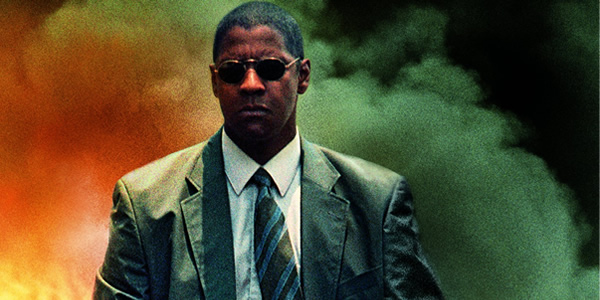 From 2004s Man on Fire onwards, Scotts films took on a distinctive look. If the 90s represented a lull, not in quality, but in his frenetic style, then the 00s (not including Spy Game) saw the return of Tony Scotts hyper-stylised filmmaking. Only this time it felt honed, polished and efficient, although possibly a little lacking in personality. By now Scott was real master of his craft and his confidence shone through, case and point, the kidnapping scene from Man on Fire. As the title sequence gave the audience a mini history lesson on the statistics of kidnapping in Mexico City, what was to occur later on in the film was of little surprise, but then thats not really what the film is about. Ex CIA operative John Creasy, played by Denzel Washington in his 2nd of 5 collaborations with Scott, though first for 9 years, is assigned to look after Dakota Fannings Pita. The writing was unfortunately on the wall for Pita, though the film is more of a character study, but thanks to Scott, a stylish, well-made character study. The sentimentality levels are high here, by the finale theyre off the charts, but early on Scott affords the audience a little respite in this wonderfully crafted kidnapping sequence. The sequence plays out like a our heros heart rate, quiet at first though as suspicion builds things get a little quicker, a little louder and a little out of control. Scott intercuts scenes of stillness and slow motion with rapid 360-degree spins mirroring Creasys POV. A bell literally tolls as even the sound effects slow down before guns are drawn and hell breaks loose. Yes, many recent pieces on Scott have championed his frenetic style, and this is true, but Scott action scenes are always assured, clear and realistic, Michael Bay he is not, and its important to recognise this. Scotts films might not be full of surprises but theyre honest and a joy to watch, maybe this is why so many people like them?
7. The goggle rig Chasing the Past Déjà vu (2006)
 More lunacy, more Denzel, more Tony Scottmore action. 2006 capped the end of a busy 3 years for Tony Scott with Déjà vu following hot on the heels of Domino in 2005 and Man on Fire, 2004. Despite, as with so many of his films, a lukewarm reception from the critics, Déjà Vu more than doubled its money at the box office. The film literally starts with a bang as a ferry containing hundreds of returning sailors and their families is blown to pieces. This time Washington plays Special Agent Doug Carlin, the supporting cast includes Val Kilmer, Adam Goldberg and Paula Patton but this ones all about Denzel, hes at the centre of everything, all the audience needs to do is figure out which Denzel, on which timeline theyre following. The responsibility of figuring out and possibly even retroactively stopping the attack is firmly on Carlins shoulders. The plot is one huge contrivance but Scotts steady hand and faith in his leading man just about carry us through. The contrivance is a little bit Strange Days, Val Kilmer and co. have a machine that can recreate 4 days in the past, its this that they use to try and figure out who the bomber is and its using this contrivance that Scott is able to create the standout scene of the movie. As the bomber leaves the area that the machine, which creates the past, covers (make sense?), Carlin must adorn the goggle rig, a device that allows the machine to cover ground previously out of range. Effectively this leads to a pretty unique car chase, Carlin is chasing somebody by following the route they took 4 days ago, though he has the now to contend with. That was almost as much exposition as there was in the film and it still doesnt make sense. What does make sense is Scotts handling of the scene. Car chases are a dime a dozen, unfortunately not every car chase can be Bullitt, Escape From L.A. or Ronin, though thankfully this is one of the good ones. Music pulses as Scott cuts back and forth between Carlin and the command centre, the urgency is immediate. Cars crash and burn as shards fly in slow motion, Denzel talks us through it but the real assured hand here is Tonys.
6. Hes going high Race Day Days of Thunder (1990)
 Released at the very beginning of the 90s, Days of Thunder is very much an 80s movie. For his third collaboration with Simpson and Bruckheimer, Scott effectively remade his first, Top Gun, but thats not to say he didnt do it well. Despite the change of scenery and the grave similarities to Top Gun, the challenge Scott was faced with would have been very different. Telling the same story maybe, but for the action scenes especially, Scott wasnt afforded the luxury of just doing the same thing again. The story of Days of Thunder is largely irrelevant. The short of it is that Maverick is now called Cole Trickle and hes a NASCAR driver. Nicole Kidman has replaced Kelly McGillis and Robert Duvall, Randy Quaid, Cary Elwes, Michael Rooker and John C. Reilly have tagged along for the ride in a further example of Tony Scotts films being very well cast. This is the sort of film thats all about the finale, a race in which Cole Trickle competes against his nemesis, the climax is what this film is for, and Scott delivers. Hans Zimmer synthesised score pounds like it doesnt yet realise the 80s is over and were off! Now this isnt the most subtly directed sequence youre likely to see but its befitting of the film and it works. As Cole speeds around the track the communication with Robert Duvalls crewmember, Harry Hogge, is constant. The cuts are as quick as the cars, from a close up of Cruises face, to a 2-shot of Kidman and Duvall looking concerned, to the exterior of the car and back againand again. Scott effectively puts us in the race, in Cruises head and occasionally reminds us whom hes racing for. As shouting ascends, the music gets faster and the crowd cheer for more, and so do we.
5. Youd be working for me, mostly undercover Redford teaches Pitt the Ropes Spy Game (2001)
 Without wishing to sound like a broken record, Spy Game is possibly Scotts most underrated movie. Made in 2001, at no point does the film feel old fashioned, yet at the same time the film somehow manages to feel very traditional, almost like a celebration of great spy movies gone by. The movie largely takes place in an office at a CIA building with Robert Redfords Nathan Muir telling his side of events which are shown in flashback. Being a spy thriller there are twists and turns but essentially Muir is trying to protect his friend, the spy-gone-rogue, Tom Bishop, played by Brad Pitt. The way the movie is constructed, right down to the very end, is like a less cool version of The Usual Suspects, but Scotts not trying to be cool. It might seem an odd choice to pick a montage as the greatest scene, we all know how montages work and what theyre there to do, the South Park guys even wrote a song about it, but theres so much to enjoy about this one. Redford is a magnetic screen presence and Tony Scott cant take credit for that, but the casting of Redford alongside Brad Pitt was like Redford passing the baton to Pitt who has more than earned it. The montage works because despite being the two leads, Redford and Pitt dont really share a lot of screen time, so for the 3 or so minutes in which this montage takes place the audience can sit back and enjoy 2 classy A-listers do their thing. Whats more is that Scott has fun with it. Pitts character is effectively an updated version of Redfords character from Three Days of the Condor, so who better to teach him his craft than the man himself, something that wouldnt have passed Tony Scott by. In addition, in one sequence involving Pitt learning how to question for information their resemblance to Woodward and Bernstein, aka Robert Redford and Dustin Hoffman in All the Presidents Men is uncanny. Scotts direction, for him at least, is relatively unfussy, he stays out of the way and lets the actors do their thing and you get the sense he enjoyed watching this back as much as the audience did.
4. This looks bad The Mexican Standoff Enemy of the State (1998)
 In the 90s Scott released a number of films that were more thriller than they were action and all the better for it. Enemy of the State saw Scott reteaming with Jerry Bruckheimer (who by this point was by himself) and one of the most bankable stars in Hollywood, Will Smith as well as Gene Hackman and a hugely strong, extensive supporting cast. Coupled with a script touched up by Aaron Sorkin and Tony Gilroy, it couldnt really fail, and it didnt, taking around $250 million worldwide. Similarly to what he would go on to do with Spy Game, Enemy of the State teamed an aging screen legend with a current box office A-lister. Smith plays Robert Dean, a regular guy whos framed for having information hes unaware he has. As his life falls apart the only person who can help is former NSA agent, Edward Lyle, played by Gene Hackman in a role very similar to that which he played in Francis Ford Coppolas 1974 classic, The Conversation. As ever, casting is half the work and Scott is clearly aware of this, the two leads are great with Hackman in particular even surpassing Smith in the cool-as-a-cucumber stakes. In a bid to clear their name, Dean and Lyle get in way above their head culminating in an exhilarating finale. As Brad Pitt did in Spy Game, Will Smith clearly learned a thing or two from his mentor, setting up a Mexican standoff in the back of a Chinese restaurant between Jon Voights bent NSA officer Thomas Reynolds and Tom Sizemores mafia boss, Paulie Pintero. Scott builds the action slowly, very slowly, though by the time Jake Busey storms into the room and everyone starts shooting, the acutely crafted tension is substantial. The sequence is unfussy, the underlying music is sinister and camera relatively still, but most importantly it shows that Tony Scotts movies aren't just loud and frenetic and that he could tone things down when he needed to.
3. Youre Sicilian, huh? Christopher Walken vs. Dennis Hopper True Romance (1993)
 This infamous scene might be top of a number of peoples lists, and it is good, but its not Tony Scotts best. The script for True Romance is of course written by Quentin Tarantino who initially wanted to direct the film himself before losing interest. Although there are two central characters, Clarence Worley, played by Christian Slater and Alabama Whitman, played by Patricia Arquette, the film is almost an ensemble piece with an incredible strong cast including Dennis Hopper, Christopher Walken, Brad Pitt, Gary Oldman and Samuel L. Jackson to name but a few. The film is essentially an homage to Terence Malicks 1973 classic, Badlands, only with added dialogue Tarantino style. The shootout at the end of True Romance was a contender for this list but was just edged out by this one. Without going into too many plot details, Walkens gangster, Vincenzo Coccotti, needs to find out where Clarence is heading, so he pays Clarence's father Clifford, played by Dennis Hopper, a little visit. The scene in question is famous largely because it is good, and this is partly due to Tarantinos snappily written, expletive-ridden dialogue, but its not great if its not directed properly, and this is where Tony Scott comes in. The meeting has a foreboding sense of inevitability. The camera is still as it cuts back and forth while Hans Zimmers piano-led score simmers faintly in the background. Hoppers Clifford knows how this scene ends while Walkens casual, affable demeanour just makes it all the more terrifying. Scott keeps the camera tight and ensures it doesnt move until each character has said their piece, its almost like the subplots are on hold. As Walken dispatches Hopper, his gun draws the cameras attention, and then all of a sudden, hes done, no remorse, no nothing, on to the next scene. Each actor gets to relish Tarantinos dialogue but its the audience that reaps the benefit of Scotts fitting, accomplished, cold-hearted direction.
2. Highway to the Danger Zone Top Gun (1986)
 No, not the volleyball scene, nor the rendition of Youve Lost That Loving Feeling, not Gooses death or the final dogfight, not even a scene featuring Tom Cruise, the ultimate scene of Top Gun is the introduction, when the world was introduced to those now infamous MiGs. Right up until writing this down, the scene selected from Top Gun was going to be the final dogfight, culminating with the whole you can be my wingman any time line. But really what works about Top Gun, why it has been such an important movie in terms of shaping the modern day blockbuster, is there right from the off. Top Gun ignited the career of Tom Cruise, but his acting, charm and star quality did the rest, not Tony Scott. What Tony Scott did was a whole different ballgame. Inspired by a magazine article, producers Jerry Bruckheimer and Don Simpson were looking for a director for their plane movie, and they found him in the shape of advertisement specialist, Tony Scott. The film was written by Jim Cash and Jack Epps Jr, remember them? No? Of course not, because that isnt what Top Gun was ever about. This wasnt a writers film, this was a production. Top Gun is about spectacle, pure and simple. In order to make Top Gun, Tony Scott set about fetishizing the aesthetics of filmmaking, it was big, it was loud, it was in your face and it set a precedent, whether good or bad, of things to come. It was basically an advert, but it wasnt selling anything, except itself. As the Paramount logo assembles the introduction to Joe Satrianis theme tune fades in. The screen goes black and the key players are introduced, Simpson, Bruckheimer, Scott, Cruise, McGillis, in that order. The backstory is told by way of a title card that holds the screen for no more than 10 seconds as the phallic nose of a silhouetted MiG enters stage left against the dusky red hew. Engines roar as Satrianis theme transitions to Kenny Loggins Highway to the Danger Zone. As the silhouettes begin to colour the action kicks off, almost from the get go. These machines can barely fit on the screen, suddenly bigger was definitely better and a new kind of bravura filmmaking was born. Whether Top Guns influence was hugely positive is perhaps up for debate, but its influence shouldnt be overlooked. From here on out, summer blockbusters were different, they were bigger. The summer blockbuster wasnt anything new, arguably starting with Jaws in 1975, these movies were certainly events, but they didnt look like Top Gun did, the ultra-high concept was here to stay and Scott had helped create it.
1. Youre way out of your league, Hunter Washington vs. Hackman Crimson Tide (1995)
 Perhaps a slightly controversial choice, not as influential as Top Gun or infamous as True Romance, but more exhilarating than each. The scene in question showcases what really made Tony Scott great. Yes he could do spectacle, he could put together a quickly cut scene in his sleep, but as has so often been the case, with the right actors and the right story, hes more than happy to stop showing off for a while and let the scene do the talking. But just because hes not showing off, it doesnt mean his part in proceedings isnt as vital. Crimson Tide is almost entirely set aboard a submarine. The film is about paranoia, not only political, but also personal. The sub in question is the USS Alabama, which has been sent to allay fears that a Russian nuclear missile has been taken over by a group of insurgents who may or may not try to arm said missile at any time. The Alabama is manned by Gene Hackmans aging Captain Frank Ramsay and Denzel Washingtons younger, idealistic family man, Lieutenant Commander Ron Hunter. Now Crimson Tide isnt Scotts best film, its script is often a mess (receiving rewrites from Quentin Tarantino amongst other) its politics are heavy handed and its ending a little (surprisingly) anti-climactic, but when Scott gets it to work, it works rather well. Being confined to a submarine, Scott doesnt have the luxury of his oft-used swirling cameras and circling helicopters, he has to generate action, tension and suspense in other ways. Case and point is the scene where were first alerted to the idea that all may not be well upon the good ship Alabama, culminating in an argument between Ramsay and Hunter. After a message is received incomplete, tempers begin to fray as to how the subs course of action should proceed. What works so beautifully is that Scott doesnt rely on tricks; he gives the scene room to breath, letting a simple disagreement progress naturally into so much more. As the sequence progresses, after each character says their piece, Scott keeps threatening to draw a line under it, only to keep the camera focussed on the two central characters, who, like Scott, wont let it lie. The leads are wonderful here, with Hackmans wry, patronising tack providing an excellent counter to Washingtons clearly outraged yet calm Lieutenant. As they dispense of civilities and begin to bark at one another, Scott kicks in a little underlying music, just to remind us of the severity of what is taking place, nothing fancy, it doesnt need to be. As Gene Hackmans captain leaves the scene, he is wearing a baseball cap akin to Scotts own trademark cap, a cap that will be sorely missed.