Toy Story 4 Theory: The Real Untold Tragedy Of Woody
And why Toy Story 4 is the perfect ending...
Toy Story 4 - which is on course to make Disney a bucketload of money after a predictably stellar opening weekend - is inevitably an emotional affair. Much like Avengers: Endgame, it might not be an end to its franchise entirely, but it was an end of sorts and it closed a major chapter in giving Woody an ending.
In that respect, it worked better than Toy Story 3, which is lofty praise indeed. And even though the marketing suggested that this was Forky's story, the reality, as ever, is that the narrative was focused on Woody's existential crisis rather than the one confusing the new character. This entire franchise has been similarly focused and it all started with a cowboy doll and his kid.
WARNING: Incoming SPOILERS for Toy Story 4.
3. Woody And Andy
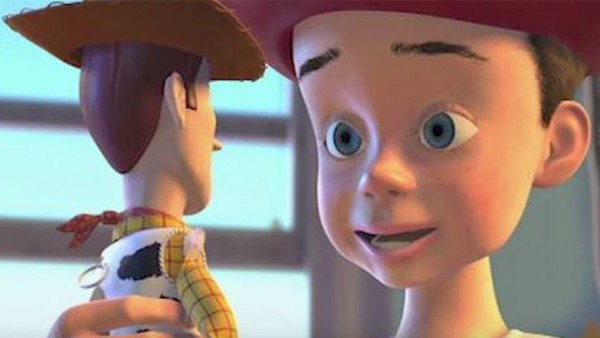
We've seen Woody repeatedly grapple with mortality anxiety, watching his friends and fellow toys falling away and leaving Andy's life before he found a new home with Bonnie in Toy Story 3. That was initially presented as a happy ending, because Woody once more found purpose - he is, after all, more than any other character in this series, driven by the idea of ownership meaning validation.
That characteristic is a key one. Previously, it had been somewhat assumed that Woody's drive was an indication of his suitability to "lead" the toys as well as explaining why he was Andy's favourite. But Woody's obsessive need to have one specific owner was revealed to be toxic to a certain extent, because it ensured that he was destined to feel rejected. The parable of Lotso was essentially a model for what he would become if he didn't let go of Andy and accept that kids move on and toys have to as well.
But there's something in Toy Story 4 that changes everything for Woody. Or at least for our perception of him and the tragedy of his existence that's never really been explored up to this point.
Since the first movie, we've all merrily accepted that Andy was Woody's owner. He never mentioned anyone else before him and you'd think that he would have if he was pre-owned (even by someone else in Andy's family). After all, Lotso and Jessie are both emotionally devastated by the rejection of previous owners, so it's not like toys simply forget and move on. In fact, in a brief moment, Toy Story 4 establishes that Jessie still struggles with abandonment issues when she's locked in a cupboard. Rejection doesn't go away and neither do the memories of previous owners.
So Woody can't have had a previous owner. He doesn't deal well with change, he's dangerously committed to his kid and Toy Story 4 repeatedly mentions the fact that he's still hung-up on Andy rather than focusing on Bonnie. At first, this is painted as him responding to Bonnie not viewing him as a favourite toy, but it's more than that really. Because Woody DID have a past before Andy and by implication it was a deeply sad one.
Just as Toy Story 2 hinted, Toy Story 4 establishes that Woody is an antique. He was made some time in the 1950s (by his own admission), which makes him the perfect target for Gabby Gabby when she looks to steal his voice box to replace her own defective one. It's not just a throw-away decision for that story element either, it's the whole crux of why Woody is the way he is.
Fundamentally, you have to ask what Woody was doing for the 40 years or so before he became Andy's favourite toy.
2. Woody's Secret Past

When we meet Woody, he's driven by a sometimes crippling fear of toys being given away or lost or left behind. That's his role as leader of the toys and it's something he's particularly good at. When he meets up with Jessie, Stinky Pete and Bullseye in the first sequel, he befriends them easily not simply because they're from the same brand, but because he wants to "save" them from redundancy. Even in Toy Story 3, he's sympathetic to Lotso's broken mentality because he is a lost toy and that's Woody's weakness.
Looking a little deeper at what we know about Woody and his singular commitment to Andy, there's just no way he had an owner in those 40 years. If he had, he would bear either bear the wounds of repeated rejection and would talk about his previous kids or he would have come to realise that toys moving on is a fact of their existence. But he does neither.
Woody's entire arc from Toy Story to Toy Story 4, in fact, is learning that very revelation, because he's never been through it before.
The reality, sadly, is that Woody was just like Stinky Pete and Lotso for those 40 years. He never had an owner and he never had purpose. He was the lead toy from a show that was dropped before its finale because of a lack of interest. His show wasn't cancelled because the network were monsters and Stinky Pete didn't sit mint in the box because someone recognised his value as a collectible back in the 1950s - both were because nobody cared. Woody was a rejected toy from a redundant TV show and nobody wanted to love him until Andy came along.
That can be the only way Woody had no idea about Woody's Round-Up or how he belonged to a whole fandom back in the 1950s. He didn't experience any of it because he was never loved and never knew his part in a community of love. His reality was colder, more isolated and completely removed from everything he was designed to be.
That barren, devastating period is precisely why he's drawn to the broken, Frankenstein's monster toys in Sid's bedroom despite his fear. His experience is the whisper that makes him turn back to them. It's the same thing that ensures he'd later bring Jessie and Bullseye to Andy, despite the problems that new toys simply appearing out of nowhere could cause. It's the reason why he seems possible redemption in Stinky Pete, Big Baby, Lotso and Gabby Gabby. He knows what it means to be unloved and warped by isolation.
That's also why Woody is taken in by Stinky Pete in Toy Story 2 despite Andy still being young enough to want to play with him. Part of him knows what comes after Andy rejects him because he's been there before, so he's willing to entertain the idea of becoming a museum exhibit if it means he has a purpose.
1. How Toy Story 4 Gives Woody The Right Ending

It's Woody's unspoken tragedy that sets him apart from the other toys, rather than their naivety. Throughout the series, he's painted as more aware, even without the revelation of toy existence that comes in Toy Story 4, which makes no sense when you think about it, really.
It's not simply a matter of Woody being big-hearted or a father figure to the other toys. He's no better than them in moral terms and he shouldn't have anything within him that makes him so different. And yet, while the other toys are driven solely by a desire to be playthings for Andy and do not wrestle with the impending "doom" of being given away or sold anywhere near as much as he does, Woody is dangerously anxious about the idea of his own redundancy.
That's not even something that really occurs to the other toys, until he meets Jessie in Toy Story 2. Even Wheezy doesn't really have issues with being thrown away, he just seems to accept it as a fact of life, and so too does Bo Peep when we see her being sold in the Toy Story 4 flashback. Woody has invented the anxiety of being passed on because of his own fears of redundancy that were forged in the forty years of him being left alone and unloved.
And it takes a little spork and the return of Bo Peep in Toy Story 4 for him to give up on his past and the idea that a toy needs ownership to be validated. What they need, he realises, is friends. We should have seen it all along, from the moment Randy Newman started singing about having a Friend In Me.
When Bo Peep comes back into Woody's life, he has his moment of epiphany that he's been concerned about the wrong things. And it's all thanks to Forky, really. The film's story follows Woody as he attempts to save a character who might as well be a personified challenge to his fundamental belief in needing an owner.
Forky has no concept of ownership, because his existential crisis is focused around him believing he's not a toy and wanting to be thrown away as trash. Woody wants to save him for his own good, not simply because Bonnie loves Forky, but because if Forky is allowed to be thrown away, it confirms what he always feared most: that kids move on and that toys are fundamentally relplaceable no matter how much they appear to be loved. After 40 years without love, he was showered with it from Andy and then he saw that fade again and it broke him. He saw Lotso go through the same thing and Jessie before him and his quest to reunite Forky with Bonnie is really an attempt to fight against inevitability.
Woody is fighting as much for himself when he's saving Forky as he is for Bonnie's sake.
And while he does reunite Forky with Bonnie, his experiences alongside the spork - who challenges him essentially with questions we all thought were just jokes ("why am I alive?") - lead him to the realisation that toys don't need to be owned. Or that they don't need to be so attached to only one child forever. And that was Woody's biggest challenge precisely because of that unspoken 40 years of redundancy that sits in the back of his mind.
it's only when he puts that behind him and not just the spectre of his time with Andy, that he can truly find happiness when he decides to head out on a new adventure with Bo at the end. And that's precisely why the ending of Toy Story 4 is such a perfect ending for Woody and we don't really need to see him ever again. No matter how much money Pixar make.
What do you think of Toy Story 4? Share your reactions below in the comments thread.