The Universal Monsters Movies - Ranked From Worst To Best

I vant to suck your... blood!

Hallowe'en is coming around again, which means that it's time to gather together and watch some of the classics of horror cinema. Of course, different generations have different ideas of quite what constitutes "classic", but whether your vampire of choice is Orlok, Lestat, or Eric Northman, you will be aware of the classics that kick started the whole genre on screen. When you say that your vampire favourite is so memorable because they're "different", that means "different from Dracula" and not Bram Stoker's novel either, but the Universal Pictures take on the vampire as brought to life by Bela Lugosi. You don't even have to have seen a single minute of the Universal Monster Cycle to recognise them. Through cultural osmosis, references, parodies and tributes, these seven iconic monsters and their film franchises are part of our shared screen horror lexicon. Even though most are based on existing characters, it is the Universal versions that have become definitive. It is the Universal versions of the characters that will inspire thousands of costumes this Hallowe'en. And it's the Universal monsters that will in cartoon form cover all manner of Hallowe'en decorations and other merchandise of the season. But which ones actually featured in good movies? The classic Universal Monster Cycle ran from the 1920s to the 1960s and featured these seven monsters as its recurring franchise stars alongside a raft of one-off scary features. There have been various attempts by the studio to resurrect these characters (Van Helsing is probably best forgotten, though), while other studios of the time tried their own rival monsters (Paramount's Jekyll and Hyde is a Universal monster picture in all but studio credit and probably explains why Universal didn't produce their own take on this gothic icon), but it's the classic Universal films that endure. So, let's take a look back over the seven classic Universal monsters and see which films are still worth watching. (Note: the ranking order of this list is based purely on the monsters' films in the original Universal cycle, not any other versions of the same characters).

7. The Creature From The Black Lagoon

Played by: Ben Chapman (The Creature From the Black Lagoon), Tom Hennesy (Revenge of the Creature), Don Megowan (The Creature Walks Among Us), Ricou Browning (underwater sequences in all three films) Who is he? "Gill Man", as the amphibious humanoid is also known, was the last of the classic Universal monsters to get his own series. Unusual in not being based on a gothic source novel, the Creature also exists in a more contemporary setting than the rest of the monster cycle. It Came From Outer Space producer William Alland had been inspired by urban legends of fish-people living in the Amazon, along with the monster movie archetype of the sympathetic but grotesque creature carrying off the beautiful woman. The first film, directed by Jack Arnold, is one of the best examples of the 50s B-movie creature feature, with its ultimately tragic and iconically designed monster, preposterous dialogue (a paleontological expedition wields harpoons and poisons and yet declares "we're not here to fight monsters, we're not equipped for that") and 3-D from the dying days of the medium's first phase as an appealing novelty. The sequels, in which the Creature is brought back to civilisation, are far less memorable, making the character something of a lesser icon than the other monsters. After the classic era: Universal have made a couple of efforts at revisiting the Creature From the Black Lagoon/Gill Man franchise, but without much success. John Landis and John Carpenter both toyed with the idea of a remake at separate times, Sahara director Breck Eisner and Pleasantville and Hunger Games helmer Gary Ross (whose father was a writer on the original) were both attached to a new version in 2005. The film would have seen the creature as a result of the pollution of the Amazon. The project was later dropped by Universal as was a mooted cameo in Dracula's castle in Van Helsing and an expanded role in that film's unproduced sequel.

6. The Mummy

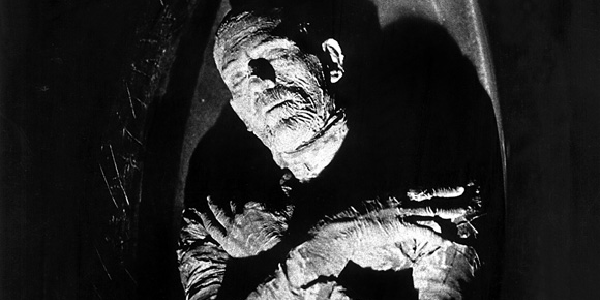
Played by: Boris Karloff (The Mummy), Tom Tyler (The Mummy's Hand), Lon Chaney Jr. (The Mummy's Tomb, The Mummy's Ghost, The Mummy's Curse), Eddie Parker (Abbot and Costello Meet the Mummy) Who is he? Universal boss Carl Laemmle Jr. (son of the studio's founder) had been the driving force behind the first monster films and was now inspired to make a mummy movie by the uncovering of Tutankhamun's tomb. Failing to find an appropriate source novel, Laemmle had his go-to monster screenwriter John L. Balderston write an original story that was directed by Dracula cinenatographer Karl Freund. The first film's Imhotep, a priest mummified alive when trying to resurrect his lover and brought back to life by archaeologists reading from an ancient scroll, was played by Boris Karloff hot off the back of his breakthrough role in Frankenstein. Karloff has real presence and his make up effects are impressive even though he spends hardly any time in the iconic bandaged look. None of the principles returned, however, for the follow up, making The Mummy's Hand as a much a remake as a sequel. Tom Tyler stars as new mummy Kharis in a film that's a definite B-picture and even ham fistedly re-uses footage of Karloff from the first movie. Lon Chaney Jr., who played most of the Universal monsters at one time or another, replaced Tyler for sequels about Kharis, but none come close to Karloff's original. After the classic era: Hammer's own monster cycle included a mummy series, the first of which, The Mummy, remade the first two Kharis films with Christopher Lee. Universal, however, would not dust off Imhotep until the big budget action movie remake in 1999. The new Mummy series is arguably Universal's most successful monster reboot, stretching to more parts than the original franchise (provided you count the Scorpion King series as well). The first film, starring South African Arnold Vosloo as Imhotep opposite Brendan Fraser and Rachel Weisz, is a great fun action romp with a decent take on the monster and the same initial story as the Karloff film. Director Stephen Sommers even impressed enough to be handed the keys to the rest of the Universal monster franchise. Both Sommers' appalling Van Helsing and the ever declining quality of the Mummy sequels and spin-offs eventually killed off the first film's legacy. Universal have ordered a new Mummy, to be overseen by Star Trek's Robert Orci and Alex Kurtzman. It is due out in 2016 and the studio hopes that it will contribute to a new monster cycle.

5. The Wolf Man

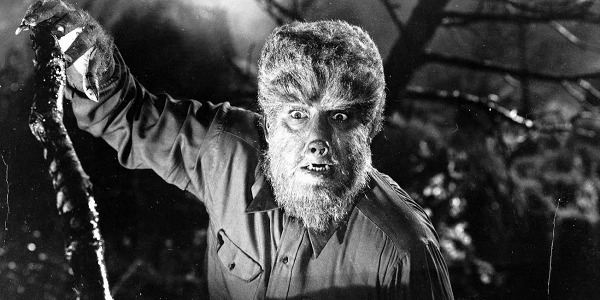
Played by: Lon Chaney Jr. (The Wolf Man, Frankenstein Meets the Wolf Man, House of Frankenstein, House of Dracula, Abbott and Costello Meet Frankenstein) Who is he? Universal's second attempt at a werewolf story, following 1935's Werewolf of London, The Wolf Man's Lawrence Talbot proved a more enduring creation. Largely this is down to Lon Chaney Jr. As stated above Chaney, the son of Universal's original monster star, played various Universal monsters at different times, but he was also unique in playing the Wolf Man in every one of his original sequels (the only Universal monster to retain the same actor). Chaney, who starred in the first film opposite fellow Universal stalwarts Claude Rains and Bela Lugosi, underwent hours of having yak hair glued to his face by make up artist Jack Pierce, but it did create the best werewolf look on screen until the 1980s. Another tragic monster, Talbot's wolf-ism is more of a curse than anything in a movie packed with gypsy mumbo jumbo, but notably lacking in full moons or a complete man-to-werewolf transformation scene. These elements were added for Talbot's later appearances, when a full moon brings him back to life. Unusually for an iconic monster, the Wolf Man had no solo sequels. Instead he made his return in Frankenstein Meets the Wolf Man, ushering in the somewhat lesser era of crossover movies that made up the latter years of the monster cycle. After the classic era: Van Helsing bizarrely decided that the only thing that could kill Dracula was a werewolf, so he for some reason liked to keep them around. Although marketed as Universal's Wolf Man, the film character was not Lawrence Talbot but rather an original creation, Velkan Valerious played by Will Kemp, who has little to do with the final plot. After a troubled production that saw director Mark Romanek replaced with Joe Johnston, Talbot finally returned in 2009's The Wolfman. American Werewolf's Rick Baker provided Benicio del Toro with a make up look and creature design that impressively updated Pierce's original style. Unfortunately the movie was strong in atmosphere but lacking in much plot or character elements.

4. Dracula

Played by: Bela Lugosi (Dracula, Abbott and Costello Meet Frankenstein), Lon Chaney Jr. (Son of Dracula), John Carradine (House of Frankenstein, House of Dracula) Who is he? Although the lavish silent Phantom of the Opera had preceeded it, it was Dracula that really kicked off Universal's reputation as monster film makers. Producer Laemmle had wanted something similarly grandiose for Dracula, but the budget wasn't there. Instead director Tod Browning's film was adapted from the hit Broadway play by John L. Balderston and Hamilton Deane. Consequently, Dracula feels stage bound, small scale and somewhat lacking in dynamism. For the titular count, Laemmle had wanted a name actor, but ended up going with Bela Lugosi from the stage show, purely because Lugosi came very cheap. He would not appear in any of the sequels but the comedy Abbott and Costello Meet Frankenstein 17 years later, but Lugosi still became the iconic version of Dracula in all future pop culture references. That is not to say that Lugosi gives a great performance, however. Always a hammy actor with a limited range, Lugosi is at least the only big screen Dracula to share the count's Hungarian nationality, but his thick accent has become the stuff of a thousand parodies. After Lugosi, Universal (like Hammer in their first Dracula sequel Brides of Dracula) followed the film with a further Dracula-free adventure for Van Helsing. Gloria Holden is a more impressive performer than Lugosi as the lesbian-tinged Dracula's Daughter, but the script remains stolid and talky. From then it was business as usual with Lon Chaney Jr., again, when Dracula returned from the grave in Son of Dracula. After the classic era: Universal have generally seen Dracula as the jewel in their monster crown. As such, the studio have returned to Transylvania more than any other monster setting. After Christopher Lee made a more imposing and seductive Dracula in Hammer's own monster cycle in the 60s and 70s, Universal finally got to make their opulent period romantic version of the story in 1979. The studio's first attempt at rebooting their monsters since the classic era, it featured Frank Langella's Dracula in an all star cast including Laurence Olivier and Donald Pleasance. Up against Werner Herzog's Nosferatu and parody Love At First Bite at the box office, Dracula flopped on release but its influence on the likes of Francis Ford Coppola's version of the story is obvious. In the 21st century, Universal used Dracula as the main antagonist in the ill fated Van Helsing with Richard Roxburgh arguably the worst screen Dracula there has been. More recently, Dracula Untold sought to reboot the story as a historical epic based on Vlad the Impaler, with The Hobbit's Luke Evans as a more noble Dracula. Despite mediocre reviews, Universal have announced it as the first film in a new shared monster universe.

3. The Phantom Of The Opera

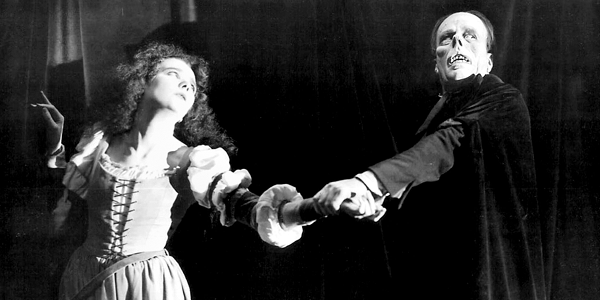
Played by: Lon Chaney (The Phantom of the Opera - 1925), Claude Rains (The Phantom of the Opera - 1943) Who is he? The very first Universal monster came to screens in the silent era, based on Gaston Leroux's then recent Edwardian page-turner about a ghostly being dwelling beneath the Paris Opera House. Unusually, the franchise did not run to sequels, but rather a direct remake with sound and colour. "Man of a Thousand Faces" Lon Chaney (whose son would go on to play most of the rest of the Universal monsters) found his signature role in Phantom's Erik and remains the finest performer of the character on stage and screen. Chaney, famous for his incredible self-applied make-up transformations, had previously played Quasimodo in Universal's Hunchback of Notre Dame, a film whose gothic trappings anticipated the full on gothic horrors of the studio's later work, so was an obvious choice for another Parisian freak. Claude Rains did a decent job in the 1940s version, but remains overshadowed by Chaney. The film retains the original's grandeur (largely through reusing the opera house sets) and, a rare colour Universal monster picture, won Oscars for its colour cinematography and art direction (the only Oscars for Universal monster films). Rains' lack of availability scuppered a mooted sequel, which instead became the film The Climax with Boris Karloff. After the classic era: Universal have not revisited the Phantom since their monster golden age. Largely this is down to the bombastic 1980's musical version from Andrew Lloyd Webber, Charles Hart and Richard Stilgoe. The show's hugely long running stint on Broadway has cemented it as the definitive version in many people's minds and Warner Brothers own the film rights, something they exploited with an uninspiring cinema version featuring shouty Gerard Butler.

2. The Invisible Man

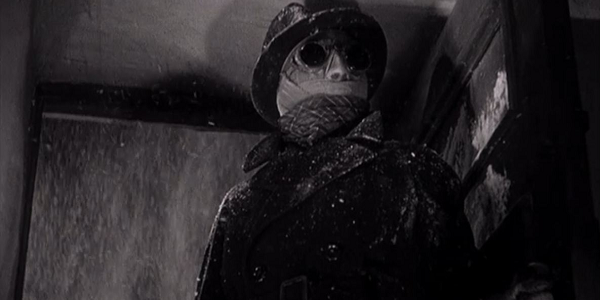
Played by: Claude Rains (The Invisible Man), Vincent Price (The Invisible Man Returns, Abbott and Costello Meet Frankenstein), Virginia Bruce (The Invisible Woman), Jon Hall (The Invisible Agent, The Invisible Man's Revenge), Arthur Franz (Abbott and Costello Meet the Invisible Man) Who is he? Rather than follow a particular character, the Invisible Man series rather allows original invisible man Jack Griffin to stay dead and instead follows his invisibility serum in other stories involving other characters. The first film was based broadly on the H.G. Wells novel, although Wells himself had little involvement in the production and had mixed feelings about the finished product. Instead, the script was worked on by a series of talented writers including R.C. Sherriff and Preston Sturges. Director James Whale had wanted to cast his Frankenstein and Old Dark House star Boris Karloff as the eponymous see-through gent, but Karloff's salary demands proved a stumbling block. Claude Rains was cast instead and this proved a masterstroke. The imperious Rains gives what is probably the finest performance of his distinguished career as the increasingly unhinged invisible criminal looking to begin a reign of terror. In the capable hands of Whale, Universal's top monster director, the film is a more accomplished and memorable work than virtually all the other monster pictures (our Number 1 excluded), while the invisibility effect remains totally convincing. Despite the title, Rains did not return in The Invisible Man Returns, but was replaced by Vincent Price as a new character in a new story. In an almost entirely voice role, Price's rich, grandiose tones are perfect. One of his first horror roles, it helped launch a career as one of the genre's greatest stars. A strong entry into the monster cycle, it may not match up to the original, but The Invisible Man Returns is one of Universal's best sequels. The rest of the series is less good quality, but interestingly takes the conceit away from horror and through everything from screwball comedy to patriotic spy thriller. After the classic era: Universal have not returned to the invisible man since the original series. Given others' attempts with Memoirs of an Invisible Man and Hollow Man, that is probably a good thing. The Fox movie adaptation of The League of Extraordinary Gentleman, meanwhile, had to invent its own invisible man when unable to get the rights to the Wells character.

1. Frankenstein's Monster

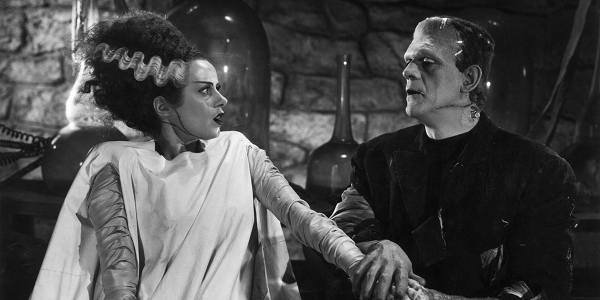
Played by: Boris Karloff (Frankenstein, Bride of Frankenstein, Son of Frankenstein), Lon Chaney Jr. (The Ghost of Frankenstein), Bela Lugosi (Frankenstein Meets the Wolf Man), Glenn Strange (House of Frankenstein, House of Dracula, Abbott and Costello Meet Frankenstein) Who is he? The greatest of all Universal monster series, Frankenstein was the product of a number of great talents coming together. Producer Laemmle wanted to replicate the success of Dracula, so looked for a stage adaptation of a similar stature gothic classic. He hired Dracula playwright John L. Balderston to adapt Peggy Webling's play of Mary Shelley's novel. Meanwhile, Universal had given highly regarded director James Whale his pick of the studio's projects. Whale picked Frankenstein and had the script re-written to his liking. Universal had wanted Lugosi for the lead, in order to capitalise on Dracula's success, but his lack of acting range saw him downgraded from doctor to monster and eventually removed from the project entirely. (Lugosi would finally play the monster in the crossover Frankenstein Meets the Wolf Man, but only because preferred choice Lon Chaney Jr. couldn't play both monsters. Chaney actually would later play both, filling in uncredited for Glenn Strange in some sequences during Abbott and Costello Meet Frankenstein). Instead Whale settled on the experienced hands of Colin Clive for Frankenstein and Boris Karloff (credited as ? in the film's opening titles) for his creation. Even under the layers of Jack Pierce's iconic make up design, Karloff gives a performance of poignancy and pathos, which makes Frankenstein one of the more tragic monster movies. Whale, meanwhile, directs with a gothic elan far removed from Tod Browning's rather pedestrian work on Dracula. If anything, Whale's stranger, funnier sequel Bride of Frankenstein is even more highly regarded than its predecessor. In Elsa Lanchester's Bride, with her electric white streaks in her hair, it introduces another of the studio's iconic creations before destroying her in a finale more emotional than the first. Karloff's final turn as the monster, without Whale or Clive, is still worth a watch, with Karloff playing opposite Basil Rathbone as Son of Frankenstein. After Karloff wanted more various and interesting roles, his signature character suffered through being played by a number of lesser actors as a lumbering mute in a series of plotless crossovers (during which time Universal basically decided that the nameless monster shared his creator's name like father and son). The legacy of the timeless classic early Frankenstein films, however, will always go on. After the classic era: The Karloff films have proved hard to match for the various other studios attempting their own Frankenstein. Universal's only real attempt at reviving the monster was Van Helsing, which (like beloved childhood monster mash-up The Monster Squad, not made by Universal but a love letter to them) at least appreciated that the monster is a sympathetic creature more on our side than Dracula's. Talk of a new Universal monster cycle post-Dracula Untold has inevitably led to speculation about a new Frankenstein, but it won't beat Fox's new version (with James McAvoy and Daniel Radcliffe) to our screens.

In this post: 
dracula
 
Posted On: 
Contributor
Contributor

Loves ghost stories, mysteries and giant ape movies