Wes Anderson: 10 Film Scenes To Admire

Yes, this does involve Herman Blume chucking himself into a pool, as all lists should.
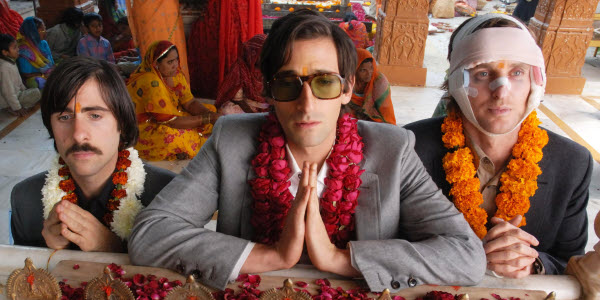
You can usually tell when you're watching a Wes Anderson film: the ensemble cast, the crumbling family (or family unit), the child prodigies, the confectionery-bright colours, the symmetrical framing, the Futura font and, of course, Bill Murray, Owen Wilson and/or Jason Schwartzman at their tragicomic best. But these features by no means reduce his films to a mere checklist. Instead they have become hallmarks of one of the most consistently engaging directors working today. Over the course of eight films, Anderson has become a unique artist in the cinematic landscape; his snappy, deadpan dialogue and visual flair recognisable within only a handful of frames. Through a ragtag bunch of eccentrics and a keen ear for a killer soundtrack, each of his films finds the bittersweet balance of whimsy and melancholy. Those montages, those slow-motion sequences, Bill Murray... it's impossible not to fall in love with Anderson's style. Which brings us to this article. Covering the range of Anderson's feature-length works (including a slight spoiler for The Grand Budapest Hotel), here is a compilation of those scenes guaranteed to put a smile on your face. Enjoy!

10. Bookshop Robbery - Bottle Rocket

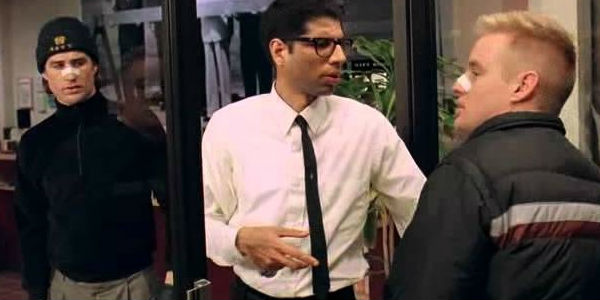
Small town crooks Dignan, Anthony and Bob (played by Owen Wilson, Luke Wilson and Robert Musgrave) have lined up a series of heists that will surely secure their way to an easier life. Having broken into Anthony's house as a practice run, the group's next target, a local bookshop, should be equally simple. And yet, from the second they approach the doors it descends into farce: Anthony- dressed very much like the traditional cat burglar - is thrown by the worker's line of questioning and so it falls to Dignan to push his way past with a pistol. Once inside, it becomes clear that a quick exit with the money is increasingly unlikely. The manager, forced to empty a drawer full of banknotes, objects to Dignan calling him an idiot and so his intruder finds a nicer way of asking him not to place the cash into such small bags: ''Do you have bigger bags, like for atlases or dictionaries, uh, sir?'' Despite the presence of two armed robbers (Bob waits outside as the getaway driver), the staff appear to be not so much afraid as slightly inconvenienced. Managing to be both tense and funny, this scene marks a clear and confident sign of things to come.

9. Introducing The Tenenbaums - The Royal Tenenbaums

As we've seen time and time again, Anderson sure knows how to piece together a montage. And the one that opens The Royal Tenenbaums, posing as the first page of a novel, is surely one of the most striking. Alec Baldwin's authoritative narration begins with patriarch Royal (Gene Hackman), before moving onto the lives he has messed up; namely, those of his children Chas (Ben Stiller), Richie (Luke Wilson) and Margot (Gwyneth Paltrow). They appear first as precocious pre-teens and then as troubled twentysomethings, each believing that they're failures in one form or another. Not only have their individual talents deserted them (as an entrepreneur, tennis pro and renowned playwright, respectively) but their father has, too. As we rattle through these vignettes, the soundtrack ranging from baroque to a cover of 'Hey Jude', each is a masterful mini-opera of fortunes found and faded.

8. The Funeral(s) - The Darjeeling Limited
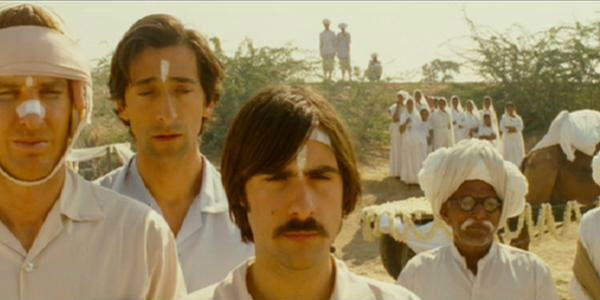
While attending the funeral of a young boy they had failed to rescue from a river, brothers Francis, Peter and Jack Whitman (played by Owen Wilson, Adrian Brody and Jason Schwartzman) are transported back to their father's funeral, the last time all three had seen each other. In the sudden switch from India to back home, their positions remain constant but their ceremonial white dress has snapped, seamlessly, into a sombre, almost military black. This flashback sees them crammed into the back of a limo, rushing to pick up their late father's car from a garage en route to the funeral service. Although The Darjeeling Limited has varying degrees of success with its symbolism (the brothers dropping their literal and metaphorical luggage as they chase a train isn't particularly subtle), watching them struggling to drive away the car - which isn't yet repaired - acts as a neat and powerful reminder of their inability to grieve.

7. Sam Meets Suzy - Moonrise Kingdom

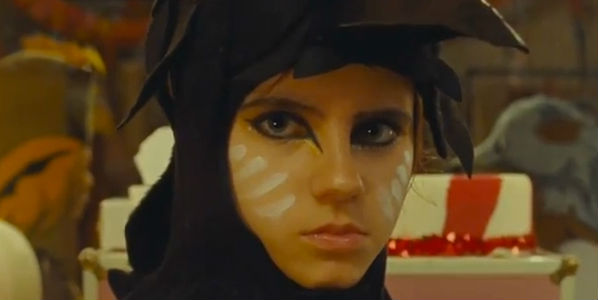
During a church production of 'Noye's Fludde', Khaki scout Sam (Jared Gilman) walks out of the audience, wanders the corridors and winds up in the girls' dressing room. It is here that he meets Suzy (Kara Hayward), a similarly troubled twelve-year old who is preparing to go onstage. Singling out Suzy from a gaggle of girls sitting before a mirror, Sam looks at her costume and asks ''What kind of bird are you?'' ''I'm a raven,'' Suzy flatly replies. They then simply stare at each other in an awkward cross between curiosity and attraction, before Sam is shooed away by one of the organisers. They've barely met and now they've been forced apart. Fortunately, after the performance, Suzy finds Sam sitting forlornly on the bus and passes him a note with her address on and the instruction 'Write to me'. Almost immediately, the precocious pair begins an exchange of handwritten letters, detailing their plan to run away to an idyllic beach hideaway known only to them as Moonrise Kingdom. What makes this scene so charming is how quickly it establishes these star-crossed lovers; the blunt, bumbling scout and the moody, mysterious raven.

6. Let Me Tell You About My Boat - The Life Aquatic With Steve Zissou
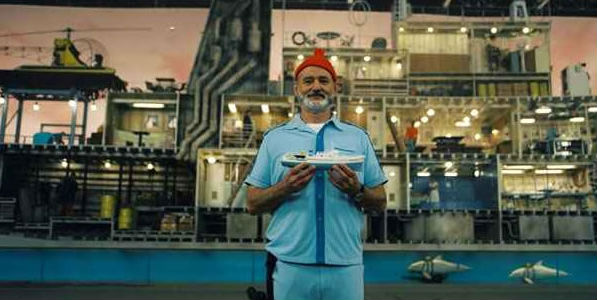
Whenever people say that they're not a fan of Wes Anderson, chances are it's this film that they have in mind. Although it has become something of a cult classic, 'The Life Aquatic with Steve Zissou' showed the director at his most self-indulgent; its plot slooowly plodding along and his characters, never the most expressive of people to begin with, mumbling at each other in an almost anaesthetised drawl. However, it is kept afloat by an incredible sequence in which offbeat oceanographer Zissou (Bill Murray) introduces us to his beloved boat, the Belafonte. ''Let me tell you about my boat'', he says, as a curtain lifts and reveals a full-size model standing majestically behind him. As though opening the door to a dolls house (a comparison that would reappear in the opening shot of Moonrise Kingdom), the camera glides through each room with Zissou providing a running commentary on his crew as we pass them. There's even a spot of stop-motion animation, with a couple of 'research dolphins' shown swimming underneath the boat. But then, with wonderful theatricality, Zissou's narration is interrupted by Ned (Owen Wilson), the lights go out and the model is cast into darkness once more.

5. Boggis, Bunce And Bean - Fantastic Mr. Fox
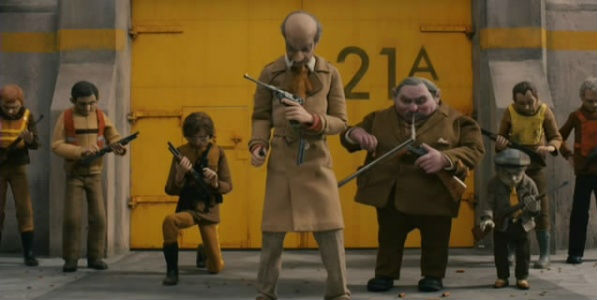
''Boggis, Bunce and Bean/One fat, one short, one lean...''
There's much to love in Anderson's adaptation of the Roald Dahl classic, not least the arrival of the film's three antagonists. Our introduction to them comes - as all introductions should - from a badger named Clive (voiced by Bill Murray) who warns Mr. Fox (voiced by George Clooney) that the three farmers he has been stealing from will doubtless seek revenge. And what better way to see these ''horrible crooks/So different in looks'' in action than through an inventive, entertaining and rapid-fire montage? Thanks to Fox's nightly raids, Boggis is relieved of a few chickens, Bunce loses his geese and Bean, their seemingly self-appointed spokesman (voiced by Michael Gambon) finds his secret cider cellar suspiciously lighter come the next morning. And so they team up to hunt down the thief, inspiring this catchy yet somewhat eerie children's rhyme.

4. Herman Blume - Rushmore
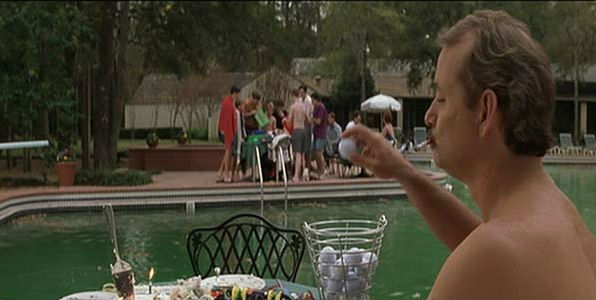
Few actors can make hitting rock bottom look so damn appealing as Bill Murray. His steel industrialist Herman Blume is a pathetic washout, wealthy but desperate; having to compete with fifteen-year-old student Max Fischer (Jason Schwartzman) for the heart of teacher Rosemary Cross (Olivia Williams). At a birthday party for his twin sons (whom he hates), he sits bored at the opposite end of the pool, absent-mindedly throwing golf balls at anyone in reach. After catching his wife flirting with another man, he rises from his chair, walks towards the diving board, climbs the ladder, takes a swig of whiskey from his glass and cannonballs into the pool. It doesn't sound particularly effective but it's the little touches - the Budweiser shorts, the cigarette in his mouth, the glass in his hand - along with his complete lack of expression that makes this scene say so much in such a short space of time. There's no dialogue, instead Herman lets the soundtrack (The Kinks' "Nothin' In This World Can Stop Me Worryin' 'Bout That Girl") speak for him. Sitting there on the pool floor, he finds a rare moment of peace - only for a kid swimming by to disrupt his daydream and bring him back into the real world. When he eventually resurfaces, things are disappointingly, predictably, exactly how he left them.

3. The Society Of The Crossed Keys - The Grand Budapest Hotel
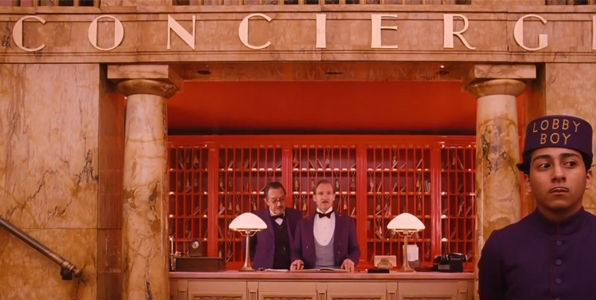
One of the funniest (and most ridiculous) sequences in Anderson's latest film sees concierge Gustave H (a superb Ralph Fiennes) call upon the help of a secret club known as The Society of the Crossed Keys. As each member - himself a master concierge of an esteemed European hotel - receives the message from their lobby boy, they tell the latter to ''Cover for me''- leading the poor chap to continue such tasks as extinguishing a fire or providing mouth-to-mouth resuscitation. It is here that Anderson regulars Bill Murray and Waris Ahluwalia make their brief but much anticipated appearances. It's a simple concept: have one man telephone another in a chain of increasingly inopportune moments, but it's certainly one that works - with the end result resembling a mixture of Father Ted and Monty Python. As we jump from one eccentric character to another, one gloriously ornate hotel to another, and one celebrated cameo to another, it really is a sequence you'd be happy to watch all day.

2. The Train - The Darjeeling Limited
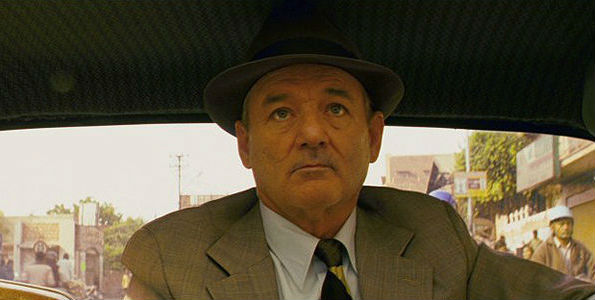
As the Whitman brothers change their minds about returning home and instead chase after a train, a tracking shot cuts through its walls to show each of the film's minor characters (and some who have hitherto remained offscreen) have suddenly materialised in neighbouring carriages. And so we have the businessman (Bill Murray) who had narrowly missed The Darjeeling Limited in the opening sequence, the train's chief steward holding the confiscated cobra, the children in the village, Rita staring sadly into space, Peter's wife Alice in her New York apartment, Jack's ex-girlfriend back in the Hotel Chevalier, Brendan relaxing on a plane, and not forgetting the man-eating tiger in the Himalayan convent - all given their own carriage. Just as they had spent the film trapped in the brothers' thoughts, so here they are hermetically sealed in their own space in time. It's a fitting conclusion, neatly tying together the film's loose ends while providing the film's cinematic highlight.

1. Heaven And Hell - Rushmore

Having tirelessly competed with Herman Blume for the heart of Miss Cross, Max Fischer finally admits defeat with an uncharacteristic display of humility. But he sure knows how to go out with a bang. After a suitably gritty restaging of Serpico, Max turns his attention to the Vietnam war. The result, 'Heaven and Hell', is part-Platoon parody, part-tribute to Blume's own experiences and the most entertaining school play you've ever seen. "You'll find a pair of safety glasses and some earplugs underneath your seats,'' Max tells his audience on opening night, ''Please feel free to use them". He isn't joking; 'Heaven and Hell' is a jaw-dropping, crowd-pleasing, all-guns-blazing pyrotechnical extravaganza featuring model aircraft, buckets of fake blood and a very real flamethrower. Loud explosions, swooping helicopters and some beautifully choreographed carnage all help to bring the conflict to life. Max's own battles may have drawn to a close but, as the camera picks up on Blume's teary-eyed approval, his play has not only brought about reconciliation but also the perfect end-note to Anderson's greatest film. Like this article? Are there any other Anderson moments that you think should have been included? Let us know in the comments box below.

Contributor
Contributor

Yorkshireman (hence the surname). Often spotted sacrificing sleep and sanity for the annual Leeds International Film Festival. For a sample of (fairly) recent film reviews, please visit whatsnottoblog.wordpress.com.