West Side Story Review: 7 Ups & 3 Downs
Spielberg does the impossible and improves upon a classic.

2021 truly has been the year of movie musicals, and as terrific as In the Heights was, it looks like Hollywood saved the best for last, with Steven Spielberg's much buzzed-about remake/reimagining of the 1961 classic West Side Story, adapted of course from the 1957 Leonard Bernstein-Stephen Sondheim play.
And while it's incredibly easy to question the necessity of a remake considering both the '61 movie's firmly cemented stature as an all-timer and how spectacularly well it's aged over 60 years, this is a rare re-do that doesn't merely justify its existence - it arguably outdoes the original.
Spielberg's West Side Story is an almost unthinkable triumph given the sacred nature of the source material and the incredible challenge of attempting to deliver a worthwhile update.
Whether you're a fan of musicals or not, the sheer operatic thrall of Spielberg's filmmaking, aided by an exceptional cast, makes for an intoxicating mix that makes the majority of its 156 minutes basically fly by.
While this remake absolutely didn't need to exist, one suspects most will be glad that it does, if for no other reason than it giving Spielberg the opportunity to flex his most jaw-droppingly impressive directing work in many years.
But first, here's what doesn't quite work...
Downs...
3. The Changes Won't Please Everyone

Despite the near-perfect template of the '61 film, Spielberg's new take isn't a straight-up remake by any means, and though the filmmaker and writer Tony Kushner make a lot of smart changes, not everything is going to work for everyone.
Probably the most controversial difference from the first movie is the decision to move "I Feel Pretty" much further back, such that it actually occurs after the iconic rumble between the Jets and the Sharks.
While this is more faithful to the original play, it does result in a jarring bout of mood whiplash, as we're flung from the heartbreak of the rumble's outcome to Maria's (Rachel Zegler) chirpy song almost immediately afterwards.
There are other changes of setting, structure, and tone that will divide musical purists in particular, though general audiences likely won't take much issue at all with most of Spielberg's revisions.
2. Too. Many. Lens Flares.

Though this is a beautifully shot film for the most part courtesy of Janusz Kamiński's likely-to-be-Oscar-nominated cinematography, there's one aspect of its aesthetic that feels overdone to the point of self-parody.
Spielberg and Kamiński made the decision to include aggressive lens flares in basically every single scene, and while it certainly gives any movie a cinematic sheen when deployed sparingly, here it's used to comical excess.
As much as J.J. Abrams rightly gets flak for his own obsession with lens flares, there are scenes in this movie where it's hilariously obvious that numerous light sources were being intentionally shone directly into the camera lens to generate the effect, rather than it being a natural consequence of filming.
It's hardly a deal-breaker and more casual-minded audiences probably won't even give it a second thought, but Spielberg and Kamiński could've saved themselves some criticism by just toning the flares down a bit.
1. It Loses Steam In The Third Act
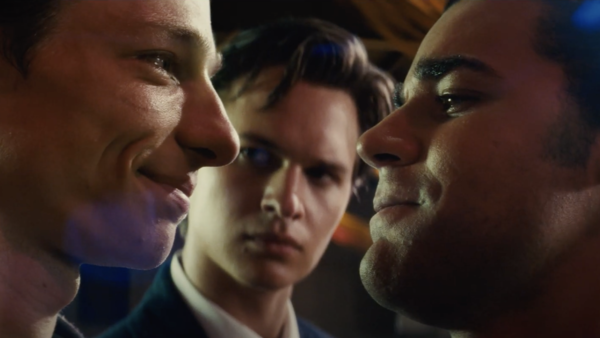
Though Spielberg does a generally upstanding job of carrying the audience to the finish line, it's tough to deny that the film loses a lot of its propulsive, joyous energy in the more downcast third act.
This is in part because this remake can't fix the source material's biggest problem - the speed with which Maria forgives Tony (Ansel Elgort) following an horrific act.
Fans have complained about this aspect of the story since the play's release - not to forget it being inspired by Romeo + Juliet - but it feels decidedly more unconvincing in this version.
As a result the emotional throughline of the finale doesn't quite connect as well as it could, and audiences may feel slightly worn down by the grimmer tenor of that final 45-50 minutes.
These issues aside, here's what Spielberg and his team totally got right...
Ups...
7. Steven Spielberg's PHENOMENAL Direction

It's genuinely surprising that Steven Spielberg hasn't ever directed a musical before, but given that remaking West Side Story has been his dream project for many years, it's less surprising that the end result is a project absolutely dripping with passion.
If Spielberg's directorial efforts of the last decade-or-so have mostly felt a little lacking in enthusiasm and basically seen the director working on autopilot, West Side Story feels like the product of a hungry, energetic filmmaker decades Spielberg's junior.
This is Spielberg's most vibrant filmmaking in many years, deploying gorgeously smooth, elaborate crane shots and long takes to immerse the audience in ways the '61 film never could.
Spielberg knows the best place to put the camera at all times, and is of course an expert actors' director, which together ensure this is the most alive a Spielberg film has felt in a long, long time.
It's difficult to picture the master director not scoring a Best Director Oscar nomination for his outstanding work here, and he's so, so deserving of the honour.
6. Rachel Zegler & Ariana DeBose Steal The Show

It's never easy for any actor to step into the shoes of a massively iconic role, and given that the parts of Maria and Anita - previously played by Natalie Wood and an Oscar-winning Rita Moreno - are among musical cinema's most recognisable, the pressure was especially significant.
But Rachel Zegler and Ariana DeBose both live up to their predecessors with terrific performances that could very well end up receiving Oscar nominations, despite their respective fields being rather crowded this year.
As Maria, Zegler is obviously a more appropriate choice compared to Wood, who as a Caucasian actress was kitted out in distracting "brownface" to portray the Puerto Rican character.
Zegler's incredible singing voice is matched by her dramatic prowess, even if she's unavoidably overshadowed - just as Wood was in the '61 film - by DeBose's brilliantly energetic performance as the feisty Anita.
There would've been no shame in either actress not quite measuring up to their forebears, but they assuredly deliver their own equally valid spins on these beloved characters. Bravo.
5. The Fantastic Musical Numbers

Perhaps the area in which this new take best improves upon the '61 movie is in its staging and execution of the classic musical numbers.
Though the original film remains a technical marvel in its own right, Spielberg's more dynamic filmmaking quite frankly blows it out of the water.
From a stunning opening long-take crane shot - presumably digitally assisted - that segues into the famous musical prologue, it's clear that Spielberg wants to use modern filmmaking tech to one-up the original's own visual majesty.
Mercifully employing little CGI throughout, though, the vibrancy largely comes through by way of the impeccable gliding camerawork, exquisite framing, spirited choreography, and more evocative locations.
While the New York of the '61 film felt a little empty and lifeless, here it's positively bustling.
The single biggest improvement surely occurs in the staging of "America," which is shifted from a rooftop to the more potential-filled city streets, Spielberg taking full advantage of this expansive setting to deliver the film's true show-stopper of a sequence.
4. The Excellent Ensemble Cast
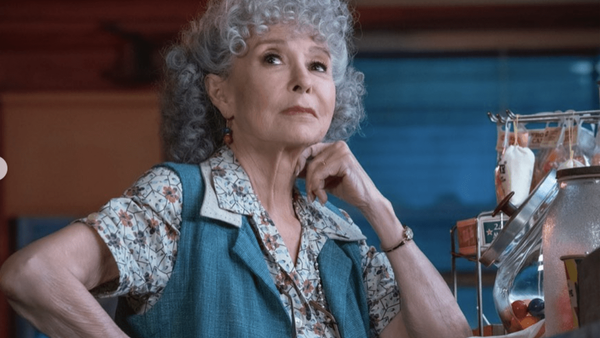
If Rachel Zegler and Ariana DeBose are rightly going to earn the lion's share of the cast's praise, the ensemble is an undeniable embarrassment of riches.
Though some might be reluctant to furnish too much praise on Ansel Elgort for his recent personal scandals, he's well-cast in the role of Maria's love interest Tony.
While far from the musical's most interesting character, Tony is brought to life by Elgort's evocative performance and particularly his strong singing voice.
But the most impressive performance among the Jets goes to Mike Faist, who makes Riff far more than a potential caricature, imbuing him with so much life and attitude.
David Alvarez is also terrific as Sharks leader Bernardo, and Corey Stoll is a hammy hoot as the cantankerous Lieutenant Schrank, though the true show-stealer among the supporting cast is inevitably Rita Moreno.
Moreno, who of course played Anita in the original film, is back here to play Valentina, a new character who basically assumes the part of pharmacist Doc from the original, serving here as his widow.
Moreno appears in a number of scenes, often acting as the voice of reason to the feuding youngsters, and in a scene so brilliant it just might net her a Best Supporting Actress Oscar nomination, tenderly sings the iconic song "Somewhere."
Simply, there's not a single weak link among the cast - everyone here is bringing their A-game.
3. Tony Kushner's Screenplay Updates The Material For Today
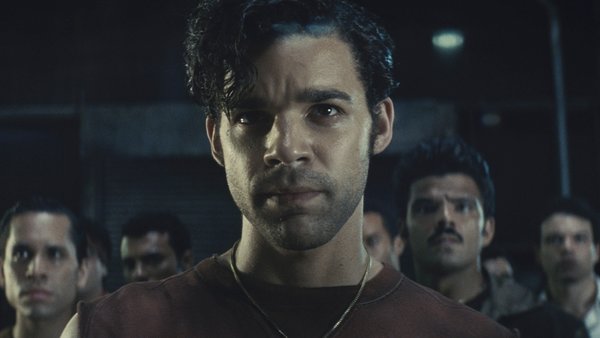
Though this remake doesn't shift the story's setting forward to 2021, Tony Kushner script and Spielberg's filmmaking do nevertheless present a more enlightened, relevant portrayal of the narrative and characters for contemporary audiences.
The original was of course explicitly concerned with the racial and cultural divides that caused its central conflict, and even more of an effort has been made here to dig into the nuances of each side's grievances, yet without feeling like it's lecturing the audience.
Elsewhere, Tony is given a compelling backstory and specific motivation for wanting to avoid violence, while Maria is reimagined as a less virginal, more assertive character.
Spielberg also makes the mildly controversial decision not to subtitle any of the film's Spanish dialogue, though ultimately it's an interesting and successful choice which places both languages on equal footing.
More to the point, most of the spoken Spanish is ancillary dialogue, and that which isn't is largely repeated or otherwise explained in English.
While the original film has mostly aged incredibly well - brownface aside, that is - it's certainly welcome to see Spielberg and Kushner striving to give it a more progressive, modern-minded update.
2. Janusz Kamiński's Incredible Cinematography
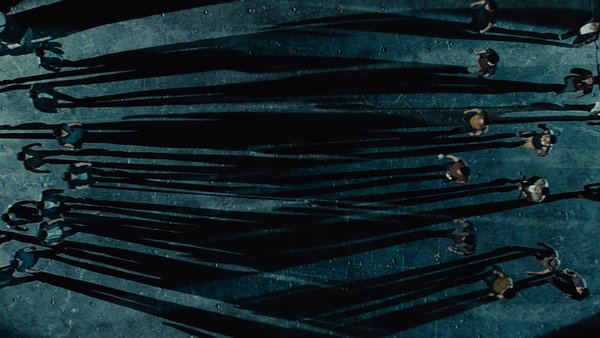
West Side Story sees Spielberg once again re-teaming with his regular cinematographer Janusz Kamiński, who aside from those aforementioned excess lens flares does an absolutely spectacular job bringing the director's vision to life.
From top to bottom, this is a beautifully assembled film from a visual perspective: the framing, ultra-smooth and motivated camera movement, lighting, and desaturated colour grading all add up to ensure this feels both like "classic" Hollywood and something taking full advantage of modern filmmaking tech.
Kamiński faced an enormous challenge to elevate Spielberg's film above what came before, but that he has certainly done in aesthetic terms, ensuring the new West Side Story is an eye-watering feast in basically every moment.
1. It's A Rare Remake That Improves Upon The Original

Generally speaking it's an impressive achievement if a remake of a classic movie is "pretty good" and doesn't inspire feelings of hatred or annoyance from fans of the original, but Spielberg's West Side Story goes so, so much further than that.
It's not something to declare lightly, but this new take is on the balance of averages a general improvement over the '61 film, offering up a more technically robust, visually adventurous, thematically resonant, and character-driven riff on the story.
Again, purists might take issue with some of the changes made, but accepting Spielberg's film in its entirety, it is a fiercely confident remake that more than justifies its existence beyond mere box office dollars.