What 10 Great Movies Look Like Without Visual Effects
Digital wizardry at its finest.
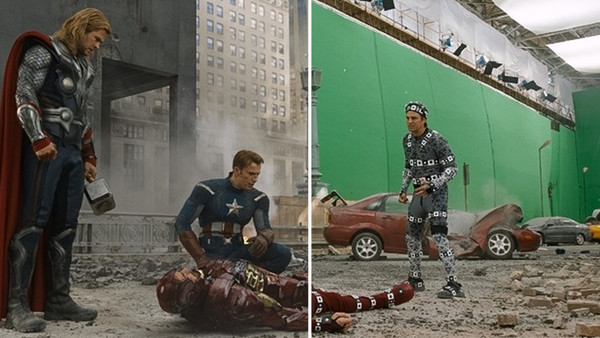
Love them or hate them, visual effects are a vital component of just about every major Hollywood movie these days, and like any tool, its effectiveness typically comes down to how and why it's used. And by whom, of course.
Though often used as a crutch by lazy filmmakers, CGI can also be extremely versatile in the hands of the right artists, dazzling not only the eyes but also the heart and the mind.
To that end, these 10 films represent some of the more inspired, creative and iconic uses of VFX technology over the years, with the filmmakers using CGI to enhance what was practically achieved during shooting.
The mind-boggling transformations speak for themselves, taking seemingly sterile, un-cinematic footage shot in front of a coloured screen and giving it the much-needed magic touch.
As these films created iconic movie locations out of thin air, added complex digital characters into the mix and cleverly concealed elements of the filmmaking process, let's peel back the curtain and see just how different the raw footage looked...
10. The Matrix
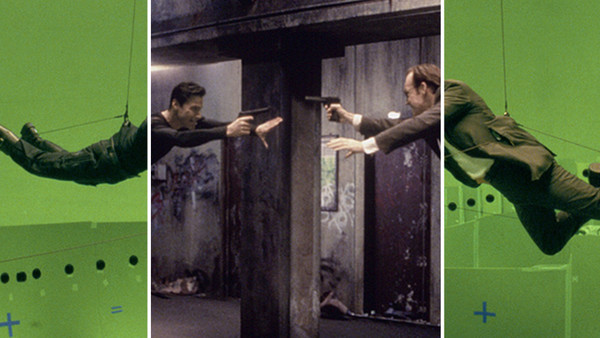
Let's kick things off with a ground-breaking triumph of VFX that continues to remain an innovative benchmark 20 years later.
The Matrix popularised the concept of bullet time, of depicting action in slow-motion while freely passing the camera through the scene, and it's a technique that continues to be used widely across blockbuster films today.
The various bullet time sequences throughout the film still look impressively seamless, such that it's easy to forget that most of the marquee shots were actually captured against a green screen.
In this controlled environment, a bespoke camera rig captured footage with a full 360 degrees of coverage, allowing the Wachowskis to effectively stitch frames together and imply a seamless camera pan around the subject.
The slickness of the effect blew audiences away back in 1999, and remains an absolute marvel of cinematic engineering today.
While contemporary blockbusters routinely fail to correctly match the lighting between green screens and backdrops, The Matrix still looks pretty much perfect.
9. Avengers: Infinity War
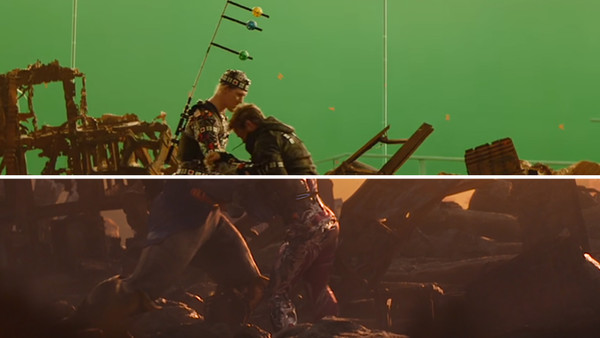
Avengers: Infinity War is one of the most ambitious blockbusters of all time - at least until Endgame came along - and in order to fully deliver the superhero team-up extravaganza audiences were expecting, the Russo brothers employed a mind-boggling 2,900 visual effects shots throughout the film.
By far the most complex aspect of Infinity War from a technical perspective was translating Josh Brolin's performance capture work as Thanos into a convincing digital rendering while retaining the tactile qualities of Brolin's performance.
After all, we've all witnessed how bad CGI can ruin a potentially compelling feat of performance capture (looking at you, Justice League).
As extensive B-roll footage of the shoot makes clear, Infinity War's effects team also had to deal with the size differential between Thanos and Brolin, by attaching a pole to Brolin's performance capture suit in order to give the artists a reference for Thanos' head.
To further lessen the technical load, very few elements in Thanos' scenes are actually practical, bar a few environmental objects and the actors he's working opposite. This gives the artists as much freedom as possible to figure out the precise geometry of Thanos' spatial positioning relative to Brolin.
Though it wouldn't quite be fair to call Thanos a seamless creation - he is a giant purple alien, after all - the villain's uncommon expressiveness is an undeniable triumph for the genre, and for blockbuster filmmaking as a whole.
8. Life Of Pi
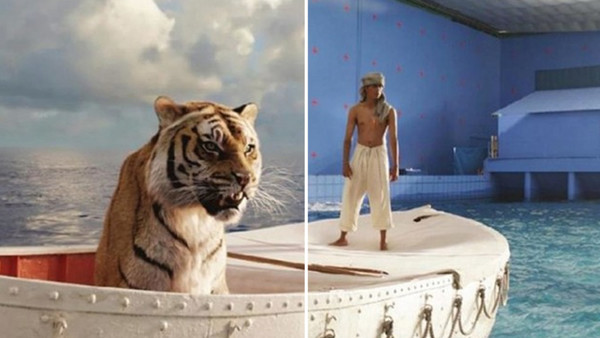
Ang Lee's epic survival drama went on to win four Oscars, one of which was for its staggeringly convincing visual effects.
Long considered "unfilmable" due to its technical complexity - requiring a young actor (Suraj Sharma) to be convincingly stranded at sea with a Bengal tiger - Lee ultimately decided to shoot all of the film's ocean scenes in a purpose-built wave tank.
Extensive behind-the-scenes footage reveals how this wave tank basically resembled a giant swimming pool, with Sharma acting within a prop boat and occasionally opposite a stuffed tiger intended to act as a stand-in for the digital one.
The absurd photo-realism of the tiger and the ease with which the audience believes that we're seeing a genuine oceanic environment is a major testament to VFX house Rhythm and Hues, who tragically filed for bankruptcy less than two weeks before winning their Oscar for the movie.
7. District 9
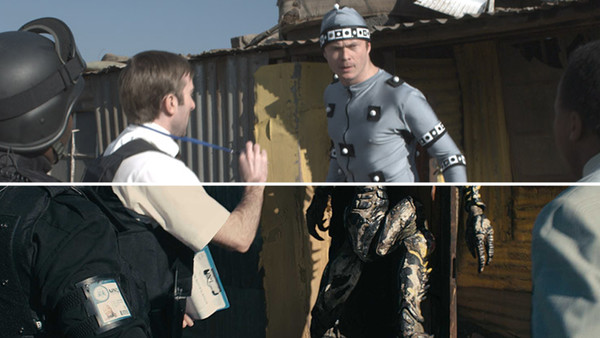
Neil Blomkamp's Oscar-nominated District 9 just might boast the best visual effects of any movie made for a mere $30 million - though it certainly helps keep costs low when Peter Jackson's your producer.
Despite its low-fi mockumentary style and largely unknown cast (at the time), the film employs extensive visual effects in almost every scene, utilising motion capture with stand-in performers for the alien "prawns", which was then translated into a digital likeness by Image Engine.
The absurdly realistic texture design of the creatures is especially impressive considering how much of the film takes place in broad daylight, which didn't allow Image Engine much opportunity to mask the limitations of their work through darkness.
And yet, watching District 9 a decade later, the prawns remain ludicrously convincing creations, as is vital for the audience to eventually empathise with them.
Had it not been up against Avatar for the Best Visual Effects Oscar in 2010, it surely would've taken the gong home.
6. Mad Max: Fury Road

Though Mad Max: Fury Road gets a ton of cred from film fans for its emphasis on practical effects, the film's reliance on CGI is often underestimated - and that's precisely why it's so damn good.
George Miller isn't just a veteran action filmmaker, he's also got decades of experience working with complicated visual effects and animation, having directed Babe: Pig in the City and both Happy Feet movies.
This ensured he knew exactly when to implement pervasive VFX throughout the movie - and when not to - and for the most part the effects are extremely tough to pick out.
The big money shot of the movie, where a tanker explodes with Max (Tom Hardy) being catapulted across the screen, contains far more digital elements than are immediately obvious.
In fact, aside from the explosion itself and the tanker caught in the middle of it, every other vehicle and human element was composited in post-production - most obviously, Hardy himself.
Common sense tells us that Hardy wasn't really being swung from car to car while a cacophonous explosion detonated behind him, but given that the end result lacks any of the usual CGI giveaways - namely inconsistent source lighting - you'd be forgiven for assuming they did it for real.
5. Star Wars: The Last Jedi

Whatever you make of Star Wars: The Last Jedi, there's no denying the brilliance of its visual effects, from the various space battles to its crowning achievement - Supreme Leader Snoke (Andy Serkis).
Audiences are always in good hands with George Lucas' own VFX company Industrial Light & Magic (ILM), and teaming them with performance capture maestro Andy Serkis to create Snoke was a slam dunk before shooting even started.
Regardless of Snoke's divisive fate, the character is an exceptional achievement in photo-realism, especially given the grotesque nature of his appearance and how little he ultimately resembles Serkis.
It is a perfectly harmonious combination of effects and performance, ensuring the audience doesn't quite know where one begins and the other one ends.
And let's face it, if you're an actor working opposite a part-digital creation, you couldn't ask for a better scene partner than Serkis.
4. Logan
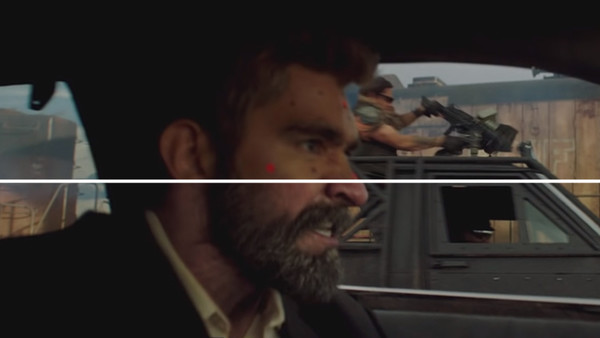
Though Logan was mounted as a more grounded and gritty alternative to the mainline X-Men movies, it still featured its fair share of digital effects elements - especially once a Wolverine (Hugh Jackman) clone was hurled into the mix.
While the effect itself is extremely well done, it obviously draws attention to itself given that, well, there's only one Hugh Jackman walking around (that we know of, anyway).
But Jackman's face is actually cut-and-pasted into the movie more often than you might assume, with director James Mangold daringly replacing the face of a stuntman with Jackman's during the car chase sequence at Logan's hideout.
Unless you've seen the VFX breakdown for yourself, you'd likely never guess it wasn't Jackman driving the car himself.
Considering how challenging these CGI-heavy close-ups are to get right, it's a truly ballsy move on the part of Mangold and the film's effects team.
3. The Martian
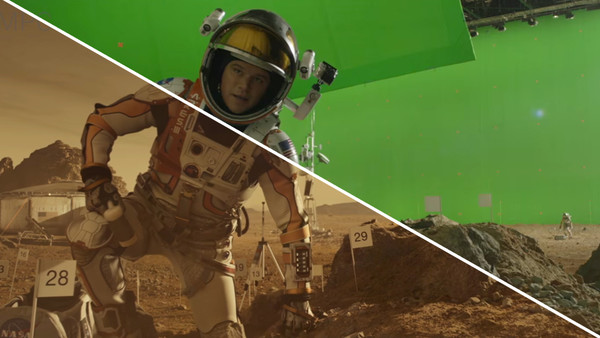
To the surprise of absolutely nobody, The Martian's Mars-set sequences weren't actually shot on Mars, with the production often using Jordan's Wadi Rum valley to double for the planet's surface.
However, if you thought that every single scene set on Mars was filmed at the sandy Jordanian location, you'd be (understandably) wrong.
In fact, director Ridley Scott shot most of them on a soundstage in Hungary, and given the greater sense of control this would afford any filmmaker - namely from the elements of nature - it makes a lot of sense.
It's incredibly difficult to spot where the practical set ends and the digital one begins in the final film, in turn doing what the very best CGI always does - transport the audience to another world (quite literally in this case).
2. Deadpool
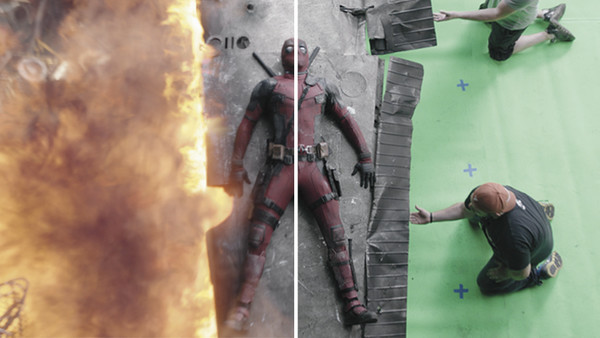
Despite Deadpool's "modest" $58 million budget - for the standards of superhero fare, anyway - the film is absolutely awash in gnarly and creative visual effects, and it certainly helps that director Tim Miller cut his teeth working as a VFX artist.
The overwhelming majority of the film's CGI is deployed during the extensive highway sequence which effectively serves as a narrative wraparound throughout the movie.
And though much of the scene was indeed shot practically on a Vancouver highway, anything more than a basic action beat was ultimately completed against a green screen on a soundstage.
It's not quite fair to say that Deadpool's CGI is invisible, though that's largely by design, and by giving the entire film a glossy sheen, it helps prevent the lower-fidelity effects from standing out too much.
Given the price tag, what Miller achieved is really quite incredible.
1. The Avengers
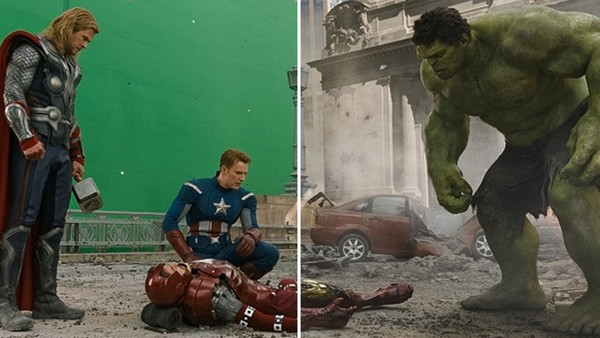
The Avengers might seem quaint by recent MCU standards, but there's no denying the ingenuity of its climactic Battle of New York, which saw writer-director Joss Whedon call upon ILM to recreate New York digitally from the ground-up.
Despite how brilliantly the scene evokes the real New York, the majority of the sequence was actually shot on soundstages in New Mexico and Cleveland, with ILM recreating the city by mapping roughly 250,000 images of Manhattan.
That's not to forget that several of the superheroes - namely The Hulk (Mark Ruffalo) and Iron Man (Robert Downey Jr.) - were kitted out in performance capture suits.
As such, watching the finished sequence must've been quite the exercise in cognitive dissonance for all involved.