What Does The Ending Of Enemy Really Mean?
Unravelling Denis Villeneuve's masterful mind-bender.
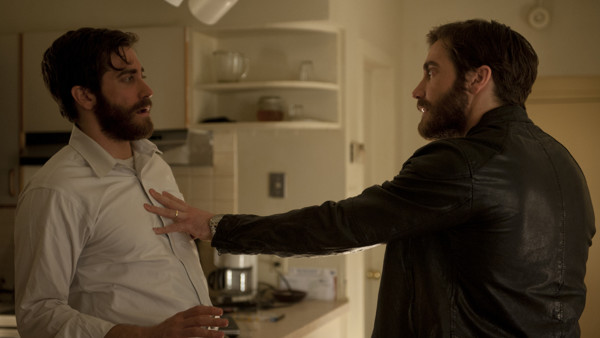
Denis Villeneuve's 2013 film Enemy may not have been a box office smash, but it is one of the most provocative and entrancing psychological thrillers of the last decade.
Loosely adapted from José Saramago's 2002 novel The Double, Enemy stars Jake Gyllenhaal as Adam, a despondent college history professor whose life is turned upside down when he discovers a doppelgänger of himself, Anthony (also played by Gyllenhaal, obviously), while watching a movie.
What begins simply enough quickly becomes increasingly dizzying and complex, as the identities of the two men become blurred in decidedly David Lynch-esque fashion. This leads to a third act and a final scene in particular that's wide open to interpretation and has been passionately debated over the last five years.
There are no 100% definitive answers, and Villeneuve has patently refused to clear anything up - because why would he? - but by taking a deep dive into the cerebral thriller, we can perhaps uncover quite what it all means...
8. What Happens?

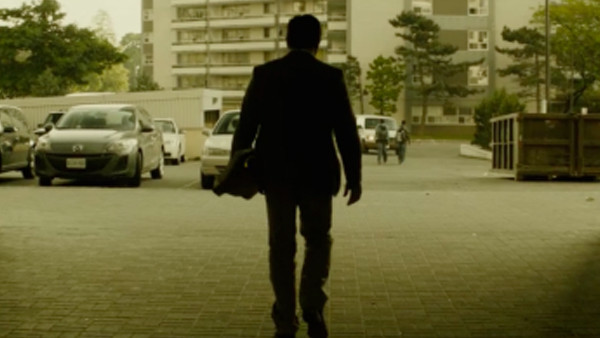
The film's third act kicks into gear when Anthony stalks Adam's girlfriend Mary (Mélanie Laurent), and subsequently plots to have sex with her.
Anthony accuses Adam of sleeping with his heavily pregnant wife Helen (Sarah Gadon), before bullishly insisting that Adam swap places with him for the weekend, so Anthony can have sex with Mary and "even things out".
Anthony also vows to leave Adam's life after the weekend, so Adam complies with his request. However, Adam then decides to visit Anthony's apartment and take his place in return.
Though Helen appears to either not notice or not care about the switch, Mary notices the wedding ring mark on Anthony's finger, inciting an intense argument. As Anthony drives her home, the argument continues and the car violently crashes, presumably killing them both.
The final scene has Adam, still in Anthony's place, opening a letter containing a key which grants him access to the underground sex club Anthony is shown visiting at the very start of the film.
As Adam talks to Helen, he enters the bedroom to continue the conversation, only to be greeted by a gigantic tarantula, seemingly backed against the wall in fear. After a beat, Adam sighs and the film ends.
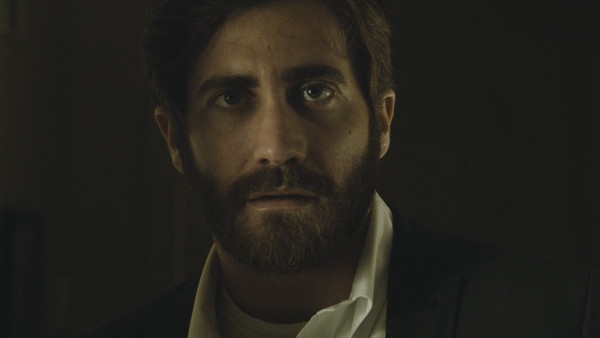
7. Do Adam & Anthony Both Exist?
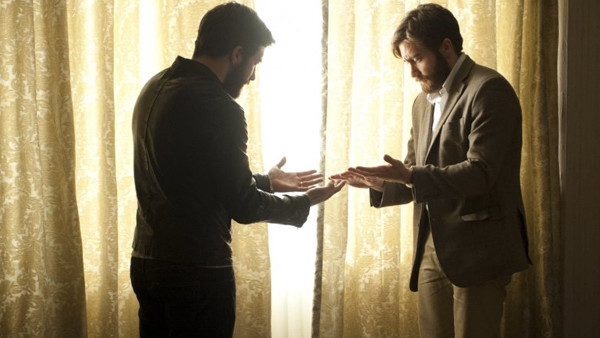
The key to unlocking the mysteries at the core of Enemy's narrative lie in answering one question once and for all: are Adam and Anthony actual, physical doppelgängers of one another or not?
Firstly, it's interesting to note that the two men are never seen in the same place at the same time by any other character, and in the few scenes where they share the screen, they're entirely alone.
Even after the two first meet up and Adam hurriedly leaves in a panic, Anthony drives past him on the freeway but his motorcycle helmet covers his face, making it entirely possible that Adam is, indeed, merely projecting Anthony as a fabrication of his own mind.
Furthermore, when Helen sees Adam at the university and immediately calls Anthony on her phone, Anthony doesn't answer the phone until Adam is out of view, further cementing the ambiguity of whether Adam truly has a double or not.
As such, the film's visual language - not to mention its thematic content - seems to have Denis Villeneuve suggesting that there is only one actual, physical person on Earth played by Jake Gyllenhaal, which can of course only mean one thing...
6. Adam Is Suffering From Multiple Personality Disorder
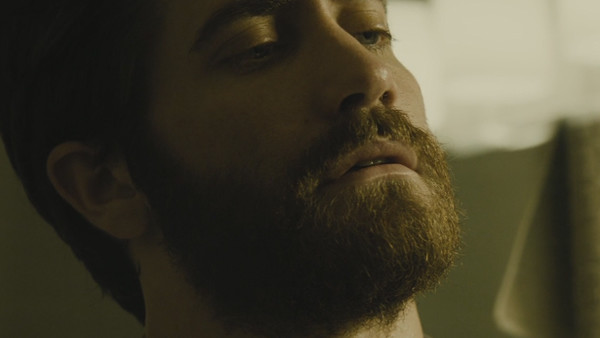
There are persuasive clues throughout Enemy that Adam is in fact suffering from multiple personality disorder (aka dissociative identity disorder), and Anthony is merely a competing personality in his mind.
First off, there's the fact that both men are physically identical, not merely both resembling Jake Gyllenhaal, but both sporting the exact same beard - amusingly, Anthony debates shaving it off but doesn't - and bearing the same scar on their bodies.
There's also far more convincing proof elsewhere: both Adam and Anthony seem to possess the very same picture of themselves. Adam's version is torn, but he later discovers a complete version in Anthony's house, which also features Helen.
There are numerous references to Anthony's infidelity throughout the film, and after Anthony speaks to who he claims is Adam on the phone, Helen asks him, "Are you seeing her?" This could theoretically be referring to any of the women Anthony has presumably cheated with before, but it would also make a ton of sense for it to be Mary.
Perhaps most pivotal, though, is Adam's meeting with his mother (Isabella Rossellini), which includes a number of blatant hints at Adam and Anthony being part of the same muddled, fractured psyche.
Firstly, she declares that he has "enough trouble sticking with one woman" (also true of Anthony), then she tells him to "quit that fantasy of being a third-rate movie actor" (also applicable to Anthony), and finally, though we hear Anthony talk about enjoying blueberries earlier in the movie, Adam insists he doesn't like them. His mother retorts, "Of course you do", again conflating these two apparent people together into one whole. Adam's mother is also quite insistent that he is her only child.
Moments later, Anthony can be seen rehearsing his "Did you f*** my wife?" speech into a mirror, as though quite literally having the conversation with himself and playing the scene out in his own mind. Even when we see Anthony confronting Adam about this, Adam calls him crazy and Anthony shouts back at him, "I'M f***ing crazy!?", almost as if to imply that THEY are crazy.
How plainly these instances are laid out before the viewer makes a compelling argument that Adam and Anthony are two personalities fighting for the same body. Quite which events throughout the film are real are up for debate, but it seems clear that in the very least, Adam and Helen actually exist and are probably married.
5. Depression Is Key

By far the most common symptom of multiple personality disorder is depression, and there are number of hints throughout the film that Adam is depressed, which bolsters the notion that Anthony is a competing personality.
For starters, Villeneuve and cinematographer Nicolas Bolduc opted for an offputting, almost jaundiced visual style, quite literally shooting the film through a lens detached from reality, which can metaphorically reflect Adam's own depressed view of the world, where everything looks more drab than in actuality.
In more palpable terms, the first minute of the film sees Adam talking to his mother on the phone, who says, "I'm worried about you. How can you live like that?" and is clearly concerned about her son. When talking to a co-worker about movies, Adam even says "I could do with something cheerful" when asking for a recommendation.
It's made abundantly clear throughout the film that Adam is restless and dissatisfied with his work, intimate relationships and family life, the result of which has at least partly contributed to the onset of his depression and ultimately his split personality disorder.
There's one aspect of Adam and Anthony's lives that seems to differ significantly, though, and this may be the primary anguish responsible for the internal conflict...
4. Relationships Are Dictatorships
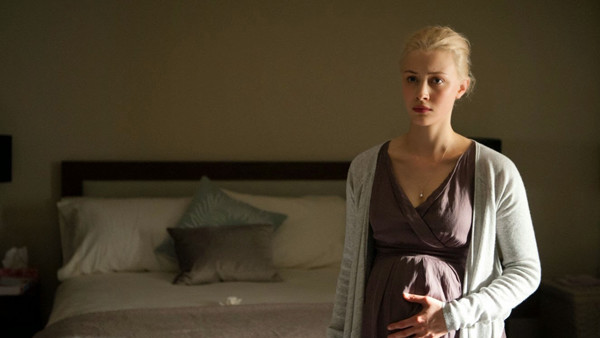
Though there are plenty of theories online about how Enemy is a metaphor for living under a totalitarian state, in more abundant terms it feels like the film is drawing parallels between global politics and relationship politics.
When Adam is lecturing at the university early on, he says, "Control. It's all about control", and goes on to state that dictatorships maintain control by "[censoring] any means of individual expression."
Minutes later, Adam repeats this speech at another lecture, but this time Villeneuve intercuts it with scenes of Adam having sex and hanging out with Mary, as if to deem this Adam's "freedom of expression". Anthony's married life with a pregnant wife, Helen, meanwhile, is the dictatorial means of controlling his life.
To that end, it's fair to surmise that Adam's depression and subsequent development of a split personality comes down to his desire for greater freedom, a disdain for control and a fear of one thing above all else...
3. Spiders Represent Fear Of Commitment

Adam is terrified of commitment, and this is visually represented throughout the film by the thing many people fear most: spiders, most horrifyingly and potently realised in the final scene, where "Anthony" returns home to Helen and she now resembles a gigantic tarantula.
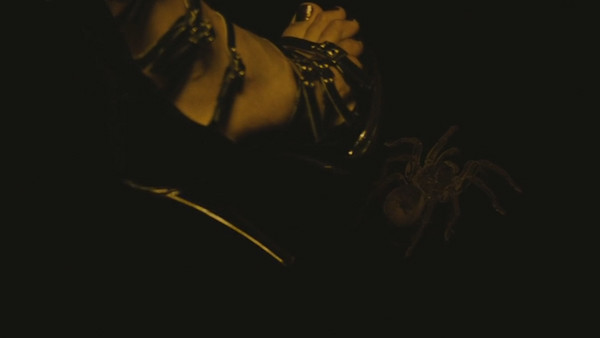
This symbolically suggests that his attachment to Helen, now permanent through the impending arrival of their child, is what repulses him the most. It links back perfectly to the movie's opening sex club scene, where a woman crushes a tarantula with a high-heeled shoe while Anthony and a host of other men look on in near-orgasmic intrigue.
The men, away from their wives and partners, can feel the weight of responsibility and fidelity being stamped on, no matter how brief it might be (hence why Anthony is accosted by a man desperate to get a key to the next show).
On a broader level the spiders also relate almost entirely to women, be it the shot of the giant spider in the middle of the city occurring straight after Adam's mother chides him, or the spider-web appearing on the remnants of Anthony's crashed car mere moments after Mary insults his masculinity.
The spider as a fear object and the spider-web as a tool typically used to trap prey amount to Adam/Anthony's terror at being caught in a relationship with no means of escape.
So, with the root of Adam's condition revealed, it's time to consider the resolution of his conflicting personalities...
2. Adam Vs. Anthony
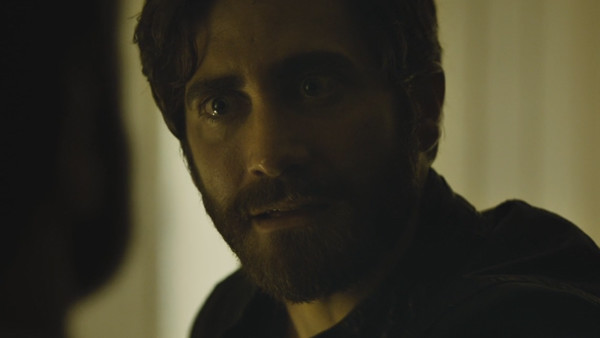
Enemy's opening title declares that "chaos is order yet undeciphered", which seems to be referring to Adam's quest to reconcile his two conflicting personalities, creating order by deciphering which one is dominant while purging the other.
The Anthony-starring film Adam watches is even called "Where There's a Will, There's A Way", seeming to provide unconscious encouragement for Adam to pursue a resolution to his condition.
Anthony insists that Adam won't ever see him again after he's spent the weekend with Mary, and though the audience will initially take that claim at face value, Anthony is literally stating the fact that once this war for dominance has played out, only one of them will be left standing.
The audience may not appreciate the relevance of what Anthony says, but Adam does, which is why he visits Helen while pretending to be Anthony, in an attempt to maintain dominance, stop Anthony from purging him and in turn purge Anthony. Unexpectedly, Helen asks him, "Did you have a good day at school?", demonstrating her awareness of and apparent comfort with Adam winning out.
Helen's approval may help kickstart Anthony's "death" from Adam's mind, as symbolised by the car crash, because Adam starts crying shortly thereafter, presumably through the anguish of losing some part of himself, no matter how disruptive. Helen then tells Adam, "I want you to stay", seemingly cementing Adam's place as the "winner", mere seconds before we see Anthony and Mary's surely fatal car crash.
1. The Ending AKA "Events Happen Twice, The Second Time's A Farce"
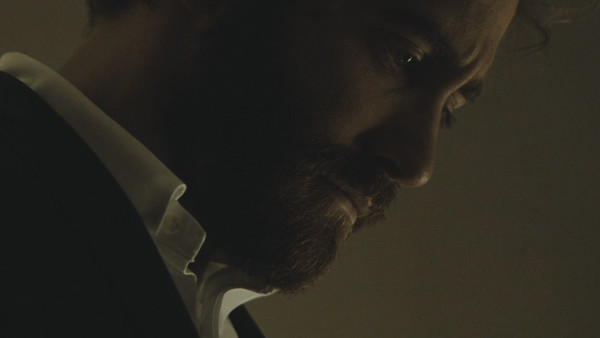
Though at first Anthony's demise seems to imply a somewhat happy ending for Adam, the final moments sadly ensure that's probably not the case.
Adam finds Anthony's key for the sex club and declares to Helen that he's going to go out, presumably to the club. The fact that Helen is transformed into a spider mere moments after he makes this decision is the aforementioned manifestation of Adam's fear of commitment, which he has clearly failed to conquer.
Adam is simply succumbing to the same pattern of behaviour as "Anthony", which ties back to an early scene where Adam talks to his class about Hegel, who said "all the greatest world events happen twice", and that Karl Marx added, "the first time it was a tragedy, and the second time it was a farce."
If Adam/Anthony's fear of commitment was at least relatable on a basic human level the first time around, seeing him intent on repeating this behaviour is now pathetic, even laughable, especially with him having purged Anthony from his mind.
As for Adam's much-discussed final facial expression? It's telling that Adam merely sighs at the sight of the spider, as though exasperated by the presence of this burden in his life, resentful of his pregnant wife as he heads out into the night to seek carnal freedom elsewhere.
It's entirely possible that Adam takes a beat and decides not to head to the club, but given the pointedness of that prior Marx quote, he probably can't help himself.
What do you make of this interpretation of Enemy's ending? Got any ideas of your own? Shout them out in the comments!