What Does The Ending Of Shutter Island Really Mean?

Martin Scorsese's psychological thriller is trickier than the average.
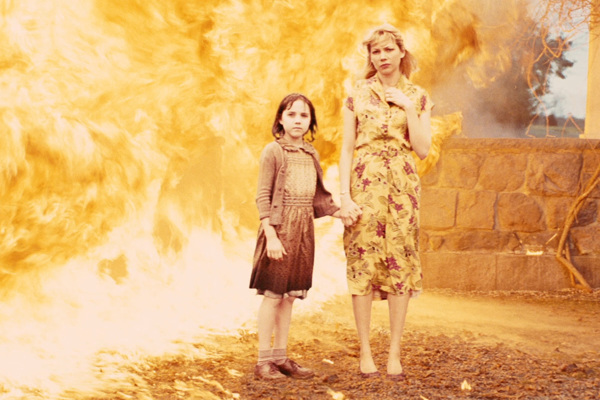
2010's Shutter Island is like no other Martin Scorsese film. Not the kind of realism-tinged examination of troubled men nor an exploration of the criminal, religious or artistic worlds Scorsese often obsesses over, Shutter Island is a straight-up disturbing psychological thriller with lavish helpings of horror. This is not just a singular film for Scorsese stylistically or genre-wise, however - Shutter Island is also the director's most mysterious project. Blurring the line between truth and fiction, reality and hallucination, Shutter Island is a character study that doesn't even allow you to trust its main character, never mind the many shady figures around him. Already dense with ideas and period detail, Shutter Island offers one of the great movie twists of the decade prior to its close, before potentially switching things up again with an ambiguous final scene. It's a film that cannot be fully digested after just one sitting, and a film that will find a different result in the interpretation of every individual viewer. There are numerous avenues to go down when attempting to uncover the true 'meaning' of Shutter Island; but it is, in actuality, a film of many meanings all at once. Major spoilers for the film follow - from here on out, it's a thorough examination of Shutter Island and its tricky twist climax.

The Literal View

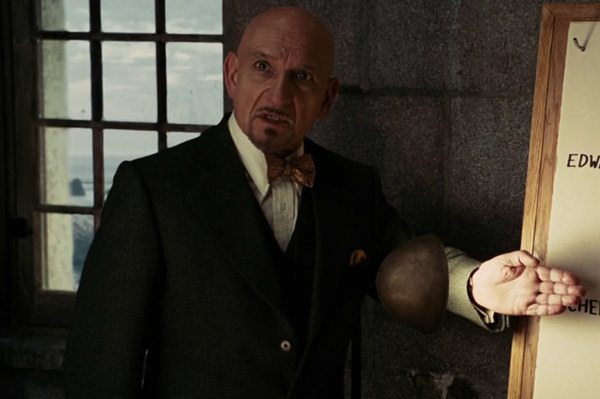
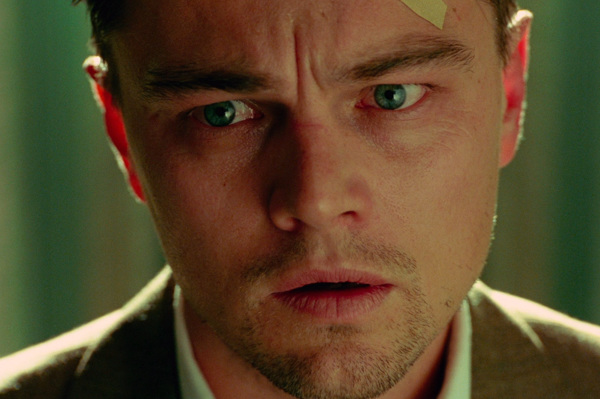
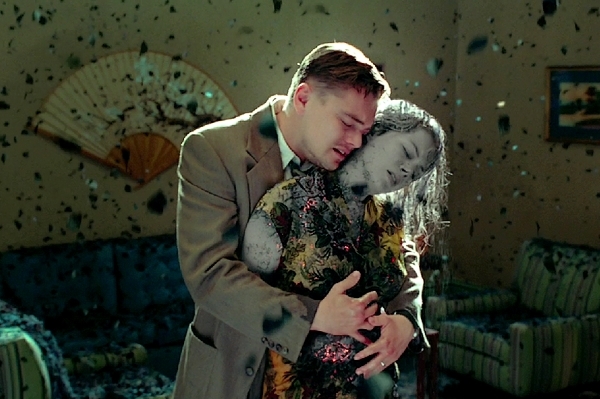
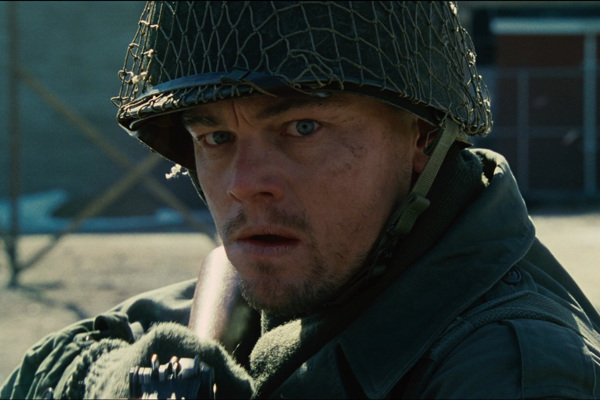
In 1954, US Marshal Teddy Daniels (Leonardo DiCaprio) and his partner Chuck Aule (Mark Ruffalo) travel to Shutter Island, to the Ashecliffe Hospital for the criminally insane, in order to investigate the disappearance of one of the patients: Rachel Solando. At the island, they are met by Dr. John Cawley (Ben Kingsley), the lead psychiatrist who endeavours to treat his patients more humanely than some of his contemporaries. While at Ashecliffe, Teddy begins having flashbacks to his WWII days, liberating Dachau concentration camp, and to life with his now-deceased wife (Michelle Williams). Solando is suddenly, mysteriously found, but as a raging storm strands them on the island, Teddy and Chuck widen their investigation, in an attempt to get to the bottom of the strange goings-on at Ashecliffe. In reality, Teddy has an ulterior motive: to find Andrew Laeddis, the man responsible for his wife's death who has also disappeared from the Ashecliffe facility. In his search for Laeddis, Teddy finds George Noyce (Jackie Earle Hayley), a patient who has apparently been experimented on by Ashecliffe staff, and a woman who claims to be the real Rachel Solando. In a final attempt to uncover the truth, Teddy heads to Shutter Island's lighthouse, where he finds Dr. Cawley and Chuck, really Ashecliffe's Dr. Sheehan, waiting for him. They explain that Teddy is actually Andrew Laeddis, and that he was the one who killed his wife after she drowned their children in a lake. After some cajoling, 'Teddy' accepts that he is the real Andrew Laeddis. Back in his Ashecliffe patient's uniform, Andrew sits down for a cigarette with Dr. Sheehan (Chuck's real identity), but it appears he's slipped back into the mindset of Teddy Daniels once again. Andrew is taken by the guards and Dr. Cawley to the lighthouse, where it's assumed he is to be lobotomised. But is that what really happens? There's four distinct ending theories to explore, as well as the wider meaning and intent of Scorsese's film.

Ending Theory #1: An Elaborate Experiment On The Innocent Teddy Daniels
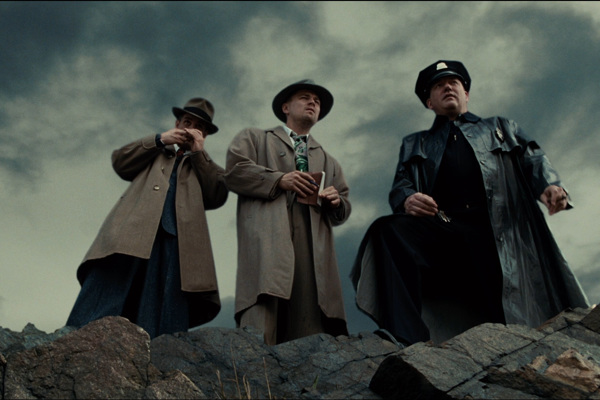
Teddy/Andrew's status as a guilt-ridden Ashecliffe patient appears obvious in the closing minutes, but there may be reason to believe Teddy Daniels is - as he believes for much of the film - just an innocent being toyed with after all. Given the period, a time in which the US government was genuinely carrying out dangerous tests on American citizens without their knowledge (see Project MKUltra and the Tuskegee syphilis study), and considering the numerous mentions of human experimentation within the film, things do occasionally point that way. That would all appear to be moot following Teddy's final flashback and admission of guilt at the end, but knowledge of the director still leaves room for doubt. One interesting thing about Martin Scorsese is that he shoots films from his characters' point of view, to such an extreme that his films Taxi Driver and The Wolf Of Wall Street, to name two examples, have been accused of racism and excessive irresponsibility. Really, Taxi Driver and The Wolf Of Wall Street only appear racist and uncaring because they're taken from the perspective of a bigot and a sociopath, respectively. It's possible, then, that Shutter Island has too been misinterpreted by critics, with the film's 'official' version of events actually the vision of an innocent man who's been convinced he's insane through a combination of medication and psychological suggestion. It could be that the government is continuing its 'experiments' with Teddy Daniels's trip to Shutter Island, playing an overly-elaborate game with Daniels (Noyce calls Teddy a "rat in a maze") in order to see if they can trick him into manufacturing his own doom. The film is so paranoid, so mistrustful of authority and the US government that an establishment conspiracy can't be completely ruled out.

A Martin Scorsese Tribute (Influences And Inspirations)
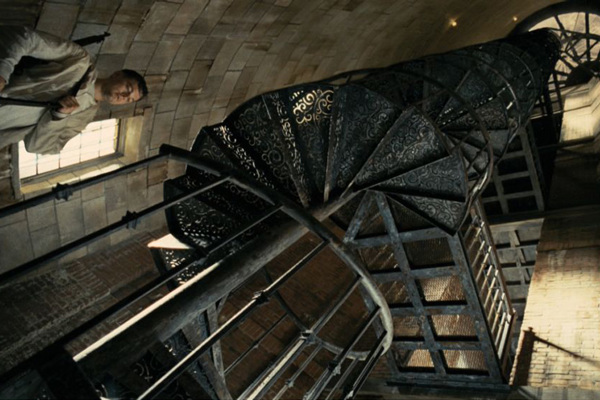
There are several possible interpretations as to what Shutter Island's story really 'means', but there's little doubt as to what the director was going for stylistically. From beginning to end, Shutter Island's story serves as a canvas upon which Martin Scorsese can craft a tribute to cinema of the past, drawing on everything from shadow-heavy German expressionism and pulpy film noir to '50s melodrama and B-movie horror. Samuel Fuller's Shock Corridor, about a sane man going undercover in a psychiatric institution and succumbing to madness, appears to be one influence, while The Cabinet Of Dr. Caligari and old Val Lewton zombie movies serve as mood inspirations. More specifically, there are references to John Huston's Key Largo in the all-encompassing storm and to Scorsese's beloved The Red Shoes in Teddy's ascent up the lighthouse's spiral staircase. The flashbacks to Teddy/Andrew's married life, meanwhile, have the feel of a skewed Douglas Sirk melodrama, while the WWII scenes come from a different place altogether, almost taking on a super-violent exploitation movie vibe. The multitudinous settings and interconnecting stories allow Scorsese to explore all manner of genre conventions - he takes the extremes of many different movie types and mixes them all together for a hyper-stylised melange. Shutter Island is narratively complex and does contain one hell of a finale, but on one level it's all just about Martin Scorsese using the story as an exercise to imitate his cinematic forebears.

Ending Theory #2: Andrew's Mind Retreats Into Fantasy To Cope
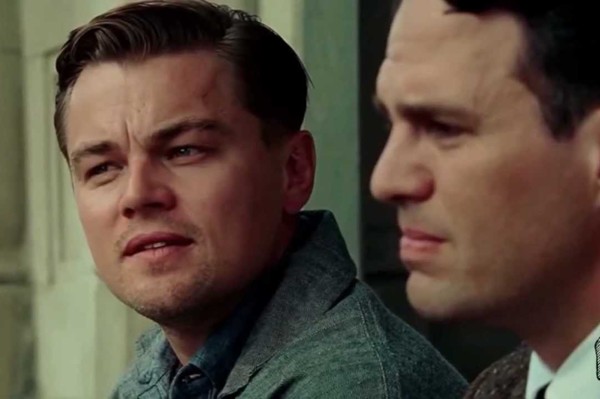
Shutter Island and Christopher Nolan's Inception are spookily similar, in ways beyond the immediately obvious. Yes, they were both released in 2010, both star Leonardo DiCaprio, both explore dream logic and blur the line between reality and fantasy, and both end on an ambiguous note, but - going deeper - they are both also about unreliable narrators haunted by the ghost of their spouse, for which they are each in some way culpable. Yet another reason why Inception and Shutter Island act as companion pieces: it's suggested the lead characters in both have been seduced by fantasy, which they use to escape their realities. Both are afraid of confronting their past and are obsessed with their professions, professions which dominate their lives and function as distractions from the demons they refuse to face. Here is where the paths of the two films' protagonists diverge, though: where Inception's Cobb in the end chooses to let go and accept reality, it's implied that Shutter Island's Teddy Daniels instead chooses to forego reality and embrace his fantasy world at the close. Dr. Cawley in the lighthouse makes clear that this has happened already: he and Dr. Sheehan broke through with Andrew nine months before, only to end up with Andrew again falsely convinced he is Teddy Daniels, US Marshal. There's nothing to definitively suggest this hasn't just happened again, nine months later.

The Damaged Mind Is Incurable

It's probably the most cynical interpretation of the film there is, but - depending on which side you fall regarding whether or not Andrew's relapse at the end is intentional - one of the most sensible options is to assume Andrew was always going to revert back to square one by the end of Shutter Island. If the viewer is to assume that what Dr. Cawley and Dr. Sheehan are saying in the lighthouse about Teddy/Andrew is all true, then it seems as though Andrew has been going round in circles for two years already. As Dr. Cawley says, Andrew keeps 'resetting', like "a tape playing over and over on an endless loop". Teddy slipping back into old habits unawares is, of course, tragic, but Shutter Island may still be hinting at more. As Shutter Island and the Ashcliffe facility act as a microcosm of America (and perhaps the world), it's possible that Teddy/Andrew, on the face of it an everyman, symbolises everyone with mental illness. The suggestion, then, is not just that Teddy's madness is inescapable, but that madness on a wider scale is cyclical, and inevitable for those with an already damaged mind. After all, given that an elaborate stunt like the one Dr. Cawley pulled on Shutter Island doesn't work for Andrew Laeddis, what hope is there for everyone else of ever truly being cured?

Ending Theory #3: Andrew Chooses To Be Lobotomised
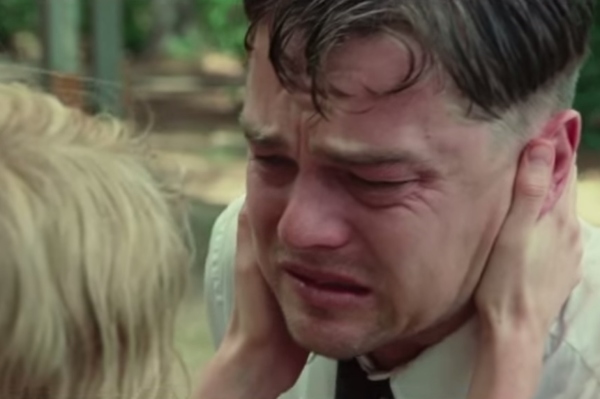
It may be that Andrew Laeddis knows exactly what he's doing in the closing scenes when he begins that long walk towards the lighthouse. Many have taken his last line - given to the closest person he has to a confidant, Dr. Sheehan - as a final indicator of his self-awareness: "Which would be worse? To live as a monster, or to die as a good man?" This could just be the ramblings of a man that for two years has been constantly on edge, but the line's placement at the very end of the film would suggest otherwise. The implication is that Andrew sees 'dying' - or in this case being lobotomised, a procedure which will in effect kill both the old Andrew and 'Teddy Daniels' off for good - as the preferable alternative to living as himself any longer. After all the horrors the film has displayed by this point, it'll be understandable to some viewers. Teddy has killed in cold blood, lived through an unjust war, alienated close ones with his drinking, lost all three of his children and murdered his own wife, leaving him suffering from a level of trauma that anybody would find it difficult to live with. That Andrew at the end of Shutter Island chooses his fate is the most obvious interpretation of the film's ending. Why he does so, however, could be interpreted one of two ways: either Andrew can no longer bear the guilt, or he's aware of the damage he can cause, and has decided it's time to remove his violent, volatile self from society.

Teddy/Andrew Is God's Lonely Man

Scorsese draws not just on cinema's legacy with Shutter Island, but his own. Guilt, for one, is a pervasive Scorsese theme that rears its head once again in Shutter Island. It's a concern of Scorsese's going all the way back to his early films, with the director's Catholic faith once more having a bearing on his work thematically. Another, more crucial idea drawn upon by Shutter Island and that's been repeated time and again through Scorsese's work is the concept of God's lonely man, mentioned outright in Taxi Driver and a recurring Scorsese protagonist. Whatever your interpretation of Teddy/Andrew's fate, Scorsese positions him as another one of his martyrs, abandoned by God in his mind but ultimately responsible for his own downfall. Though Teddy meets numerous characters - many of whom reach out to him in an attempt to help him heal - along the way to his apparent lobotomy in the final scene, Teddy repeatedly and ultimately chooses to isolate himself. The doctors at the facility, some of the patients (George Noyce: "You have to let her go") and even the figments of Teddy's imagination encourage him to move on, but he pushes on with his 'investigation' regardless. Among Scorsese's brood of leading characters, Teddy Daniels becomes just another one of God's lonely men, a protagonist that becomes a martyr by his own design.

A History Of (American) Violence

Shutter Island is influenced heavily by movie history aesthetically and by Martin Scorsese's own history thematically, but American history on the whole - in particular its history of conflict - is explicitly written all over the movie. There are references to the Civil War (when the Ashecliffe facility was built) and the Korean War (there's talk of Korean forces brainwashing US soldiers), memories of WWII abound, while the film is set during the Cold War, a time of mostly non-violence that still left the USA in a state of perpetual fear. The most powerful weapon on Earth, the H-bomb, also weighs heavy on the characters' minds ("They say there are bombs that can reduce whole cities to ash"), while the constant threat of violence permeates the movie (even in dialogue scenes, there are sickening descriptions of barbaric acts and characters making abrupt statements like, "God loves violence"). It almost seems inevitable that Teddy Daniels/Andrew Laeddis's fate is to be an ugly one. Here, another recurring Scorsese theme rears its head: that man is the product of his environment. In this case, Teddy/Andrew has been manipulated by the psychosphere of post-WWII America to become aggressive and paranoid. Shutter Island suggests that America's state of almost perpetual conflict, continuing even in times of apparent 'peace', results in yet further violence among its people. The film's closing act appears to confirm it: Shutter Island ends with a lobotomy, a horrific zombification, as the war between the new form of psychology and the old comes to a close, with the more violent option winning out.

Ending Theory #4: The Film Is Andrew's Lobotomised Nightmare
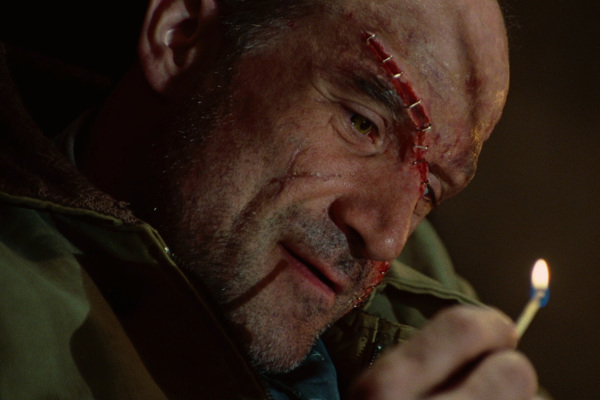
Given the lead character's fragile state of mind, and the film's heightened sense of reality, what's to say the whole thing isn't just all an intense nightmare? Furthermore, given its ludicrous nature, what's to say Shutter Island isn't the drooling daydream of the newly lobotomised Andrew Laeddis, as he remembers his past leading up to his lobotomisation in fragments, with nightmarish dream imagery included? There are hints throughout the film at this - even outside Teddy's 'official' nightmares, where blood flows freely and bodies come stacked on top of one another, OTT horror symbology abounds. Rat infestations, grabbing arms feeling through walls, extreme weather - crashing thunder and lightning included - and haunted houses all feature prominently. Then there's the less obvious stuff, where the 'dream' bleeds into what is supposed to be 'reality'. Take a closer look at 'Teddy' and 'Chuck's interrogation of Mrs. Kearns, the woman who requests a glass of water, then appears to proceed to drink it straight down - only the cup has disappeared, and she's drinking out of an empty hand. Andrew is lobotomised at the end of Shutter Island, there's no disputing that - but what if it's already happened by the time the film begins, and the movie you're about to see is the scrambled assembly of thoughts from someone whose mind no longer functions properly? Teddy's vision halfway through the film of 'Laeddis' with an ugly scar across his face, possibly suggesting a lobotomy, could be a reminder for Andrew that he's already undergone the procedure. What does the ending of Shutter Island mean to you? Let us know in the comments below.

Contributor
Contributor

Lover of film, writer of words, pretentious beyond belief. Thinks Scorsese and Kubrick are the kings of cinema, but PT Anderson and David Fincher are the dashing young princes. Follow Brogan on twitter if you can take shameless self-promotion: @BroganMorris1