What Went Wrong: 13 Disastrous Comic Book Movies (And Why They Sucked)
There are no accidents in Hollywood...
Bad movies are a blame game. With the Internet era giving fanbases a sense of entitlement and the fallacy of ownership over their favourite movie franchises, anything that doesn't live up to expectations requires a scapegoat.
Why else would there be so much obsessing about studio interference, egotistical directors, wayward set behaviour and the perceived impact of critics on box office hauls? That conversation seems to happen every time a big budget - or heavily hyped - movie fails to be both critically adored and financially lucrative. When those movies happen to be comic book movies, the obsessive scapegoating hits another level entirely.
And while there's a lot of nonsense out there masquerading as genuine reasons for movie failures, it is possible to look at some of the most notorious disappointments in the genre's history and chart exactly why they imploded.
Given how obvious some of the causes for these bombs were, it's a wonder the studios didn't learn from the experiences, but here we are...
13. It Hid What It Was (And Then It Leaked) - The Hulk

Before The Avengers reinvented the Hulk in the shape of Mar Ruffalo and even before Ed Norton semi-botched his own take on the character, Ang Lee made some of the boldest creative choices behind any comic book movie. The result was a curiously contemplative Hulk movie that explored the darkness within in a provocatively "new" sort of way.
In short, this wasn't just a Hulk smash, but unfortunately for Lee, it wasn't a smash hit either.
The Cause
First off, Lee's creative decisions alienated the existing Hulk audience. The film is way too long at 138 minutes and way too slow, it splits focus across two villains in the name of a twist and crucially, it doesn't portray the Hulk as a superhero. Fundamentally, it seeks to be too clever without really having enough to back it up, and any immediate hype (which pulled in more than $60m in its first weekend) died quickly as it suffered a 68% drop.
But arguably more fatal was the fact that Lee requested no footage from the last half of the movie was shown in trailers to preserve the twist. Not only did that make it look like the trailers were for an entirely different movie (hence the killer word of mouth after it debuted), but also built up expectations of a good second half. In reality, it was a mess and the psyche-battle is just ridiculous.
Sadly for the studio, a work print copy was leaked to the Internet before release, and those who saw it spread news that the effects were terrible. That definitely didn't help it, but then, had it been any good, it wouldn't have been a problem.
How Disastrous Was It?
It might have made SOME money (though claims it was a success are a little much), but Hulk's week-on-week performance smacked of a terrible film, and it was rebooted out of existence only five years later.
12. Zack Snyder - Justice League

Whether Zack Snyder's fans care to admit it or not, Justice League was not the "new dawn" for the DCEU that Warner Bros needed it to be. Divisive, mocked and hated by some, it now stands as a morality tale of rushing a product out when it's not right.
The Cause
Unfortunately, it comes down to Snyder not being the right director for the job.
Perhaps because Watchmen stuck so closely to the comics and was criticised for it, he wanted to do his own thing, even with Warner Bros pressurising for changes after Batman v Superman. And his own thing was not to make traditional boy scout superhero movies no matter what assurances he gave publicly. He'd grown up a fan of Heavy Metal magazine, which was the ultimate anti-superhero comic, and he openly expressed his preference for making something like that.
Warner Bros simply didn't listen and gave him three DCEU movies. And the Justice League he was making was simply not enough of a deviation from his original vision, and he was moved on and replaced too late by Joss Whedon, whose contributions didn't help matters as he wasn't given the time to do them properly amidst rumours of studio pressure spurred on by executive bonuses.
How Disastrous Was It?
Terribly for Snyder, who lost his job (despite initial reports he had left of his own accord). And for Warner Bros, it wasn't any better: the film failed to make the billion dollars it should have easily and though critical response was a little kinder than for Batman v Superman, it goes down as another bust.
If it kills the DCEU, the cost will be even huger, not least to pride.
11. Too Many Writers, Not Enough Good Writing - Catwoman

The belated spin-off for Catwoman - which was initially in development when Batman Forever came out - is a joke. There's no two ways about it. It's fatally boring, provocatively dumb and utterly terrible.
The Cause
The decision to go with a less Burton-esque movie was the first error, which came out of the fact that the first script was turned in the day Batman Forever came out. Emboldened by that film's initial response, Warner Bros were never going to go back to something as dark as Batman Returns, so the film was shelved.
Eventually, it came to be this version, with Halle Berry in the lead. But it was the talent behind the scenes that was lacking most - and particularly in the writing room. Allegedly, as many as 28 writers worked on the script and yet none could muster up more than a couple of good lines, and when you have that many brains working against each other, it's no wonder it's a mess.
Spare a thought too for the person who thought that costume - which was revealed pre-release to raucous laughter - was a good idea.
How Disastrous Was It?
Well, Catwoman failed to make any money, is still the laughing stock of DC comic book movies and a low-point for Berry so bad that it threatened to kill her career entirely. She may have laughed it off at the Razzies, but it was no small misstep.
10. Nobody Had A Clue - Green Lantern

Green Lantern should have been up there with Superman and Batman when it came to DC movie properties, but it ended up fatally misusing a great cast and ended up looking like a messy soup of too much CGI and too little direction.
The Cause
According to Ryan Reynolds, the biggest problem with Green Lantern was that it was the product of not enough sensible thinking. In his terms, the film was emblematic of a curiously modern Hollywood approach to movies (as he told Empire):
"You really need a visionary behind a movie like that, but it was the classic studio story: ‘We have a poster, but we don’t have a script or know what we want; let's start shooting!’ ”
That's a diplomatic way of saying nobody had a clue what they were doing. And it shows in the final product.
How Disastrous Was It?
Laughably so. Even with a reported $100m pumped into marketing it, Lantern made only $219m from a $200m budget (which doesn't take into account the marketing figure). In other words, it lost a tonne of money and the critics turned away from it en masse. It's now such a joke that Reynolds literally used it as a punchline in Deadpool.
9. Josh Brolin & The Reshoots - Jonah Hex

With a cast headed by Josh Brolin, Michael Fassbender and John Malkovich and a very cool source comic to work from, Jonah Hex should have made its way among the best modern Revisionist Westerns. The fact that you're probably barely stifling a laugh at that tells you exactly what you need to know.
The Cause
First off, Brolin was a problem for a purist adaptation, as he didn't like the original script's over-reliance on violence, profanity, nudity and general R-rated goodness (which Warner Bros had initially loved). As the studio wanted him, they cut all of that good stuff out and brought in Jimmy Hayward as director and writer. He'd previously made Horton Hears A Hoo, so we should have seen this all coming.
As if by magic, Hayward's first go proved unimpressive, so the studio ordered extensive reshoots across ten days, under the "consultancy" of I Am Legend director Francis Lawrence.
Brolin later revealed they attempted to shoot 66 pages of script in 12 days to shave the initial budget of $80m down, which was never going to work. In a press release designed to drum up interest for it ahead of release, he also - somewhat fatally - admitted that "we missed some things during additional shooting that we didn’t realize, because tonally, there’s no model for this…It was kind of like plowing out a completely new genre road, and saying, now we know what we have, how can we extrapolate on that?”
That's a hell of a way to kill hype for your film, but watching the remarkably short 81 minute movie, he's not wrong. It smacks of nobody knowing what the hell they were doing.
How Disastrous Was It?
The film made a paltry $10.9m at the box office and sits at 12% on Rotten Tomatoes, if you go in for that sort of rating system. Luckily, it didn't put Brolin off making comic book movies, though.
8. Studio Interference - Thor: The Dark World

Not matter how long the MCU continues, Thor: The Dark World will probably always be the worst film in every fan's ranking. It's messy, dour and curiously boring and fundamentally misses all of what made the original so welcome.
The Cause
While every whisper of studio interference on DCEU movies gets amplified massively, nobody ever seems to complain about the times Marvel did it in MCU movies. While they've had lots of successes in the franchise, they've tried to derail four of their own movies, and managed it with two.
The signs weren't good early on for The Dark World as Kenneth Branagh passed on returning, despite lengthy negotiations and then Patty Jenkins left after getting the job. Later she said she'd had to go as "you have to make sure that the movie you want to make is fully the right movie for that studio too," which is poetic code for the studio demanding something very specific.
Marvel then turned to Game Of Thrones director Alan Taylor, who gets most of the blame for what was released, but in his own words, it was "particularly wrenching because I was sort of given absolute freedom while we were shooting, and then in post it turned into a different movie."
So maybe blame Marvel's editing team for the mess, yeah?
How Disastrous Was It?
Well it's a rare misstep for Marvel and it did look like we wouldn't get another Thor movie for a while there. But really, it was only "disastrous" by the MCU's own very high standards, where 66% on Rotten Tomatoes is a very bad day at the office. It still made more than $600m though.
7. Connery Versus Norrington - The League Of Extraordinary Gentlemen

In the long history of comic book movies, few have been as profoundly disappointing as The League Of Extraordinary Gentlemen, which should have been great. It was an Alan Moore comic, after all, they're always better than they end up being in adaptation.
The Cause
Unfortunately, Fox's attempt to adapt the comic aimed too high, seeking to hire Sean Connery, who agreed after turning down Lord Of The Rings and The Matrix and missing out on their successes. Unfortunately for the studio, he also cost $17 million, meaning they had little money to then hire better co-stars for him to work with.
On top of that, the script went through more than 20 iterations, and the production was beset by production issues, including a flood that halted production (but weren't enough to convince Fox to give the film-makers more time). From there, it became a tense rush-job, and it didn't help that director Stephen Norrington and Connery clashed infamously over a prop.
When a gun didn't look right, Norrington shut the set down, pissing Connery off to the point that they almost came to blows and he threatened to have the director fired. This was not a good foundation, at all and Connery openly criticising his director on the press tour for the film, calling him "insane" can't have helped matters.
How Disastrous Was It?
It actually made money, strangely, but it was a critical bomb, picking up just a laughable 17% rating on Rotten Tomatoes. Even 15 years on, it has failed to garner any sort of cult fanbase too, which says a lot, given the intoxicating allure of blind nostalgia.
Connery might have made a massive amount of money from it, but it was enough to inspire him to retire. So that's hardly something to write home about, is it?
6. Studio Interference And False Promises - Suicide Squad

Despite some of the best marketing for any comic book movie, Suicide Squad was terrible. It could have been so much more, but the final product screamed of too many cooks and not enough restraint.
The Cause
Suicide Squad was the result of studio interference on the back of hiring the wrong director and not having the decency to either get rid of him or allow him his own vision. Realising that David Ayer was not the right man for the job, the studio mangled his vision in the edit leading to a disjointed experience that did nothing for anyone.
Even seeing Ayer's unmessed-with version would have been better than giving us this mess with an identity crisis. But in the interest of finding a more marketable tone, Warner Bros removed the most interesting sub-plot (the Joker) and tried to remould the final film into the image of the trailers that had worked so well.
The fact that the trailers were so good didn't help the negative response either: we were all sold a movie that didn't exist, so it's inevitable there'd be friction. Misdirection in trailers is one thing, but offering false promises is the next level entirely.
How Disastrous Was It?
It made a lot of money, in the end, but Suicide Squad was critically mauled, and rightly so. It also apparently derailed plans to give David Ayer an even more significant role in the DCEU, even with the supposed plans for spin-offs.
5. Toy Sales Ruled - Batman & Robin

Before Christopher Nolan arrived as Gotham's saviour, it looked like Batman & Robin might well have killed the franchise entirely. It was dumb, cartoonish and the natural extrapolation of a creative approach that favoured gags and nipples over darkness.
The Cause
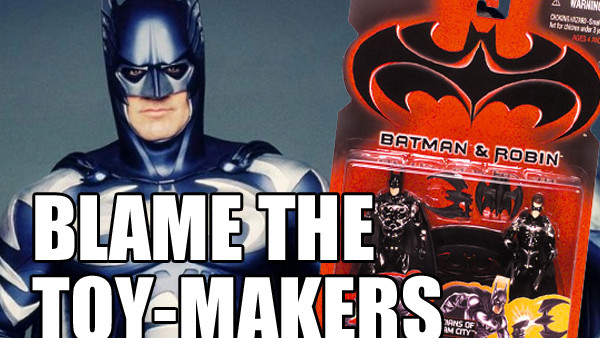
It all came down to Warner Bros' desire to sell more toys. When Batman and Batman Returns came out, they were critically adored but allowing Tum Burton to deliver his dark vision (particularly in the sequel) proved not to be as commercially rewarding as the studio wanted.
They found that they couldn't sell as many toys when the film was ostensibly for adults, so they decided to make Forever "more mainstream." Sadly, they pressured Joel Schumacher into following that mantra without giving him the necessary guidance that "more mainstream" doesn't mean juvenile and silly, which his movies increasingly became. In the end, Batman And Robin became a joke, full of gags, goofball antics and marketable stars, but with no substance and no sense of what Batman actually was.
As an indication of how bad the studio's judgement was, they actually green-lit its follow-up on the back of the dailies. So at some point, they were actually IMPRESSED with this garbage.
How Disastrous Was It?
It killed Batman Unchained's chances of existing and the Nightwing spin-off that was supposed to happen, but more importantly it made it necessary to completely reboot the franchise. Sure, it made SOME money, but it was a critical laughing stock and it made $100m less than Batman Forever.
Considering the increased cost, that was fatal.
4. The Set Meltdowns - Blade: Trinity

Considering how great Blade II was, it's a disgrace just how far the trilogy ender fell. It looked like another attempt to attract more of a mainstream audience, but the results were decidedly uneven.
The Cause
By all accounts, the set experience on Blade: Trinity was not a good time.
Promoted to director, David S Goyer decided he needed to do something different to "shake things up". For Wesley Snipes, being "different" was not a good thing and his behaviour on set screams of someone disgruntled all along.
In the wake of the experience, it was rumoured that Snipes sent death threats to Goyer and eventually sued New Line Cinema for minimizing his role in favour of Ryan Reynolds and Jessica Biel's characters.
Patton Oswalt later revealed that Snipes refused to speak to Goyer and at one point tried to choke him:
“It was a very troubled production. Wesley was just !*$% crazy in a hilarious way. He wouldn’t come out of his trailer, and he would smoke weed all day.” He also revealed how Snipes tried to get Goyer to leave the film. “Wesley sat down with David and was like, ‘I think you need to quit. You’re detrimental to this movie.’ And David was like, ‘Why don’t you quit? We’ve got all your close-ups, and we could shoot the rest with your stand-in.’ And that freaked Wesley out so much that, for the rest of the production, he would only communicate with the director through Post-it notes. And he would sign each Post-it note ‘From Blade.’”
No wonder the final product sucked. Though to be fair to Snipes, his concerns over sidelining Blade as a character were completely well-founded. But then, that might not have happened if his demeanour on set was a little better?
How Disastrous Was It?
Trinity was critically mauled and it killed a franchise that still had a lot of promise. There should have been at least the Nigthstalker spin-off that was planned, and had this made money there should be no doubt we would have seen more Blade movies too.
3. Studio Interference (Again) - Iron Man 2

Along with the misguided Thor sequel, Iron Man 2 ranks as the worst work put out under the MCU banner, which no doubt haunts Kevin Feige. Worse is the fact that the criticism is all entirely well-founded.
The Cause
As with The Dark World, Iron Man 2's underwhelming results were a result of the studio interfering and a rushed production. On the back of the first movie's successes, Marvel green-lit the sequel and went ahead without a script - which hadn't hurt the first movie, but which was never going to come off twice.
On top of that, Marvel and Jon Favreau wanted to make different movies. Marvel inevitably wanted to push links to the Avengers, but the director wanted this middle film in his planned trilogy to be based on the "Demon in a Bottle" comic book arc from 1979. The studio won, but Favreau's vision was still in there, which perhaps prompted the over-zealous editing that Mickey Rourke confirmed had destroyed his character.
As an indication of the experience's negative impact, Favreau went and made Chef, a thinly-veiled allegory about his time working on blockbusters under over-bearing bosses stifling his creativity in favour of mass appeal box ticking.
How Disastrous Was It?
It wasn't enough to kill Iron Man or the MCU, but considering the high benchmark set by the MCU, Iron Man 2 is a black sheep. And the fact that it pissed off Favreau enough to stop directing MCU movies isn't exactly ideal.
2. The Studio - Superman Lives
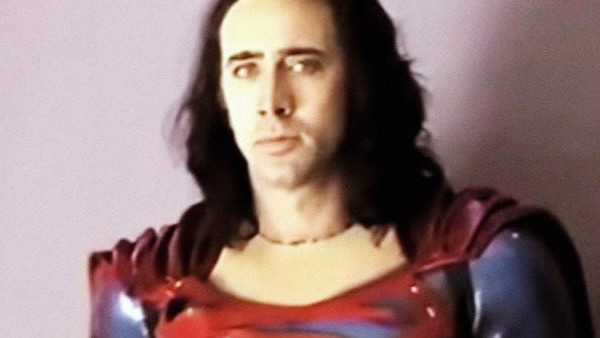
In some alternate universe, we got to see a Superman movie with Nic Cage as the Man Of Steel, but thanks to a production story so notorious it inspired its own movie, it was never meant to be as it was canned just three weeks before filming was set to start.
The Cause
As Kevin Smith revealed long ago, Superman Lives was beset early on by studio interference. He had a whole bit in his stand-up tour about what the executives wanted him to put in - including a giant evil mecahnical spider - and some of the revelations are as horrifying as they are hilarious.
But Smith's script was just one stage of development that stretched out some distance, taking in several script rewrites that somehow led to the ridiculous Dan Gilroy version that was approved. Reading it back now you have to wonder how it ever got to the table, but it was allegedly the script that killed the project, with Warner Bros unhappy with it. A rare moment of clarity from the studio at the time.
It also didn't help that the studio had lost big on a couple of flops, including Wild Wild West, which had featured the spider concept Kevin Smith had been "invited" to use in his film. They simply couldn't afford to make another loser, so they scrapped it.
How Disastrous Was It?
Well, not being made is pretty disastrous for any movie.
1. Too Many Cooks - Spider-Man 3

Given the disappointment of the Amazing Spider-Man movies, it's tempting to look at Spider-Man 3 as unappreciated, but there's no ignoring how much of a misstep it was on the back of Spider-Man 2 - which is still the best Spidey film of all.
The Cause
Once more, it came down to a clash between director and studio. Sam Raimi wanted a story that would focus on the humanity of Spider-Man's villains - chiefly Sandman - as a counterpoint to Peter Parker learning he's not a "sinless vigilante."
He also wanted to add Vulture as a second villain, but was pressurised by the studio to include Venom - a far more marketable character but one who simply didn't fit Raimi's humanist message - and Gwen Stacy, as nods to fans. The film simply became over-stuffed (to the point where writer Alvin Sargent suggested splitting it in two), and nothing got either the enthusiasm or the necessary focus to make it work.
The result was the archetypal "too many cooks" movie.
How Disastrous Was It?
So bad were the reviews that Sony cancelled Raimi's planned Spider-Man 4 and instead rebooted the franchise with Andrew Garfield. The biggest indication of that not being the best move came when the franchise needed rebooting again just a couple of years later.
Without Spider-Man 3, Sony wouldn't have had to waste so much money on two failed movies in the rebooted series, but we also wouldn't have had Spider-Man in the MCU. But then, handing over the rights to a rival film studio and having to unconsciously admit that they're better qualified is not a good look for any studio.
Which other disastrous comic book movies have obvious causes? Share your picks below in the comments thread.