Why Charlie’s Angels Just Bombed So Hard
Talk about Fallen Angels...
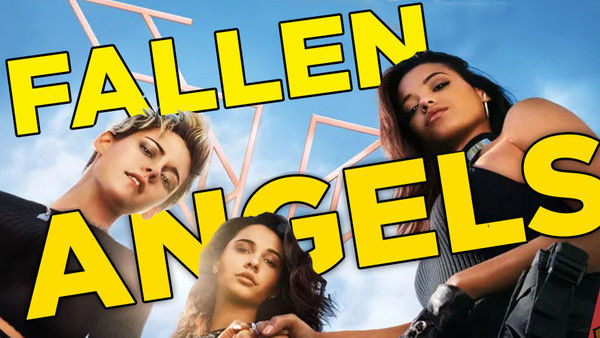
On paper, you can see why Hollywood wanted to make a new Charlie's Angels. It's an established IP with box office money behind it and evidence of a fanbase. But it was also based on something horribly outdated that would need a serious revamp to land with modern audiences. And unfortunately, that was inherently part of its biggest problems - in seeking to "fix" Charlie's Angels, the new version was given an imagined "agenda" that made its very existence a problem.
That's why the latest kinda reboot, which has just posted initially uninspiring box office figures, was always doomed. That it made just $8.6 million in its opening domestic weekend is disappointing, but it's not entirely surprising. Sadly.
It now sits on $27.9m in total on a budget of around $48-55m (a not ridiculous amount by any means). If it hits $25m domestically, it will be a surprise and key overseas markets - China in particular - have simply not come out for it. So what went wrong?
To understand the present, you have to go back to the past first.
4. Charlie's History
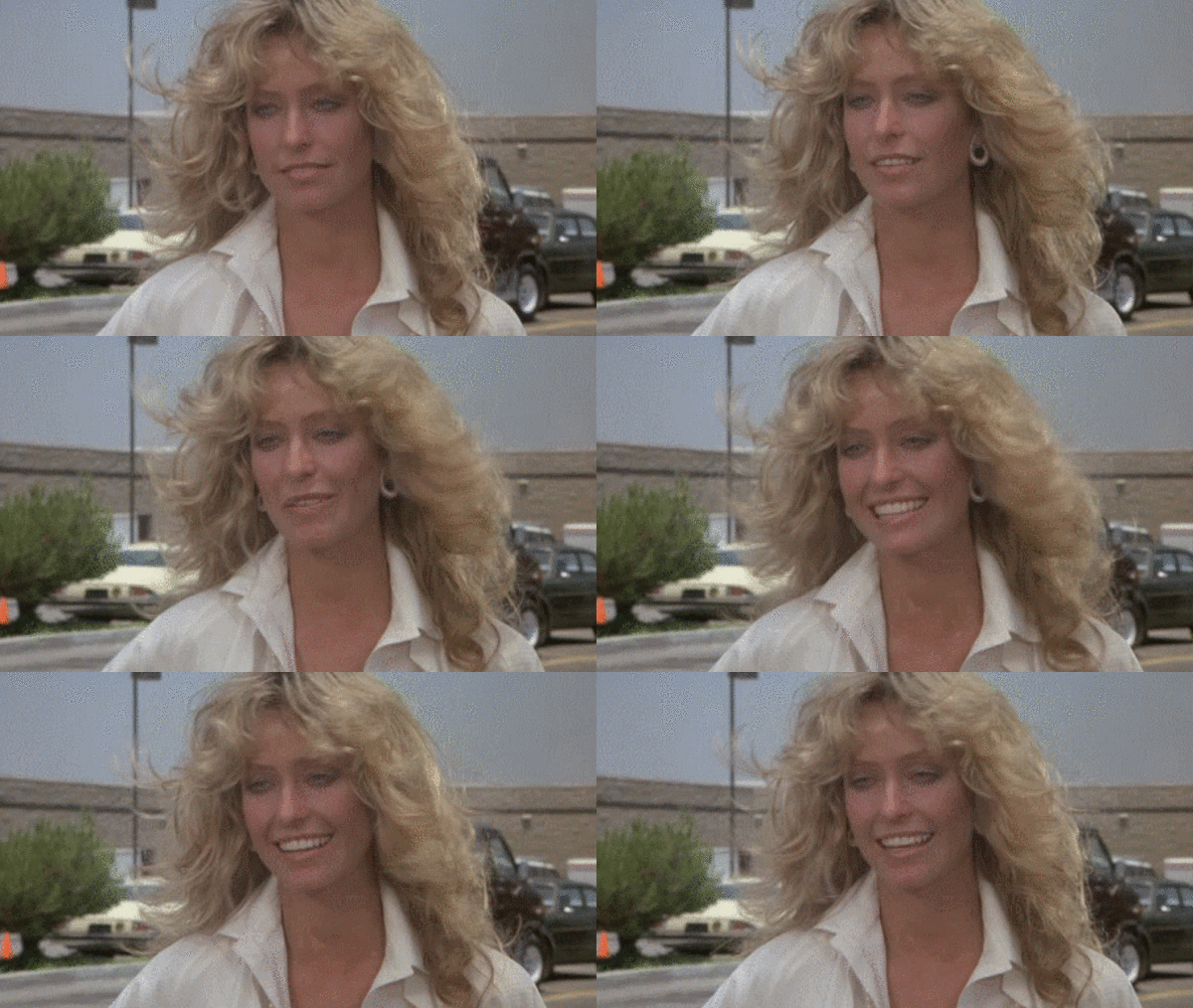
Charlie's Angels might be one of the most recognisable pop culture staples of the late 1970s - at least in TV terms - but it, like The Dukes Of Hazzard - was very, very rooted in a cultural moment that is as far removed from now as you could possibly imagine. It may have starred powerful female characters but it was marketed on sex appeal in a way that was wildly at odds with its supposed feminist agenda. Whisper it, but it also wasn't very good.
It was - however - popular, at least initially. The first two seasons broke into the top ten of Nielsen Ratings, despite ABC calling it one of the worst TV ideas they'd ever heard of and refusing to accept the huge ratings of the pilot to the extent that they screened it a second time to check. Talk about faith in your own product. But for those first two seasons, the show pulled in great figures, despite critics calling it no more than "Jiggle TV" marketed on the sex appeal of the leads.
It might have become a classic thanks to syndication and largely off the back of those first two seasons, but the third, fourth and fifth seasons faired markedly more badly, dropping in ratings to the point that the network relied on gimmicks like a talent hunt to find a new Angel for the fifth season. It didn't work and the show ended up being cancelled in 1981 at its lowest and with the original concept of a detective show increasingly pushed aside for light plots, a cop show of the week approach and more overt focus on "glamour".
Pitch a movie like THAT in 2015 - or even at the turn of the Millennium - and it wouldn't get off the ground. Ideas of feminism were grossly different back then and it's clear why there's been several attempts to reframe Charlie's Angels from what it once was. Unfortunately, though, those who actually LIKED the original show liked it for the things that revisionists would always be likely to change about it.
In 2000 and 2003, McG rebooted the series and managed to rake in over $500m for the pair at the box office from budgets totally almost $220m. Not massively successful, but there was enough profit in the first one to warrant a sequel, even with talk of production unrest (between Bill Murray and Lucy Liu, most famously). There had been talk of third and fourth chapters in the same series with the cast returning, but that plan hit the rocks around 2004, even though Drew Barrymore was talking about possibilities of a follow-up as late as 2015.
The sequel simply didn't make the required money for further instalments, earning less than the original and when you combined that with a critical mauling - including Razzies nominations - you don't need a degree in marketing to work out why it killed the franchise. But then, perhaps we shouldn't have been surprised on the cooler reception when it came with only a B+ CinemaScore, which hardly indicates enthusiasm.
And yet, someone, somewhere still believed that Charlie's Angels was a viable, commercially promising brand. Because after that, we got another reboot in 2011, this time for TV, which ran for one season, was cancelled after only the fourth episode thanks to low ratings and suffered the ignominy of having its final episode left unaired. That's how bad it was.
And yet, STILL someone, somewhere STILL believed that Charlie's Angels could work and we come to the latest attempt, announced in 2015 and helmed by Elizabeth Banks with a new, dynamic cast hired not simply because of how they look or the "glamour" appeal they bring to the table. The sort-of reboot - which has been called both a new take and a continuation, which is a problem in itself - was clearly well-intentioned and sought to change the imbalance of plot and surface gloss that plagued both the original TV series and Full Throttle, but critical reception seems to suggest that the script was an issue from the start.
And while the critical response has clearly played into things, there's more to this tale than merely bad reviews (because there have been FAR worse for far more successful movies). You have to start with the audience.
3. Charlie's Audience

Firstly, the CinemaScore for this movie was the same as it was for Full Throttle - an uninspiring B+, which is the kind of indication that studio executives do not like to see on their tentpole franchise movies. It might not indicate outright apathy, but it's not where you want to be. You can't even market the film responsively to that, because it's not low enough to make a point of. So why the cool audience response?
To a certain extent, Charlie's Angels was facing a difficult task from the beginning. Fundamentally, there is simply no reason to tell the Charlie's Angels story again. If there hadn't been the McG reboots of the early Noughties, that might have been different, because it COULD have been marketed as a sort of "woke" version of the IP, redressing the balance of sex appeal and making the Anti-Jiggle TV version, but the TV show isn't what's being rebooted here entirely. Not for the audience, at least.
Audience expectations of a reboot are that it reboots what came most recently, and the narrative here is that we were always getting another go at a franchise that was never great in the first place with no discernible logic other than "why not?" It feels like Charlie's Angels was optioned simply because we're now facing a marketplace dominated by IPs owned by Disney and every other studio is looking to fill their slates with competition for Disney. That sort of manifesto is not going to lead to 100% smart decisions.
It's an ironic reflection, but the way nostalgic IPs have been operating at the minute - with the exception of Jumanji: Welcome To The Jungle and Jurassic World, which were both remarkable successes but also somewhat anomalous ones - a new Charlie's Angels movie SHOULD have brought back Drew Barrymore, Lucy Liu and Cameron Diaz. Elizabeth Banks wasn't a problematic hire, by any means, but this should have been a long-awaited third movie trading on whatever goodwill there was for the original 2000 and 2003 movies, seeking to right the ship the same way Halloween and Terminator: Dark Fate aimed to.
The problem, of course, is that THAT too doesn't necessarily work. Dark Fate plummetted despite being a vastly better movie than Genisys while also seeking to do precisely the same thing as Halloween. Movie making is not a precise art. If there were a specific formula, every movie would stick to it and nothing would fail. But what is very, very clear is that the answer to the Charlie's Angel question that nobody asked was not to reboot.
And then you have to factor in how the production story factored into audience excitement.
2. Charlie's "Troubled" Production

Increasingly, audiences look for signs of trouble on a set as some sort of reflection of a film's quality. That's why the idea of reshoots has become so fetishised in recent years and why there's so much perverse delight when things seem to go wrong. It's the fast food that the industry thrives on. Chum for the sharks. And Charlie's Angels had some very public issues, or at the very least the suggestion of them.
What easier way to tell your audience that you have problems - even if you don't - than by kicking your film into multiple release slots and then shifting them for no discernible reason. It might not be the truth, but all that does is sign-post to the people you NEED to have faith in your movie that there are problems stopping the original plans. For Charlie's Angels, four different release plans meant audiences were turned against it before it even had a chance to excite them.
Then there were the script problems that Deadline say were never really resolved - and which led to a final script that wasn't good enough to pull in a higher class of established talent, prompting the studio to turn to newer faces.
The fact that they relied on Kristen Stewart as the big draw was also something of a misstep - at least in terms of this movie - because she's gone about her business the same way Daniel Radcliffe and Robert Pattinson have in the wake of their early career-defining franchise roles. She seems to have gone out of her way to put Bella Swan and Twilight behind her with more interesting roles and she can't really pull in that audience any more. That's not to say she's in any way bad - she's actually a far better actor for it - but in marketing terms, it's a different question.
There was some hope that the success of the lead tie-in song - “Don’t Call Me Angel” by Ariana Grande, Miley Cyrus, and Lana Del Ray - would kick up some interest, but it just hasn't happened. And it could be because of the narrow spectrum the film is aiming at. This is, reportedly, nothing like the action movie of the McG films, which might have been the biggest misstep, considering how well franchise like Mission Impossible, John Wick, Fast & Furious and the like still do at the box office. Market this as a female-starring take on those sorts of movies and you might have a considerable hit. Right now, it feels like very few people even know what Charlie's Angels actually wants to be.
Is it a girl power make-over? Criticism seems to suggest it doesn't commit to that agenda either. There's an identity crisis here that, on reflection, makes the McG versions look better.
Part of that comes down to the mistakes in the marketing.
1. Charlie's Muddled Marketing

Ostensibly, you're looking at a movie aimed at a female audience from 13 to 39. It's not an action movie, so you cut off that part of the audience. In order to really make money, it needed to activate its key audience and the area it should have focused on most was social media. But the stars of the movie - beyond the director - have limited presence on social media. Given how active the key demographic are on social media, that's an almighty loss and it's no real surprise that Sony have now vowed to scale back advertising heavily. Who can blame them? It wasn't working anyway.
It's slightly unfair, but the marketing campaign was completely overshadowed by the idea that the movie was going to be a "woke" iteration of the IP. It was a suggestion that was IMMEDIATELY leapt on by a toxic side of the film community and alienated the valuable action movie audience, who - wrongly - seemed to assume that they were going to be the film's targets. This was, for some reason, turned into another Ghostbusters reboot by people more interested in their expectations of being "triggered" than in ever judging it for its actual qualities.
Elizabeth Banks was forced to openly reassure the intended audience that it was still going to be funny, as if the suggestion of a film's progressiveness meant that it fundamentally couldn't be entertaining. There's something deeply broken there and not least because Banks had to come out and plead with people to give it a chance. Reviews suggest Kristen Stewart is very funny in it, but that doesn't matter now, because the woke label pulled it down into the deep.
Looking at the release slate, it's hard to suggest that competition was going to be a major problem for Sony, because Charlie's Angels opened against The Good Liar (hardly a box office powerhouse, no matter the talent involved) and James Mangold's Ford V Ferrari. Typically, that sort of historical story would be decent, but wouldn't trouble a franchise IP. That's been the story of the summer, at least, as original movies have been strangled by franchises, so you'd usually expect the same.
But Ford V Ferrari has opened far better than projected with a 30% higher initial box office haul than predicted and an A+ CinemaScore. And in comparison to Charlie's Angels, it looks like a real winner.
Taking all of this and removing any rave reviews from the picture and it's very clear why Charlie's Angels lost at the box office. It's a movie that no fan asked for. That no existing fan would be able to recognise as the thing they love. That nobody beyond people looking to make money from a recognisable brand would ever have made. It's a shame, but that looks to be the way it is.
Have you seen Charlie's Angels? What did you think?