Why Deadpool 2 Is The Best X-Men Movie Yet
As far as comic book adaptations go, they don't get much smarter than this.

Though all the trailers, TV spots and adverts might not have made it clear, Deadpool 2 is a love-letter to nineties X-Men, and a triumph in the superhero genre.
While the first film went on to endear itself to audiences thanks to a refreshing - albeit slightly irreverent - plot (one made by a particularly untempered performance by lead Ryan Reynolds), the sequel makes efforts to ensure that everyone knows it's an X-Men film. The charm of the first is still there of course, but in terms of embodying the spirit of the X-books' most iconic decade - the nineties - Deadpool 2 is a near perfect movie.
In that respect, and while the film could certainly be called a pallet cleanser in the aftermath of the devastatingly good Avengers: Infinity War, Deadpool 2 actually follows in the footsteps of some of the genre's most lauded efforts, encapsulating the scope and unabashed comic book-y-ness of films like Infinity War, along with all the heft, drama and emotion that has typified Marvel's most recent movies.
Yes, Deadpool 2 might not be a Logan, an X2 or even a Days of Future Past, but it does achieve what it sets out to do in a remarkably uncompromising way. Doing so allows the film to embody the spirit of the X-Men's most pivotal decade, and while it's a period Dark Phoenix will venture to next year, Deadpool 2 has - unlike X-Force's very own Zeitgeist - placed its finger firmly on the pulse of the mythos' history.
SPOILERS AHEAD...
3. It Nails The Nineties Zeitgeist, Even If It Doesn't Take Place Then
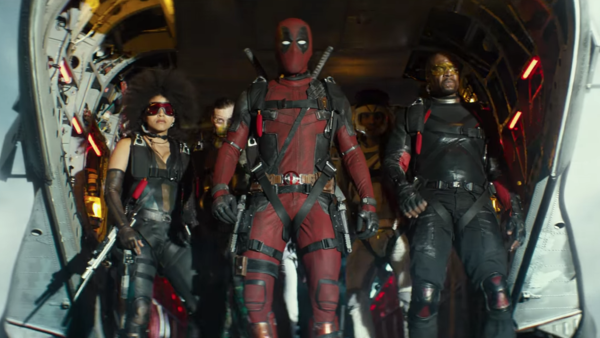
Though the nineties is often earmarked as a decade that presided over the comics industry's worst excesses, for the X-Men, it was a golden age of sorts. There was the titular animated series, which had the best cartoon theme song going; Chris Claremont's run on the series reached its epic conclusion in 1991; Jim Lee was making waves as an artist, and X-Mania span off into dozens of different titles, including X-Factor, New Mutants, and of course X-Force too.
Intermingled through all of this was the presence of Cable and Deadpool, two characters diametrically opposed to the other who found common ground to form a partnership during the decade's ensuing years. Rob Liefeld and Fabian Nicieza presided over the creation of their Deathstroke parody in 1991, shortly after Liefeld attributed the mantle of Cable to Nathan Summers, who had been introduced by Claremont four years earlier.
To many, Cable and Deadpool are nineties X-Men. They're indulgent, brash and, all too often, chaotic as well. That doesn't mean they're not loved though, and in translating that vibe - that ridiculous, cross-hatched vibe - to the big screen, Deadpool 2's genius is laid bare for all to see.
It's silly, serious and sumptuous all the same, but perhaps the highlight is when Wade breaks the fourth wall to mock artists "who can't draw feet" - a common, albeit less than serious criticism, levelled at Liefeld himself.
2. It Has A Strong Emotional Core

Mixed in with all the humour, action and spectacle of Deadpool 2 is something fans might not have been expecting - genuine pathos.
Whether it be the tragedy surrounding Wade's wife Vanessa, Cable's family or indeed the arc pertaining to Julian Dennison's Russell, the film captures the soap-opera spirit of the source material and makes it a focal point despite its own sense of humour. That in itself represents its own kind of achievement, but important to note as well is that it juggles both elements effortlessly throughout, providing the laughs that endeared audiences to Deadpool in the first film while reminding them of the pathos and tragedy inherent not just to Wade, but to the wider X-Men lore as well.
The film's key quartet of Deadpool, Vanessa, Cable and Russell all manage to impart a lasting impact in one way or another; with Wade and his wife, their journey revolves around finding a sense of belonging, freedom and family; with Cable and Russell, the two must reconcile their desire for revenge with the very essence of their character, and while the film strides dangerously close to an old cliché close to its finale, it's only pulverised by the yellow and black hue of Dopinder's taxi.
This isn't to say that Deadpool navigates its themes perfectly - of course not. What is commendable, however, is that the filmmakers understood that irreverence would only get the project so far. In actual fact, if you look at the sequel, it's those moments where it moves too closely to its predecessor where it stumbles. The first act, which serves little purpose other than to remind everyone that this is, y'know, a film about Deadpool, only ends up being the film's weakest - whereas its finale (which also packs the heaviest of emotional punches), is its strongest.
1. It Realises The X-Men's Metaphor (While Acknowledging Its Own Shortcomings)
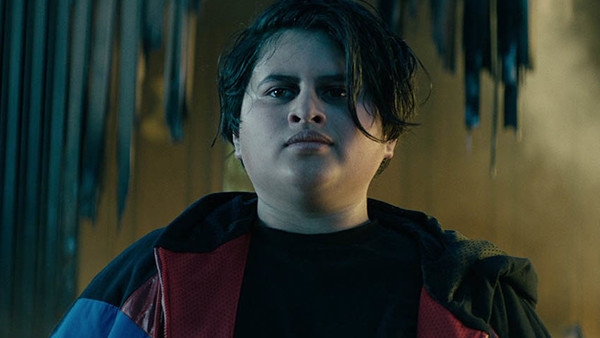
Despite its unwavering dedication to the essence of nineties X-Men, Deadpool 2 doesn't pull its punches when it comes to the franchise's earlier incarnations. Wade bemoans the team as an "outdated metaphor for the Civil Rights Movement" and, in some respects, he's correct. Although the X-Men have seemingly epitomised Marvel's unwavering dedication to depict "the world outside your window", the metaphor has fallen way short on countless occasions.
Despite being an allegory for the African American Freedom Struggle, the original X-Men didn't feature a single person of colour. When you consider too that the anti-villain and the ostensible antagonist of the comic - the Master of Magnet himself, Magneto - actually has a valid point regarding liberation struggle, as well as the effectiveness of Charles Xavier's strategies, the problem is only exacerbated further.
That doesn't mean that the comic lacks heart however. Yes, certain aspects of the allegory fall way short of expectation, but the X-Men today are a vastly different group to the one of yesteryear, comprised of mutants of various ethnicity, sexuality, gender and upbringing. Deadpool 2 acknowledges this, doing in two years what Marvel are still yet to by including the superhero genre's first big-screen LGBT* couple in Negasonic Teenage Warhead and Yukio, and also by alluding to Wade's canonical pansexuality by having the merc' openly flirt with the X-Men's Colossus (even if it is played mostly for laughs).

Yes, it could be better, but Deadpool 2 is a product visibly conscious of its source material. Dennison's character bemoans the hypocrisy of the X-Men by mentioning that there are no plus-sized heroes, and the aforementioned Xavier metaphor of passive resistance is blown to pieces in a fantastic sequence whereby the Headmaster is pulverised by Dopinder's car in the finale.
In that sense, yes, Deadpool 2's irreverence allows it to address the shortcomings of one of the medium's most famous metaphors. It goes further, however, by improving upon it - enshrining the feature as one of the most compelling X-works of the modern era and, in more than one way, as the franchise's best entry to date.
What did you think of Deadpool 2? Be sure to let us know in the comments below!