Why King Arthur: Legend Of The Sword Flopped So Hard
A post-mortem of 2017's biggest box office dud (so far).

Guy Ritchie's King Arthur: Legend of the Sword is the first major box office bomb of 2017, arriving with a $175 million price tag (not including an extra $100 million for marketing) and opening to a pitiful $15.4 million in its first U.S. weekend.
Analysts expect that the film will end up losing Warner Bros. $150 million when it's all said and done, a disastrous figure that would make it one of the biggest bombs in the history of Hollywood. So, what went wrong?
Though many movies tank against expectations or despite being genuinely great films, King Arthur was instead a depressingly predictable financial failure that just about any discerning cinemagoer saw coming a long time ago. Still, most probably weren't expecting it to flop quite this hard.
The ten reasons are myriad, and Warner Bros. embarrassingly should've seen the writing on the wall.
10. Charlie Hunnam Can't Sell A Blockbuster Movie

Though Charlie Hunnam's spirited performance absolutely doesn't deserve the blame for King Arthur bombing, it's undeniable that his lack of star power may well have contributed to the prevailing audience apathy.
Despite Hunnam's success on Sons of Anarchy, he's not yet proven that he can carry a blockbuster to box office dynamite, what with Pacific Rim's lukewarm reception back in 2013.
With the likes of Henry Cavill, Kit Harrington and even Colin Farrell previously in line to play Arthur at various points, Hunnam's level of popularity had no chance competing, so it's not a shock that he struggled to bring in the mainstream crowds.
Had he appeared in the Fifty Shades of Grey franchise as originally planned, then perhaps this might be a whole other story...
9. Audiences Don't Care About King Arthur

The sad, hard truth is that audiences just don't really give a toss about the King Arthur property anymore, especially after 2004's Clive Owen-starring effort came and went without much fuss or box office success.
Nobody's really been screaming out for a new take on the Arthurian legend, and though Ritchie's attempt was a radical, brave effort to reinvent the myth for the teenage boy set, there just doesn't seem to be the same demand for period action flicks these days that there once was.
Just look at Ben-Hur's colossal failure last year despite having an enormously recognisable name to leech from. Has the explosion of superhero movies made swords and Kings feel positively boring by comparison?
8. The Lack Of Female Characters

One of the more valid criticisms about the movie is the distracting lack of notable female characters. There's Arthur's mother (Poppy Delevingne), who is offed in the opening prologue while saying barely a line of dialogue, the hardly-in-it Maid Maggie (Annabelle Wallis), and the only woman of any real mention, the Mage (Àstrid Bergès-Frisbey).
Though Bergès-Frisbey does well with her role, she's not enough by herself to balance an extremely testosterone-filled jaunt where women are thoroughly sidelined, providing less incentive for female audiences to spend their money on a ticket (apart from ogling Charlie Hunnam's chest, maybe).
Pro-tip: if you're making a movie to the tune of close to $175 million, maybe include some women with real agency if you want it to do well.
This is one of the film's dopier and more easily-fixed issues. Throw a few female warriors into Arthur's army, give them actual names, lines of dialogue and distinct personalities, and don't have them always be rescued by the guys. Done.
7. Strong Box Office Competition

Probably the dumbest thing Warner Bros. did overall was choosing to release King Arthur on May 12th, which was a terrible choice for three reasons.
Firstly, this was merely a week after Guardians of the Galaxy Vol. 2 landed in U.S. cinemas, it was also Mother's Day weekend yet featured few female characters and went up against the Amy Schumer movie Snatched, and released a week before Alien: Covenant, basically ensuring it had no chance of having box office legs even if it succeeded in its first week.
With the summer box office slate becoming more crowded than ever, it's not surprising that studios are starting to release their tentpoles all-year round, and so in retrospect, King Arthur surely would've done much better had it been released outside of the traditional blockbuster cycle.
6. An Inconsistent Marketing Campaign
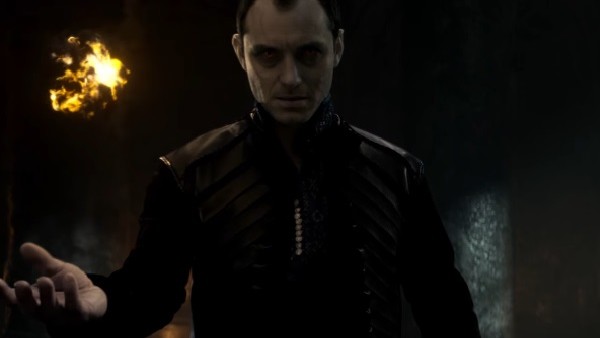
Warner Bros. has proven with the DC Extended Universe that if they don't know how to market a movie tonally, they'll just throw everything at audiences and hope something sticks.
The Warner Bros. marketing formula consists of releasing a serious, somber trailer first, and then following up with a funnier one to try and cast the widest possible net over potential audiences, even if away from the allure of iconic superheroes, it's a pretty damn risky strategy.
King Arthur's first trailer made it look mind-numbingly bland and generic, while the second trailer touted a much more fun tone, so which one was it? Audiences didn't know what to believe, and so stayed away.
Casual audiences may not necessarily use phrases like "tonal dissonance" to describe what they're experiencing, but they know that something feels off when a movie's marketing is pulling them in two different directions.
5. The Ridiculous $175 Million Budget
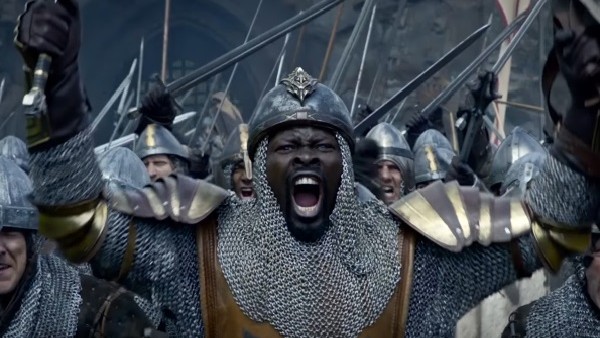
For some God-forsaken reason, this film cost a jaw-dropping $175 million. To provide some perspective, that's more than Guardians of the Galaxy, Doctor Strange, Captain America: The Winter Soldier, Dawn of the Planet of the Apes, Interstellar, Beauty and the Beast, Inception, Fast and Furious 6, Warcraft and Mad Max: Fury Road, to name just a few recent hits.
There's no way in Hell this movie should've cost more than about $100 million, because the risk is just way too high at almost double that. Sure, it's packed full of CGI, but that it cost more than many superhero movies suggests the budget was poorly allocated.
If Ghost in the Shell can be made for $110 million and xXx: Return of Xander Cage for $85 million, both CGI heavy-productions at that, it's staggering that King Arthur had such a comparatively bloated price tag.
4. The Golden Age Of TV
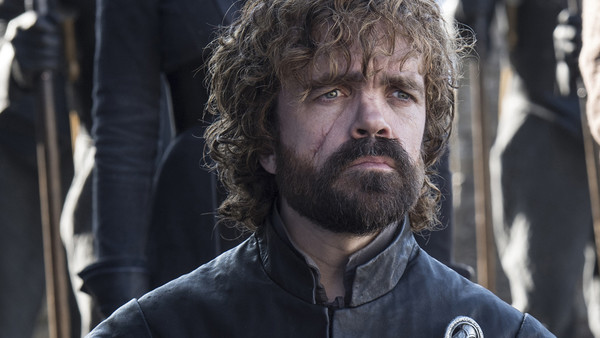
Further to that aforementioned point about audiences not caring about historical epics, the general upswing in the quality of TV shows over the last decade-or-so has surely further contributed to audiences preferring to stay home.
When you can stream the likes of Game of Thrones, Vikings and Black Sails from the comfort of your bed, there's simply not as much incentive to head out and pay extra cash to see similar fare on the big screen.
That's without even mentioning the other array of acclaimed non-fantasy or historical shows constantly coming down the pike, in what many are calling the Golden Age of TV. Why go out when you can order a pizza, grab some beers and have a lazy night at home with a boxed-set in your yoga pants?
And yes, while people will make the effort to go out to catch the new Marvel or Christopher Nolan movie at the cinema, there's another big reason why audiences may have been scared away...
3. The Scathing Critical Consensus
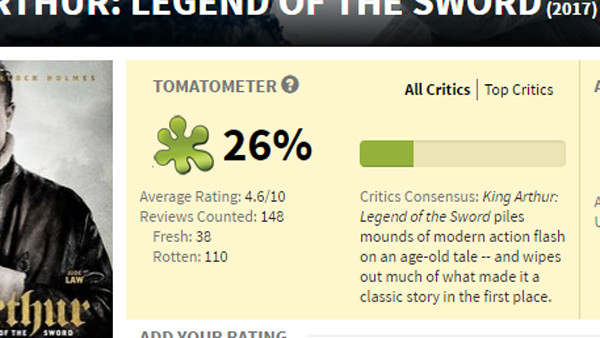
King Arthur landed a disappointing 26% on Rotten Tomatoes, which resulted in a flood of articles about how critics were "trashing" the movie despite the average score sitting at a not-awful 4.6/10. Round it up to a 5/10 and you have a supposedly pretty average film.
But the percentage score is all most people care about, and upon seeing that, many audiences were no doubt dissuaded from parting with their hard-earned cash.
There are certainly critic-proof movies out there, but due to the fairly opaque marketing campaign, a lot of people were waiting on word from reviews before heading to the cinema, and the critical ambivalence spoke volumes.
2. A Six-Movie Franchise!?

Years before King Arthur even hit screens, it was announced that the film was intended to be the beginning of a six-movie franchise, essentially creating a mini-universe of films not unlike the Marvel Cinematic Universe.
Audiences will be familiar with studios making similarly lofty claims in the past, but it's usually for a franchise they're enormously confident in, such as Marvel or most recently Fantastic Beasts and Where to Find Them.
On the other hand, audiences hear there are five more King Arthur films to come and either laugh or groan at Warner Bros' hubris, because why not wait and see if the first film goes well before committing to more movies, right?
Can't the original film just be standalone first? It's exhausting to consider the prospect of five more films like this, which may have further discouraged audiences from getting involved in yet another movie universe.
Somewhat ironically, the franchise plans are now stone cold dead, so audiences can now enjoy this standalone effort at their leisure without considering what they're getting invested in.
1. It Was In Development For Far Too Long

Sometimes when a movie takes years and years and years to get made, it's because the idea fundamentally doesn't work, the wrong people are in charge, there's no audience demand for it, or some mix of the above.
King Arthur was reportedly in development for six years before being made, where it went through numerous cast and crew changes, and though there are many long-gestating movies that are finally released to considerable success, those projects are mostly ones long-anticipated by fans.
King Arthur, on the other hand, didn't really have audiences excited from the outset, so persevering with such a long-shot of a movie felt like a fool's errand long before the film even came out, and was confirmed once it was released to poor returns.
What do you make of Guy Ritchie's King Arthur bombing at the box office? Disappointing, or well-deserved? Shout it out in the comments!