Why Timothy Dalton Is Actually The Greatest James Bond
 In 1985, Roger Moores final James Bond film, A View To A Kill, was released to a critical drubbing, with a common criticism being that Moore, 57 at the time of the films release, was far too old to realistically play the role of the worlds greatest spy. Having initially wanted to retire from the role after For Your Eyes Only in 1981, Moore agreed and stepped down from the role, leading to a media frenzy about who would replace him. Candidates ranged from the likes of Sam Neill, who would later become known for his role in the Jurassic Park series, to Australian model Finlay Light, who would later become known for nothing at all, not even having a Wikipedia page to his name. Eventually, an Irish actor by the name of Pierce Brosnan was confirmed for the role, but was forced to back out after NBC, capitalising on the media attention the man was receiving, decided to revive the television series on which he was contractually obliged to star, Remington Steele. This turned out to a blessing in disguise, both for Brosnan (who would later play the role of Bond in four films, starting with Goldeneye) and producer Albert R. Broccoli, who approached an actor that had turned down the role on numerous occasions in the past, believing himself to be too young (having only been 24 when approached for the role following Sean Connerys departure) or having pre-existing commitments to other projects. This actor was Timothy Dalton, who was finally in a position to accept the role, paving the way for a brief but brilliant era in the Bond series. This article contains heavy spoilers for those who are not familiar with Daltons Bond films. Click "next" to continue...
The Films
 Ultimately, Timothy Dalton starred in only two films, having stepped down from the role in 1994 after legal issues had prevented the production of any more films after 1989. Fortunately, the two (both directed by John Glen) are amongst the best entries in the Bond canon, with gripping plots that allow both Dalton and his supporting cast to shine. The Living Daylights, released in 1987, was one of the last true cold war thrillers (the conflict would end just a few years later) and begins with a terrific action sequence on Gibraltar before Bond handles the defection of a Russian general in Bratislava, who informs him of the existence of a KGB program with the objective of exterminating foreign spies. When the general is supposedly abducted, Bond is suspicious, believing that he and MI6 have been fed disinformation to play them and the Soviets against one another. This leads to a pursuit across three continents as Bond seeks to track the man down and discover his true intentions, becoming involved with a beautiful cellist, the head of the KGB and the Afghan mujahedeen along the way. Unlike other films in the series, which featured multiple (and often disposable) female partners for 007, The Living Daylights made use of only one (barring a brief exception in the pre-credits sequence), Czech cellist Kara Milovy (played by Maryam dAbo), whose presence throughout the film allows her to develop excellent chemistry with Bond, whose polygamy had been toned down by writers in response to concern about AIDS, which was becoming a prevalent and well-known disease in the mid-80s. Such a decision makes their relationship a believable one that is easy to follow, whilst the character isnt, unlike so many of her predecessors, portrayed as being helpless and submissive. Also unlike many other films in the series, the villains featured are not megalomaniacs intent on world domination or destruction. They are, however, arguably the films weakest point, as Joe Don Bakers Brad Whitaker is portrayed as an oaf and Jeroen Krabbes General Koskov is a little over-the-top. Nevertheless, their scheme is an interesting and refreshing one after Moores last two films, which involved the threats of a nuclear explosion and an artificial earthquake respectively. Stronger are Bonds allies, who include Thomas Wheatleys Saunders, a bureaucrat who is initially hostile towards Bond and vice versa, but who eventually develop a grudging respect for each other, culminating in the films most emotional death. Dalton handles his introduction to the role excellently, able to switch effortlessly between portraying Bond as a ruthless killing machine and as a charming gentleman. The film was a success with both audiences and critics, and was widely considered to be one of the best entries of the series in a long time, in no small part because of the new leading man.
 Licence To Kill, released in 1989, was one of the lowest grossing films in the series, primarily due to a poor marketing strategy in the United States (which included a last minute title change and the decision to release the film at the same time as Batman, Lethal Weapon 2 and Indiana Jones and The Last Crusade), but is (in my opinion, at least) the best entry in the series to date. The film doesn't follow the established formula of previous films, featuring Bond operating as a rogue agent outside the control of MI6, hell-bent on revenge against an international drug baron whose actions have seen his best friend, Felix Leiter, maimed by a shark and Felixs wife gang raped and murdered. Eschewing the humour (bar a memorable extended appearance from Desmond Llewellyns Q, with whom Dalton has an excellent rapport) that had defined the Roger Moore era from beginning to end, the film is a rollercoaster ride from start to finish, with Bond portrayed as a ruthless, intelligent and unforgiving individual who infiltrates and seeks to destroy the drug lords operation. Said drug lord, Franz Sanchez, is played excellently by Robert Davi, who like Dalton as Bond, can switch between monster and charmer instantaneously. Therefore, he serves as something of a foil to Bond, which works well when the two men confront one another. Believable as a villain, Davi is assisted by a selection of interesting henchman, ranging from the creepy marine biologist Milton Krest (Robert Davi) to the sadistic Dario (Benicio Del Toro). Bond has two leading ladies in this film, as opposed to the one he shared the screen with in The Living Daylights, but each brings something different to the table. Talisa Sotos Lupe serves as Sanchezs abused moll, appealing to Bonds protective instincts, whilst Carey Lowells Pam is capable of holding her own with 007, participating in action sequences such as a bar fight and a tanker chase that incorporates a biplane. Showcasing Bond in a different light to usual, Dalton proves more than capable of the task, portraying 007 as a highly dangerous weapon, but also as human, with the films premise being one of the few times that the man lets his emotions dictate his actions. Nobody knew at the time, but this would be Daltons swansong as James Bond. Having restored the characters reputation as an action hero who could be taken seriously, hed reinvented the franchise, but legal troubles between producers and the series parent company meant that hed never don the tuxedo again, meaning that fans can only speculate about how much more he couldve done with a role that hed so quickly made his own.
The Actor
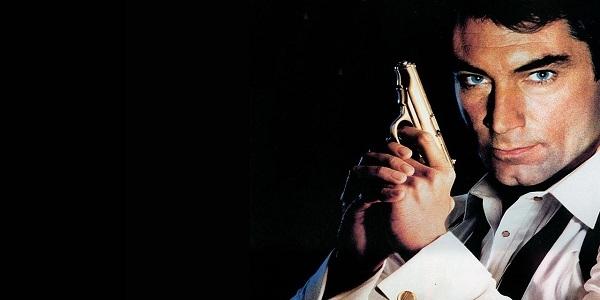 Timothy Peter Dalton was born in Wales to an English father and a mother of Italian and American descent, becoming involved at an early age with both the National Youth Theatre and the Royal Academy Of Dramatic Art (RADA). Classically trained, Daltons career began on the stage and it was theatre work for which he best known upon his casting as Bond. As a stipulation of his contract, he insisted on playing the character in a manner of his choosing - a dark and highly realistic one, performing most of his own stunts throughout production, something Roger Moore had failed to do during his tenure. Having meticulously studied the source material for the series Ian Flemings books, which he constantly re-read and referenced on set, Dalton came into the role prepared, seeing the role as not just a job and a paycheck, but a chance to put his stamp onto one of the worlds best known characters.
The Portrayal
 Recently, Daniel Craig has attracted many plaudits for his portrayal of Bond, including from Timothy Dalton himself. Much of this praise centres on how he plays the character as a blunt instrument, cold, ruthless and true to the character from Ian Flemings novels, and many are already calling him the greatest Bond of all time. Whilst Craig has made the role his own with astounding performances in Casino Royale and Skyfall (Quantum of Solace not so much), the individuals dishing out these plaudits seem to forget that there was another man who played the role in such a manner a few decades previously, another man who had sought to play the role of Bond as true to the books as possible a damaged and reluctant yet highly capable agent. His name? Timothy Dalton. When asked about who their favourite James Bond was, however, many people instantly answer with Sean Connery, who benefited greatly from being the first man to play the role, ensuring that all subsequent portrayals would be compared to his. Certainly, Connery started off well, with From Russia With Love, Goldfinger and Thunderball all being captivating films, but it began to show that he was losing interest in the character over time, particularly in You Only Live Twice. This was the first film not to use a Fleming novel for the bulk of its source material, and began the series use of questionable concepts with the addition of a hollowed volcano lair and a weaponised miniature helicopter. The Scotsman finished with Diamonds Are Forever, farcical in places, which diminishes the impact of his earlier portrayals. George Lazenby, to his credit, tried to take the role in a different direction in what was perhaps the best of Flemings stories, On Her Majestys Secret Service. The wooden acting of the Australian, however, combined with his poor chemistry with leading lady Diana Rigg, ensures that the film is often forgotten, however. Roger Moores tenure in the role was a mixed bag. He didnt take the role seriously at all, as ridiculous villains, gadgets and humourous quips began to eclipse the likes of story and character in importance. Nevertheless, he proved himself capable in great films such as The Spy Who Loved Me and For Your Eyes Only, but his comic portrayal meant that films like Octopussy, which had potential, were marred by occurrences such as Tarzan screams and Bond dressing as a clown. Moonraker meanwhile, without a doubt, is the worst entry in the series, predominantly due to its finale taking part in space, with laser guns and the like, whilst A View To A Kill wasnt much better, despite making good use of Christopher Walken as the villainous Max Zorin. Pierce Brosnan played the character as a hybrid (of sorts) of Connery and Moore, with both impressive action spectacles and humorous elements. Though Goldeneye, his first film, is one of the series finest, the Irish actor suffered from poor scriptwriting and casting as his tenure went on, with The World Is Not Enough ruined by the ludicrous decision to cast Denise Richards as a nuclear scientist, whilst Die Another Day suffers due to the fact that is plot is a thinly-disguised rehash of Diamonds Are Forever, whilst the inclusion of poor CGI in lieu of traditional stunts angered fans used to seeing some of cinemas finest stuntwork. The quintessential portrayal, however, is Daltons, and whilst his contribution to the series goes underappreciated by many, he is, to many aficionados, the definitive Bond. True to the books, his method acting approach gave the series two of its finest films, and though Daniel Craigs similar portrayal is justifiably acclaimed (and long may it continue), it should not be forgotten that Timothy Dalton was the man who set the bar, and will continue to set the bar for future Bonds to come.