Willem Dafoe: 5 Awesome Performances And 5 That Sucked

Celebrating the dizzying heights and plumbing its few unfortunate depths.

Today sees the UK release of The Fault in Our Stars, a new romantic comedy-drama based on the bestselling novel by John Green. The film has already had a very good run in the States, garnering critical acclaim and having a very strong opening run at the box office, outgrossing Edge of Tomorrow, Maleficent and Divergent on their respective opening days. For once we might have a ubiquitous, young adult film outside of The Hunger Games which might actually be worth watching. Regardless of how well the film eventually performs with audiences, it marks a welcome return to our screens for Willem Dafoe. From his earliest days as a founder member of the experimental Wooster Group, Dafoe has carved out a series of distinctive, complex and compelling characters which have won him considerable acclaim. His unusual voice and facial features make him one of the most recognisable actors in the business, and yet at his best he has always completely disappeared into a part. But, of course, Dafoe's career hasn't always been plain sailing. Like so many of the other great actors that we've covered in this segment, he's got a few black marks on his CV that he won't be so willing to discuss in interviews. So today, to mark the release his new film, we're taking a long look back at Dafoe's career, enjoying its dizzying heights and plumbing its few unfortunate depths. We'll begin with a spot of counterfeiting...

5 Awesome Performances...

5. Eric 'Rick' Masters - To Live And Die In LA (1985)

William Friedkin's career after The Exorcist is one of several occasional highs and many mediocre lows. Following his hysteria-inducing Oscar-winner, he suffered a massive setback with Sorceror; his ill-fated remake of The Wages of Fear came in massively over-budget and was released in theatres at the same time as Star Wars, meaning that it never stood a chance. Eight years later, however, he reaffirmed his worth with this film, which gave Dafoe his first truly meaty screen role. To Live And Die In LA is a crime thriller based on the novel by former Secret Service agent Gerard Petievitch. It follows two Secret Service operatives, the reckless Richard Chance (William Peterson) and the ruthless John Vukovich (John Pankow), who are on the trail of an elaborate and brilliant counterfeiter (Dafoe). The agents go to increasingly desperate lengths to bring Masters down, including going undercover and robbing an FBI agent in order to meet his demands for front money. Friedkin's film is a fast-paced, frenetic thriller which takes many familiar elements and imbues them with an unpredictable energy. But for all its great set-pieces, such as the counterfeiting sequence set to Wang Chung's distinctive music, Dafoe's performance is still one of its biggest assets. Dafoe resists the urge to overplay the cool threat of his character: he's confident, and clever, but he still keeps his cards close to his chest to confound the detectives. His performance elevates the film from being just another cop movie, and it's a very fitting place to start our countdown.

4. Bobby Peru - Wild At Heart (1990)

24 years before The Fault in Our Stars, Dafoe and Laura Dern enjoyed a very different kind of on-screen relationship under the guiding hand of David Lynch. Dafoe has always been good at playing grotesque, slippery or gruesome characters, and was creeping out his audiences long before he landed the role of the Green Goblin. But for pure skin-crawling hideousness, his performance as Bobby Peru takes quite a beating. Based on the novel by Barry Gifford, Wild at Heart is a romance between Elvis-loving criminal Sailor Ripley (Nicolas Cage) and speed metal fan Lula Pace Fortune (Dern). After Sailor is released from prison for murdering a man that Lula's mother sent to kill him, the couple go on the run from North Carolina to California to start their new life together. But Lula's mother (Dern's real-life mother Diane Ladd) has other plans, dispatching a number of ruthless and bizarre assassins to kill Sailor and bring Lula back. If Eraserhead is Lynch's version of The Philadelphia Story, then Wild at Heart is his take on The Wizard of Oz. It's a very strange and uneven film in which L. Frank Baum's story is thrown together with a celebration of all things Americana, resulting in a film which is both memorable and disturbing. Dafoe's performance has both of these qualities, with some of the worst teeth of any American villain and one of the most gruesome deaths. But above all it's his sadistic, cruel enjoyment of toying with Dern's character which makes him stick in our minds. Dafoe commits to a scary degree, creeping us out while earning our respect.

3. Agent Alan Ward - Mississippi Burning (1988)
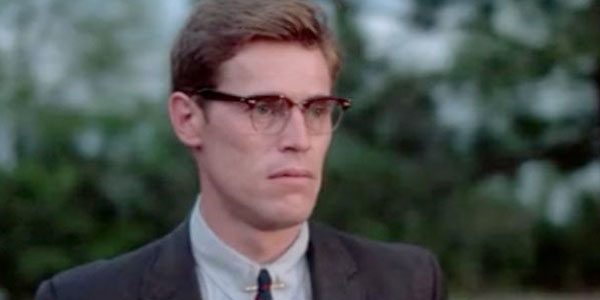
Both of the performances we've covered so far have seen Dafoe dominating proceedings - at least for the scenes in which he features. But he's just as capable of playing second fiddle, holding his own against some of the best in the business. When he was paired with the legendary Gene Hackman (who had worked with Friedkin on The French Connection), it was expected that the Oscar-winning Hollywood stalwart would be the dominant force. But Dafoe holds his own throughout Mississippi Burning, which remains a very underrated period thriller. Mississippi Burning is directed by Alan Parker, whose filmography ranges from the child-friendly silliness of Bugsy Malone to the avant-garde psychosis of Pink Floyd - The Wall and the lurid, eerie intrigue of Angel Heart. Based on real-life events, the film is set in 1964 and follows two FBI agents who are sent to investigate the murders of three civil rights activists in the fictional Jessup County, Mississippi. The relationship between the agents steadily deteriorates as they wade deeper into the murky racial politics of the county, eventually finding the truth by infiltrating and duping the local branch of the Ku Klux Klan. Mississippi Burning is a very powerful drama-thriller, marrying Parker's gripping and unsettling visuals to political and moral questions which still resonate in American society. While Hackman remains a powerful and compelling screen presence, Dafoe gives as good as he gets as the more direct, morally black-and-white agent increasingly overwhelmed by the situation. It's a performance of great nervous energy and repression, reflecting the character's desire for order in the face of growing chaos. Dafoe shrinks into the role every bit as much as Russell Crowe in The Insider, resulting in a very fine performance.

2. Max Shreck - Shadow Of The Vampire (2000)
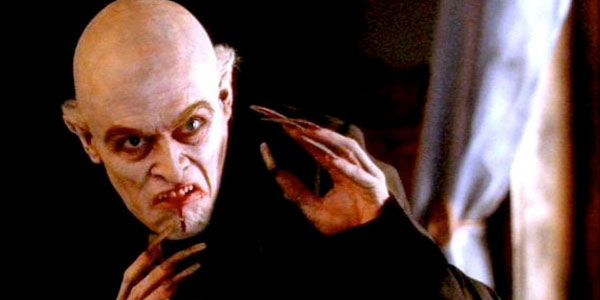
Films about film are as old as cinema itself. Some are celebratory to the point of ecstasy, with the likes of 8 1/2 and Cinema Paradiso eulogising on cinema as an art form that can transform people's lives. Others view cinema in a more macabre and gruesome light, with Peeping Tom likening film directors to serial killers and Berberian Sound Studio regarding them as the high priests of some bizarre religious ceremony. Shadow of the Vampire is a neat and offbeat entry into the latter category, which confirms Dafoe's reputation for committing to a role. Shadow of the Vampire is a fictionalised account of the making of Nosferatu, the legendary 1922 silent vampire film by German cinema pioneer F. W. Murnau (John Malkovich). Murnau casts character actor Max Shreck (Dafoe) to play Court Orlok (a.k.a. Dracula). Shreck is a 1920s Daniel Day-Lewis, refusing to appear in front of the crew without his costume and make-up and never breaking character. As filming progresses, Shreck's behaviour becomes more and more peculiar, and Murnau increasingly believes that he is closer to his character than they first thought... Shadow of the Vampire is an odd but intriguing little film which works both as a tribute to silent cinema and a creepy horror story in its own right. It embraces the exaggerated acting styles and personalities of its era, so that all the sillier touches actually work to the advantage of the story. Dafoe won his second Oscar nomination for his performance, which finds him relishing in the more humourous aspects while keeping us constantly on edge with how far he is prepared to go. He was also responsible for the title of the film; it was changed from Burned to Light when the actor asked the director, "Who's Ed?", believing it to be called Burn Ed to Light. (P. S. For more thoughts on films about film, check out this article I wrote for WhatCulture! back in January 2012).

1. Jesus - The Last Temptation of Christ (1988)

There have been many great on-screen portrayals of Jesus Christ, each bringing a very different quality or emphasis to the part. Robert Powell in the mini-series Jesus of Nazareth is still but determined; Jim Caviezel in The Passion of the Christ is willing and accepting of all the pain that is given to him; and Ralph Fiennes in The Miracle Maker is warm and comforting while mindful of what awaist him. It's very hard to call Dafoe the best on-screen Jesus, since no one actor can capture every facet of God in human form. But boy does he give it his best shot, turning in what remains his finest performance. While the other films I referenced emphasise the divinity of Jesus, The Last Temptation of Christ looks at Jesus' humanity - specifically how he was subject to the same desires, temptations and agonies of those He came to save. Reuniting Martin Scorsese with Paul Schrader (the writer of Taxi Driver), it depicts Jesus as angst-ridden and self-loathing, saving people through His ministry but always a little uncertain in his identity. The film courted great controversy by exploring Jesus' sexuality, suggesting that he had a relationship to Mary Magdalene long before Dan Brown came along. The Last Temptation of Christ is a truly extraordinary piece of work which continues to divide Christian and secular audiences alike. Its cast is fantastic throughout, including Harvey Keitel as Judas Iscariot and David Bowie as Pontius Pilate, but Dafoe is simply outstanding. He does a fantastic job of balancing the inherent goodness of Jesus with a darker, more brooding aspect, working overtime so that neither one overpowers the other. It's a beautiful balancing act which makes the story all the more intriguing and ambiguous. Considering just how good Dafoe is here, it's odd that he has never worked with Scorsese again. Having seen Dafoe as the Messiah, now let's look at the times when he was a very naughty boy (SORRY)...

... And 5 They Sucked...

5. Lord Cob - Tales From Earthsea (2006)

When I reviewed Patrick Stewart's filmography last month, I received a comment that his voice work on The Pagemaster shouldn't count because "they hired Patrick to speak, and he delivered." I replied that there is a world of difference between turning up to speak into a microphone and actually creating a rounded vocal performance for a character. It's a distinction that's just as clear there as it is in Dafoe's performance in Tales From Earthsea, which is every bit as flat the film itself. Tales From Earthsea is an adaptation of Ursula K. Le Guin's Earthsea stories, drawing its plot from elements of the four main novels and a collection of short stories. It takes place in a fantasy world where the elements have been thrown out of balance and dragons are fighting and killing each other. Prince Arren (Matt Levin) and the wizard Sparrowhawk (Timothy Dalton) travel the world searching for answers, eventually discovering that the problem comes from Lord Cob (Dafoe) attempting to gain eternal life. Tales From Earthsea was directed by Goro Miyazaki, son of Spirited Away director Hayao, and it's clear that he hasn't inherited his father's touch. The film is a sluggishy-paced, convoluted and derivative offering which lacks the crucial sense of magic and wonder that has been present in all of Studio Ghibli's best work. Dafoe isn't the film's biggest problem, but he fails to make Cob convincing as a character. He delivers his lines in a manner which suggests he didn't understand the material; his performance is confused and disinterested, resulting in a pretty poor villain. And speaking of poor villains...

4. John Geiger - Speed 2: Cruise Control (1997)

When Speed 2 was first released, British film critic Mark Kermode interviewed stars Sandra Bullock and Jason Patric for BBC Radio 1. Having seen the film and found it to be terrible, he attempted to skirt the issue by asking the cast what they had achieved by changing the setting from a bus to a boat. They responded, with refreshing honesty, that they had killed the franchise - though judging by Dafoe's performance, they were not the only ones responsible. Speed 2 begins with Annie Porter from the first film (Bullock) crashing into her boyfriend Alex's motorcycle. After she discovers that he was a SWAT team member, Alex (Patric) apologises by taking her on a luxury cruise to the Caribbean. But their holiday soon goes awry when fellow passenger John Geiger (Dafoe) hacks into the ship's computer systems, rigging charges all over the ship and setting the boat on a collision course with an oil tanker. With most of the passengers abandoning ship, Annie and Alex have to work with the remaining crew to prevent disaster. Speed 2 is widely considered one of the worst sequels of all time, confirming that Jan de Bont is better at lighting other people's films rather than directing his own. Dafoe's performance is one of the weakest elements, being needlessly over-the-top and with his motivation making little sense. While his performance in the Spider-Man films had a certain amount of range and played up to the comic-book feel that Sam Raimi wanted, here he does little but gurn and ham up for two hours. Like Cob in 'Earthsea, it's a dull and unconvincing villain which leaves the film completely becalmed.

3. Frank Dulaney - Body Of Evidence (1993)

Madonna has never been particularly lucky when it comes to filmmaking. Both of her directorial efforts have been deservedly panned, and with the possible exception of Evita her on-screen performances are wooden, preening and unengaging. But as bad as she was in Die Another Day, Body of Evidence remains a low point in her career, including as it does one of Dafoe's weakest and least inspiring performances. Body of Evidence stars Madonna as Rebecca Carlson, who is on trial for the murder of Andrew Marsh. The court is shown a homemade porn tape featuring Carlson and Marsh; Marsh was a wealthy man and the prosecution believed Carlson aggravated his heart condition through vigorous sex. Frank Dulaney, who is defending Carlson, is a happily married man who increasingly lusts after his client. The two eventually embark on a sadomasochistic affair, which grows more intense and dangerous as the case progresses. Body of Evidence won Madonna a Razzie Award for Worst Actress, and was nominated in a further five categories. It's trying to cash in on Basic Instinct but has none of the thrill, intrigue, humour or charisma which made Paul Verhoeven's film successful. If Madonna is no Sharon Stone, Dafoe is definitely no Michael Douglas: he feels awkward in the part, phoning in his lines and lacking energy during the climactic showdown. Failing to hold your own against a great actor is one thing: failing to hold your own against Madonna is pretty dire.

2. Carson Clay - Mr. Bean's Holiday (2007)
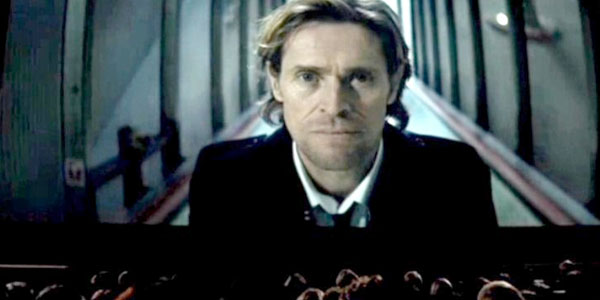
Successful TV series don't usually make successful films, something which is particularly true of British TV series. There have been a string of disappointly televisual offerings, from older output like Dad's Army and Are You Being Served? to modern dross like Keith Lemon: The Movie. While Bean: The Ultimate Disaster Movie was nothing like as bad as people expected it to be, few people in their right minds would have wanted a sequel. But back in 2007, that's what we got, complete with another disappointing turn from Dafoe. Mr. Bean's Holiday begins with the title character winning a trip to Cannes in a raffle. Through a series of unfortunate events, he ends up stranded in Paris and has to be make the rest of the journey on foot, accompanied by a young boy called Stefan (Max Baldry). During their journey the pair sabotage a commercial shoot by arthouse director Carston Clay (Dafoe), before turning up at the Cannes Film Festival and hijacking Clay's vanity project, 'Playback Time'. Speaking as a fan of the TV series (and the first film), Mr. Bean's Holiday is a shambolic mess, combining sub-par slapstick with an unintentionally creepy feel. Dafoe's performance could have been a great foil for Rowan Atkinson, but he has no comic timing and is taking his character far too seriously for it to blend in with the set-pieces. It's just one unfunny joke after another, with Dafoe playing it so straight that he kills the momentum. At least we can be thankful that Atkinson chose to retire the character after this outing - although Johnny English is still at large...

1. Charles Taylor - Fireflies In The Garden (2008)

Sometimes the worst performance of an actor is one which sticks out like a sore thumb, either ruining a good film or making a bad one worse. Considering Dafoe's penchant for memorable, sometimes OTT characterisation, you'd think his worst performance would be in a role where he completely misjudged how to play a character. In fact, the worst performance of Dafoe's career is one where he simply doesn't seem to be trying, a performance so unmemorable that it leads us to forget how charismatic he can be. I give you Fireflies in the Garden. Fireflies in the Garden is written and directed by Dennis Lee, inspired by the poem of the same name by Robert Frost. It tells the story of the Taylor family, focussing on the estranged relationship between father Charles (Defoe) and son Michael (Ryan Reynolds with bad facial hair). After Michael's mum Lisa (Julia Roberts) dies in a car accident caused by Charles, Michael arranges the funeral and begins to discover more details about his family, which eventually leads the two men to reconcile. Fireflies in the Garden is a desperately tedious melodrama which squanders most if not all of its stellar cast. While the material isn't particularly distinctive or compelling, Dafoe's lack of believability is the main factor that brings things grinding to a halt. All of his emotional outbursts feel forced and over-rehearsed, and in the quieter moments you never get the sense that he cares about the character he is playing. Rather than making the most of a role, he gives the likes of Reynolds nothing to work with, resulting in a languid pudding of a film with no energy or genuine heart. --- Disagree with my choices? Drop me a comment below or visit Mumby at the Movies for more reviews.

Contributor
Contributor

Freelance copywriter, film buff, community radio presenter. Former host of The Movie Hour podcast (http://www.lionheartradio.com/ and click 'Interviews'), currently presenting on Phonic FM in Exeter (http://www.phonic.fm/). Other loves include theatre, music and test cricket.