X-Men: Days Of Future Past - 10 Questions Singer Failed To Answer

Are we supposed to just ignore that Professor X is clearly a zombie?
Though Bryan Singer's X-Men: Days Of Future Past is a triumph, and undoubtedly deserves its title as one of the grandest comic book movies ever made, it is by no means a perfect film. But then, considering the pressures of working within a franchise that has been badly abused by two wayward sequels, and the enormous requirements of bringing two casts together, the fact that the film is a solid four stars is relatively unbelievable. Singer was faced with the task of fixing a timeline that was all but irredeemably broken, and in adding the notoriously ruinous element of time travel to the mix he could well have been accused of asking for trouble. And while the retconning and furious pushing things under the carpet did work to build towards a fitting nostalgic pay-off at the end, there are still a number of plot-holes and unaddressed details that still feel noticeably unanswered. So while the film is very entertaining - and even more so in light of the errors of The Last Stand and X-Men Origins: Wolverine - these questions remain pertinent...

10. How Did Magneto Get His Powers Back - And Why Doesn't He Know Their Capacity?
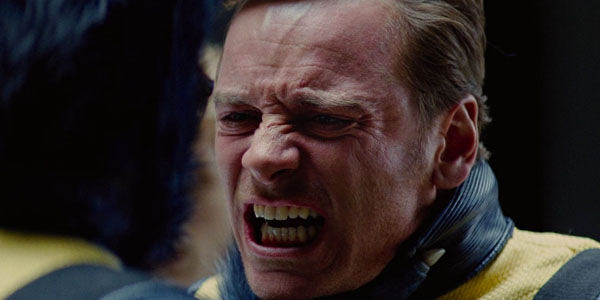
By the end of The Last Stand, Magneto has lost his powers thanks to a tactical cure administration by the wonderful Beast, and is relegated to wandering around parks playing chess with himself because apparently the police just don't care about locking away the man who tried to kill millions, if not billions of people. He's fine after all, because he hasn't got any of his powers, which has obviously rendered him completely docile, like a dog with his testicles removed, and there's no way he would just be even more annoyed at humanity for developing the serum that removed the element of him that made him superior. Anyway, all terrible policing aside, there's no explanation of how Magneto actually got his powers back: yes there was a hint at the end of Last Stand that they were returning (despite that rendering the whole threat of the cure entirely null) but there was no explanation as to why, and then all of a sudden he's back to full capacity for Days Of Future Past. And then there's the fact that when he's imprisoned in the pentagon in the 1970s he is rendered powerless by the building's use of concrete, which entirely ignores the fact that the lift right next to his cell is clearly made of metal. Why didn't he just reach out and use that metal? Or just use some of the metal further away in the building to his own ends, since he is obviously capable of lifting a whole football stadium not long after, which isn't all made of metal either.

9. How Has Wolverine Got Grey Hair?!

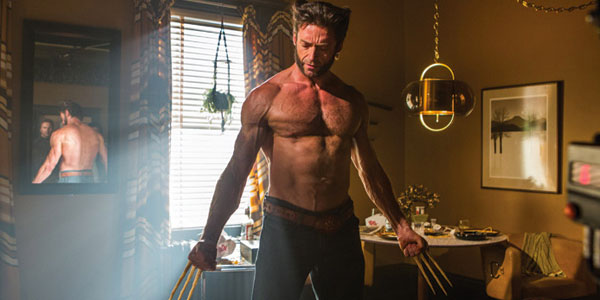
Wolverine has a healing factor that means he can lie at the bottom of a lake for some time drowned without ever actually dying, which makes him the prime candidate for travelling back in time, and there is explicit mention that he will look basically the same when he arrives in his old body because of his mutation, which all makes sense. But how the hell does he have white hair at his temples? Surely his mutation would expressly forbid his genes from going bad and changing the colour of his hair? There is some medical research available that suggests that changing hair colour can be pinned down to lower bone density in older age, which is clearly not an issue for old metal skeleton here, and it's unlikely that the ropey suggestion that stress causes premature whitening is accountable either. Obviously there's some narrative value in having him appear a little bit older to imply the passage of time, but that was never a problem in X-Men Origins, when he barely aged over 50 years, and it seems like a contradiction to have Wolverine's mortality even hinted at.

8. How Did The Government Get Havoc's Jump Suit?
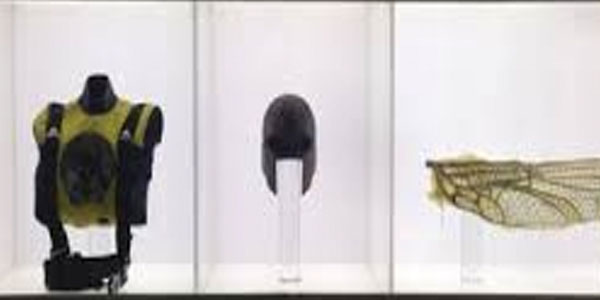
When Magneto goes to rescue his helmet - which clearly is not the same one that he wears at the end of First Class (but that's fine, because it was adapted to look more closely like Sir Ian McKellen's own Magneto helmet) - he finds it in a room that resembles a not very heavily guarded private museum exhibition (quite how he found it remains to be seen, perhaps he has a homing device or something that wasn't taken off him when he was arrested, and wasn't confiscated when the government went through all of his possessions obsessively). And next to the helmet are other items related to the climactic battle at the end of First Class: Angel's removed wing on the right, and on the left, Havoc's destroyed jump suit that Angel herself destroys. How they got the wing is easily explained, but how did they come to possess the suit? Havoc didn't remove it and leave it at the beach, from what the film showed, and it's unlikely that the government would have taken it off him and then enrolled him in the army with other mutants knowing he was involved in the Cuban Missile Crisis, along with a known assassin. So where did it come from?

7. How Did Professor X And Magneto Unite?

It is a major annoyance that the film's long run time couldn't have accommodated some reference to how the great enemies united, instead of us merely having to accept that it was merely circumstances that drew them together. It would perhaps have been more fitting to see a flash-back or establishing sequence in the future timeline when Professor X rescued his old friend from annihilation and the pair were united by the emotion of the moment. Instead in the film we get a clipped, toothless Magneto in the future timeline who seems to have lost his defining anger, which makes no sense without an establishing moment. The question that hangs in the air throughout that timeline is how Magneto came round to Xavier's thinking even as his people were being wiped out, just as he predicted the humans would do. Without some sort of trigger, there's no reasoning to grip on to.

6. Who Actually Killed JFK?

Thanks to a viral marketing campaign that was released at the end of 2013, we already knew that Magneto had been implicated in the assassination of JFK and was being used as something of a poster boy for the anti-mutant agenda given the tangible threat he represents. His incarceration of course is based on the Magic Bullet theory, but it turns out in the film that he was actually attempting Kennedy from being assassinated and was foiled as he tried. The bigger revelation is that JFK was a mutant - or "one of us" according to Magneto, who would be unlikely to use the same phrase to identify a mutant sympathiser - hence the villain's attempt to thwart his death. But despite Magneto's revelation, there's no mention at all of who killed him. The viral marketing site The Bent Bullet introduced the shady government agency WideAwake, who you would suspect were behind the assassination, but the conspiracy is just sort of dropped once the reason is established.

5. Where Did Shadowcat Learn Her New Powers?

Kitty Pryde can phase through solid objects - mostly walls - and this much we already know; but in Days Of Future Past, she has somehow learned an entirely new mutation ability, to send other mutants' minds back in time into earlier versions of their own bodies. The fact that she can do this is not really an issue, since it accounts for the time travel element nicely, and gives the character the prominence she enjoys in the comic book source, but it would have been nice to know that she had discovered her secondary mutation, as frequently happens in the comics, instead of us just being told it happened. How exactly did she find out she could do it? Was she absent-mindedly trying to pass her hands through a sleeping friend's head and inadvertently sent them back in time? Anything would have been better than nothing, as it just feels like yet another narrative serving power discovery that has no precedent.

4. How Did The Sentinels Steal Rogue's Powers From Mystique Exactly?
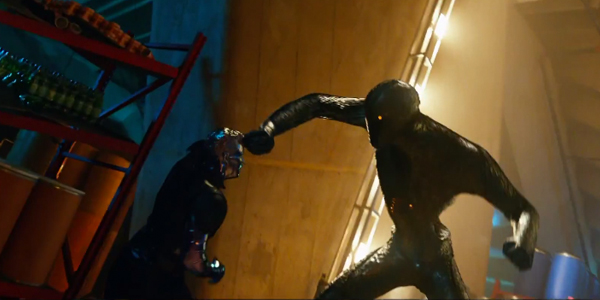
Though the likes of Riptide, Banshee, Angel, Nightcrawler and Pyro were simply dropped out of the films (with only Banshee's death explicitly being mentioned), the single character who gets screwed the most by Days Of Future Past is Rogue. Originally intended to be included - and featured in an action sequence in which she was rescued from an internment camp - Rogue was a victim of the over-extended run-time, and was only included as a cameo at the end in the nostalgic epilogue. But her presence was felt all the way through the film, thanks to a plot-hole relating to the future Sentinels' combat abilities. It is established in the film that Trask Industries used Mystique's DNA to make the Sentinel's adaptable, which would be fine if we were talking merely aesthetic adaptability, but when the Sentinels attack the X-Men they are clearly able to steal the powers of the mutants they encounter. Or in other words, they've somehow learned Rogue's mutation (the one that marks her out as basically one of a kind) from Mystique, which makes precious little sense at all.

3. How Did Wolverine Get His Claws?

By the end of The Wolverine - which is made canonical by the presence of Jean Grey - Wolverine's claws are back to being bone, but by Days Of Future Past, he has somehow grown the metal sheaths back. How did he manage that exactly? Then, when Wolverine wakes up in the '70s, he is naturally without his metal claws as he hasn't yet been subjected to the horrors of the Weapon X programme, and though there's no confirmation in the epilogue that he still only has bone claws, there's also no indication that he doesn't. It's very obvious that Singer has wiped Origins off the face of the cinematic landscape, given that the director chose to feature Brian Cox in Wolverine's traumatic flashbacks of the moment he got his adamantium skeleton and not Danny Huston. And since the end of the movie sees Wolverine fished out of the lake where he's been drowning for some time since Magneto trapped him there by Mystique pretending to be Stryker, it doesn't look like he's going to be heading for the Weapon X programme just yet. It wouldn't be at all surprising if the next movie to feature Wolverine puts him back into the 70s immediately following the events of the past timeline of Days Of Future Past, directly leading into Apocalypse, and sooner or later we're going to see a re-do of X-Men Origins, focusing on the Weapon X arc.

2. How Exactly Xavier Is Alive?!

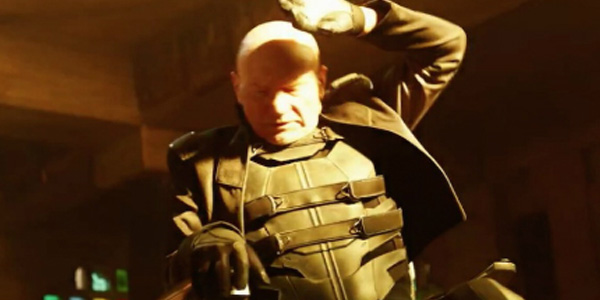
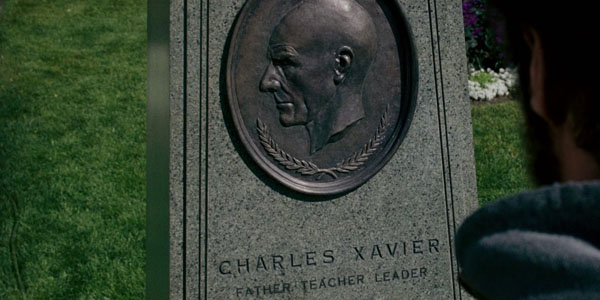
The single most enduring question from the X-Men franchise is just how Professor X manages to survive the bad case of explosion that he contracts from Jean Grey in The Last Stand. It looks remarkably fatal, and all post-credits scenes aside, bringing him back from that without a solid reason would have been folly in the eyes of the fans, even if they hated The Last Stand. But that's exactly what happened as we were expected simply to forget everything that came with The Last Stand in regard to Professor X, who was plainly alive and well, and not his walking twin brother, as has been offered as the explanation. Aside from the silly explanation that is offered on the DVD commentary of The Last Stand, there is no in-universe explanation of how the Professor manages to defy death. Some might argue that comic books always retcon deaths and bring their characters back, but at least they establish some narrative reason, regardless of how stupid it might be. And worse, the epilogue presents the returns of Jean Grey and Cyclops in such a way that we are supposed to remember their deaths, which both happened in The Last Stand in one way or another so the messages are mixed at best.

1. Did The Last Stand Even Happen?

Frankly, this is clearly a trick question since the single most obvious agenda behind Days Of Future Past seems to have been to fix the errors of the past. When the mutants of the future timeline talk about being given a second chance, and about how close they've come to extinction the words might as well be in reference to the wayward third X-men film and the subsequently Origins spin-off. Singer has been very quickly to eradicate those two films from memory - only retaining Kitty Pryde (likely because of her importance to the plot here) and Kelsey Grammer as Beast (because even in the mire of the film, he stood out as excellent) from the cast - even if he required The Last Stand to exist for the nostalgic pay-off at the end of his sequel. That of course leaves endless possibilities for the young cast of the X-Men: while it is a pleasant idea, it's unlikely we'll see the old cast back on screen (other than Hugh Jackman's Wolverine) because their stories feel resolved, and we can look forward to future X-Men movies exploring some of the storylines we've already seen with impunity. What did you think of X-Men: Days Of Future Past? Share your thoughts below in the comments thread.

Contributor
Contributor

WhatCulture's former COO, veteran writer and editor.