X-Men Days Of Future Past Trailer: 6 Time-Travelling Headaches Already Created

Time travel: the quickest way to confuse your entire audience.

The X-Men films are no stranger to continuity problems. Ever since the disaster that was X-Men: The Last Stand, the series has flipped back and forth between respecting the continuity set out by that awful film in spite of its faults (as The Wolverine did) or outright ignoring it (as X-Men: First Class did). Although the series got an honest reboot a couple of years back with X-Men: First Class, it was clear the producers were still holding onto the old cast for various unexplained reasons (perhaps because they hadn't quite got their money's worth on the outrageous amounts of talent in the original ensemble), and to a similar extent, the continuity of the original trilogy. Now we are seeing what we rarely do with rebooted franchises - both casts, old and new, are on a collision course in the time travel based X-Men: Days Of Future Past, where they will resolve all the problematic continuity once and for all. It's commonly-known that the new X-Men film is going to fix the franchise's extremely rocky timeline and potentially eradicate some of The Last Stand's worst excesses. However, there's a chance the film's time-travelling could confuse things all the more, and if we're looking at the already-bonkers new trailer, you can see that all sorts of hard questions are raised that will need to be answered. Enjoy our speculation, and try not to get a headache from all the time-traveling paradoxes...

6. How Does The Wolverine Post-Credits Scene Make Any Sense Now?

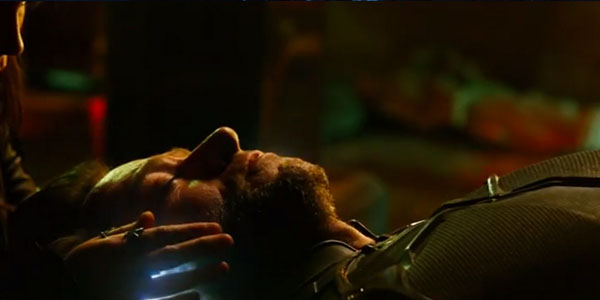
As an X-Men film, The Wolverine did exactly what it promised to do (that is, wipe any residual memory of X-Men Origins out of the audience's mind with a competent solo-outing), and little more. Arguably the most memorable scene in this film comes right after the credits have rolled. In this scene, Wolverine (Hugh Jackman) is going through airport security, when Professor X and Magneto confront him and tell him that the world is in grave danger from some kind of anti-mutant super weapon. Not only was it a great geek moment it was an effective teaser for what was essentially a reunion of the old X-Men movie team. Cut to almost a year later, when we find ourselves watching the Days Of Future Past trailer, where the three of those characters are in a post apocalyptic wasteland - presumably as a result of the weapon Magneto was going on about. The world looks pretty devastated by the time of the next film, which begs the question - how did that even happen? The Wolverine takes place in a relatively modern world (albeit with some fantastical elements like the occasional robotic ninja) and by the time Days of Future Past rolls around, Magneto & Professor X look not much older at all, and the world is in ruins. Did Trask industries (mentioned in The Wolverine scene) manage to make and activate an anti-mutant super weapon within basically a minute's notice? Unless they explain the change with some very clever exposition, it'll be hard to ignore the fact that the teaser in The Wolverine just doesn't match up with the following film. Forward thinking is always important with these things...

5. How Will Correcting The Future By Changing The Past Work This Time?
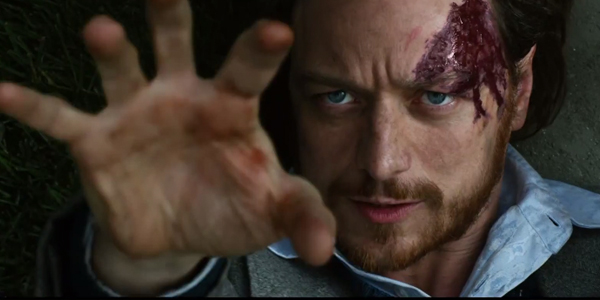
Oh boy, this is a thorny one. This plot device has been used time and time again in cinema in everything from 1984's The Terminator to 2012's Looper, but the X-Men continuity creates a unique problem with it: what will become of the older X-Men cast? Half of the cast in this particular X-Men film reside in a continuity that they are essentially trying to erase. If everything goes according to plan and Young Magneto and Young Charles unite to prevent whatever evil it was from devastating mutant-kind, one would assume it would contradict everything that happened after the "past" period in this movie - circa 1970. Would this mean the end of Ian McKellen and Patrick Stewart's iconic takes on these two characters, or will the future timeline simply pull a hard reset back to the days of X2 and before? Or will the future branch off into its own "alternate future" timeline, allowing the past and present X-Men casts to separate once again and re-unite for another crossover feature? The possibilities here boggle the mind, especially when thinking ahead to the X-Men film series after this one. Like the comics they are based on, they can literally go anywhere after bringing time travel into the mix.

4. Will The Future Be More Than Just A Framing Device?
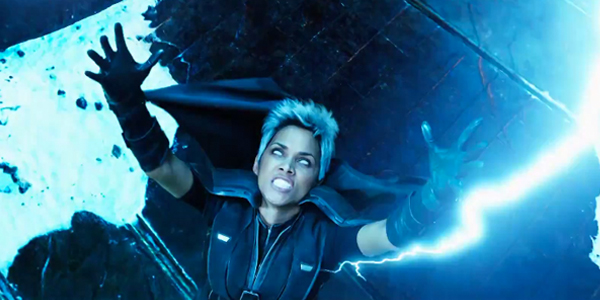
Whenever time travel is employed, the future plays a varying, but always critical, role. Most of the time, it is relegated to merely the role of a framing device, putting greater emphasis on the ripple effect created by the past. It seems the post-apocalyptic future in X-Men: Days of Future Past is on track for the Terminator route - a future so bad it only exists as a plot device to motivate the protagonists in the "present". And while the trailer indicates that is where the focus will lie, it seems there is a chance of the future playing more than just a supporting role. There has been a lot of the future shown in this trailer - on top of just the monologues from Charles and Erik, there are small sequences featuring everyone from Kitty Pryde to Storm and the other supporting mutants from Xavier's school. This all begs the question: how large will these rolls be? They will either be glorified cameos in the opening sequence, or have their own subplots and extended action sequences, which could make the proceedings all the more cluttered. But then, if they manage to prevent the mutant apocalypse, any sequence set in the Future will be rendered meaningless. The whole problem with "the future as cautionary tale" thing is it tends to make one plot or the other fairly one note (do you remember much of anything in the future-set Terminators other than bleak wastelands and explosions?). As of now, it seems the future is more in use for framing device purposes as of now, but we'll get more as this story develops.

3. How Does Professor X Talk To Himself?
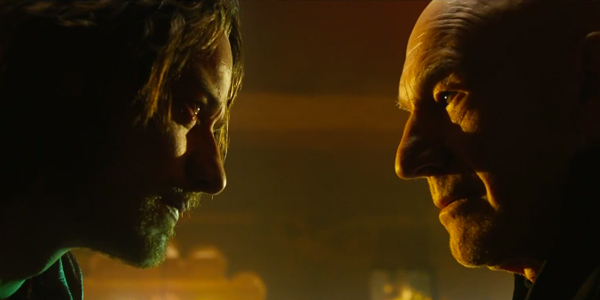
One of the most compelling scenes in both trailers to this new X-Men movie is a sequence featuring Patrick Stewart and James McAvoy talking to each other. It is a fan-baiting moment, but just how much will the movie have to work to make it make sense? The characters are separated by decades of experience and time, but somehow during the course of the picture will have the opportunity to exchange wisdom. The answer to this question will no doubt come when they explain how the time travel in the vaguely defined technology of X-Men works. Since they are only sending Wolverine's consciousness back in time, one would assume that Cerebro has an important part to play, but that is something of a science fiction cheat - to make a well-defined device do something it clearly hadn't been able to do in previous entries. If that is their method of time travel, they must figure out a way of justifying it within the canon itself. Once we've settled on Cerebro, we've got quite a few options here, involving Cerebro or Xavier from the future speaking through Wolverine or speaking directly to his past self through some kind of cross-time mind-link (it could happen), but the more you think about it, the less clear the answer becomes. Unless they are planning on transporting the young cast to the future, in which case they have opened a completely different can of worms that will be undeniably entertaining but infinitely convoluted.

2. Old Wolverine = Young Wolverine?

Wolverine, as the previous X-Men movies have established, is ageless; Hugh Jackman, as the powers of observation have established, is also apparently ageless. Take note, future producers: this is how good casting works. Of the entire cast, it seems Logan is the only one who takes equal part in both story lines, both Future and Past. According to the trailer and the plot synopsis of the film, Xavier's plan involves sending Wolverine's mind back through time into his past self in order to encourage the alliance between Xavier and Magneto. This boils down to another question of specificity: how will this effect both Wolverines (past and future)? This film has plenty of convoluted plot details without having to throw a schizophrenic Wolverine in the mix, so one would assume that old Logan completely takes over the body of young Logan - for all intents and purposes, taking the place of his younger mind. This begs the question: what will happen after that? If they manage to correct the future, will Wolverine remain as the only person who remembers the post apocalyptic wasteland they averted, or will he revert to his younger brain once the future has been effectively reset? After the events of the film, this could leave Logan a completely different character, motivation wise. Imagine this: once X-Men: Days Of Future Past ends, Logan's future mind is stuck inside his younger body, and he has to watch people who were his peers and mentors grow up from young men and women, while he remains the same age he's always been. It's as elegant a way to shoehorn Hugh Jackman into the rebooted cast as any...

1. What's Up With The Completely Insane Technological Leap?

The past X-Men films have wisely kept their science-fiction technology on the conservative side, for obvious reasons. The X-Men had futuristic body armor, Professor X had a mind-reading device, but otherwise the technology stayed relatively within the possibilities of the modern era. But in this new film, instead of playing fast and loose with small technological changes, Days Of Future Past takes a massive leap into the future, severely upsetting its own continuity from the previous films. This jump from The Wolverine (or even just X-Men 3) to Days Of Future Past implies a step from "the near future" to "the far future" that doesn't seem technologically possible. As mentioned earlier, it is implied in The Wolverine that Professor X and Magneto knew of the as of yet unexplained ultimate weapon before this war broke out, but were unable to prevent its use. It is theoretically possible that Trask Industries unleashed their arsenal very soon after Logan's meeting with those two, but the instant development of spaceship-like aircraft (not just the X-Jet) and futuristic fortresses requires much more suspension of disbelief. Perhaps it took Trask Industries some time to unleash their ultimate weapon, but the ages of Storm, Kitty, and Iceman implies that it cannot be too far after the end of X-Men: The Last Stand (whose continuity they are still wrestling with, lest we forget). If this winds up to be another case of "corporate arsenal kept secret from everyone including the highest members of the government", we can accuse the writers of at least one count of severe laziness. How this paradox is to be solved remains to be seen, but one must wonder what ever became of the relatively grounded world X-Men 1 through The Wolverine took place in... Do you have any questions about the new X-Men movie (or just the series' continuity in general) that we missed? Drop them in the comments along with any theories of your own.

Contributor
Contributor

Self-evidently a man who writes for the Internet, Robert also writes films, plays, teleplays, and short stories when he's not working on a movie set somewhere. He lives somewhere behind the Hollywood sign.