Zack Snyder's Justice League Review: 7 Ups & 6 Downs
Zack Snyder takes back control of his controversial superhero epic.

The time has finally come. More than three years after Justice League tumbled into cinemas amid massive post-production woes - including director Zack Snyder's replacement by Joss Whedon and the whole Henry Cavill mustache debacle - Snyder's original vision for the movie is finally here.
Thanks to the sustained popularity of the #ReleaseTheSnyderCut movement, the director's four-hour cut of Justice League hits HBO Max and other digital platforms this week, allowing fans to see a version of the movie Snyder hoped to release back in 2017.
And while Zack Snyder's Justice League is by no measure a great movie, it is a formidable attempt to change the narrative surrounding the widely-mocked superhero tentpole - and a mostly successful one at that.
It has its own issues and hangups for sure, but also delivers a shockingly distinct vision for what was supposed to be the DC Extended Universe's answer to The Avengers.
All in all, the Snyder Cut ditches the drably formulaic nature of the Whedon film and makes it actually feel like a Snyder film again - operatic, ridiculous, and often ludicrously entertaining.
Temper your expectations and there's a worthwhile movie in here, even if its 242-minute runtime proves undeniably unwieldy...
Downs...
6. The Frequently Terrible CGI

Visual effects have never really been the DCEU's strong suit - even the franchise's better films like Wonder Woman have suffered from garishly blurry, plastic-y CGI, and the theatrical release of Justice League was surely the series' worst offender. The Snyder Cut, sadly, isn't an exception either.
For starters, most of the VFX retained from the 2017 movie have been basically untouched, and though $70 million was spent to bring the Snyder Cut together, there's no world where 2,650 new effects shots produced in just six months could ever end up looking spectacular.
And so, fans need to appreciate that the Snyder Cut is a work of compromise, with visual effects often resembling what you'd expect to see in a first draft rough cut rather than a polished end product.
Though it's a major relief that Henry Cavill's infamous CGI mug is no more, the green screen elements often clash harshly with the physical actors, and it's painfully clear the project was basically rushed to completion to give HBO Max a buzzy blockbuster project this year.
5. Steppenwolf Remains A Mediocre Villain

If you were hoping that the Snyder Cut might transform the villainous Steppenwolf (Ciaran Hinds) into a worthwhile villain, you'd best lower those expectations now.
While this new version of the film does expand his motives and make him feel like more of an actual character, he's still a damp squib when it's all said and done - a typical CGI monster who wants to enslave the world and so on.
The only remotely interesting facet of his character is his apparent enslavement by his nephew Darkseid (Ray Porter), a plot element removed almost entirely from the Whedon Cut, but despite a spirited vocal performance from Ciaran Hinds, he's still a sub-MCU baddie all things considered.
4. The R Rating Adds Absolutely Nothing

One of the theoretical benefits of the Snyder Cut's HBO Max release is that Snyder isn't beholden to Warner Bros.' desire to release a PG-13 movie in cinemas. And so, this new version of the film touts a more adult R rating for "violence and some language."
Ultimately, though, the less family-friendly affectations add very little that's actually worthwhile, and end up feeling more like an attempt at lazy edginess rather than a sincere effort to reconfigure the tone and characters.
In terms of violence, splashes of blood are added to much of the action, particularly a rather disturbing reworked version of the opening sequence in which Wonder Woman (Gal Gadot) battles a team of terrorists, who now leave streaks of blood on the walls after Diana slams them into them.
Language meanwhile devolves to a few of the superheroes dropping F-bombs, which ends up feeling forced, even comical, given how utterly unnecessary they are.
Basically, the film could be PG-13 and lose nothing meaningful.
3. The Exhausting 4-Hour Runtime

While on one hand it's commendable that Warner Bros. and HBO Max granted Snyder the freedom to release a titanic four-hour version of his story, there is also something to be said for restraint, especially for a filmmaker as self-indulgent as Snyder.
As a result the Snyder Cut is certainly an overlong enterprise, and though it's sensibly chunked into seven chapters, there's the unmistakable feeling that Snyder included every single piece of usable material he shot for the film.
And so, the Snyder Cut includes at least a few lengthy slow-motion musical montages too many, ensuring that if viewed in a single sitting, it ends up feeling like a bit of a slog.
It's still hugely preferable to the extreme alternative we got back in 2017 - a bare minimum two-hour superhero dud - but the saying "kill your darlings" exists for a reason.
Few films reach their greatest form by including everything, and sometimes a little executive oversight isn't a bad thing (though given WB's tendency for interference, Snyder has probably earned a pass here).
2. Zack Snyder's Tonal Issues Continue

One of the most prominent and persistent issues with Zack Snyder's movies is tone - the guy just doesn't know how to strike a consistent mood or introduce comedic elements without generating mood whiplash.
Take Man of Steel, which peppered cringe-worthy humour - like the infamous "I think he's kinda hot" gag - between carnage which clearly caused plenty of death.
This is apparent from early on in the Snyder Cut, particularly the aforementioned scene where Wonder Woman "heroically" splats a number of terrorists against walls in front of a group of schoolchildren, even seeming to melt their leader with her bracelets, while sending rubble showering onto the cops waiting outside.
The Internet's also likely to have a field day with the ridiculous sequence where The Flash (Ezra Miller) rescues Iris West (Kiersey Clemons) from a car accident - a bizarre slow-motion aside involving 200% more hot dogs than anyone could've ever expected.
There's nothing here likely to invoke fans' ire on the level of Superman (Henry Cavill) snapping Zod's (Michael Shannon) neck or Batman (Ben Affleck) blowing bad guys up with reckless abandon in prior DCEU films, but all the same, Snyder remains a filmmaker with only a scarce understanding of tone.
1. It's Still A Mess (But An Interesting One)
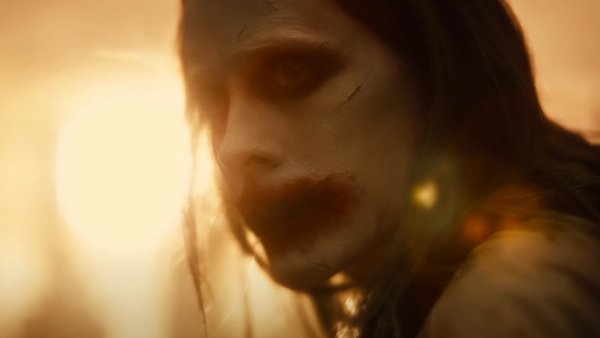
While the Snyder Cut largely succeeds where the original film doesn't, it does have to be said that the overall experience is a wildly messy one - if at least interesting enough to often offset this.
From the semi-random inclusion of minor melodramatic subplots to the numerous exposition-heavy flashbacks, overabundance of sloppy CGI, and an insane epilogue sequence that's sure to be hugely divisive, it's tough to call this an entirely coherent vision.
The budgetary and time restrictions can only partially explain these issues, and while it's admirable that Snyder wanted to give fans everything he possibly could - this likely being his final foray in the DCEU and all - the end result also suffers from the film's clear desire to be all things to all people.
But again, the Snyder Cut is an infinitely more interesting and entertaining film than what we got back in 2017, and here's everything it gets right...
Ups...
7. It's Effortlessly Superior To Whedon's Justice League

Even those who find the Snyder Cut excessive and uneven will struggle to favour the more concise Whedon Cut, because Snyder has made such a concerted effort to right the wrongs of that studio-demanded version.
Almost every scene and quip that audiences hated about the Whedon film has been deleted: in particular, the awful phone footage opening of Superman, the cheap-looking rooftop introduction to Batman, and the random Russian family from the finale have all been blasted into space.
Some of Whedon's more questionable additions such as the squirm-inducing scene where The Flash ends up on top of Wonder Woman and the casually sexist "humour" is also gone.
Countless scenes have been re-edited or re-structured for the better, particularly Steppenwolf's battle against the Amazons on Themyscira, and all other major action sequences have been drastically overhauled with exciting new footage.
All in all, the Snyder Cut shows just how egregiously neutered the Whedon version was, delivering a solid impression of the movie Snyder originally hoped to give us in 2017.
6. The More Relaxed Pacing

The four-hour runtime is definitely an issue here, but it's also tough to argue too much with Snyder's more relaxed, laid-back pacing compared to the theatrical release, which was forced to race through exposition and action at a full sprint in order to achieve Warner Bros.' mandated two-hour length.
As a result, Snyder is allowed to linger on small character moments and just let scenes unfold at a natural clip rather than slicing away any shots that don't actively move things forward.
If a four-hour sit sounds unreasonably demanding, the inclusion of story chapters at least creates natural split points for audiences who would prefer to watch it over a couple of sittings.
5. Cyborg Gets Redeemed

One of the biggest disappointments of the Whedon Cut is the baffling sidelining of Cyborg (Ray Fisher), who was intended to be introduced ahead of his own solo movie, yet was given such a piecemeal showing that those plans were ultimately scuppered.
Though Cyborg's CGI suit is still relatively rough looking, perhaps the Snyder Cut's greatest victory is in restoring masses of backstory and character work for the character.
The ambiguous, personality-devoid Cyborg of the Whedon Cut is replaced with a superhero whose tragic past is acutely understood, and who is confirmed to be the most tortured member of the team.
No other superhero benefits more from the Snyder Cut than Cyborg, even if we'll sadly never know exactly how the character could've evolved in future DCEU movies.
4. The Fan Service Really Works

Though Joss Whedon certainly tried to make his version of the film a fist-pumping, optimistic avalanche of fan service, it didn't really work, but this new version of the film is practically awash in crowd-pleasing moments.
Beyond the aforementioned redemption of Cyborg, fans will be elated to know that Superman's resurrection is considerably more exciting, Snyder's original plans for a black-suited Superman restored in gloriously badass fashion.
A number of characters removed from the theatrical release are also back in the mix - beyond Darkseid, his servant DeSaad (Peter Guinness) appears for a few scenes, and Ryan Choi aka Atom (Zheng Kai) is seen hanging out at S.T.A.R. Labs with Silas Stone (Joe Morton).
The Snyder Cut also places a far greater emphasis on the team aspect during action scenes, with a greater abundance of set-pieces which feel as though ripped directly from comic panels.
Fans left underwhelmed by the 2017 movie should find themselves decidedly more satisfied by Snyder's version, with its clear desire to give them exactly what they want.
3. Junkie XL's Fantastic Musical Score

The theatrical cut of Justice League was originally supposed to be scored by Tom Holkenborg aka Junkie XL, who completed the entire score before being replaced with Danny Elfman when Whedon came aboard.
While Elfman's score is actually one of the Whedon Cut's stronger elements, the Snyder Cut benefits from an entirely new score created by Junkie XL for this new version of the movie.
The score is firmly within the composer's expected wheelhouse, with a focus on epic drum beats, searing synths, and operatic swells, ensuring Snyder's grandiose vision is given an appropriately epic musical accompaniment.
Also, those who loved Hans Zimmer's Man of Steel score will enjoy a neat reprise of the main theme, "Flight," during one of the movie's most pivotal moments (and you can probably guess what that is).
2. The Finale Is A HUGE Improvement

Beyond the added screen time given to Cyborg, the Snyder Cut's major triumph is in giving the final battle against Steppenwolf and the Parademons a major overhaul.
Though many elements of the battle in the Russian city of Pozharnov remain, the sickly red-tinted sky from the Whedon Cut is gone, and the League's fight with Steppenwolf is significantly expanded.
The battle trains far more of a focus on the pivotal involvement of Cyborg and The Flash as well as the Mother Boxes, in turn delivering a finale which actually feels like an epic payoff to the prior three-plus hours, rather than the more generic, forgettable climax of 2017.
1. It's A Fascinating Experiment Which Should Satisfy Fans

Whether you end up loving, liking, or hating Zack Snyder's Justice League, the journey getting here and the end result is nothing if not completely transfixing.
This is a film which by all rights should not exist in this form, and yet, it does.
It won't result in any sequels - despite the film's epilogue teasing more stories to be told - but may be part of a wider tidal shift in entertainment media, pertaining to both the relationship between companies and their fans, and the impact of streaming media on the movie landscape.
It has its own issues and possesses not an iota of restraint about itself, but the fact that Snyder was able to finally bring his version of the story to fans who passionately campaigned for it is at least a small pleasure in this deeply crazy and uncertain time.
It is, perhaps more drastically than any other Director's Cut in movie history, a successful, radical departure from the iteration originally released to audiences.