10 Great Video Games You'll Never Play Again (And Why)

Sometimes that first impression is all you need.

Many of the greatest video games of all time aren't always those we come back to over and over again. And that sounds weird, right? After all, isn't replay value one of the signs of a great game? Sure, maybe in the olden days when magazines used to systematically judge games by the rigid categories of graphics, sound, replay value and gameplay, but these days, it's totally accepted that games can be great without having to keep you returning obsessively. If a game has a profound story that can grip your heart with a tightly-clenched fist and not let go (in a figurative sense, rather than Mortal Kombat, way), then a single playthrough is usually enough. Like passionate but short-lived relationships, some games may not keep you in their company for a very long time, but the memories made will stay with you forever. This list is a tribute to those games that left a permanent mark on your personal history of video game experiences, but that you know deep in your heart you'll never go back to - either because playing them again just wouldn't be as magical, it'd be too traumatic, or simply because bigger, better things have appeared in their stead.

10. Demon's Souls

What it is: The first entry in the infamously challenging Action-RPG series that would go on to bring us Dark Souls and Bloodborne.3. Why It's Great: Demon's Souls was like nothing anyone had played before. Its relentless yet fair difficulty was something that had no right to be popular in a gaming generation full of people who were increasingly used to having arrows telling them exactly where to go, and QTEs that would make the player look incredibly skillful with minimal effort. Demon's Souls punished clumsiness and haste, and rewarded dilligence and patience. Unlike so many AAA games, death was actually a thing to fear in Demon's Souls, and could result in hours of lost game time. But you learned from these experiences, and it meant that your successes - particularly victories over the game's truly menacing, majestic bosses - would make you feel truly euphoric, in a way that other games couldn't possibly achieve. Why You'll Never Play It Again: Demon's Souls was the beginning of something beautiful, and for that it has the gaming community's eternal gratitude. Coming out relatively early in the last console generation, the game is decidedly uglier and clunkier than its successors, though still fantastic compared to most of everything else out there. Demon's Souls, however, is a PS3 exclusive, which means that current-gen gamers probably won't be able to get their hands on it. The other issue is that Demon's Souls is essentially the 'rough draft' for its successors, each of which adds its own enhancements and tweaks to the unique Souls gameplay formula.

9. Grand Theft Auto IV

What It Is: The first GTA game to be released on the Xbox 360 and PS3. The plot followed Eastern European war criminal Niko Bellic, a man who's desperate to escape his violent past and start a new life in Liberty City. Why It's Great: Rockstar seemed to have reached a certain kind of peak with San Andreas. The game world was huge, the amount of stuff to do was unprecedented, and the level of silliness and satire in the series had reached new heights. That's why it was such a shock when GTA IV came out, with its much darker, dirtier tone than the wacky San Andreas. Many people bemoaned the story which - if the player made the wrong choice - could have a tragic ending that lingers hauntingly in the memory. GTA IV was a brave move by Rockstar, taking the series in a completely unexpected direction. Why You'll Never Play It Again San Andreas and Vice City have that nostalgia factor, while GTA V's Los Santos is a stunning, richly detailed environment that's always a joy to revisit. Another thing that the aforementioned games have is that trademark Rockstar humour, which makes them instantly accessible. GTA IV has neither the humour, the nostalgia factor nor the carnal, playful appeal of other games in the series. If people are looking for a GTA to just jump into and mess around in, then IV has none of the traits they'll be looking for. Sure, GTA IV arguably has the best story, but it's the kind of story that feels so weighty and choice-driven, that playing through it again would feel a bit like trying to rewind your destiny. For better or worse, you've made your choices in GTA IV. Now it's time to leave them behind and move on.

8. Call Of Duty 4: Modern Warfare

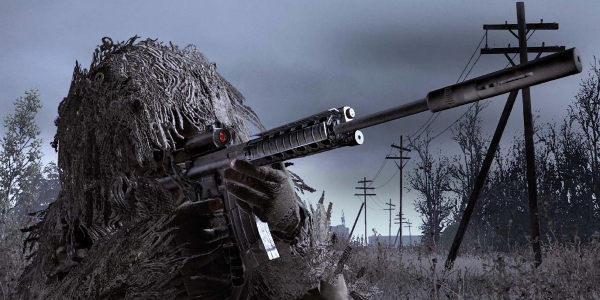
What It Is: The fourth game in Activision's 'Call of Duty' series, and the first game (of far too many) in the series to move the action away from World War II, and bring it into the present day. Why It's Great: You may not believe it, but there was once a time when the idea of a realistic modern-day shooter was really pretty revolutionary, and World War II was the overdone cliche that people were bored of. The first Modern Warfare had a fantastic campaign that made every subsequent game in the series look like a weak imitator by comparison. That moment... in the helicopter... with the bomb (I'll say no more); that beautifully tense sniper level; the riveting conclusion. CoD 4 was filled with sublime moments that showed off the potential of FPS storytelling. Why You'll Never Play It Again: Ok, in this case, if you're reading this list then you may be tempted to revisit Modern Warfare, but it's the kind of series that has become as routine and incrementally progressive as an annual sports game. The general rule is, people mindlessly buy the latest game in the series (usually having pre-ordered it before finding out that it's kind of like the previous one, but with more DLC you have to splash out for), then forget about every game in the series that came before it. CoD 4 has been unfairly buried in the rubble created by its increasingly regurgitated and chaotic succesors, but such is the brutal way of the big money AAA games industry.

7. Far Cry 2

What It Is: The second game in the Far Cry series, and the first that was developed by Ubisoft, rather than Crytek who went on to form their own studio and work on Crysis. Why It's Great: Far Cry 2 took the series' open-world, outpost-tackling gameplay to the African Savannah - a vast hostile environment that's rarely been explored in video-games. The game world is huge and admittedly quite barren, but has its own desolate, arid beauty that's a little more distinctive than the lurid settings of Far Cry 3 and 4. The storyline is surprisingly sensitive in its depiction of a political power struggle in a turbulent country, and in its Buddy system where actual named characters come to your aid - and possibly die in awesome moments of unpredictable, emergent gameplay. Then there's the game's ending, which continues to fuel fan debates to this day; just who really was the Jackal? Why You'll Never Play It Again: Far Cry 2 has a unique environment is a joy to explore, but it simply lacks the larger-than-life character of its successors - which are filled with eccentric villains, psychedelic drug sequences, and tons of wacky things to do that turn their environments into veritable playgrounds. Far Cry 3 and 4 are less punishing, less realistic, and more refined than Far Cry 2 - whose many gritty qualities and facets just aren't glamorous or overstated enough to draw people away from its successors.

6. Heavy Rain

What It Is: A story-driven 'interactive drama' game from Quantic Dream that presented players with multiple possible story arcs depending on the decisions the player made. Why It's Great: Giving players a sense of meaningful, consequential choice in video games is one of the biggest challenges faced by developers. Heavy Rain, which sees you control four different characters hunting down a notorious child killer, is extremely cinematic, and insanely suspenseful simply because of the fact that you know that simple mistakes can kill off major characters, which has drastic implications for how the story pans out. It may not be long, but it's extremely gripping while it lasts. Why You'll Never Play It Again: Of all the video game genres, the 'interactive drama' style is probably the least conducive to replayability. All the action in the game is based on quick-time events, and much of the suspense comes in not knowing what's about to happen, then suddenly fumbling around as your character gets attacked by someone, or needs to go through the proper kissing motions so they can jump into bed with someone. The whole game is based on small moments with big consequences, and the entire impact of that is diminished once you know those moments are coming, and once you know all the twists and turns the plot takes.

5. Outlast

What It Is: An indie first-person horror game released in 2013, which terrified all but the staunchest psychopaths and was a popular subject for many shriek-filled Let's Play videos. It puts you in the role of a reporter who investigates the strange goings-on at an old mental asylum. Why It's Great: Outlast is part of the wave of 'helpless horror' games that culminated in the release of AAA survival horror hit, Alien: Isolation. You don't have any weapons in the game, with your most important bit of kit being your night-vision camera, which you're always horrifyingly aware has a limited battery supply. This camera is both a great survival tool and a means of building up suspense, as witnessing the ghoulish, murderous patients of the asylum through night-vision is almost as horrifying as stumbling around in the dark. The game's main goal is to build up suspense, then to be teeth-grittingly terrifying as you get spotted and have to flee your pursuers. It successfully achieves this thanks in large part to the camera, which gives Outlast the feel of a found-footage horror movie. Why You'll Never Play It Again: For all its excellent presentation and nail-biting gameplay, Outlast has one distinct disadvantage. Unlike games like Amnesia, Alien: Isolation and the P.T. demo (R.I.P), it doesn't use random enemy generation. So should you replay a sequence or the whole game, enemy positions will be the same each time. This means that the fear factor (i.e. the very reason you play the game) diminishes should you play it again, which sadly means that the game's longevity doesn't, er, outlast its first playthrough.

4. Spec Ops: The Line

What It Is: A third-person shooter from 2K Games released in 2012, in which an elite Delta Force squad gets sent into an abandoned, sand-blasted Dubai on a reconnaissance mission. Why It's Great: What starts off as a pretty generic third-person shooter turns into one of the darkest, most powerful video game stories ever, particularly in the modern shooter genre. While the gunplay is yeah-OK, the game is most memorable for its harrowing imagery and situations you find yourself in - which are among video games' best attempts to date at exploring the horrors of war (by way of Joseph Conrad's Heart of Darkness, from which Spec Ops takes its inspirations). Why You'll Never Play It Again: Spec Ops is an odd combination of an incredible story with very ordinary gameplay. The harrowing plot is already likely to divide people about whether they really want to play through it again (excellent though it may be), but what will deter you is the prospect of running through small, homogeneous desert environments, shooting the same old people with the same old arsenal of standard military weapons. There are some truly outstanding gameplay moments along the way, but their grim nature is of the sort that many people will be quite content with having experienced just the once.

3. Gone Home

What It Is: An indie first-person exploration game made by Fullbright, in which a young woman returns from a yearlong trip to her family home in the 90s, uncovering clues and secrets about the events that occurred over the past year. Why It's Great: While exploration games have slowly risen to prominence in recent years, Gone Home remains the best of them. Throughout the three or so hours of the game's length, you simply wander around the house, opening drawers, switching on lights in rooms, and generally nosing around. The atmosphere is incredible, taking its cues from horror games while at the same time feeling welcoming and nostalgic. The game lets you interact with just about anything - from ketchup bottles to cassette players - making it extremely immersive for the time that you spend with it. Why You'll Never Play It Again: Despite being a touching tale told through your interactions with the environment, Gone Home relies on horror tropes to keep you gripped throughout its incredibly short story. It feels a bit like you're a kid who's been left home alone for a few hours, enjoying the freedom to fiddle with everything, but still running quickly past the entries to dark rooms, and feeling jumpy at every creak and other weird noise the house makes. Once you've played through Gone Home, you don't feel like a kid any more, because you're wise to its undeniably brilliant little tricks that keep things suspenseful. The build-up to the ending is also incredibly tense, as there are hints that you might be onto discovering something terrible. Gone Home is invested so heavily in taking the player on this single emotional journey, that it just wouldn't be the same doing it again, but that shouldn't deter you from experiencing this poignant first-person snooper.

2. BioShock: Infinite

What It Is: The third (and final?) game in the BioShock series, and the first one to be set outside of Rapture, this time taking players to the airbound city of Columbia. Why It's Great: Gamers became extremely attached to the fallen underwater dystopia of Rapture. It remains one of the most impressive examples of video game architecture, and embodies all the city's individualistic values. To completely abandon Rapture's moody, hallowed halls for the bright and eccentric climes of Columbia was a bold move, and man were the results stunning. Gameplay-wise, Infinite spiced up the combat by adding an aerial dimension, courtesy of skywires connecting different parts of the city. The story, meanwhile, is an ambitious exploration of multiverses, and the dangers of religious zealotry and idealistic ideologies. Why You'll Never Play It Again: BioShock: Infinite is a very linear, on-rails experience (or should I say, on-skyrails experience? Eh, eh?). Sure, the game world of Columbia is beautifully designed, but there isn't much exploration to do, and there are few hidden corners and easter eggs around for you to seek out. Maybe BioShock could've taken cues from Naughty Dog here, who fill their games with unlockables that can only be used from a second play-through, or maybe a single playthrough is just fine, considering its memorable moments and breathtaking images will stick with you forever. Surely that signifies great value for gameplay?

1. The Walking Dead

What It Is: An story-oriented episodic adventure game in which players control a convict (Season 1), then a young girl (Season 2) trying to survive a zombie apocalypse. Why It's Great: In a lot of ways, The Walking Dead is an evolution of the kind of storytelling offered up by Heavy Rain. But where the Heavy Rain cast was a bit on the cold and aloof side, in The Walking Dead every person you meet feels truly memorable, with their own background or survival story to tell. Few games make you care about their characters as much as this; a feeling made all the more powerful by the fact that your choices seemingly affect who lives and who dies. Why You'll Never Play It Again: The Walking Dead is a game that doesn't let you retract your decisions or undo events that occur, and much of its impact comes from this true-to-life fact that time is irreversible. If someone dies, that's it, and you have to live with it. To just replay the whole thing and have more control over who gets to live and join your zombie apocalypse Dream Team would defeat the point. But then there is also the sense that, once you familiarise yourself with how Telltale games work, you realise that the choices you make are kind of an illusion. Towards the end of Season Two of The Walking Dead, it's clear that certain events in the game were just inevitable, trivialising many of the seemingly weighty decisions you had to make along the way. The Walking Dead is a brilliantly crafted game offering you the illusion of choice, with very little actual choice. Once this illusion fades away, the gravitas of your decision-making dissipates. What games can you never bring yourself to replay, despite them being fantastic? Let us know in the comments!

Watch Next


Contributor
Contributor

Gamer, Researcher of strange things. I'm a writer-editor hybrid whose writings on video games, technology and movies can be found across the internet. I've even ventured into the realm of current affairs on occasion but, unable to face reality, have retreated into expatiating on things on screens instead.