10 Hidden Areas In Video Games You Weren't Supposed To Find
Although these areas were meant to be remain secret, gamers found them anyway.
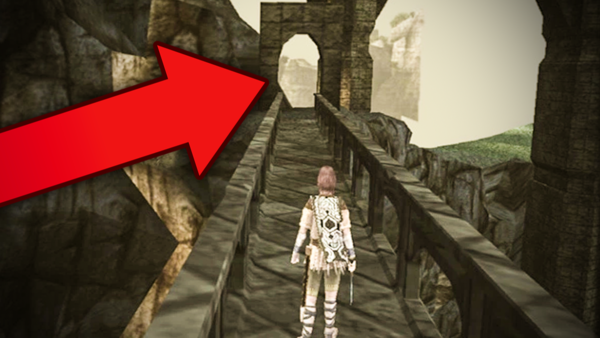
It's disappointing when gaming developers don't get the chance to implement every idea into a certain property. But at the same time, it's all part of the process. If there's a deadline to be made or the game's cartridge or disc ran out of space, a couple of mechanics, bosses, or levels may need to go.
However, if these elements are already done and dusted, deleting them can cause game-crashing bugs. In situations like this, it's less risky to disable access to the content rather than removing it.
But there are ways around it. By taking advantage of glitches or tweaking the code, players can enter rooms or levels that were supposedly lost forever. Rumours can circulate around whether these inaccessible places exist for years, making it more rewarding when they're proven to be real.
After discovering these elusive areas, players should get a newfound appreciation of the game in question. By glimpsing behind the curtain, they should gain more insight into the development process and see what could've been.
Although it's refreshing to discover a secret area in a game, it's more enjoyable when it was never meant to be found.
10. Jungle Book World - Kingdom Hearts: Birth By Sleep

Throughout Kingdom Hearts, our heroes have explored worlds based on Disney properties, including Cinderella, Peter Pan, and Fantasia. Despite having a dozen entries under its belt, Kingdom Hearts has never incorporated one of the most beloved Disney films, The Jungle Book.
However, the classic story nearly appeared in Kingdom Hearts: Birth By Sleep. Using cheat devices or modified ISOs, players can run around Rudyard Kipling's jungle world.
Despite being playable, the level is pretty bare-bones. There are no Jungle Book-based NPCs, enemies, or bosses. No character models of Mowgli, Shere Kahn, or Kaa can be observed in the data, implying the level got the chop early on. However, King Louie's throne can be found, meaning the jazz-loving orang-utan should've prominently featured.
Square Enix never offered an explanation why this level was left on the cutting room floor, but it may have to do with space limitations, story integration, or licensing complications (which is why Tarzan's world was removed from the original).
Though not officially a part of the Kingdom Hearts franchise, it's nice to see a small part of The Jungle Book appeared in Birth by Sleep, considering the film's lasting legacy.
9. Training Area - Tomb Raider: Angel Of Darkness
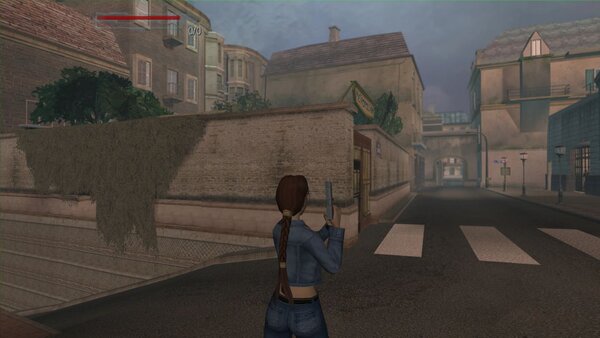
Though Tomb Raider: Angel of Darkness was intended to reinvent the franchise, this divisive entry nearly killed it singlehandedly. Due to its clunky mechanics, inconsistent pacing, and glitchy-heavy gameplay, this instalment is a sore spot for the brand.
These problems were exasperated by a very rushed development, which led to a heap of content being abandoned. One cut aspect was an extension of the opening tutorial in Paris, which allowed Lara Croft to perform more elaborate training.
Even though many planned elements never saw the light of day, this training section can be found through level-select cheats or with the debug mode. It seems like this area was scrapped late in development, considering it's mostly rendered and contains a bunch of dialogue, enemies, and items. Sadly, there's no way to complete the section, meaning it's impossible to continue onto the main campaign.
Although it's annoying when levels are discarded, this one has a happy ending. When Angel of Darkness was rereleased in Tomb Raider IV-VI Remastered, this training section was restored, allowing players to access it through normal conditions for the first time.
8. The Lake Of Mud - Bloodborne
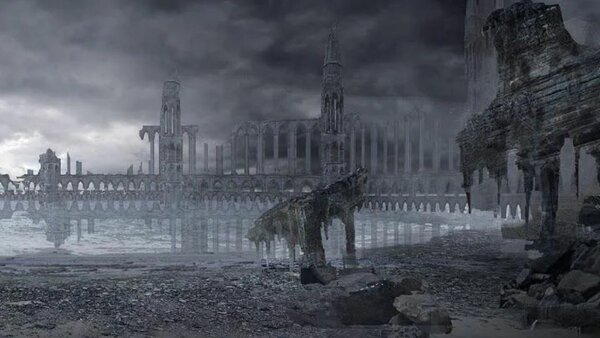
Hidden deep within the Chalice Dungeons in Bloodborne, there lies a place that can only be accessed using mods. Unused dialogue from Micolash was data-mined from the Gothic soulsborne title, referring to this mysterious territory as The Lake of Mud.
It's structured as a wide, open, swamp-like basin, which heavily contrasts with the rest of Bloodborne's urban landscapes and cosmic dreamscapes.
Though unfinished, The Lake of Mud is fascinating to explore since it contains an earlier version of the final boss, The Moon Presence. Rather than resembling an emaciated humanoid like the standard Moon Presence, this alternate antagonist is akin to a Lovecraftian monstrosity, adorned with whip-like tentacles.
Due to this area's unique appearance and the Moon Presence's... um... presence, some have speculated The Lake of Mud was meant to serve as the battleground for the final showdown at one point. But since the developers have yet to comment on this terrain, we cannot be sure, nor is it known why it was removed in the first place.
Despite being incomplete and tedious to find, The Lake of Mud is certainly worth a look.
7. The Control Room - Donkey Kong 64
With the release of Donkey Kong Bananza, now seems like a fitting time to reflect on DK's last true 3D outing, Donkey Kong 64.
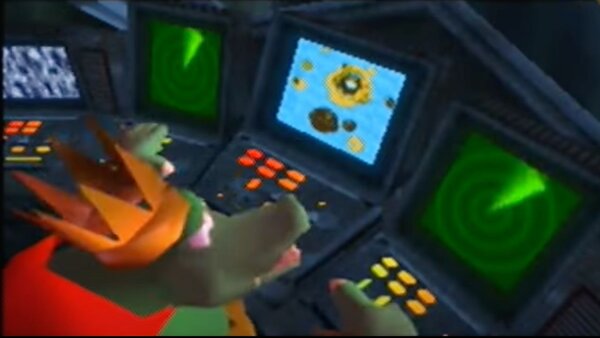
During the climax, DK and his buddies corner their arch-nemesis, King K. Rool, compelling the conniving croc to leave his Kremling ship via an escape craft. After pressing a few buttons in the control room, K. Rool flies away. Even though the control room can be seen during this cut-scene, it was never meant to be accessible, since the craft is irreparably damaged before our heroes set foot in it. Although the control room physically exists in the Kremling ship, the collision detection of the walls around it stop the player from entering.
However, the developers forgot about the collision detection underneath. By swimming below the vessel, it's possible to clip through the hull and sneak inside the control room.
There's not much to do, but it's a nice Easter egg (despite being accidental). What makes this secret funny is how this area can be visited after K. Rool's escape craft is bashed up, despite the fact the control room should no longer exist.
6. The Dam - Shadow Of The Colossus
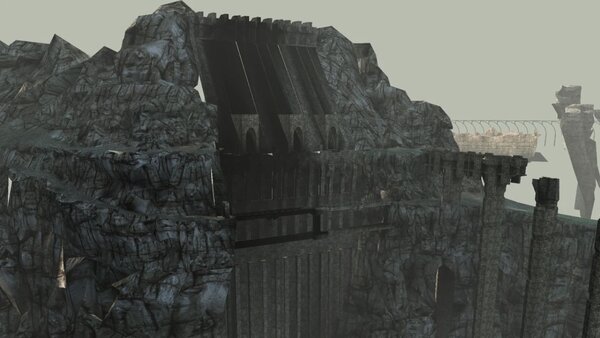
As beautiful as Shadow of the Colossus turned out, not every idea survived the development process. Several additional bosses and areas were planned but axed so early on, there are scare details about any of them.
One cut element that garnered a lot of interest is a dam in Grid I-2, discovered by Pikol four years after release. Although the dam seems generic, it'd be odd for the developers to craft a gigantic structure like this, solely to stick it in the background. The fact the dam is highly textured and fully-modelled further indicates it was supposed to have a purpose.
However, it's a mystery what that purpose could be. Some have theorised the dam was meant to lead to one of the many ditched bosses. Others suggest its purpose was to connect to another region that was later removed.
Though the dam was tricky to find in the original version, the debug menu in the PS3 remaster allows players to fly and warp to unused map regions, such as this one. A mod of the dam with collision detection was added in the 2018 remaster, making it easier than ever to explore this area.
5. Test Levels - Shadow The Hedgehog
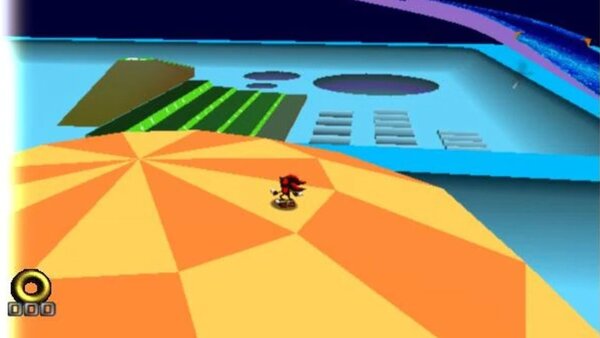
Since its early days, Sonic the Hedgehog has required an incredible level of speed, control, and precision to navigate through each level. For this reason, many instalments undergo a staggering amount of testing to ensure mechanics, collision detection, and character AI are up to standard.
Sega tends to leave these test levels in the final product, where they can be accessed through unconventional means. Although these testing grounds can be found lurking in Sonic Adventure 2, Sonic Heroes, and Sonic Origins, probably the most interesting one lies in Shadow the Hedgehog. Rather than having one testing level, this spin-off contains nine.
It may sound excessive, but it's understandable since Shadow the Hedgehog incorporates many crucial mechanics that had rarely been a part of the franchise before. Rather than overstuffing every mechanic in one testing area, the developers sensibly decided to spread them out. One test level focuses on basic movement, another on Shadow's firearms, another on his Chaos control, and so forth.
Despite the fact Shadow the Hedgehog wasn't well received, players should appreciate these hidden levels, since they highlight the experimentation and effort that went into the ambitious title.
4. Stormy Ascent - Crash Bandicoot

As rock-hard as the original Crash Bandicoot was, the crate-bashing platformer was supposed to be more challenging. Naughty Dog intended to include a level called Stormy Ascent, which made other infamous levels like Whole Hog and The High Road feel like a cakewalk by comparison.
Stormy Ascent is like an extreme version of Slippery Climb, with our Wumpa-munching hero traversing through a series of precarious wooden platforms suspended over a deep chasm. The area is filled with spinning knives, swinging pendulums, and collapsing boards, demanding pinpoint precision and timing. Worst of all, there are no checkpoints, meaning players need to complete the whole thing in one go.
Though Stormy Ascent was finished, Naughty Dog worried its punishing difficulty would stop progress dead for casual players, incentivising them to remove it. But over the years, players have figured out other means to access the level, earning it a reputation amongst hardcore fans.
Stormy Ascent became so iconic, it was made available in the 2017 remaster, Crash Bandicoot N. Sane Trilogy, allowing a whole new generation to be wowed and horrified by this nightmarish level.
3. Citadel - GoldenEye 007
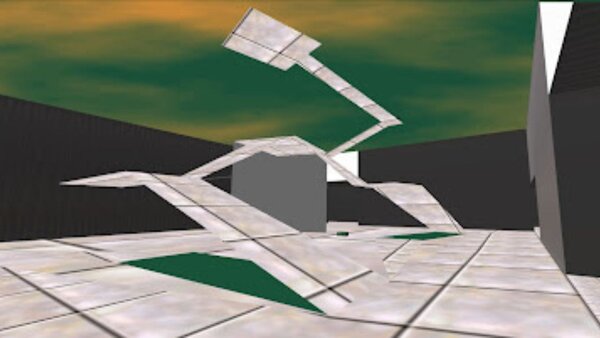
Even though the entries in this list were never meant to be witnessed by anyone but the programmers, you'd think it wouldn't take that long for someone to discover them. By studying the code or using a cheat device, it shouldn't be that hard for gaming experts to locate every hidden file.
But that wasn't the case for GoldenEye 007. Though veterans meticulously pooled over the N64 shooter to find every secret imaginable, the top-secret Citadel went undiscovered for six years.
Although the Citadel was speculated years prior, many images of this complex were proven to be fake. As such, it was believed the Citadel was a hoax, (much like the All Bonds Mode cheat that many GoldenEye 007 owners fell for).
But by using a GameShark code, the Citadel was revealed to be legit in 2004.
According one of the developers, "Citadel was a very rough test level designed during the early stages of multiplayer mode. It's not in the finished game in any shape or form." (That last part proved to be untrue.)
There isn't much to explore, but it's reassuring for GoldenEye purists to learn this long-rumoured level was real all along.
2. Minus World - Super Mario Bros.
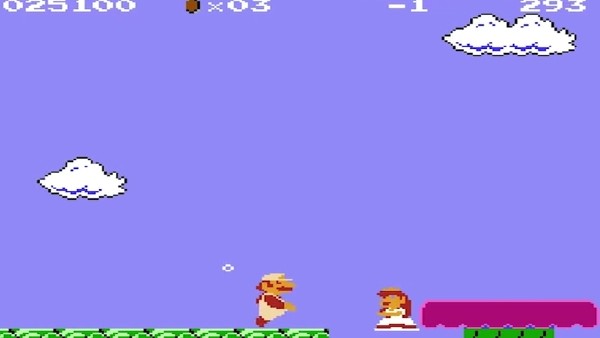
Being among the most celebrated games of all time, it's no surprise Super Mario Bros. has one of the most famous cheats in gaming history. In World 1-2, Mario can leap over the pipe at the end of the cave to reach three Warp Pipes, allowing the plumber to skip to World 2, 3, or 4.
Although most gamers during this time should be well-acquainted with this trick, there's another Warp Pipe that was never intended to be used. By breaking certain bricks near the exit and positioning Mario just right, the Goomba-stomping hero can phase through the wall. Though this trick gains Mario access to the most left Warp Pipe, the warp destination won't load properly.
As a result, Mario will be transported to a never-ending version of World 7-2, which is referred to as World -1 or (Minus World). Mario can swim around indefinitely in this level, and the only way to leave is by running out of time or lives.
Interestingly, the glitch works very differently on the Famicom Disk version, which was exclusive to Japan. After phasing through the wall and using the Warp Pipe, Mario gains access to three glitchy levels, one of which features a floating Princess Toadstool and a headless Bowser. Funniest of all, Mario can inexplicably "swim".
Despite the fact the developers worked their butt off to avoid such programming errors, none of them could've anticipated anything like this.
1. The Entire Game - Shadow Complex (Demo)

Although many entries on this list involve a small obscure room, Shadow Complex's hidden area is very, very different.
Prior to launch, a demo for Chair Entertainment's 2.5D platformer was released, giving players a taste of what to expect. Instead of being a cut-down version of the official game like the majority of demos, Shadow Complex's version contained the entire main campaign. To avoid players accessing everything outside the designated demo area, the gameplay automatically ended after reaching a certain checkpoint approximately 30 minutes in.
But by performing a wall jump in certain areas, players could reach regions that were meant to be inaccessible, bypassing the end-of-demo checkpoint. By taking advantage of this glitch, it was possible to play the whole game without purchasing it.
When details of this bug spread online, Chair Entertainment went into panic mode. Unsurprisingly, the developers quickly patched the exploit before anyone else could take advantage of it.
Similar things have happened in other demos (such as Dead Island), but Shadow Complex is one of the few examples where accessing supposedly inaccessible areas rewards players with a free game.