20 Video Game Twists That Were Completely Pointless
Seriously, can video games retire the "it was all a dream" trope forever?

There are plenty of plot twists in video games which have become infamous for how predictable or non-sensical they are. The Origami Killer in Heavy Rain opens up an avalanche of plotholes; many players correctly deduced the villain's true identity in Batman: Arkham Knight before the game came out, just to name a few.
But it's more frustrating when a bombshell isn't just silly but pointless. Rather than revolving around a head-scratching mystery, some platformers, shooters, and RPGs throw in a curveball at the eleventh hour that has no effect on the narrative whatsoever. These revelations are more annoying when they aren't built up in any way or contradict relationships and established lore.
Sometimes, the reason why these big reveals fail isn't necessarily the fault of the developers. If a sequel is cancelled, any twist from its predecessor that was intended to be explored in detail becomes redundant.
If these "earth-shattering moments" were removed entirely, it wouldn't affect the plot in any way. As a result, it makes it all the more bizarre why the creators were keen to include these twists in the first place.
20. The Little Girl - Bayonetta

In Platinum Games' cosmic hack-and-slash, the titular witch must face the forces of Paradiso to prevent the resurrection of their ancient deity, Jubileus.
Throughout the adventure, Bayonetta repeatedly encounters a bespectacled girl called Cereza. Over time, it’s unveiled that Cereza is a child version of Bayonetta who has been displaced in time. Bayonetta's interactions with her younger self causes a causality loop, inspiring Cereza to become a universe-saving warrior.
However, there are two problems with this revelation. Firstly, players should see it coming a mile away due to the girl's resemblance to her adult counterpart. (Couldn't the developers have given Cereza a different hairstyle at least?)
Now, this detail could be forgiven if the twist blossomed into something more. However, Cereza's inclusion is a drop in the ocean, since the story is already stuffed with betrayals, love interests, interdimensional wars, battles with gods, and reality-ending cataclysms. Why Platinum Games were pushed to throw in yet another overelaborate subplot into the mix is anybody's guess.
This subplot has no baring on the sequels either, making Cereza even more meaningless in hindsight.
19. Rorke Lives... Despite Dying - Call Of Duty: Ghosts

In this Call of Duty instalment, the US has been invaded by The Federation, incentivising brothers, Logan and Hesh, to form a resistance group called Ghosts. In the end, Logan corners The Federation's leader, who happens to be former Ghost member, Gabriel Rorke.
After an intense battle, Logan blasts Rorke in the chest, seemingly killing him. The vehicle Logan is residing on crashes into a river, washing away Rorke's body.
After Logan swims to the surface, he breathes a sigh of relief, believing his mission is complete. With no warning, Rorke appears and captures Logan, preparing him to be brainwashed.
Though this predicament is supposed to be shocking, it undermines the narrative. If the developers wanted Rorke to live, why did he design the showdown so there was zero chance of him walking out alive? He wasn't just shot in the heart with a pistol, but a freakin' magnum, which should've imploded his chest. Rorke was then swept up in the water's vicious current, where he should've drowned. Unless he's Jason Voorhees, there's no explanation how Rorke shuffled off his lethal injuries and was strong enough to overpower another soldier.
Worst of all, Rorke's inexplicable resurrection never amounts to anything, since Ghosts never got a direct continuation.
18. None Of It Was Real - Super Mario Bros. 2

Super Mario may be among the most celebrated video game franchises of all time but the Italian plumber isn't renowned for plot twists. However, that might be because Super Mario Bros 2's "gotcha" ending wasn't particularly popular.
In this adventure, Mario, Luigi, Princess Peach, and Toad venture to Subcon to free the inhabitants from the tyrannical frog emperor, Wart. After besting the amphibious adversary, the scene cuts to Mario in bed catching some zs, meaning everything that occurred to him and his companions was a figment of his imagination.
To be fair, calling this magical land "Subcon" hinted that none of this was real since dreams take place in the subconscious part of the mind. (But what kid would known that?) However, this revelation is disappointing since the "it was all a dream" trope has been done to death.
Now, it's common knowledge Super Mario Bros. 2 started off as a different title called Doki Doki Panic. Although the original game also took place in a dreamworld, Nintendo could've removed that element while converting Doki Doki Panic into Super Mario Bros. 2.
17. The Masked Woman - Resident Evil 5

In Resident Evil 5, secret agent, Chris Redfield, allies with anti-terrorist operative, Sheva Alomar, to uncover a conspiracy in Africa involving a new zombie virus called Uroboros. The mission is deeply personal for Chris since his old partner, Jill Valentine, was apparently murdered by the conspiracy leader, Albert Wesker. On his quest, Chris and Sheva encounter Wesker's subordinate, a masked woman who may have connections to the heroes. (Gee, I wonder who she could be.)
At the halfway point, the henchwoman's mask is shot off, revealing her to be Jill, who's being mind-controlled by Wesker.
Even though Jill's return shouldn't have caught anybody off-guard, it could've been an intriguing development, since it forces Chris to be at odds with his ex-teammate.
However, Jill's brainwashing is reversed minutes after she's unmasked, nullifying the tension. Rather than teaming up with Chris, Jill pretty much disappears until the end of the main campaign.
Even though the mystery behind the masked woman was set up as if it was going to be mind-blowing, the twist was insultingly predictable and led to no new developments.
16. The Bad Guy Is The Good Guy... Then The Bad Guy Again - Haze
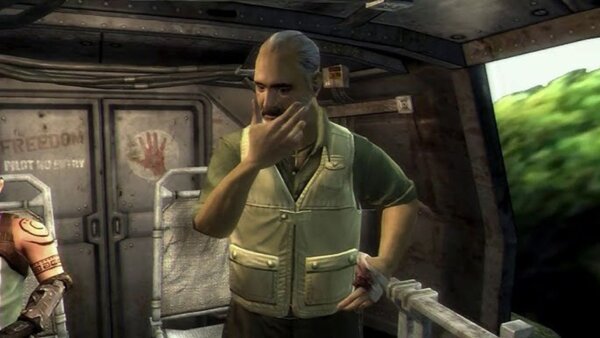
Haze revolves around an army corporation called Mantel that injects soldiers with a drug called Nectar to numb them to the brutality of war.
When one of the soldiers, Shane Carpenter, realises the atrocities that Mantel has committed, he joins a rebel group called the Promised Hand, governed by Merino. Though Mantel painted Merino as a skin-wearing cannibal, Shane believes his new leader is a good man who's eager to end the conflict. After defeating his former allies in an epic battle, Shane ushers in a new age of peace.
Or so he believes. During the epilogue, Merino reveals he intends to use the Nectar for his own agenda, indicating he's just as evil as Mantel.
Although this epiphany blindsides players, it may not be for the reasons intended. Although it's not uncommon for a war-based title to end on a sour note, Shane's character arc feels pointless since he's back to working with the bad guys again. Not only that, Merino's true colours are never hinted at, to the point where it feels like he had a personality transplant two minutes before the end.
Though Free Radical Design tried to subvert expectations with this revelation, having Haze end on a happy note would've worked out better.
15. I Am Your Father - Viewtiful Joe + Viewtiful Joe 2
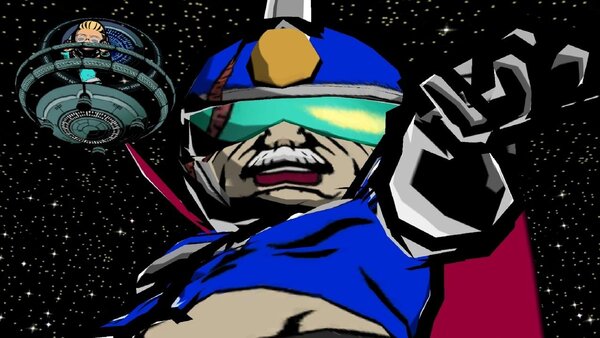
Capcom's cel-shaded beat 'em up centres around film fanatic, Joe, and his girlfriend, Silvia, who are sucked into a fantastical reality called Movieland. In this dimension, Joe is endowed with cinema-inspired superpowers, allowing him to use fast-forward, slo-mo, and close-ups to solve puzzles and batter enemies.
Viewtiful Joe is a treat for cinephiles since it indulges movie cliches, including the damsel-in-distress, cheesy catchphrases, exposition-heavy monologues, and evil twins. As a result, it's not surprising when the game throws in one of the most famous tropes near the end, with the main villain, a former hero called Captain Blue, confessing that he's Sylvia's father.
Although this would've been the perfect opportunity to go whole-hog and embrace the nod to The Empire Strikes Back, this trope isn't acknowledged. Even though Joe is gobsmacked to see his idol embrace villainy, it's never explained why Captain Blue turned bad in the first place.
Stranger still, Viewtiful Joe 2 pulls the same stunt, with the antagonist ultimately unveiled to be Joe's father. Considering this is the second time it's happened, the heroes should've pointed out how ridiculous and cliched this plot twist is. Instead, nothing creative is done with this reveal, so it's not shocking or funny.
14. John The Sage - Assassin's Creed IV: Black Flag

In Black Flag, an Abstergo employee is tasked with reliving the memories of his ancestor, a 17th-century pirate called Edward Kenway, to find an ancient artefact. While in the modern sections, you're regularly contacted by an unseen technician called John, who warns you that Abstergo have ulterior motives.
Once Edward's adventure concludes, John is revealed to be a reincarnation of an ancient humanoid race called the Isu. John was manipulating you so he could reawaken his partner, Juno, who created the artefact Edward was seeking.
Even though this is a lot of information to take in, it doesn't go anywhere since John is shot dead less than two minutes later. To add to the anticlimactic moment, the player cannot speak to John or influence events during this sequence.
Although the Juno subplot continues in later instalments, the long-term narrative would've functioned the same without this confrontation. Above all else, this so-called bombshell doesn't progress Edward's story at all.
Instead of feeling like a shocking revelation, John's identity seems like an afterthought. Considering how much mystery surrounded the protagonist's off-screen benefactor, players were expecting more.
13. The Krazoa God - Star Fox Adventures
In Star Fox Adventures, the titular space-faring hero is tasked with bringing peace to a planetary system, where a wicked warlord called General Scales is attempting to seize control over the Krazoa Spirits.
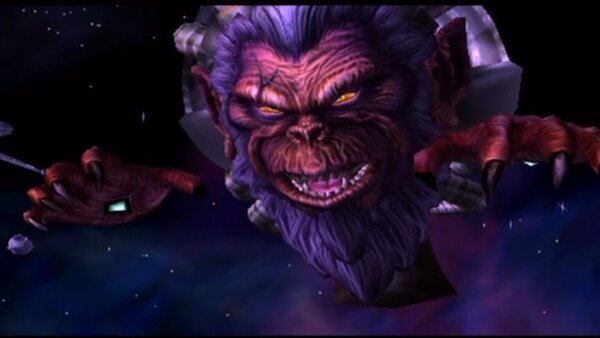
Despite the fact Scales appears to be the central villain from the very beginning, the game pulls a bait-and-switch during the climax, with the overgrown lizard admitting he answers to a higher power. Moments later, the secret antagonist is shown to be a floating statue head called The Krazoa God.
But that's not all. Literally ten seconds before the showdown, the Krazoa God swings around, unveiling Fox McCloud's arch-nemesis, Andross, has fused to the back of the entity's noggin. After making a few generic threats, the final battle commences.
Firstly, this bait-and-switch is disappointing, since it diminishes the threat General Scales posed, especially since players never got the chance to fight him.
Although last-minute switcheroos can be jarring, pulling a bait-and-switch moments after another bait-and-switch is pretty nuts. Even though Andross' return shouldn't be surprising, chucking the sinister simian into Star Fox Adventures in the last five minutes was weird.
12. It's Dr. Wily... Again - Mega Man VI
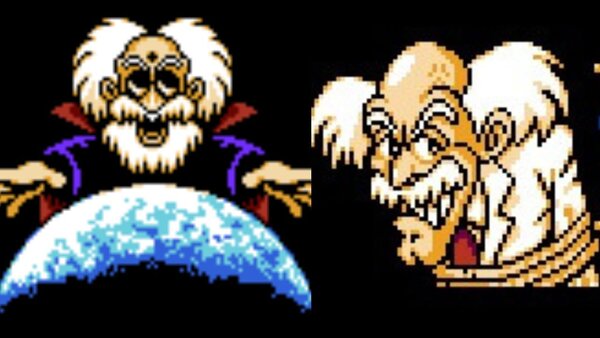
Although Dr. Wily was the main villain in Mega Man I-III, the fourth instalment tried something new, having the Blue Bomber face a different antagonist called Dr. Cossack.
Or so it seemed. Halfway through Mega Man's adventure, he discovers Wily framed Cossack for his crimes. Mega Man V pulled the same stunt with Mega Man's brother, Proto Man, depicting him as the big bad, only to reveal it was the maniacal scientist once more.
Although Mega Man VI performed this shtick again, the developers barely tried to hide it this time. According to the prologue, Wily was being manipulated from the get-go by a mysterious figure called Mr. X… who looks like Wily with glasses and a beard.
During the so-called final battle, Mr. X and Wily are revealed to be one and the same, to the surprise of nobody. (Also, why did the deranged doctor pretend he had a master to begin with?)
Several sequels have since tried to pull the "Dr. Wily isn't behind it this time, we promise," but Mega Man VI is the most egregious example.
11. Getting Rid Of Vaas - Far Cry 3

On paper, swapping one antagonist for another late in a story sounds gimmicky, especially if players are invested in the initial villain. However, bait-and-switches can work, so long as the latter baddie is more compelling than the former.
Which begs the question - Why was iconic antagonist, Vaas Montenegro, sidelined in Far Cry 3?
Before Ubisoft's threequel was released, the promotions were hyping up the charismatic smuggler, portrayed masterfully by Michael Mando. There was an overwhelming sense of dread each time Vaas appeared in the game, due to the his volatile mood swings and unpredictable nature. More importantly, he feels like a dark reflection of the hero, Jason Brody, making the conflict more personal.
So when the mohawk-sporting psycho kicks the bucket halfway through, Far Cry 3 loses its emotional core. What's worse is Vaas is substituted for smug crime boss, Hoyt Volker, who lacks his predecessor's philosophical bite and psychological manipulation.
Looking back, it feels like the marketing team built Vaas up as the be-all-and-end-all solely to make his exit more shocking. Ironically, this rug-pull deflated the entire story in an instant.
10. O'Brian Isn't What He Seems - Days Gone

Days Gone highlights how a pointless twist isn't necessarily a bad thing. The post-apocalyptic adventure follows biker, Deacon St. John, who's trying to find his wife in a state overrun by zombie-like creatures called Freakers. On his travels, Deacon is assisted by masked researcher, James O'Brian.
If players complete the main campaign, they'll receive an ending that seems to wraps everything up nicely. But fulfilling certain criteria will unlock an epilogue, revealing O'Brian as a Freaker who's managed to maintain his intellect and personality.
Now, this is a great narrative shift, since it opens up many avenues the story could venture down in a later entry. Is the virus still evolving? Can O'Brian's blood cure the infection? Will the good doctor eventually become mindless? Can the Freakers mutate in other ways?
Although such questions could've been explored in the proposed sequel, Days Gone 2 was canned, making this major development lack any closure.
O'Brian's true identity is a jaw-dropper, but it highlights the biggest problem with sequel-bait, since endings like this don't mean anything if the property doesn't get a follow-up.
9. Everything Is A Game - Star Ocean: Till The End Of Time

It's easy to get swept up in a role-player, since the main campaign often takes many, many hours to complete. You can get so heavily invested in each of the characters' backstories, dreams, and conflicts, there are times where you forget it's fictional.
Unless of course, the game reminds you that nothing is real. Star Ocean: Till the End of Time focuses on a 19-year-old called Fayt, who finds himself caught in a cosmic war with an alien civilisation. This sci-fi saga is extremely long (even by JRPG standards), so it'll take about 60 hours to finish.
So, the last thing you want to hear after being fully immersed in the complex narrative is how the entire Star Ocean universe exists in a simulation. For this reason, every sacrifice you made, every war you fought, and every crucial decision you took part in occurred in an artificial reality.
Just to piss players off more, Fayt is informed that everything that occurred in the previous game was also just that... a game. Even though meta-twists can be clever, this one was more immersion-breaking than mind-blowing.
8. It Was Xehanort All Along - Kingdom Hearts (Franchise)

Throughout the Kingdom Hearts franchise, Sora and his Disney buddies are repeatedly introduced to villains who come across as major threats. But in almost every instalment, the lead adversary is swapped out for an insidious Keyblade Master called Xehanort.
Now, there's nothing wrong with having a recurring evildoer. Super Mario has Bowser. The Legend of Zelda has Ganondorf. The problem with Kingdom Hearts is how it keeps parading around a nefarious character as the big bad, only to bait-and-switch them with Xehanort. So, when the story spends countless hours teasing intimidating foes, like Vanitas, The Foretellers, or Xemnas, it's eye-rolling when Xehanort pops up, saying he was pulling the strings all along.
What's more annoying is Square go so far as to make Xehanhort the main villain retroactively. Although Ansem was the antagonist of the first Kingdom Hearts, he's exposed as Xehanort in the sequel. Understanding how Xehanort is always behind everything when he isn't barely mentioned in the story is so convoluted, it would've been easier if it was established he was main baddie from the start.
On top of that, players struggle to get invested in any enthralling villains, knowing they're going to be substituted with you-know-who later.
7. Your Wife Is Closer Than You Think - Bionic Commando

In 2009, Capcom attempted to revitalise one of their earliest IPs, Bionic Commando. In this loose sequel, government operative, Nathan Spencer, is tasked with eliminating the terrorist faction, Ascension, using his weaponised robotic arm. Spencer rejects the mission at first, but changes his tune when his employers promise to find his missing wife.
Even though Bionic Commando is pretty rough around the edges, nothing received more criticism than the big reveal at the end. After Spencer's mission is complete, he's informed that his cybernetics could only function if it had an emotional connection with the host. As such, this inspired Spencer's superiors to place his wife's soul into his mechanical arm.
Despite being intended as a hard-hitting moment, hearing the words "Your wife is in your arm" makes you realise how ludicrous the whole scenario is.
Weirder still, it doesn't match the tone at all. Bionic Commando spends hours cultivating a gritty drama, then pivots to metaphysical soap opera with no preparation. Instead of deepening Spencer’s trauma, the twist juveniles it and makes the hero's grief come across as unintentionally comedic.
6. MB - Metroid: Other M

With all the heat Metroid Prime 4: Beyond has received recently, it's easy to forget about the negativity surrounding Metroid: Other M. Though the Wii exclusive had plenty of redeemable qualities, it was derided for its terrible dialogue, lifeless performances, and how it reinterpreted Samus Aran as submissive and emotionally fragile.
Furthermore, Other M concludes with the most preposterous twist possible. Throughout Samus' mission, she's assisted by a scientist called Madeline Bergman. Bergman explains how the Galactic Federation created a machine to control the Metroids, based on the source code of Samu's arch-nemesis, an alien supercomputer called Mother Brain. But in the end, Madeline confesses she's the human incarnation of Mother Brain and was manipulating Samus for the beginning.
Firstly, the villainess barely fooled anybody (especially since Madeline Bergman and Mother Brain have the same initials). Also, this development makes the Galactic Federation look incompetent, since they didn't think it would backfire if they rebuilt one of the galaxy's most dangerous entities.
It's bold to try something different, but revising an emotionless computer like Mother Brain into a human adversary defiles her backstory and mythos.
5. The Orphanage - Final Fantasy VIII
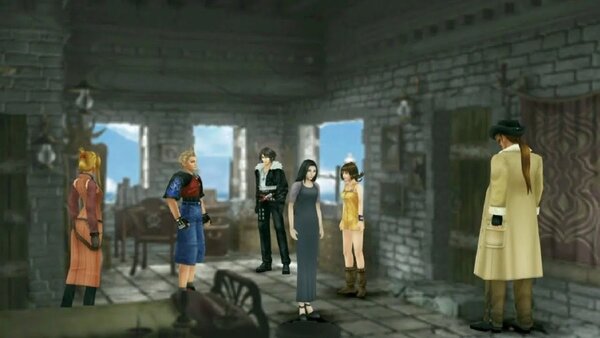
Final Fantasy is infamous for throwing in messy plot-points at the last minute. With that said, FFVIII takes the biscuit.
In this PS1 RPG, Squall teams up with Rinoa, Zell, Selphie, and Seifer to stop the malevolent witch, Edea, from taking over the world. Over time, Squall learn Edea is being corrupted by a sorceress from the future, Ultimecia.
After Edea frees herself from Ultimecia's control, she informs Squall and his companions that they were all brought up in her orphanage as children. When the group point out they have no memory of these events, Edea explains that they lost their childhood memories through (get ready for this) magic. This revelation is meant to be a powerful emotional beat, indicating Squall's destiny has been intertwined with his friends since day one.
But this sudden shift isn’t foreshadowed in any way and has no bearing on anything that came before or since. This entire section just wastes an hour of time in an already overly long campaign.
Also, using a trope like "They all had magic amnesia" to explain away any plotholes is embarrassingly lazy.
4. Samuel Hayden's Betrayal - DOOM (2016)

In 2016's DOOM, The Doom Slayer must once again face the legions of Hell, while being assisted by an android, Samuel Hayden. Though Samuel is cold and analytical towards the beefy marine, they appear to be on the same page, since they both want to shut down the portal to Hell for good.
But after the Slayer vanquishes the final boss, Samuel confiscates the silent hero's weaponry, hoping to harness its power for his own needs. The Slayer is then cast into an unseen location before the screen cuts to credits, signalling the sequel will centre around a major conflict with the duplicitous robot.
On the contrary, Samuel Hayden barely features in Doom Eternal. In the events between the two games, Samuel's body has been critically damaged, so he's out of commission for most of the main campaign. Samuel does feature in Eternal's DLC, but is retconned as an angelic being called a Seraphim, muddling the continuity.
Even though Samuel Hayden was a fascinating character, Doom Eternal would've played out almost exactly the same if his villainous turn was dropped entirely.
3. Schala Lives - Chrono Cross

In Chrono Cross, a teen called Serge teams up with a feisty thief called Kid and dozens of others, hoping to bring peace, not just to their world, but all realities.
Despite being a sequel to Chrono Trigger, Chrono Cross isn't tied to the SNES classic religiously, instead exploring a different story that takes place centuries after its predecessor. There are occasional references to Chrono Trigger, but it doesn't feel gratuitous, since both plotlines centre around splintered timelines.
But during the third act, Kid is exposed as a clone of Princess Schala, who appeared in the previous game. Over time, Serge learns the antagonist of Chrono Trigger, Lavos, cloned Schala so he could use her essence to obtain godlike power.
Now, there's a number of problems with this development. Firstly, Kid had her own distinct personality, history, and motivations, so this twist undermines that. Even though Schala was important in Chrono Trigger, that game had a multitude of memorable characters. Because of this, casual players mightn't remember who Schala was, making this moment fall flat.
Also, couldn't the writers have devised a straightforward explanation how Lavos intends to conquer reality without crowbarring Chrono Trigger into the narrative in the most convoluted way possible?
2. BJ Blazkowicz's Death - Wolfenstein II: The New Colossus

In Wolfenstein II: The New Colossus, BJ Blazkowicz and his ragtag squad travel to Nazi-controlled America, hoping to put a stop to The Third Reich.
When Blazkowicz is captured by the German forces, first-time players naturally expect him to burst out of his restraints and escape. Instead, the seemingly invincible hero has his head chopped off, and his execution is broadcast to the whole world.
It goes without saying that Blazkowicz's death should be the biggest turning point, since it was repeatedly emphasised he was the only one who could bring down the goose-stepping extremists. After seeing his head being lopped off, it appears all hope is lost and the Nazi regime have emerged triumphant.
Unfortunately, the impact of Blazkowicz's death is completely diluted when the good guys steal his decapitated head and reattach it to a extra human body.
Let's reiterate that - The other heroes happened to have a spare body lying around.
Even though Blazkowicz’s demise should've had irrevocable consequences, he’s running around five minutes later (on the planet Venus might I add) as if nothing happened.
1. The End Is Not The End - Twelve Minutes

In Annapurna Interactive's adventure title, a husband finds himself reliving the same twelve-minute time-loop, which involves a a cop breaking into his apartment and shooting him dead in front of his wife. To prevent this tragic outcome, the husband must explore dialogue choices, interactions, and objects in his environment.
If the husband figure out the truth, he'll convince the police officer that his hostility is based on a huge misunderstanding. After the antagonist apologises for repeatedly murdering the husband, he embraces his wife and the couple seem to live happily ever after.
But instead of cutting to credits, the time-loop resets and the scenario plays out again.
Now, this moment blindsides first-time players, making them realise the mystery is deeper than they initially assumed. However, the truth behind this whole situation is much dumber than anybody could've imagined. It turns out the so-called hero murdered his father, causing him to snap and concoct this scenario in his fragile mind, with the cop representing his hostile relationship with his dad.
Okay, that's... unnecessarily complicated, but not too bad. However, the developers had to throw in one twist too many. It's later revealed the husband developed this psychosis after learning his wife is actually his sister.
What makes this epiphany so ridiculous is the fact Twelve Minutes already had a satisfactory conclusion that tied up every loose end, only for the creators to tack on a preposterous mindbender that revolves around incest.
As hard as it is to believe "it was all a dream" is no longer the worst twist imaginable.