10 Massively Underrated Japanese RPGs You Must Play

Got 100 hours to spare? Good.

Japan represents different things to different groups of people here in the West. To some, it€™s the promised land of anime, ramen and ninjas. To others, whose only knowledge of the place is from the crazy TV shows, it is completely and utterly baffling. For those with even a passing interest in games, however, Japan is first and foremost the home of the JRPG. A lot of (especially early) JRPGs follow a solid, tried-and-tested formula of turn-based combat, random encounters, epic boss fights and XP-based levelling systems. Although not hugely innovative (or innovated on) as a combat system, it nevertheless allowed many JRPG titles to sweep us up in what they were best at; deep, compelling, twisting narratives that hooked their claws in and never let go. Some of the most emotional gaming moments can be found in JRPGs €“ just ask Aeris... oh. The JRPG genre houses some of the titans of gaming. Everybody has heard of Final Fantasy and Pokémon, they€™re some of the most famous and successful series around, but there€™s more out there than just the big names if you know where to look. Here are some of the most underrated JRPGs released onto shelves, all of which are definitely worth playing if you can find them.


10. Nier

Nier is not a perfect game by any means €“ if it were, then more people would have played it and it wouldn€™t be on this list. As it is, it passed a lot of people by €“ which is a bit of a shame, because for all its flaws, it€™s still a very worthwhile experience. Sure it€™s kind of repetitive, and fetch quests are kind of irritating, and the combat system is pretty generic €“ but somewhere in amongst all that are the grains of something much more interesting. Part of that comes from the setting; the post-apocalyptic Future Earth, which makes for a melancholy and oppressive atmosphere that is oddly enticing. The music and the voice acting also contribute to that feeling, and both of those (rarely, for a localised game) are absolutely on point, especially the choral symphonies around the various imposing temples. There€™s also a few nice twists and turns along the way. The protagonist, Kaine, has a compelling enough personality to carry some of the games niggles, and the €œbullet hell€ segments of the game are a total shift from what you€™ve experienced up until that point, which helps to relieve some of the frustration of the more repetitive parts. Plus, if you ever get bored, you can go and ride a boar. It's brilliant.

9. The Last Remnant

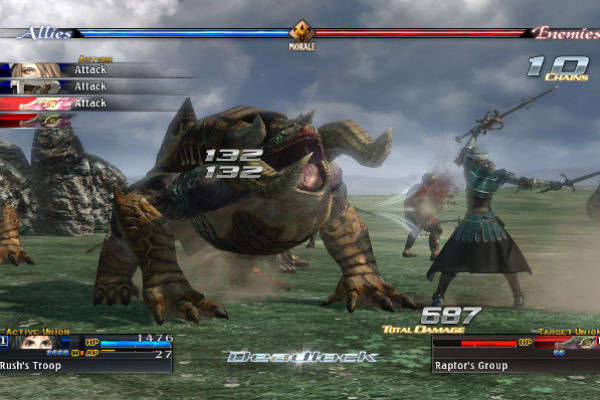
The Last Remnant is an odd beast. On the surface, it seems like a pretty generic cookie-cutter JRPG; an unnecessarily complicated (though admittedly fairly interesting) game world, save-the-family storyline that we€™ve seen plenty of times before, and hyperactive plucky €œChosen One€ protagonist that are seemingly a dime a dozen in Japan. Another of its flaws is that around the middle of the game, the difficulty becomes less of a curve and more of a wall, which means you€™ll be spending a lot of time grinding in the dungeons. Strangely enough, though, that isn€™t necessarily a bad thing, because the battle system in The Last Remnant is by far the most interesting aspect of the game. It is turn-based, but rather than just focusing on a few important characters, battles are fought in groups. Each person brought into combat is assigned into one of these €˜unions€™, and as you progress through the game you can recruit more people into the fray, meaning battles become much larger and grander in scale and complexity. This style of fighting introduces a whole new level of strategy into combat. Because of the sheer numbers involved, orders to the troops have to be less specific; for example, €œuse magic attacks€ as opposed to €œcast Fireball€. You also have to be careful of your positioning in battle, because getting flanked by multiple enemy groups will only lead to a world of hurt. Formations are vital, as is figuring out exactly which enemy groups to intercept €“ and a wrong decision can lead to a TKO. The Last Remnant innovates nicely on a traditional formula, and that alone makes it worth your while.

8. Lost Odyssey

Lost Odyssey certainly has pedigree behind it €“ it was created by Hironobu Sakaguchi, the same brains behind Final Fantasy, which is arguably the most influential and well-known series in gaming, never mind in the JRPG genre. Not only that, the score was created by another Final Fantasy veteran, Nobuo Uematsu. However, possibly because Lost Odyssey isn€™t Final Fantasy, it never quite garnered the same level of success. However, just because it wasn€™t as popular doesn€™t mean the game is any worse. In fact, Lost Odyssey is arguably a better Final Fantasy game than most Final Fantasy games. It returns to the roots of what made its parent series so successful €“ a huge, epic adventure across several continents; profound, philosophical storylines concerning the 1000-year-old protagonist, Kaim; and a focus on constructing a deep and compelling narrative through which the player is sucked into the game world. Lost Odyssey is an epic in every sense of the word €“ not only is it an under-appreciated gem, but it€™s also absolutely huge (the 360 version comes on 4 discs, just to give you some indication). Given that soon after its release, FFXIII was released to almost universal criticism, maybe Square should€™ve taken notes.

7. Final Fantasy Tactics

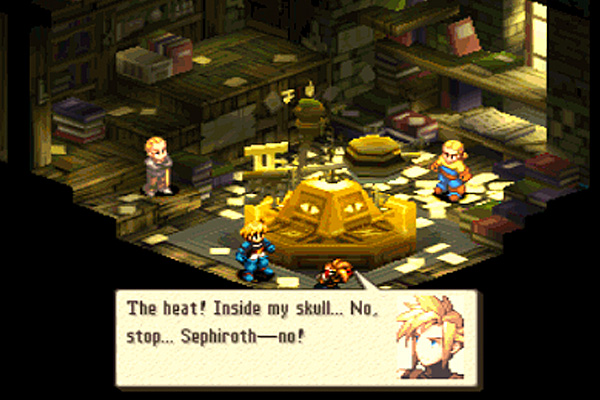
Normally, when people think of JRPGs, Final Fantasy is the series that immediately springs to mind. And with good reason, because it€™s a juggernaut of the genre. What people don€™t usually do, however, is give much thought to the Final Fantasy titles outside of the main series. It€™s a shame, because they€™re missing out on some real gems, like the Tactics series. The Tactics games feel more like a Final Fantasy board game more than anything else €“ and more specifically, chess. Combat takes place in environments divided into squares, so there€™s a lot of strategy involved in moving your characters around and trying to get into firing range of enemies without being in danger of a lethal counterattack. One class can even place traps around the environment, so a lot of battles require figuring out how to make use of the terrain. Don€™t get too comfortable though, because the cruel in-game Judges can €“ and will €“ flick the switch from easy to hard mode with a snap of the fingers. Speaking of classes, the series is a real flashback to the job system in Final Fantasy games of old. There are a bunch of different races available for recruitment, each of which can take on a multitude of different jobs. The games effectively let you customise your entire party to suit your playstyle, rather than having predefined characters in predefined roles €“ and that€™s pretty darn cool, given how long ago they were released. Tactics might not be the most famous Final Fantasy title €“ but it€™s definitely one of the best.

6. Arc The Lad: Twilight Of The Spirits

Few people have heard of the Arc games in the West, and fewer still have gotten around to playing them. Nevertheless, should you want to check them out, then Twilight of the Spirits is probably the best of what is already a pretty good bunch. There are a couple of premises that make this game really interesting. Firstly, Spirit Stones (your in-game MP equivalent) are actual physical resources that you have to purchase with money, as opposed to the more traditional system of MP restoring at save points or through potions. When you run out, that€™s it €“ no more magic for you until you buy more. This is actually very cool because it gives you an incentive to keep an eye on your funds, and it also gives you something to buy when you€™ve got to that point in all RPGs where you have more money that everybody else in the entire world. The second premise involves the story. As the plot unfolds, you€™ll alternate between two parties, each of which has a different cast of characters and abilities. There€™s quite a bit of €œexperience leapfrog€, because the party you€™re currently using is going to be levelling up whilst the other is sitting around doing nothing. What makes it more interesting, though, is that the two parties inevitably end up facing off against each other €“ meaning that the party you don€™t choose to side with can unleash all those abilities you spent time obtaining right back at you in one seriously awesome boss fight. It might be getting on in years, but Twilight of the Spirits was one of Japan's best offerings of the PS2 era.

5. The World Ends With You

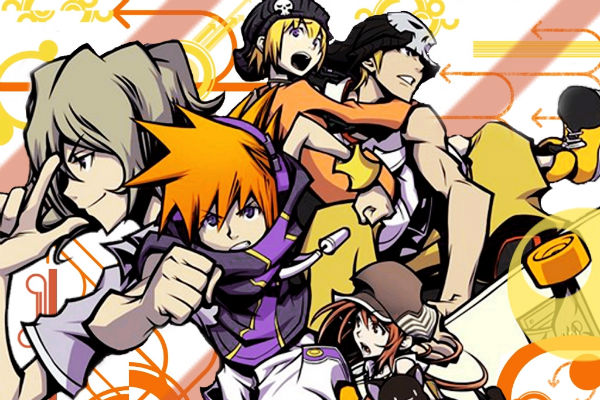
JRPGs sometimes suffer from containing very conspicuous tropes; crazy hairstyles, huge fantasy worlds where mages and knights are commonplace, massive impractical swords and often a large dollop of angst. Whilst the crazy hairstyles are still there, The World Ends With You breaks free from these tropes, resulting in one of the breakout pocket RPGs this side of the millennium. This game is very difficult to describe, because it does so much so differently to other RPGs, and a lot of it is incredibly complicated. Take the battle system, for example; you control Neku, the protagonist, with the touchpad on the DS, whilst at the same time inputting controls for his partner with the D-Pad. It feels like rubbing your stomach and patting your head at the same time €“ even the game itself tells you to take it slowly €“ but when you€™ve got it down, you can unleash absolutely devastating combos. Visually, the game is set in a very stylised Shibuya District, making heavy use of manga-type graphics €“ but considering that this title is on the DS, they look pretty damn good. The audio is great too - it really captures the atmosphere of a busy modern-day Tokyo, rather than the generic fantasy lands we€™re so used to seeing. Probably the only major qualm with the game is that it is very, very hard. This game is truly one for the hardcore gamer, despite its presentation. There€™s so much more to it, though, more than can be described here. Stick with it if you pick it up. It€™ll be well worth it.

4. Ni No Kuni: Wrath Of The White Witch
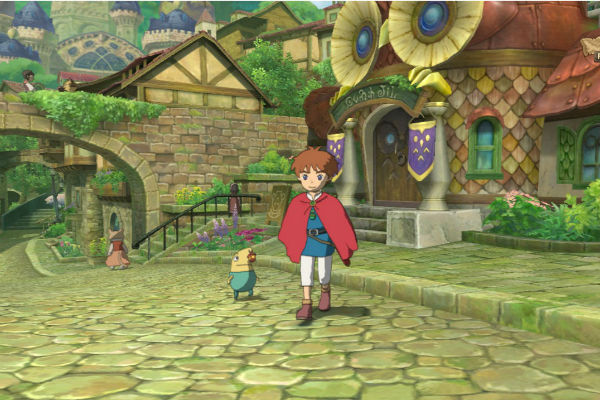
Ni No Kuni is another game with significant pedigree behind it €“ it was developed as a collaboration between Level 5 and Studio Ghibli, the globally-recognised animation studio. Right from the start, you can see the influence that Ghibli€™s chief, Hayao Miyazaki, had on the visuals, his style is immediately recognisable. It isn€™t only the visuals, though; Ni no Kuni accurately captures that wistfulness and tenderness of so many Ghibli productions. In Oliver, the orphaned protagonist, the game echoes one of Ghibli€™s trademark themes: that of children being forced to grow up before their time, and the hardships that come with it. The gameplay is pretty intricate, and can take some time to get used to €“ especially given the levels of complexity involved in each part €“ but that isn€™t to say it€™s not enjoyable. For comparison, it€™s probably most similar to the action battle systems of later Final Fantasy games. You control one character and their familiars in real time, using attacks and abilities which have cooldown timers, and assign tactics to the other characters in your party. The familiars are probably what make the game, however. Most of the wildlife in the world can be trained into a familiar, Pokémon-style, and they all have loads of different abilities, spells, and roles that they can use €“ basically your entire minion team is customisable. It makes for an interesting use of strategy, as you have to swap out different familiars to have a better chance at the various (and frequent) boss battles. If you like watching Ghibli movies, just imagine playing one. Ni no Kuni lets you do exactly that.

3. Dragon Quest Series

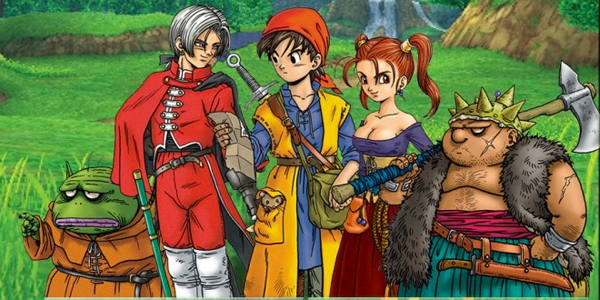
The Dragon Quest series has always been the Luigi to Final Fantasy€™s Mario; just as good as, and in many cases better than, its more famous brother, but never quite getting the same recognition or popularity. It€™s a bit unfair really, because the ones that have been localised in the West are, quite frankly, some of the best examples of the genre (Dragon Quest 8, for instance). The gameplay itself tends to stick to the tried and tested formula of turn-based random encounters, which works well, especially when the monsters are all cartoonishly funny and interesting. One of the charms of the series is that it isn€™t afraid to have a sense of humour €“ unlike its bigger brother, which usually has emotions ranging from €œserious€ to €œeven more serious€, DQ will crack jokes, deliver offhand asides and even give you a bit of slapstick comedy. However, that doesn€™t mean it can€™t be deep and emotional when the time comes though €“ far from it, in fact. With its solid, traditional battle system, beautiful cel-shaded graphical style, incredible aptitude for storytelling and compelling cast of characters, the Dragon Quest games are definitely not to be missed.

2. Valkyria Chronicles

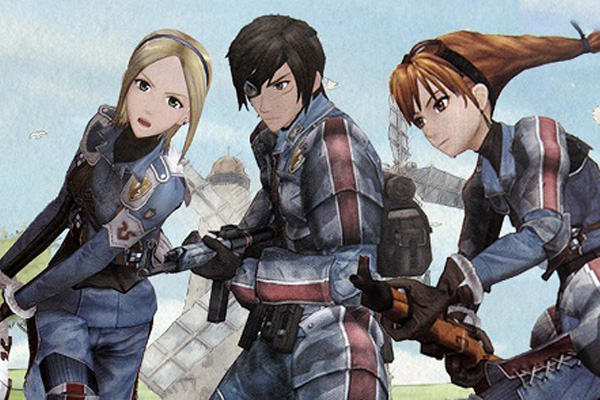
Valkyria Chronicles is essentially Japan€™s answer to XCOM: Enemy Unknown (despite being released a good few years beforehand), and by that I mean Valkyria Chronicles is XCOM with an animé makeover. Considering how good Chronicles is, it€™s no wonder the latter did so well. Despite that, Chronicles remains an underrated and under-appreciated game. The gameplay is divided into missions €“ you choose your squad members (and there€™s several different classes to pick from), and off they go to capture a base, or take down an enemy commander. You move your squad around the field in third person, then switch to first person when it€™s time to fire. So far, so good. Unlike XCOM though, in this game, tanks are king. They take more of your turn to move, but in return they are ridiculously powerful (if slightly bad at aiming). One of the small niggles that Chronicles suffers from is that later in the game, the enemy tanks become so ridiculously overpowered that it€™s more a matter of luck than skill when taking them on. There are all sorts of little details in-game which add to the experience too; like how every squad member (and you can recruit dozens) has their own personality and friend group, or how you can€™t just equip every single upgrade to your tanks because there€™s only a limited space. Honestly, this game is just brilliant, and there€™s no better way to see that than by playing it yourself.

1. Dark Chronicle/Dark Cloud 2

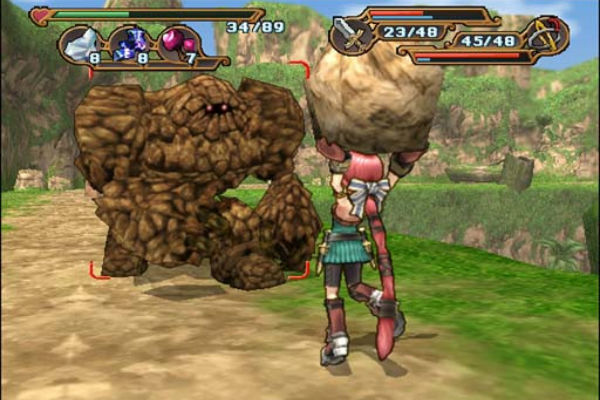
Dark Chronicle, or Dark Cloud 2 depending on your location, is one of those games that contains a little bit of pretty much everything. At various points it can be a roguelike dungeon crawler, an invent-a-thon, a city builder, a fishing simulator, crazy golf, Pokémon Snap, and The Sims. None of those are made up. Despite cramming so much into a single adventure, Dark Chronicle doesn€™t suffer for it. If anything, other, lesser games should take notes on how to do things properly. Probably the only real flaw is that the combat feels a little clunky and unwieldy, possibly because the developers spent more time making other stuff to do rather than fine tuning it. Actual game progression does require quite a lot of dungeon-crawling and monster-bashing, and therefore a fair amount of combat, but it€™s by no means a deal-breaker. Apart from the combat and weapon levelling-up system (which is incredibly innovative for its time), a lot of the rest of the game is taken up by the 'georama' city building aspect. Basically, time-travelling happens, as it often does in JRPGs, so in order to save the future you have to rebuild towns in the past to pretty exacting specifications. It€™s really interesting, and a lot of fun. Dark Chronicle is an absolute classic, and it does so many things so well it€™s difficult to describe in such a short space. Seriously, go out and find a copy, you won€™t regret it. What's the most underrated JRPG out there? Let us know in the comments how many you've played!

In this post: 
Lost Odyssey
 
Posted On: 
Contributor
Contributor

Matty Coxhill hasn't written a bio just yet, but if they had... it would appear here.