10 Mind-Blowing Facts About The Making Of FIFA

Incredibly, FIFA was nearly canned by EA before it became a series...

The thrilling excitement of scoring that last-minute, title-clinching goal. That incredibly satisfying moment experienced when pulling off one of the many 'skill moves' whilst playing as Lionel Messi. Living vicariously through the digital representation of one of the world's best footballers is something many gamers take for granted, it's one of the thrills that the FIFA series should create effortlessly. Examining the humble beginnings of the FIFA franchise makes it clear that there's been countless hours of work to get to this point. FIFA 16 was critically heralded as a wonderful piece of software, one of the best football games in history. It hasn't always been an easy ride for EA Sports, they've had to deal with ups and downs since the first game was launched back in 1993. Whether it's been battling Konami's own long-running series, Pro Evolution Soccer, or continually striving to ensure that the finished product is better than last year's, the fight is ongoing at EA. This article explores some of the crazy and remarkable stories to have come out of FIFA's continued development, stretching right back to the first game. FIFA International Soccer was a world away from what was achieved in FIFA 16, but it still led to many sleepless nights for the men and women working on each game.


10. Big Features Are Developed Years Before There's Suitable Technology

FIFA's immensely popular 'Ultimate Team' mode has become one of the biggest draws for the series overall. Consumers appear to adore the card-based concept, and it's estimated by EA Sports to be the most-played aspect of the more modern titles. Incredibly, it was thought of years before it even became part of the games, EA just didn't know how to incorporate it smoothly. In similar fashion, the more advanced defending that was introduced in FIFA 12 was worked on for years before it was adopted. At the EA Sports home base in Vancouver, Canada, there are dedicated sections of the workforce solely there to work on ideas that will be featured in future games. That was the case with the defending change in FIFA 12, it was tweaked for many years before being used. Goalkeeping is often another touchy subject for many gamers when it comes to FIFA, something EA are only too aware of. Indeed, FIFA 16 has the best keeping in the series to date, but the incredible programming needed for individual goalkeepers is just something that wasn't possible on the last-generation of gaming consoles. Thus, EA was forced to wait.

9. Bruce McMillan Would Put The Game On In The Background
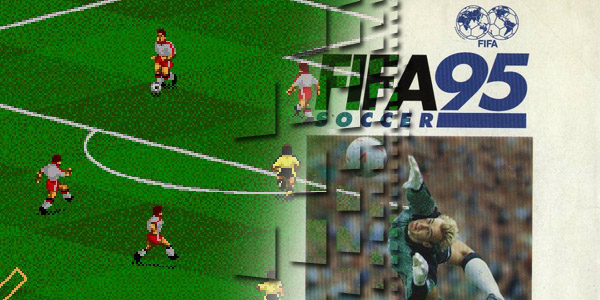
The early years of the FIFA series didn't come with a lot of expectation from Electronic Arts. In the early-to-mid-1990's, the development house seemed far more focused on the Madden and NHL franchises that were selling well, and their location in North America made it difficult. EA didn't know much about football, but the people working on the first batch of FIFA games were very dedicated to making it a success. Bruce McMillan was one of the main producers on the first run of FIFA titles, and he knew a lot of effort was required in order to make it a viable project. For that very reason, he adopted a very unique strategy which he figured would allow him to know the game inside and out. Even when he wasn't play testing the game, McMillan would leave it on in the background as he worked, even long into the night. His thinking behind this was that he would continuously soak up the atmosphere of the game and it would help him think more clearly. Other entries on this list make it clear that the developers and programmers bordered on obsession with the series during the early years. McMillan's tactic wasn't out of place with what other people involved were doing.

8. Victor Valdes Was Unable To Follow Scripting Phrases
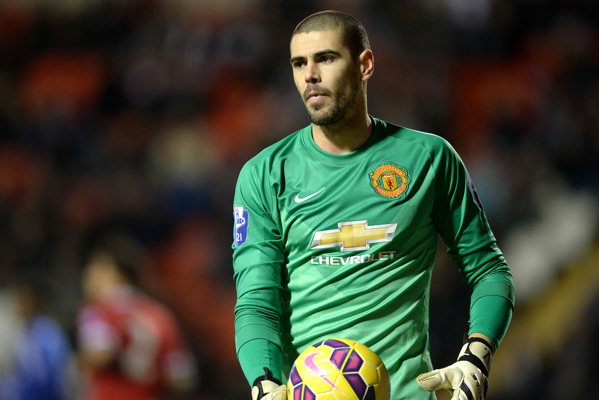
It's fairly common knowledge that EA Sports photograph English Premier League players relentlessly from all angles. This is all part of the head-scanning process that wishes to ensure the league is accurately represented. Every Premier League club is visited, although not only for photograph purposes. Nigel Nunn is the man enlisted to travel between English clubs and capture the players for EA's art department. He's not only there to take pictures, the game demands different facial expressions and a degree of realism when players are shown conversing on the pitch. For this very reason, Nunn must ask those being scanned to do wacky things like grimace, puff out their cheeks and say certain phrases. Some players, specifically those of foreign descent, can find this particularly difficult. During the development of FIFA 15, one of those men was then-Manchester United goalkeeper Victor Valdes. Struggling with many of the English words, Valdes was unable to give Nunn what he wanted. Aside from a handful of basic words, he therefore is hardly ever seen mouthing his mouth in the game.

7. EA Measured Success By Metacritic Scores

It may be difficult for younger gamers to imagine now, but there was a time, around a decade ago, when FIFA wasn't top dog in the football video game market. Instead, it was Konami's Pro Evolution Soccer that was the darling of players, renowned for having a better feel to the gameplay. People were even willing to overlook the lack of licensing in Konami's product compared to EA's. For that very reason, several on the FIFA team became infatuated with the idea of review scores. Seemingly desperate to claw back their dominance, EA Sports talked at length with people reviewing the game to find out what they did or didn't like about the experience. As an extension of this market research, the team also used the website Metacritic extensively to see what the general public thought about each release. Remarkably, Metacritic scores let FIFA's developers know they were moving in the right direction. When FIFA 10 hit a rating of 90 on the website, workers at EA Sports rejoiced, because that had been one of their goals in development. It's fascinating to picture game developers looking at things this way, because most would likely lead gamers to believe they know what's best to begin with.

6. FIFA Developers Were Crestfallen When Thierry Henry Joined PES
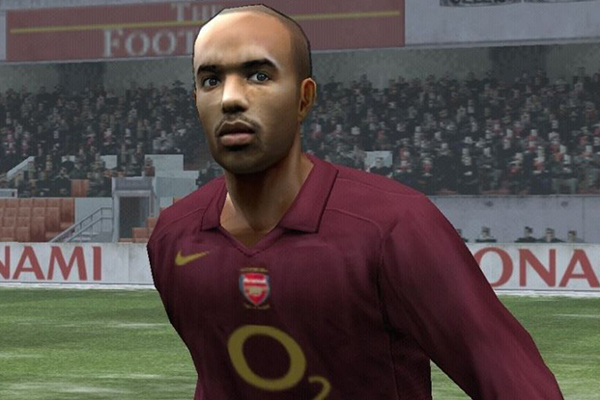
The battle between FIFA and PES didn't stop with gameplay, graphics or licensing, it also extended to player relationships. On the cover of FIFA 2004, then-Arsenal striker Thierry Henry was displayed as one of the top stars who clearly preferred FIFA to the closest rival. As it turned out, that wasn't the truth, Henry later outed himself as a bigger fan of Konami's game than EA's. This occurred when the Frenchmen unthinkably signed a deal with the Japanese developer to feature on the cover of Pro Evolution Soccer 4 in 2004. During a press announcement to signal his defection to PES, Henry said that he had been playing the games for around a decade and thought PES was a more accurate representation of real-life football. One of EA's workers, Chip Lange felt the comments were hard to take. It would have been easy for FIFA to then roll over and let PES win the football-related video game war, but EA Sports reportedly only became more motivated by what Henry had said. It's incredible to imagine that all of this was going on when gamers were simply looking for a great football title they could enjoy on PS2 and Xbox.

5. Chief Programmer's Son Begged Developers To Let Him Come Home
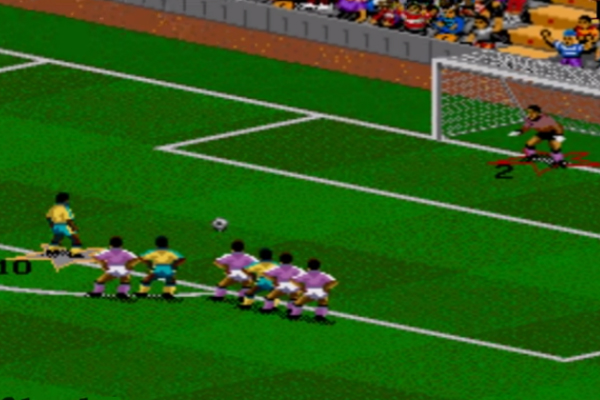
Few can claim they know the early FIFA titles any better than Jan Tian. As one of the lead programmers on the very first game, Tian worked tirelessly on ensuring FIFA International Soccer was as original and great as it possibly could be. He was the one who envisioned the isometric view that would stick with the series until it moved to a full 3D for the Playstation releases of FIFA games. So dedicated to the cause was Tian that he worked himself to the bone, even ending up in hospital due to a lack of sleep. One evening, whilst working alongside Bruce McMillan to perfect nuances of the game, the office phone rang. On the other end was one of Tian's children, a young boy who desperately wanted to see his father. Tian's Son said that he wanted his dad to come home, which must have been an emotional moment for the programmer. Still, he worked relentlessly, mainly focusing on how to make the CPU as realistic as possible. Tian didn't want the computer to act differently from a human player, which was his real challenge. Due to his effort, he received an award for 'Outstanding Achievement' from EA.

4. John Motson Revolutionised How EA Recorded Commentary
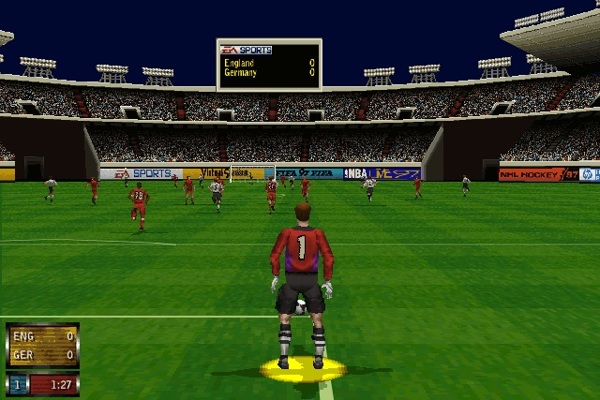
In 1997, legendary football commentator John Motson was signed up by EA Sports to deliver some contextual phrasing to FIFA 97. Alongside Andy Gray, he would provide commentary for matches. Meanwhile, Des Lynam would act as a presenter of sorts, introducing games to players. This was a bold new step, only becoming possible due to the enhanced power of consoles such as the Playstation. Initially, Motson was handed scripted lines by EA that were to be crudely recorded and sent off for inclusion in the game. As the years rolled on however, the veteran announcer decided to pitch his own ideas that might work. One of those was to actually have he and a co-commentator talk whilst matches played out in front of them. In Motson's mind, this would give the commentary a better feel. That's exactly what started happening, and is still pretty much the way Martin Tyler and Alan Smith do things today for the modern titles. Over time, commentary has started to feel more natural, but there's a chance things might not have changed for the better had Motson not offered his advice in the 90's.

3. FIFA Was Based On Pre-Determined Factors Right Up Until 08

Those who stick in a FIFA disc from the Mega Drive, Playstation or PS2 eras may start to see a familiar pattern emerging the more they play. Infamously, it was possible to score from a certain point on the edge of the box every time in the 16-bit era, and later versions of FIFA featured similar pre-determined outcomes. This is something many within the company wanted to change, they just didn't feel they had the technology. Stunningly, it wasn't really until FIFA 08 was released in late-2007 that things started to change. Something FIFA had been blamed of was a very stiff gameplay experience, one excellent for scoring flashy goals but not one players felt fully in control of. Naturally, features such as 360 movement and the processing power of modern generations of gaming systems has helped EA remedy that issue. It's funny to think, but FIFA used to be restricted by a strict set of pre-determined rules that governed matches. For example, players could only reach the ball for a header if they had pressed the button before the CPU had reacted to the situation. This template has loosened over time, making games a much more well-rounded experience overall.

2. The Guy Behind 'Skill Moves' Is An Ex-Jamaican International

In FIFA 16, if players click the R3 button (right thumb stick) they'll see a ring form around the player they are controlling. Button prompts also appear, theoretically teaching people how to perform different shots, passes and skill moves. In older FIFA games, the opportunity to have controlled players display skill was possible, but it's become a much bigger part of the game as the years have rolled on. The man behind the idea to have players who can weave and jink past opponents is a former Jamaica internationalist. Aaron McHardy was working as a play tester for FIFA games when he pitched the 'Skill Moves' feature to EA Sports management. So taken were they by the suggestion that they made McHardy part of the development team outright for FIFA 08. Even though he only played once for the full Jamaican international side, the striker has left real-life football behind to embrace the virtual world. Nowadays, his official title is 'Lead Gameplay Producer', and he cut his teeth with EA by featuring as a motion capture star in FIFA 07. He's the one responsible for all those tricks and flicks that have become so entrenched in the series.

1. Developers Hid From EA Management To Stop FIFA Being Cancelled
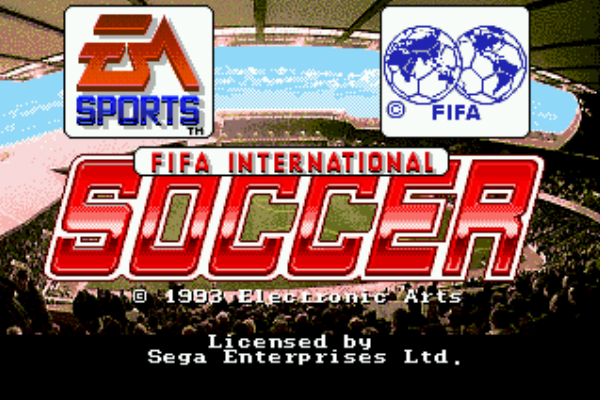
The very first FIFA title wasn't one that Electronic Arts thought would be a big success for the company. When it was released at the tail end of 1993, it shocked everyone by becoming one of the biggest-selling games of the entire year, even outselling the official FIFA World Cup 1994 game produced by U.S Gold. Throughout the development process, it became clear to the small core team working on the game that top level management were considering canning it altogether. In fact, FIFA International Soccer was considered for cancellation more than once, but somehow escaped each time. One of the main reasons for this was that developers decided to duck and dive, hiding from management in the hope that they would forget. Nowadays, FIFA is one of EA's biggest franchises, but things weren't always that way. Imagine FIFA International Soccer had been cancelled, one of gaming's longest running institutions would probably not be around as people know it today. There would likely be football games, but would they even come close to the success that FIFA has experienced? Probably not. What other startling facts about FIFA's development do you know? What do you make of the ones listed here? Let your voice be heard down in the comments section below!

In this post: 
FIFA
 
Posted On: 
Contributor

Lifelong wrestling, video game, music and sports obsessive who has been writing about his passions since childhood. Jamie started writing for WhatCulture in 2013, and has contributed thousands of articles and YouTube videos since then. He cut his teeth penning published pieces for top UK and European wrestling read Fighting Spirit Magazine (FSM), and also has extensive experience working within the wrestling biz as a manager and commentator for promotions like ICW on WWE Network and WCPW/Defiant since 2010. Further, Jamie also hosted the old Ministry Of Slam podcast, and has interviewed everyone from Steve Austin and Shawn Michaels to Bret Hart and Trish Stratus.