10 Most Disappointing Video Games Of 2019 (So Far)
Days Gone is the best worst game you'll play this year.

It's been a topsy turvy year for the gaming industry. Ever since it kicked off in January, fans knew that change was afoot, as major releases you'd usually expect to see reserved for the end of year holiday rush dropped in the first three months, all of which were absolutely packed with games that dominated the discourse.
However, while players have had more titles to sink their teeth into, prime cuts have been difficult to come by, with the majority of releases so far amounting to little more than disposable fast food. In a way, you can see why these publishers pushed the titles to the beginning of 2019 away from the holiday season of last year: they'd have been left completely in the dust.
While we've already covered the outright worst offenders of the year so far, it's the major disappointments that have been the most noteworthy and remained in the headlines. These titles might not have even been outright bad, but with the hype and expectations being so ridiculously high, none of them were the knockouts fans were expecting.
10. Fallout 76

Although it released at the tail-end of 2018, Fallout 76 has continued to disappoint well into the new year. The double-edged sword of the live-service model means that games survive and potentially thrive for years after their initial launch, and as a result reviews and opinions are forced to change. Unfortunately for Bethesda, the opinion of their multiplayer experiment hasn't altered since it debuted.
While it's not quite as bad as it was eight months ago, Fallout 76 is still a buggy, frustrating mess that's a complete nightmare to wrestle with, never mind enjoy. It's not just visual hiccups that make it so frustrating (though they are well documented), but simply foundations that would be bad no matter how much polish were heaped onto them: the quests are mundane, the shooting (especially VATS) barely works, and enemies are either ridiculously easy or cheaply difficult.
Bethesda should be rewarded for sticking to the game, and promising a major content update later this year, which could genuinely see this removed from the list by the time November rolls around. As it stands though, 76's reputation remains just as sullied as it was in 2018.
9. The Division 2
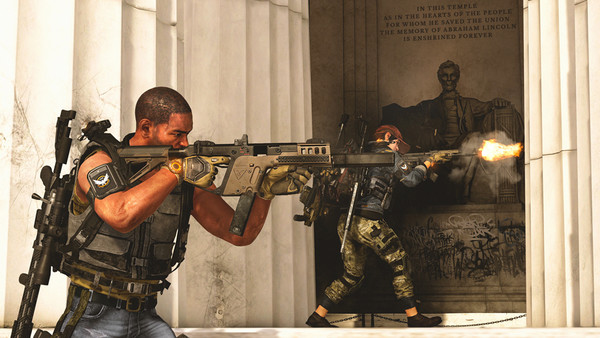
Functionally, there's nothing really wrong with The Division 2. The shooting is tight and punchy, the dystopian depiction of Washington D.C. is genuinely breathtaking at times, and it showers you with loot that, for the most part, is rewarding to gain. Why, then, does playing it leave you feeling so empty?
Well, that's partly because despite being a full sequel years in the making, it doesn't offer all that much new. Mechanics have been polished, enemy variety increased and missions are less grindy, but the gameplay loop of completing quests, exploring and and levelling up is so familiar that you can't escape a pervasive feeling of de ja vu with each session.
It's one of those games that's completely fine to play - good, even - when indulging in the pure, visceral repetition of the combat, but one which leaves your mind as soon as you put it down. That's fine, and it still makes The Division 2 a good time, but it could have been - and should have been - so much more.
8. Days Gone

Days Gone is the best worst game I've played all year. There is so much about it to love, from the loving depiction of Oregon, to how you're encouraged to scavenge and survive in this harsh landscape, to even a good chunk of the likeable characters. However, evening out all of these is always an equal amount of negatives that threaten to completely overshadow whatever good times you had with the Sony exclusive.
To give the title some credit though, the fact that it is a Sony exclusive in the first place contributes to why it's considered disappointing. Over this generation, the PS4 has become defined by its high-quality exclusives, from Spider-Man to God of War, Uncharted 4 to Bloodborne, and consequently a game that's only merely 'good' like Days Gone doesn't meet the wild expectations players have.
Even without those outside forces though, Sony Bend's game would probably make this list. There is a core to Days Gone that is genuinely special, but sadly it's obfuscated by open world baggage that brings the entire thing to a screeching halt. It goes on for far too long, is packed with far too much busy work, and reminds you of all the games it's inspired by that you'd rather be playing instead.
7. Crackdown 3

The worst thing about Crackdown 3 is that expectations weren't even high, and yet it still left fans totally disappointed. After years spent in development hell, suffering one delay after another, the once Xbox One X launch title was sheepishly pushed out this February to virtually no fanfare, almost as if Microsoft knew the pile they had on their hands.
Even with such a publicly tumultuous dev cycle though, there was the hope that it would be good. The brand is beloved, it looked sharp, and how can anything with Terry Crews in it not turn out at least a little bit enjoyable?
The biggest problem was that, despite having so much time off, virtually nothing had changed since the already-too-familiar Crackdown 2. Sure, the graphics were beefed up and the shooting was tighter, but the missions were virtually ripped straight out of the 2010 open-world handbook. The kind of activities the title was made up of wouldn't have cut it in a budget indie game, and they certainly didn't cut it for the return of one of Microsoft's biggest franchises.
6. Left Alive

On paper, Left Alive sounds amazing. Set in a war zone in the year 2127, Square Enix's game gave off some serious Metal Gear vibes (and not only because Yoji Shinkawa did the art for that franchise as well as this title), as players were forced to navigate and survive in the no-man's land that followed both armies pulling of the conflict.
It's a great setting for a stealth game, but sadly Left Alive simply didn't have the mechanical knowhow to fulfil its potential. It's another case of warring with the game in order to actually have any fun, as the stealth system is incredibly rudimentary, occasionally even broken, the point where not only is it not enjoyable, but it lacks the depth required to sustain the entire experience.
Throw in some frustrating scavenging and crafting mechanics, and Left Alive becomes nothing more than a hodgepodge of hand-me-down ideas from better games that did them much, much better.
5. Rage 2
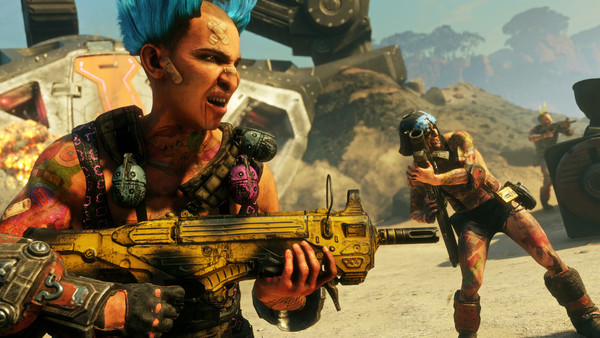
The original Rage gets a lot of s**t despite being an actually pretty solid and promising shooter. It had its problems, and it came at a time where Id Software weren't firing on all cylinders like they are today, but there was the potential for a great franchise. Fast-forward eight years, and the team had finally found the time to dust the series off, attempting a revival - this time with a new aesthetic and tone - with the help of Avalanche Studios.
The trailers looked great as well, with a charming, punky approach to the post-apocalyptic world that looked far more appealing than the original's drab, dreary plodding. The sequel essentially looked like an open world Doom with the car combat of Avalanche's Mad Max - i.e. the best damn thing ever.
While that synergy did come together a few times in the final release, for the most part Rage 2 was a surprisingly fragmented experience. The shooting felt impactful and satisfying as expected, but there wasn't enough of it; driving was fine, but it was only used to cover space; the open-world had its charm, but was full of cookie-cutter missions.
Sadly, while some games like Days Gone can just about overcome this bloat, it suffocated Rage 2.
4. Travis Strikes Again: No More Heroes
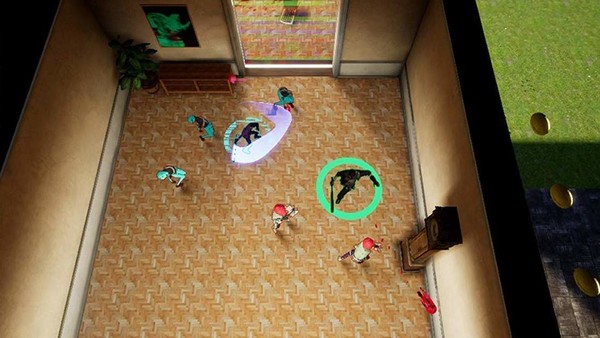
The original No More Heroes became an instant cult-classic, but the series has struggled to capitalise on the interest (and unique ideas) of that title with the sequels, particularly this year's Travis Strikes Again. Attempting to re-energise the series by swapping the perspective to a new top-down view, the third game lost much of the charm that made the original so special.
The rough edges around Suda 51 releases have always been something you have to deal with, but with No More Heroes 3 the frayed edges have come to define the experience more than the creative inspiration at the heart of it.
The title is essentially built around the studio's love of video games, adopting different styles based on the level and even sending up specific indie titles, but sadly that didn't translate into anything interesting to play, or any real consistency to the quality. Suda 51 is still a cult darling, but between this and Let it Die, the duds are starting to overshadow the bright spots.
3. Jump Force

Jump Force should have been the easiest home run in video game history. The fighting game blended the worlds of all of your favourite animes, from Dragon Ball Z to Yu Gi Oh, bringing their distinct styles to life with flashy combat and some brilliantly detailed character models.
Sadly, once the developers had accomplished those things they must have stopped working, because the game that was built around them was the most rushed, cheaply-made product. Everything from the animations, to the "story" to the severe lack of content made the experience feel threadbare, even by modern-day fighting game standards. Even the actual combat, while looking occasionally spectacular, was shallow and repetitive, sucking all depth out of the fights.
Though it wasn't the only universe being featured, it didn't help that the title came only a year after the stellar Dragon Ball FighterZ delivered the definitive fighter for that anime, with this not only paling in comparison, but acting as more of a reminder how much of an anomaly that experience was.
2. Team Sonic Racing

I know it might seem ridiculous to get excited about a new Sonic game in the year of our Lord 2019, but the Sonic kart racers - especially 2012's Sonic & All-Stars: Racing Transformed - have always been reliably good, acting as a great love letter to some of SEGA's greatest characters.
It helped that the actual racing was always solid as well, and while it was never at the level of complexity of Crash Team Racing, still provided enough depth to offer a genuine sense of competition between players.
Sadly, this year's Team Sonic Racing threw all of that out the window, cutting out the wider SEGA characters and instead focusing on the most mundane tracks, racers and cars.
It gets a few extra points by being cheaper than a proper full-priced title, but Team Sonic Racing should have built on the solid foundations before it, rather than regressing to a simplistic, basic formula.
1. Anthem
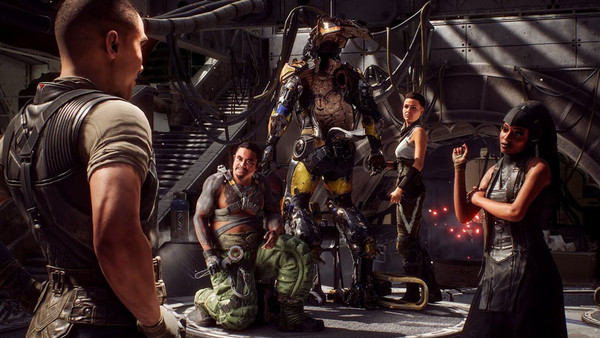
There was always doom hanging over Anthem. At every major reveal, the live-service shooter appeared purposeless and half-baked, but fans couldn't help but still expect Bioware to to smash those doubts and deliver something special. After all, while the main studio stumbled somewhat with Mass Effect 3, they bounced right back with GOTY winner Dragon Age: Inquisition, and this was their first new IP since 2007.
Even the worst case scenario was always envisioned as Anthem being a solid loot-shooter with a poor story that was more focused on the grind than delivering solid characters or memorable set-pieces - essentially Destiny when it launched. Sadly, Bioware's game couldn't even live up to that.
Because, while the core shooting and flying was satisfying, the 'loot' part of the looter-shooter moniker was completely botched. The game was indeed focused around the grind, but it became quickly apparent that there was no reward for investing, no pot of gold at the end of the rainbow, only the same missions recycled over and over and over and over and over and over and ov-