10 Most Infamous Unreleased Gaming Consoles
6. GamePark XGP
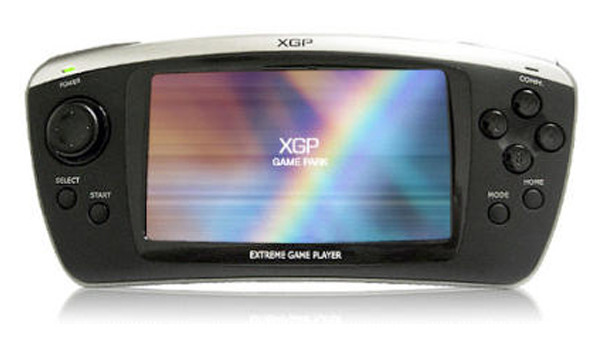
In 2001, South Korean Game Park company released the GamePark 32 (GP32 for short), an open source handheld system running Linux. With a reasonable price, it became the darling of the homebrew and emulation communities, especially since it was powerful enough to run emulators for a number of popular classic consoles.
Nowadays that's not a big deal with the type of things you can get done on an Android-powered phone, but in 2001, it was huge. In light of the success of the GP32, Game Park started to plan a follow-up system, the XGP. It was exactly what you'd expect: more features, more horsepower that small developers could utilize, and so on. Before long, though, there was internal strife within the company, and it split into two. The new company, GamePark Holdings, won the war, and as a result, the XGP was never released.
GamePark Holdings stuck around as GPH, and released follow-ups in the form of the GP2X, GP2X Wiz, and most recently the Caanoo. The Caanoo was something of a flop, and GPH has stopped developing hardware, but there's still a strong following for their older portables. Thankfully, though, we didn't really miss out on anything with the XGP becoming vaporware.
5. Control-Vision
Remember Night Trap? One of the first and most infamous games released for the Sega/Mega CD, it was a weird interactive B-movie where you had to save a bunch of young women from some seriously stupid looking vampires called Augers. And Dana Plato is in it.
The movie portion looks weirdly dated for a game released in 1992, and there's a very good reason for that: It was shot in 1987. Why? It was a proof of concept title for Control-Vision, a console developed by Tom Zito for interactive movies that used VHS tapes as storage.
After an initial round of funding by Nolan Bushnell, toy giant Hasbro invested $7 million (about $15.2 million with inflation) into the project, but after filming finished in 1987 on the second full-length title, Sewer Shark, they gave up on the project and Zito bought the rights to everything. Digital Pictures, the company that released Night Trap and Sewer Shark in the CD era, was owned by Zito.
It was certainly more advanced than Action Max, another VHS-based system that did see the light of day in 1987, but ultimately, it was going to be limited to bad interactive movies, as the eventual CD-based versions proved. As for Night Trap, its legacy is as one of the lightning rods of the video game violence controversies of the early '90s. For some reason, even though the game was about saving the girls from vampires, much of the news coverage centered around the idea of trapping the young women themselves.
4. Panasonic M2

The first of the 32-bit consoles to hit shelves was the 3DO Interactive Multiplayer with a 1993 launch. The 3DO Company's business model differed from most other console makers in that they built a platform, but other companies licensed it to build consoles to sell to consumers. The 3DO was, essentially, supposed to be to video games what JVC's VHS format was for VCRs and Compact Disc Digital Audio (developed by both Sony and Philips) was for music playback at the time.
Panasonic was the first on board, with Goldstar, Sanyo, and even AT&T (their console never made it to market) joining in later. As a follow-up, 3DO developed the M2, which they sold to Panasonic exclusively for $100 million, as the "VCR of video games" model didn't really take off. Somewhere between the Nintendo 64 and Sega Dreamcast in terms of graphical horsepower, it got pretty far along, with promotional materials sent out and plans for both standalone and 3DO add-on models, but Panasonic pulled the plug when it got too unwieldy.
It did survive in the arcades as a board for a handful of games, but that was the end of it. There are a small number of developer and prototype consoles in circulation, but they go for obscene amounts of money on eBay.
3. Sega VR

Until the rise of Oculus Rift and PlayStation VR, the idea of the consumer virtual reality headset had been a dead issue for close to two decades. The relatively good ones in arcades were too expensive to be in widespread circulation even among arcade owners, while the bad ones, like whatever Nintendo's Virtual Boy was supposed to be, were really, really bad.
Sega's attempt was apparently the best of the consumer models, with some cool features like head tracking, but it had many of the same weaknesses as the Virtual Boy: namely that users developed headaches and motion sickness really easily, especially after prolonged use. Even the incredibly low powered Virtual Boy had an auto-pause function that activated every 15 minutes. At least Sega VR was a headset, though. Virtual Boy was a tabletop set of goggles that you had to lean into, which resulted in bonus neck pain. Which led to more headaches. Which led to more neck pain. Which...
2. Konix Multisystem

Konix was a somewhat popular manufacturer of joysticks and other game controllers for computers when they began work on Slipstream, a customizable controller for racing games and flight simulators that could take on various different shapes. It also included force feedback (rumble) years before Nintendo and Sony popularized it
Seeing greater potential in it, Konix started working with Flare Technology (a group of former Sinclair employees working on their own console) on turning it into a standalone console, where, unlike most systems, the hardware would be in the controller. The idea was that it would compete with the popular computers in Europe like the Commodore Amiga and Atari ST.
Essentially, they were trying to bring home the experience of specialized arcade hardware. You know how some arcade racing games have you sit down in chairs that move with you and the wheel to simulate a real race track experience? The Multisystem was going to have one of those, too. While there was a glut of custom silicon inside, the plan was to use the same 3.5" floppy discs as computers to keep costs down.
That cost-cutting led to one of the console's downfalls: Low memory, which made it incredibly difficult to program for. Konix ran out of money, and Flare went back to the drawing board. They sold their next project to Atari, and that became the Atari Jaguar, which didn't do fantastically, to say the least.