10 Most Infamous Unreleased Gaming Consoles
Some of the most interesting consoles were never even available in stores.

In video gaming - and the technology world in general - there's a term for hardware and software that's promoted and promised without a product even hitting the market: Vaporware.
Sometimes, years later, dreams of the past are dramatically exhumed and become reality, Duke Nukem Forever being easily the most notable example. Generally speaking, though, when it comes to the biggest pieces of vaporware in gaming, unreleased consoles are usually what come to mind. Sony, Sega, Nintendo, and Atari have all gotten heavily into development for new consoles that never hit the market, as have mainstream electronics companies like Panasonic and a whole host of companies you've never heard of.
Some of these actually got pretty far, with announced release dates, games getting previewed in many of the popular magazines at the time, and all sorts of other hype. At least one of these consoles completely changed the face of the video game industry. If this console was actually released, it's entirely possible we'd have at least one fewer player in the current console market.
On that note, it's time to look at those consoles that just vanished into the ether.
10. Nintendo SNES-CD/Sony Play Station

In terms of sheer intrigue, no piece of vaporware tops Nintendo's SNES-CD. Not only was it hyped up for a long time, but even though it was never actually released, it's incredibly significant historically. The SNES-CD hype came when Sega and NEC were hyping their own CD add-ons for their competitors to the SNES, their Genesis/Mega Drive and TurboGrafx 16 consoles, respectively. NEC made it to the market first by a couple of years, followed by Sega, and and neither made as much of a dent as they would have liked.
Optical discs were clearly the future for delivering games at that point, but as add-on hardware with small game libraries and horrific load times in every title, they weren't especially appealing. Nintendo initially partnered with Sony on their add-on. Various disagreements over the terms of the licensing led to bad blood between the two companies, but they had a deal, so Sony announced a standalone console compatible with the SNES and SNES-CD called the Play Station at the 1991 Consumer Electronics Show.
The next day, Nintendo announced a partnership with Philips. It went far enough that some titles were announced, with a few magazines doing previews for a port of 7th Guest, a then-popular PC game. No hardware came out of this deal, either, so only Philips benefited, as they got to use the Mario and Zelda licenses for a few infamous games for their CD-i console, which didn't last very long on its own. In the end, Nintendo didn't touch optical discs until the release of the Gamecube, which used mini-DVDs.
9. Active Enterprises' Action GameMaster
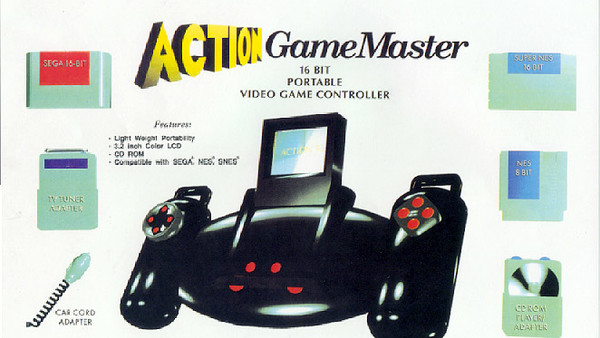
In 1991, a small company named Active Enterprises released an unlicensed game cartridge for the Nintendo Entertainment System (it hit the Sega Genesis/Mega Drive in 1993), the infamous Action 52, a collection of 52 different games for the low, low price of just... $199?!?!?!
Yes, the idea was that with 52 games in one cartridge, you were paying less than $4 per game, or about the going rate to rent a game at the time. The games were uniformly terrible, and many had game-breaking glitches, some even crashing at the title screen. The centerpiece was 'The Cheetahmen', Active Enterprises' attempt at creating franchise characters. As you may have noticed from the lack of Cheetahman titles propping up the Switch, it didn't really work.
With limited distribution and no official Nintendo or Sega license, it was a flop, but Active Enterprises was thinking big. They also announced an upcoming portable system, the Action GameMaster. Not only would it have a cartridge slot for their own games, like Cheetahmen III (the second one came out as a standalone NES title), but it would have adaptors for NES, SNES, and Genesis/Mega Drive cartridges, as well as a CD drive for Sega CD games. How they expected to do this, only they know, but obviously it never happened and, hopefully nobody invested money in this company.
8. Infinium Labs Phantom
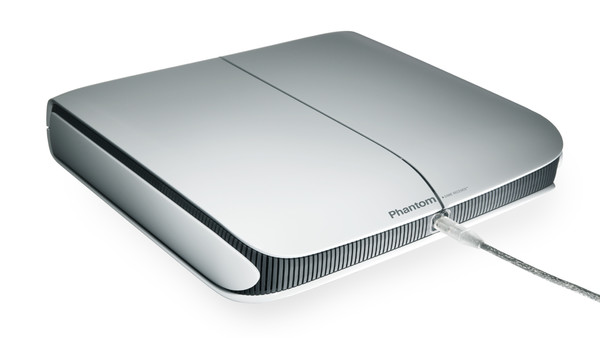
From the day it was announced, the belief was that the Phantom would never be released. It was a console from a start-up with grandiose plans: not only was it going to be entirely download-based at a time when most consoles were just exploring online play, but it could also play any PC game. All this was for less than $399 in the U.S. It seemed too good to be true.
It was. Named THE PHANTOM, it almost seemed like an elaborate joke. It would be one thing for say, Nintendo give a console such a name, but a mysterious startup doing so was met with heavy skepticism. And rightfully so: The company was accused of operating a stock inflation scheme, never released a console, and only released the hardware's keyboard as a peripheral for PCs. It got mixed reviews, and that was pretty much the last anyone heard of them.
7. Sega Neptune
As weird as it was at the time, the period that played a big part in the eventual end of Sega as a hardware manufacturer looks even more ridiculous now. With the Genesis/Mega Drive doing well, you can't really blame them for releasing the Sega/Mega CD add-on at the height of the game industry's craziness over CDs and "multimedia".
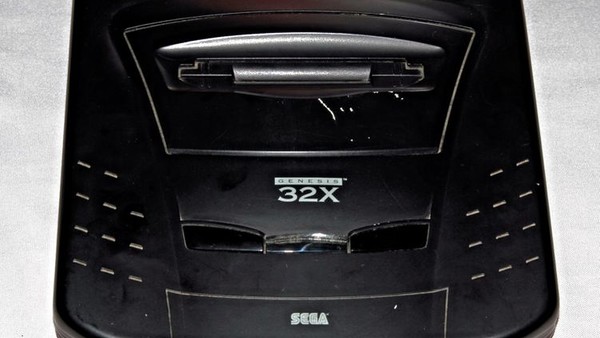
It was the next step that eventually led to their doom: the 32X. Yet another add-on, it plugged into the Genesius' cartridge slot to upgrade the 16-bit console, turning it into some sort of 32-bit monstrosity that was allegedly comparable to the new standalone consoles that were coming out. If you had the CD drive, it was even better, because there were also 32X CD titles. Of course, this was incredible confusing when the Sega Saturn, a 32-bit standalone next generation console, was released in Japan just a day after the 32X's North American launch.
The confused launch has been latterly blamed on conflicts between Sega of America and their Japanese parent company, troubles which had persisted since Sonic 2's cross-continental development. Consumer confusion would only have increased had Sega went ahead with the Neptune, a hybrid console combining the Genesis/Mega Drive with the 32X in one sleek box for $200. It was cancelled when the whole 32X line was dropped, though prototypes have been seen in the wild. While Sega made a valiant attempt at recovery as a hardware company with the Dreamcast, this was the beginning of the end.