10 Most Offensive Portrayals Of Women In Gaming

Harmless fun that people read too much into, or something more sinister?

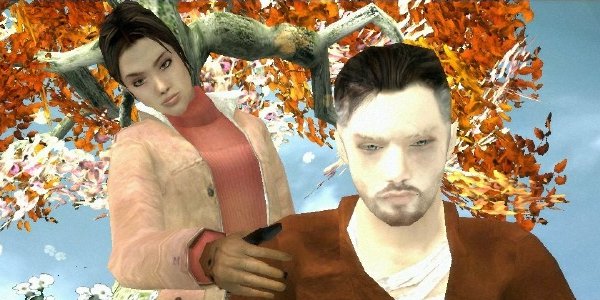
Alongside the debate about video game violence, one of the most discussed aspects of gaming is sexism and the medium's portrayal of women. Ever since video game characters have been around, it's been a hot-button issue, one that is met with fierce support on both sides, some seeing depictions of females in games as harmless fun that people read too much into, while others decry it as an indication of the misogyny that runs rampant throughout the industry. In 2014, it feels like something that we should be long-past: there are so many strong video game heroines that it's easy to see the offended side as simply being overly sensitive and reactionary, but then, while games have come a long way, there are still questionable depictions of females in a lot of contemporary titles. Thankfully characters like Alyx Vance from Half-Life get to have their cake and eat it: she is a strong, forthright character who also happens to be good looking, yet is never overtly sexualised to the point that she can be anything more than another supporting character in the game. I myself enjoy many of the following games, but it doesn't mean I'm not tired of their arguably immature, wish-fulfilling female characters. If we want the medium to be taken more seriously, we really need to steer away from these sorts of examples. Whichever side of the debate you fall down on, feel free to argue below!

10. The Nerd Bait

The nerd bait is the female character who essentially fulfills the wishes of most 13-year-old male gamers: she will not just be a brilliant fighter, but she'll also be sexy as hell (not a crime in of itself), and typically do battle in the most impractical, revealing outfits possible. Some examples of this trope include Bayonetta, Lulu from Final Fantasy X, the kinky nuns in Hitman: Absolution, Jill in Resident Evil: Nemesis, and pretty much every female character in the Mortal Kombat series. The characters are all kitted out like they're going for a night on the town rather than to kick some butt, and it's just an opportunity for young lads to ogle pixellated women. It's depressingly cynical that these developers probably think that men wouldn't buy the game if the women were dressed half-way decently. And this doesn't mean they can't be sexy, but Bayonetta and Lulu's fetishistic outfits in particular are just freaking ridiculous!

9. The Manic Pixie Dream Girl

A trope primarily associated with indie movies like The Perks of Being a Wallflower and (500) Days of Summer, the manic pixie dream girl has nevertheless appeared in the world of gaming, especially in the Final Fantasy series. I'm drawing my attention to one character in particular, and that's Rikku from Final Fantasy X (and the girl-centric X-2 spin-off). She ticks all the boxes for a manic pixie dream girl: she's got a weird dress sense, is extremely quirky, defies social conventions, and yet is also supposed to be extremely appealing to players. I suppose to that end Rikku is also nerd bait, though to her credit, at least she's not sporting ridiculous double-Ds, as would have probably pushed her character over the edge. Physically, she seems a little more down to Earth, though that's promptly forgotten by the self-conscious quirkiness of her character, because apparently she'd just be too boring otherwise. I can't hear the word "monkey" without thinking of her anymore.

8. The China Doll

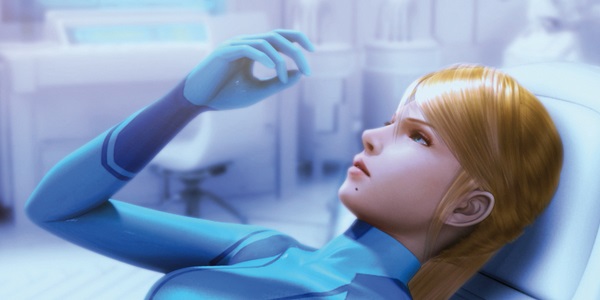
Prior to the release of Metroid: Other M in 2010, Samus Aran was the exact opposite of an offensive video game heroine: she was essentially the premiere video game icon for women, long before Lara Croft ever arrived on the scene. It was a huge plot twist when gamers finally discovered that Samus was a woman, and Metroid's success instantly cemented her as one of the all-time video game heroes regardless of her gender. This continued unabated until Other M, where Nintendo made some incredibly controversial changes to the character for basically no reason at all. To cut a long story short (IGN posted an excellent piece on the full story here), the tough Samus we once knew is revealed through a series of cut-scenes (marking her first time speaking in the series) to be extremely fragile and overtly emotional, adhering to the much-maligned stereotype of the woman held hostage by her feelings. Other M may not commit the cardinal sin of parading Samus around in skimpy clothes, but it completely ruins the character by making her subservient and weak, which isn't how fans envisioned the character (and to put it kindly, they were not pleased).

7. The Eye Candy

Sometimes women appear in games simply to be ogled and literally nothing else, as can be true in those ridiculous Dead or Alive Xtreme Beach Volleyball games, which reportedly had an entire developmental team devoted to ensuring the physics of the female characters' breasts were accurate. The characters serve literally no narrative function, as can also be said for the loading screen women in the Grand Theft Auto games, who by and large don't even appear in the games themselves. Sex sells, and this isn't exactly anything new, but in 2014, the Dead or Alive example seems pretty ridiculous indeed. It's only supposed to be a bit of fun, sure, but it's easy to see why people have gotten up in arms about it. Should video games be demonised any more than a rap music video or a Michael Bay movie's sexualisation of women? Absolutely not (though some will argue they should because of the interactive element), but this sort of thing became tiresome years ago unless you're under the age of 15.

6. The Lovesick Puppy

One of the most baffling character trajectories in any game of the last 10 years was Carla Valenti's arc in the flawed-but-great Fahrenheit. Valenti is a doggedly determined Detective who spends the game chasing the protagonist, Lucas Kane, who she suspects of having committed murder. She seems to have heaps of integrity, but when she comes into contact with Lucas mid-way through the game, things suddenly change, and before your jaw can even drop, she's fallen in love with the guy (who is also now a corpse), and they're humping a few feet away from a bunch of hobos. This unintentional display of shoddy characterisation was due to budget and time issues, so as a result, Carla declaring that she loves Lucas about half an hour after she was hot on his tail just seems laughably ridiculous, and another instance of a daft female character adhering to the emotionally overzealous stereotype. At least Quantic Dream remedied this with strong female characters in Heavy Rain and Beyond: Two Souls.

5. The Boobs

This one is subtly different from the "nerd bait" and "eye candy" designations that I've already mentioned, because these characters typically have more going on than the eye candy, but are primarily known for their swelling chests rather than anything else. Even Bayonetta is considered as a total package, but frankly, who thinks of anything but boobs when they hear the name "Ivy" mentioned in relation to SoulCalibur? Similarly, though Lara Croft was a revolutionary video game heroine, let's be honest, most of the discussions about her end up mentioning her ridiculous triangular breasts from the earlier games, and how many man hours (or rather, boy hours) have been spent worldwide trying to get that nude cheat right? Then there's more recent games like Dragon's Crown, which features a character called Sorceress (pictured in the opening page of the article), who is almost as much boob as she is anything else (and I'm barely exaggerating). Once you get out into the world and start meeting women, stuff like this just seems a bit embarrassing and silly: I'm not a teenager, I don't need to be pandered to like this. It's patronising.

4. Overly Attached Sidekick

Navi is Link's fairy companion in The Legend of Zelda: Ocarina of Time, and though she's not Link's girlfriend, you'd struggle to believe that given how much she nags him, shouting "Hey! Listen!" at every errant opportunity, to the point that it even became a popular Internet meme. Navi is frequently regarded as one of the worst sidekicks in video game history, and though she doesn't take the conventional form of a woman, she still adheres to yet another woefully outmoded female stereotype: the nag. Navi is an attention whore of the highest order, and though she does ultimately prove useful in explaining things (and then explaining them again, and again, and again), I'd almost rather figure things out for myself than have to put up with her constant attention seeking.

3. The Baby

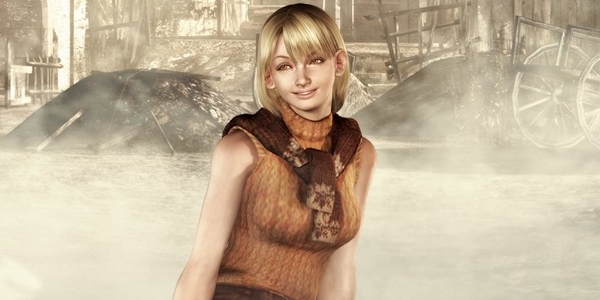
The baby, not to be mistaken for the damsel in distress, who I'll get to shortly. The baby is not quite as helpless as the damsel, in that they at least have enough agency to move around and occasionally outsmart their enemies, but they're generally useless offense-wise, and require the player to go out of their way to protect them. Two classic examples come in the form of "escort" characters who have to be shepherded to safety for fear of a Game Over screen. The first is Ashley Graham, the incredibly annoying daughter of the President in Resident Evil 4, turning the bulk of the game into one giant escort mission with only a few benefits (that Ashley can reach areas that Leon cannot). The second instance is Emma Emmerich, Octacon's step-sister in Metal Gear Solid 2: Sons of Liberty, who is afraid of water and as such has to have her hand held by Raiden as they navigate a water-logged section of the Big Shell. Did anyone enjoy these two aspects of what were otherwise pretty awesome games? Would it have killed Capcom and Konami to make them a little less helpless, if only for the player's sake?

2. The Rape Victim

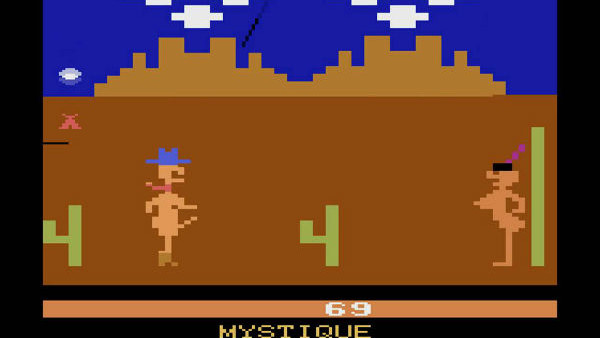
Custer's Revenge is one of the worst games of all time, a glorification of rape in which the player controls a crudely drawn version of General George Armstrong Custer, with the goal being to reach the opposite side of the screen, avoiding projectiles, in order to rape a Native American woman. Yep. For all of the positions the aforementioned games have put women in, this isn't one of them. It's not that video games shouldn't deal with rape, but to do so in such a flippant, even "comical" manner just seems way off-base, even if the game is over 30 years old. Take last year's Tomb Raider, which accidentally ignited a PR fiasco when the tabloids picked up on a scene where a bad guy makes an advance on a restrained Lara. Suddenly the scene was a "rape" scene, even though Lara promptly fends off the move with a knee to the groin. Attempted rape? Sure, but even at that point, at least Crystal Dynamics had the good sense to approach it from a mature standpoint rather than treat it as a joke, which it unequivocally isn't.

1. The Damsel In Distress

And finally, we have the most outdated, cliched gender stereotype of all time: the damsel in distress. It's a trope that's been prevalent in movies, games and literature since inception, of an utterly helpless female who has to be set free by the rabble-rousing man. Even ignoring the rather dubious debates about Mario games being inherently sexist, isn't it a bit outdated for Princess Peach to always be the helpless, pristine little flower so often kidnapped by Bowser? By this point, I had hoped Nintendo might reinvent the character somehow, though I suppose the old adage, "If it ain't broke, don't fix it" seems to be taking precedent. Peach can keep her pink dress and keep hassling Mario, but please, give her something a bit more involved to do! Are there any offensive mishaps I missed? Or is all this sexism talk just a bit ridiculous? Let me know in the comments!

 
First Posted On: 
Contributor
Contributor

Stay at home dad who spends as much time teaching his kids the merits of Martin Scorsese as possible (against the missus' wishes). General video game, TV and film nut. Occasional sports fan. Full time loon.