10 Reasons Everyone's Giving Up On Next-Gen Consoles

Did they roll them out too early?

The eighth generation of home consoles were met with rabid anticipation after nearly seven years (longer if you don't count the Wii U) of old hardware. Despite the hype and record-breaking sales however, there's still the nagging feeling that something isn't quite right. Like Bill Murray in Groundhog Day, gamers feel like they're trapped in a repeating cycle, experiencing the same trends over and over again. With a new generation comes the promise of technological innovation and a fresh start for developers as well as gamers. This seemed to hold true about the eighth generation, and yet something doesn't quite feel right. Rather than being a fresh start and a leap forward, this new generation of consoles feels like a step back. Large companies like Ubisoft, EA, Activision, and others continue to take advantage of their consumers, triple 'A' sequels are constantly being pumped out on a yearly basis along with more uninspired titles that make us wonder if the last generation ever ended. Meanwhile, the PC gaming sector is stronger than it ever has been, and is actually outperforming the console platforms. Contrary to the popular idea that "PC gaming is dying", it seems as though the opposite is true. With the mobile market overtaking handhelds and consoles like the Wii U and Xbox One are struggling to make sales, it's clear there's a lot of people jumping ship, and you can't really blame them.


10. You Have To Pay To Play Online

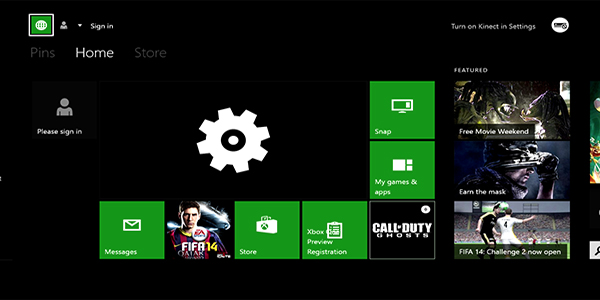
Though not something that originated with this generation, mandatory subscription fees to access the online features of a console is a problem that's only gotten worse this time around. In the seventh generation, one of the bigger pros toward the PlayStation 3 and Wii over the Xbox 360 was that they had free online, which meant you didn't have to constantly worry about an extra bill at the end of the month on top of a five hundred dollar machine. Since the advent of the PlayStation 4 and Xbox One however, the only home console of the big three that doesn't charge players for online play is the Wii U, a console that's been failing miserably all generation long. At sixty bucks a year, paying for online doesn't really seem worth it, especially if you only use the online occasionally. For PC gamers, this has never really been an issue. For the average Steam or GOG user, the idea of paying to play online for a single service on top of your ISP bill probably seems pretty ridiculous. For those who just want to play online occasionally, or just don't see the point in paying, having to worry about extra fees is a huge turn off when shopping for new gaming hardware.

9. There's Nothing New And Creative

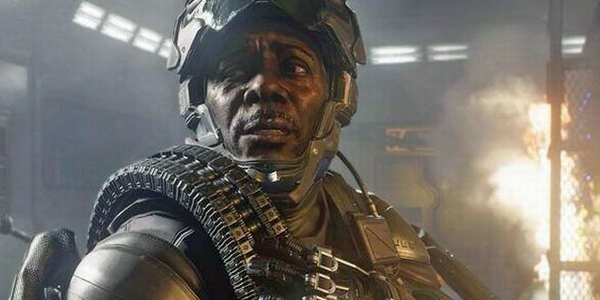
As established as they may seem, the heavy-hitting franchises like Uncharted, Assassin's Creed, and Gears of War, Assassin's Creed, and Gears of War were all new a generation ago. They felt like a fresh start for a new generation, until most of them were run into the ground with annualised releases. The generation prior, we had properties like Prince of Persia and Jak and Daxter, and with the next generation, those titles were more or less replaced with something fresh. As the latest E3 opened up with yet another iteration of Call of Duty, it's not hard to see why people are getting bored of consoles. Characters like Sack Boy, Nathan Drake, Marcus Phoenix, and Ezio Auditore spearheaded the last generation. At the time, they were something new, and although plenty of PlayStation 2 series saw sequels on then next-gen hardware, the industry as a whole felt less afraid of trying new things, something that's hard to say now.

8. Indie Developers Don't Have Enough Support

With triple 'A' studios consistently disappointing, people have been turning to indie developers more than ever to make the games they love. Although there's been a recent push to support indies - especially on the PlayStation 4 - neither Sony or Microsoft have shown the level of dedication required to attract developers to their platform. True, indie games run the gamut from genius to outright scams, but they're a necessary part of any gaming library, because indie devs will make games bigger companies wouldn't even touch. Though Sony has been trying to add more independent games on their platform, there's still a sad lack of quantity and variety. With hefty publishing fees, it's not hard to see why indie developers opt for PC, where the cost of publishing can be as low as zero.

7. They Don't Have Backwards Compatibility

With backwards compatible hardware, the transition from the sixth to seventh generation was much smoother, because practically nothing was lost in the process, aside from the hundreds of dollars in hard-earned cash you spent. For PlayStation 2 owners, buying a PlayStation 3 was just an upgrade because, at the time, there wasn't anything a PS2 could do that a PS3 couldn't. Thus, paying a few hundred dollars for an upgrade made sense, at least back then. This isn't the case with PlayStation 4 and Xbox One. If you're attached to your current library of games, buying the new console is going to be harder because you can't trade up, and you have to keep both systems. In fact, the only console to feature backward compatibility is the Wii U, the console that has been failing miserably since the start of the generation. Now, It's understandable that Microsoft and Sony wouldn't do this as well, considering the cost in doing so. However, the least Sony and Microsoft could have done was make the first model backwards compatible, to increase adoption rates. With so few games, wouldn't these new systems have benefited from the addition of the entire library of its predecessor?

6. They Lack Variety

Killzone: Shadow Fall, Call of Duty: Ghosts, Call of Duty: Advanced Warfare, Battlefield 4, Crackdown, Destiny, Alien Isolation, Dying Light, Far Cry 4, DOOM... the list goes on. There's a lot of shooters coming to the current-gen consoles, but where are the strategy and puzzle games? Where's the simulators, survival games, and platformers? There's some to be sure, but there's not nearly as many, and they don't get quite the same level of publicity, which is a real shame. Even hardcore shooter fans want a little variety now and then. Lining up your sights and pulling the trigger can only be done so many times before it starts to get stale, and right now that's the meat of the games offered in the current generation. If you were to hop on to Steam or GOG however, you'd find a larger variety of games and genres from turn-based grand strategy to point and click adventure. Whether you want to shoot people or enjoy a visual novel, you're accommodated on PC, which is sadly not the case on consoles right now.

5. There's Not Enough Games

For a fair few console owners, there's a good chance that they are owning their machine of choice for the sake of music and TV services, but it's unlikely that even the most casual of players will shell out $400 for something they can do on their old consoles, DVD and Blu-Ray players, or smart TVs. If you're going to buy a next-generation device, you're likely doing it because you want access to games to the games you can't get anywhere else, mostly because each console's respective owners realise that they can't make money unless your favourite franchises are held ransom. The problem is, there's not a lot of those exclusives right now. At the moment, there's no more than ten playable exclusives on both the PlayStation 4 and Xbox One, with the Wii U - a console that's been failing miserably - having the biggest library of the three. Considering that most of the game's these companies boast about are multi-platform releases (keep in mind that Microsoft started their E3 conference with Call of Duty: Advanced Warfare) they haven't exactly provided compelling reasons to buy a console. For example, one the Xbox One's heaviest hitters is Titanfall, a game that's not exclusive to that platform, and plays better on PC. Microsoft made a big deal about Dead Rising 3 being an Xbox One exclusive, and now it's coming to PC as well. When you're killer apps can be bought on hardware that's cheaper and stronger, you're going to have a problem.

4. You Have Less Freedom

When it comes to consoles, you're very limited in what you can do. Way back when, consoles were used to play games and nothing else. Nowadays they're all-in-one entertainment machines, featuring music, photos, web browsing, TV and video services along with the ability to play your psychical movies and even play games! With all of these features, it's hard to see these as game-centric platforms rather than underpowered PCs with a clunky OS. However, consoles don't have nearly the same level of flexibility and freedom that PC does. If you want better performance or graphics, you just have to hope developers do their job very well, which they don't most of the time. There's no way to upgrade your machine except to wait for a new model or console to come out, setting you back hundreds of dollars in the process. When it comes to the two big competitors, the only thing that can really be upgraded is the PlayStation 4's hard drive, since the Xbox One's 500GB drive cannot be replaced. Hardware isn't the only limitation that consoles have however. Want to change your username? You can't on PS4, and it'll cost money on the Xbone. If you want extra peripherals outside of a fight stick, you're out of luck, cause you can only use an Xbox controller on the Xbox One. When it comes to consoles, you just have to accept what you're given, which can be a huge turn off for gamers with higher standards.

3. Prices Are Still High, Especially Compared To PC

The economy still sucks and prices aren't getting much lower. At $400 to $500, consoles aren't cheap, and retail games still cost $60. Until the entire industry goes completely digital, prices probably won't get much better than that, at least for console gamers. The problem with console games available digitally however, is that they still cost ludicrous amounts of money. Triple 'A' titles still go for full price, and old software is rarely ever discounted, despite being several years old in some cases. Add the high cost of games, expensive entry fee just to get the console, and monthly fees all together, and you've got a hobby that's far expensive than it really needs to be. The tired myth that "PC gaming is too expensive" flies in opposition to this, with some gamers thinking that consoles are cheaper. This may be true in the short term, but at $60 a pop for new games and $60 a year for Xbox Live, you'll soon find yourself spending more money on a console than a decent gaming rig. If people are jumping ship on consoles, maybe it's because they're paying for a cruise line just to find themselves in a leaky sail boat.

2. The Hardware Is Weak

As we move forward with a new generation, the technological gap between platforms continues to grow. The Wii U is Nintendo's first attempt at high-definition gaming, and the PlayStation 4 is thought to be estimated at 50% faster and stronger than the Xbox One. With the PlayStation 4 being the leader of the pack in sheer power, how does it stack up against gaming PCs? Unfortunately, it doesn't. Both the PlayStation 4 and Xbox One are consistently failing to hit 1080p at a smooth sixty frames per second, something that's long been the standard for PC gamers. This might have been acceptable for the PS3 and 360, but we've supposedly moved forward to a new generation, haven't we? If you can't upgrade your machine, a new generation should mark a massive leap in technology. If that's the case, why are we still playing at the same framerate for so many games? At this point, there shouldn't be any games running at 30 FPS. With such weak hardware, it's hard to justify paying so much for an upgrade when all you get is slightly shinier graphics and more of the same.

1. The Same Bad Business Practices Haven't Stopped

On top of all this, the industry is just as cynical and conniving as it ever has been, if not more so. EA continues to drive your favourite IP into the ground, Activision is pumping out cynical sequels on an annual basis, Capcom is as incompetent as ever, and Ubisoft is still being Ubisoft. The same bad business practices that have been plaguing the industry for years - especially on consoles - hasn't just carried over to the new generation, it's gotten worse. Games like Watch Dogs, once considered to be the spearhead of the eighth generation, are building up hype with fake promotional material that gets worse and worse until the game itself finally releases, revealing a sad shell of a game that's painfully average, especially when held side-by-side against its E3 build. Publishers are still continuing to push people to pre-order games about which their entire knowledge is based solely on advertising, a lot of which ends up being a boldface lie. Content is still being sliced off and offered as paid downloadable content, and DLC in general continues to be more of the same, for more of your money. Development budgets of AAA games continue to escalate to ridiculous proportions, forcing publishers to push bad business practices.The fear of risk continues to cripple the industry, and the new console generation has done nothing to change that. Creativity and innovation, whilst nice buzzwords, are never actually put into consideration as developers continue to pump out the same formulaic titles they did on the PlayStation 3 and Xbox 360. We're not even a year into this generation, and we're already getting "HD remasters" of games that came out last year. The seventh generation of consoles, as cynical as it could be, at least had an identity. The eighth however, just feels like more of the same.

Contributor
Contributor

Ken was born in 1994, and before the turn of the century, he was already a gamer for life, starting with Pokémon Blue Version. He has a passion for storytelling, especially in the gaming medium. Growing up on a healthy diet of JRPGs and point and click adventure games, young Kenny grew up playing Nintendo and Sony consoles, before becoming a snobby member of the PC Master Race. Nowadays, he resides in a time warp, refusing to believe the nineties ended as he fills up his Steam library with old point and clicks and cRPGs.