10 Ridiculous Design Decisions In Video Games
What the hell were they thinking?

Video game development sure is a tough process, with hundreds of artists and business-folk collaborating in the hope of making great art - or in the very least, shifting millions of units.
And the complexity of that process is such that even otherwise brilliant games can allow baffling and bizarre design choices to slip through the cracks.
Whether a stern mandate from high-up executives or simply an eccentric creative call that didn't pay off, these video game design choices all fell a little short of the mark (or is it tripped?).
From needlessly recycling outdated mechanics to shamelessly shoving cynical gimmicks into the mix, or maybe just not letting players pause a damn cutscene, these games all made oddball design choices that haven't aged well.
Years later, fans remain exasperated and bemused that artful creatives could let something so vital make its way into the final game, and regardless of the rationale for including it - if there even is one - the immediate result was ferocious ire from fans...
10. The Opening Announcements - Splatoon 2
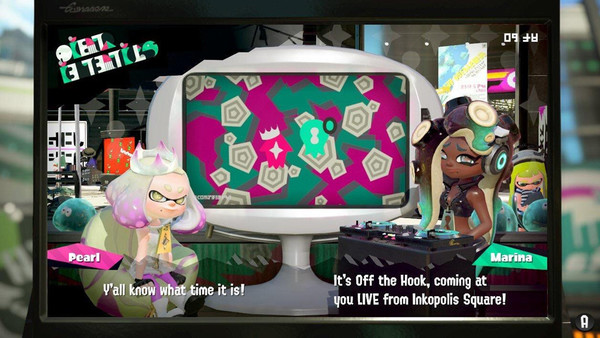
Splatoon 2 is one of the Nintendo Switch's finest multiplayer offerings...but why on Earth did they make the woefully counter-intuitive decision to force the player to sit through an agonisingly overlong opening scene?
The boot sequence features the game's "hosts", Pearl and Marina, walking players through the maps currently in rotation, and though it's fine enough the first or second time you play, after that it quickly comes a chore to zip through.
Players are forced to spam the A button to get past this pointless spiel as fast as possible, and given that the Switch's own design philosophy is concerned with fast boot times and speedy play, this verbose brick wall couldn't feel more at odds with it.
There are, inevitably, some sneaky workarounds, such as disconnecting your Switch from the Internet in order to skip the sequence, or simply leaving the Switch in sleep mode with the game booted, though the latter is obviously negated if you decide to swap to any other game (or if Splatoon 2 requires an update).
Basically, it's an hilariously backwards design choice that benefits no-one and simply ensures it takes longer to get into a game that thrives on its snappy, bite-sized appeal.
That Nintendo hasn't patched in the ability to skip the sequence with one button press two years on is just embarrassing.
9. Stand Still To Aim - Resident Evil 4

The Resident Evil franchise's infamous tank controls have proven massively divisive among players, though in fairness, it's a choice that absolutely made sense for the first three games.
These early entries into the series heavily restricted the players' movements and forced them to fight off zombies within a constricted series of camera angles, while requiring them to stop moving in order to aim and fire their weapons.
But when Resident Evil 4 revolutionised the franchise by introducing over-the-shoulder gunplay, it made sense that Capcom probably should've also adjusted the controls - specifically lessening the aiming restrictions.
Instead, players still found themselves forced to stand still in order to aim. While some fans might argue that this heightened the game's tension, considering its countless innovations otherwise, it felt lazily old-school in a game otherwise keen to move the series on.
Sadly, Resident Evil 5 also retained the stand-to-aim mechanic, and it wasn't until Resident Evil: Revelations and (the otherwise terrible) Resident Evil 6 that players were able to actually strafe while aiming.
Standing still to aim had its place in classic Resident Evil, but by the time the series went over-the-shoulder, it really should've gone the way of the dodo. Thankfully, Capcom finally appears to have accepted this with more recent entries.
8. Press Down To Jump - Conan: The Mysteries Of Time
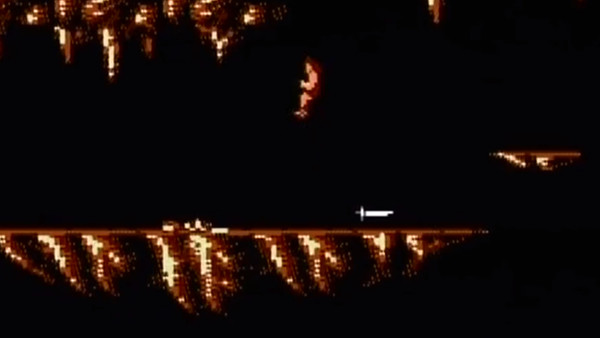
Don't feel bad if you've never played the 1991 NES disasterpiece Conan: The Mysteries of Time, because it's quite probably one of the worst video games ever made.
And its most egregiously irritating feature? The baffling choice to assign the 45-degree jump manoeuver to the freaking Down button on the D-Pad, like a maniac.
This is obviously antithetical to the idea that all upward jumping moves should be executed by pressing the Up button - or better yet, a separate button away from the D-Pad - and that pressing Down is typically reserved for activities such as ducking.
But what truly makes this table-flippingly annoying is the fact that Down + A is also used to pick up items, and so in order to avoid accidentally jumping to your own death while collecting an object, you need to press A slightly before Down to successfully grab the item.
Seriously, what the hell?
7. Random Tripping - Super Smash Bros. Brawl

The Super Smash Bros. franchise is much-loved for its ludicrously addictive and deceptively deep gameplay, but 2008's long-awaited Super Smash Bros.
Brawl invoked the ire of its passionate fanbase by adding an extremely unpopular mechanic to the mix - random tripping.
That's right, Brawl introduced the possibility that any player, no matter how skilled, might suddenly trip over mid-match, as dictated by an RNG operating in the background during every move a player makes.
Though this was clearly an attempt to lessen the skill gap between players by introducing random shenanigans, pro players especially weren't amused, frustrated that tripping could potentially derail a crucial attack or prevent a last-minute escape.
Furthermore, in another wilfully obtuse Nintendo move, there was no way for players to turn tripping off in the game's options (without using mods, anyway).
This ain't Mario Kart - random shouldn't be the order of the day, and given how seriously so many players take the series, it felt wildly misguided to impose mandatory chance elements on everyone.
Mercifully, Nintendo listened to the vocal fan outcry and ditched tripping from all subsequent Smash releases. Phew,
6. Overheating Javelins - Anthem

In fairness, BioWare's divisive multiplayer RPG released with a heap of bizarre design issues earlier this year, though by far the most pervasive and "game-breaking" was the decision to limit the player's ability to fly around in their Iron Man-like Javelin suits.
In an effort to keep co-op players together, the Javelin's locomotion abilities are heavily restricted by an overheating mechanic, which forces players to stop flying or hovering until their meter replenishes.
Flying is by far the most entertaining activity Anthem has to offer, so placing infuriating and un-generous limitations on it is an unquestionably dopey design choice, and surely among the many reasons for the game's player-base quickly dying off.
5. Weapon Durability - The Legend Of Zelda: Breath Of The Wild

The Legend of Zelda: Breath of the Wild is one of the greatest games of the current generation - and if ever, honestly - but this is absolutely in spite of one majorly frustrating and divisive mechanic.
While weapon durability isn't an inherently bad idea, it's employed horribly throughout Breath of the Wild, given the tendency for weapons to break after an indecently short time, requiring players to swap to a new one far too frequently.
Now, players who do even a merely cursory amount of exploration should find themselves stocked with plentiful weaponry, but the lack of clear information about your weapon's durability pre-break is frustrating, unaided by the game's relatively high degree of challenge.
It's clear that Nintendo was hoping that players would find creative environmental combat solutions rather than simply whipping another sword out, but ultimately it's a mechanic that's more tedious than it is well thought-out.
4. The Auction House - Diablo III

Ah, remember Diablo III's infamous Auction House?
Initially, it was an attempt to clamp down on third-market selling of Diablo items and create a safer space for players to buy and sell their wares.
There were two marketplaces - one operating with in-game gold and the other with real-world money - but it quickly became clear that being able to buy that sweet, sweet loot at the Auction House massively de-valued the core Diablo experience.
Diablo is, at its core, all about battling for hours in order to hoover up rare loot, and so allowing players to buy it with a few clicks in Diablo III made the series' core gameplay loop feel relatively hollow - if not entirely meaningless.
Players using real money could effectively conduct their game from the Auction House without having to do much fighting, and there was a clear incentive to study the meta of the Auction House more than the actual systems of the core gameplay.
Thankfully Blizzard removed both versions of the Auction House from the game less than two years after its release, though sadly, the damage was very much done for most fans. Presumably it won't be making a re-appearance in Diablo IV...
3. Cutscenes Can't Be Paused - The Witcher 3: Wild Hunt

Is there anything more archaic in a contemporary video game than the inability to pause a damn cutscene?
It's a much complained-about issue that developers had seemingly solved years and years ago, and yet, for shame, 2015's The Witcher 3 doesn't offer players an option to pause cutscenes.
Now, there are workarounds to this, as PC players can Alt + Tab and hope for the best or install a mod which allows the ability to pause, while console players can open their system dashboard for a soft-pause, but the lack of an actual dedicated cutscene pause feature within the game is absolutely shameful.
Given how long some of these scenes can go on for, and how accustomed players have become over the last decade to, you know, not totally abandoning real life for the sake of a video game, it's absurd that a title as otherwise robust as The Witcher 3 is so out-of-touch in this regard.
2. The Microphone Mini-Games - Mario Party
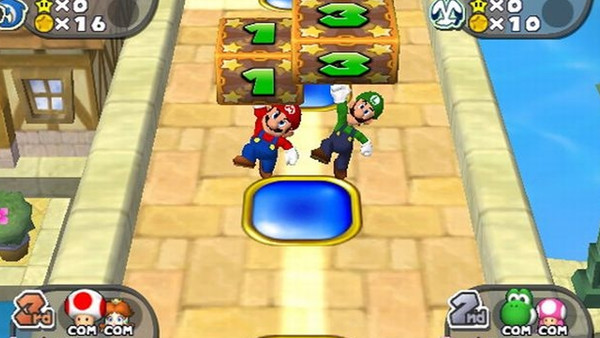
Mario Party 6 introduced a most bizarre - and, thankfully, short-lived - new mechanic to the series, with players able to plug a microphone peripheral into the GameCube in order to play a number of mic-specific mini-games requiring them to use their voice and, er, blow on the mic.
Unfortunately the mic was more a chintzy, desperate gimmick than it was a neat accoutrement to the core party experience, because no matter how hard Nintendo tried, there just isn't much fun about speaking the number of a dice roll aloud and hoping that it might influence the dice roll.
The mic returned for Mario Party 7 and also Mario Party DS - the latter of which used the DS' in-built mic - but the results were similarly listless, after which Nintendo thankfully ditched the idea entirely. Never again, please.
1. Universal Ammo - Deus Ex: Invisible War

Deus Ex: Invisible War is a game so baffling that many hardcore fans of the original game never even bothered with it. It's a title jam-packed with eyebrow-raising choices not befitting its iconic predecessor, perhaps most of all the decision to give players universal ammunition.
This meant that the player had just a single pool of ammo to draw from, and every single weapon in their possession could utilise this pool.
In theory the idea was to make combat simpler for more casual players, but it had the unintended consequence of frustrating those who like to frequently switch their weapons up.
Using a heavy weapon even just a few times typically depleted a large amount of ammo for smaller weapons, and though the intentions behind this concept may have been earnest, all it ultimately did was discourage players from experimenting with different weapons. Awful.