20 Great Video Game Franchises That Became UNPLAYABLE
Metal Gear Solid and Batman Arkham were once untouchable. What happened?

To survive in the gaming industry, being solid isn't good enough. To contend with the high-flyers, a video game franchise has to be consistently great. Even if the latest instalment from a recognised brand is regarded as a masterpiece, the next entry has to match it to avoid falling behind.
Of course, even the best of the best will suffer the occasional slump. Tomb Raider, Final Fantasy, and Donkey Kong fell out of favour at one point or another, yet came back stronger than ever.
But more often than not, a gaming saga never finds its footing once it goes downhill. No matter how many sequels or spin-offs they toss out, none of them may be on par with the old-school line-up. Sometimes, the series in question will suffer a slew of duds, causing it to fizzle away slowly but surely. Other times, a IP can nuke its reputation with the release of a single dud.
It's unrealistic for a property to stay on top for decades, but it's still disappointing to see these supposedly untouchable games suffer such a fall from grace.
20. Dead Space

Once celebrated for its spine-tingling horror, Dead Space has struggled to maintain its relevancy in recent years. The one that started it all was a tour-de-force in nail-biting atmosphere, smart enemy design, and immersive audio-visual horror. Dead Space pushed for strategic combat, since players needed to rely on limb-targeting the enemies rather than blasting everything in sight. Paired up with the balanced resource management and haunting scares, the original game was a knockout.
Though the sequel was also a triumph in its own way, it was obvious EA was subtly substituting subdued tension with cinematic action. If Dead Space didn't course-correct, the IP could lose its magic.
Sadly, that's exactly what happened. Dead Space 3 fully embraced bombastic battles, diminishing the claustrophobic fear of the original. Also, the reliance on scripted sequences, predictable enemy encounters, and generic sci-fi elements rubbed many players the wrong way.
On the surface, Dead Space looked like it was shaping up for an epic return when the remake of the first game received glowing reviews. But things unravelled when the sales numbers came in, revealing that 2023's Dead Space tanked. There've been rumblings of a Dead Space 2 remake or an official continuation since, but nothing concrete has come of it.
19. Red Faction

Red Faction felt revolutionary when it launched in 2001. Its destructible environments let players blow holes through walls and reshape arenas in ways other shooters couldn’t fathom. Coupled with its smart game design and impressive AI, Red Faction was regarded as the best shooter on the PS2 by a long shot.
Rather than dishing out more of the same, Red Faction II took the action to Earth instead of Mars, while also improving on the basic mechanics. Though it was top-notch on the PS2, the other ports were less than lucky.
Although the follow-up, Red Faction: Guerrilla, was great on all systems, its legacy was tarnished by the bare-bones expansion.
Even though it felt like Red Faction could recover, Armageddon sealed its downturn. This underwhelming instalment took place in underground tunnels, breaking away from the open-world gameplay that made Guerrilla so special. The disappointment was a double-whammy, since the abominable Battlegrounds spin-off was released shortly before to promote Armageddon.
When THQ filed for bankruptcy soon after, the future of Red Faction became highly questionable. Although it looked like series could make a comeback when the remastered Guerrilla came out, it was let down by horrific input lag and game-crashing bugs.
Oh, well. Red Faction had a good run.
18. Tony Hawk

Tony Hawk's Pro Skater's reputation has soured over the years, so it's easy to forget when the property had zero competition. The original PSOne game was considered the quintessential skating title, due to its accessibility, manoeuvrability, and head-bopping soundtrack.
After four entries, Tony Hawk took an experimental route. Although this led to a few great spin-offs like Underground, most instalments didn't measure up, including Proving Ground, American Wasteland, and the fittingly named Downhill Jam.
Rather than learning from their mistakes, Robomodo kept churning out slop, including the abysmal Tony Hawk: Ride (which somehow got an equally awful sequel called Tony Hawk: Shred).
Recognising the IP was tumbling down, a high definitive remake of the initial trilogy was released called Tony Hawk's Pro Skater HD. However, the revision was deceptively misleading, since it only contained a fraction of the original content and lacked many classic features, including park editor and create-a-skater.
Even though Pro Skater 5 could've turned everything around, it became the death knell of a once proud franchise. Worried about losing the licensing, the project was rushed out the door, resulting in a game plagued by bugs, poor performance, and non-existent physics.
To the surprise of nobody, Pro Skater 5 became Robomodo's final game, going out of business less than a year later.
17. Banjo-Kazooie

Banjo-Kazooie is a cautionary tale, filled with bitter disappointment and false hope.
When Rare's whimsical title launched on the Nintendo 64, it seemed like the only 3D platformer on the system that could give Super Mario 64 a run for its money. Banjo-Kazooie was applauded for its innovative puzzles, colourful characters, and expansive worlds, further solidifying Rare's reputation as a top-tier studio. Most intriguing of all, Banjo-Kazooie's epilogue indicated the sequel, Banjo-Tooie, would let players jump from one game to another, which was an unprecedented mechanic at the time.
The "Stop 'N' Swop" feature was phased out of Banjo-Tooie, but it was still a terrific follow-up. But when Rare was sold to Microsoft, it looked like the loveable bear and bird were gone for good.
So, when Banjo-Kazooie: Nuts & Bolts was announced, the response was pure elation. However, that excitement turned to horror when the threequel debuted. For some bewildering reason, Nuts & Bolts moved away from platforming to focus on vehicle construction. Now, experimentation is crucial to keep a franchise fresh, but this was too much of a departure, especially since the vehicle-building was tedious, time-consuming, and not fun.
16. Silent Hill

There is no question the survival-horror elements in Silent Hill were ahead of their time. Sure, there was violent and gore aplenty, but the reason why Konami's cerebral nightmare got under people's skin is because the games stressed psychological horror and dread above all else. Jump-scares were minimal, but it always felt like some otherworldly creature would appear at any moment, leaving players in a permanent state of terror.
But after the Silent Hill 4: The Room, the blood-curdling property never truly found its feet again. Origins was predictable and conventional, which are words that never should be associated with Silent Hill. When Homecoming suffered similar criticisms, fans grew concerned they were witnessing the beginning of Silent Hill's dip in quality.
Shattered Memories, which was a reimagining of the original, was reasonably scary, but nowhere near as unsettling as the classics. Downpour's structure left a lot to be desired, since players found themselves aimlessly wandering around while completing unimaginative puzzles.
Despite the fact the P.T. project was expected to reinvent the series, it was ultimately cancelled - and then literally rendered unplayable as Konami removed it from storefronts. When Silent Hill returned after a decade-long hiatus with the dreadful The Short Message, it diluted the franchise's name once more.
Though the recent Silent Hill f was praised, Konami is playing it safe after the success of the SH2 remake by redoing the original (for the second time). Obviously, this news should satiate long-term veterans, but Silent Hill can only thrive if it embraces new ideas.
15. Parasite Eve

Rather than imitating Resident Evil, Parasite Eve was among the few survivor horrors of the late nineties that did its own thing.
Square's creepy title combined RPG progression with horror elements, creating a unique form of gameplay for its time. Mixing turn-based combat with real-time movement felt innovative, and Aya Brea quickly became one of the most compelling female protagonists in gaming.
Disappointingly, Parasite Eve II did the opposite of its predecessor, embracing Resident Evil's aesthetic and gameplay. This decision was to give the sequel more mainstream appeal, but made Parasite Eve II feel like every other scary title at the time.
The next instalment, The 3rd Birthday, discarded the original's identity even more, replacing the role-playing mechanics with a third-person shooter structure. The story became convoluted, leaning on time travel and shock value rather than coherent sci-fi horror. Aya Brea suffered from major character assassination, since the complex heroine was revised into a sexually objectified badass. Adding salt to the wounds, her voice-acting this time around was distractingly awful.
Instead of carving its own identity in the horror genre, Parasite Eve ended up getting lost in the shuffle by indulging in trends and dated ideas.
14. Saints Row

When a video game franchise loses sight of what it once was, it often spells doom for the brand. Ironically, Saints Row got a second wind when it decided to jump the shark.
The original was considered a GTA knock-off, but you'd never know that while playing the sequels, especially after seeing the hero travelling to Hell on a couch or singing "I Don't Want to Miss A Thing" to stop a nuke. Against the odds, Saints Row became more popular the more ridiculous it became.
However, Gat Out of Hell spelt the beginning of the end for Volition's bonkers saga. The expansion for Saints Row IV was criticised for its brief campaign, brainless action, and lack of character customisation.
Volition's Jeremy Bernstein was also concerned Saints Row's absurdity had gone too far. Although purists of the later entries were gutted when it was announced the follow-up would reel in the zaniness, it shouldn't have been a dealbreaker so long as the gameplay was up to scratch.
Which is why it's a shame to learn 2022's Saints Row didn't do anything right. Due to the technical issues, weak story, cringeworthy characters, repetitive missions, and bland open world, it's a wonder what the developers hoped to accomplish with this mess.
Though the reboot was supposed to set everything right, Saint's Row rep is worse than ever.
13. Crackdown

In Realtime world's superpower-themed game, stats level up only when they're used, encouraging players to punch enemies, blow up obstacles, and scale buildings to boost your Strength, Agility, Firearms, and so forth. Because of this, players can feel the hero gradually becoming more powerful, making every encounter and mission deeply satisfying.
Despite the promising start, Crackdown 2 relied on repetition instead of innovation, reusing the same city with minor tweaks, but with a bigger emphasis on grinding. The sense of empowerment from the initial Crackdown, which was instrumental to its success, now felt routine.
With that said, Crackdown 3 seemed promising, with early demos showing off cloud-power destruction. Also, casting Terry Crews as the main Agent gave the game some serious meme energy.
But rather than revitalising the series, Crackdown 3 was the final nail in the coffin. Mechanics hadn't evolved, the world lacked any shred of personality, and the charm of the original had faded to nothing.
Ultimately, Crackdown fell apart because the developers didn't attempt to update the concept, and instead, just kept throwing in more of the same.
12. Paper Mario

Serving as a spiritual successor to Super Mario RPG, Paper Mario was a paper-themed title that utilised turn-based battles. Even though Intelligent System's cutesy role-player could've been a cash-grab, it was anything but paper-thin.
Better still, Paper Mario: The Thousand-Year Door went above and beyond to surpass its predecessor. Thanks to its innovative battle systems, clever puzzles, and quirky humour, The Thousand-Year Door ranks among the best Mario properties.
But rather than becoming Nintendo's next big spin-off, Paper Mario took a nosedive. Super Paper Mario, Sticker Star, and Colour Splash were okay, but never came close to matching the first two instalments. Even the crossover with Mario & Luigi, Paper Jam, failed to satiate the fanbase, thanks to its repetitive combat and lack of creativity. (It's worth mentioning the Mario & Luigi franchise has also gone south, as 2024's Brothership game proves.)
Though the Origami King instalment could've revitalised Paper Mario, it was let down by a convoluted combat system, infuriating puzzles, and a lack of RPG elements. (You can't even level up!)
Interestingly, the recently released Escape from Ever After captures the spirit of Mario's role-playing adventures better than Paper Mario has in decades. Why an indie studio can nail the Paper Mario experience better than a development company handpicked by Nintendo is a mystery.
11. Metal Gear Solid

Some video games are so beloved, the idea of them becoming a shell of their former self is terrifying.
But with Metal Gear Solid, it really felt like the good times would never end. The first MGS set the bar so high, maintaining the standard didn't seem feasible. But time and time again, the spy-and-stealth saga met these impossible expectations or surpassed them.
But after Hideo Kojima departed from the property he forged and spear-headed, it felt like Metal Gear Solid's best days were in the past.
After the release of 2015's Metal Gear Survive, this skepticism was warranted. The bland story and forgettable characters were a far cry from the classics. There was a weird focus on resource gathering, which was monotonous and sloppily designed. The monetisation and micro-transactions felt like a slap in the face, especially since players had to pay for extra save slots.
Although the MGS: Snake Eater Delta remake was great, it feels like Konami took the lazy option, since they're favouring nostalgia over creativity. Despite the fact Metal Gear Solid was once regarded as the top dog, there hasn't been a great new title in over a decade.
10. Duke Nukem

Apogee Software's decision to change Duke Nukem from a 2D platformer into a first-person shooter during the nineties was risky, especially since the industry was overstuffed with Doomclones at the time.
Luckily, Duke Nukem 3D stood out, not just for its solid gameplay, but for its distinctive personality. The tongue-in-cheek humour and Duke's relentless one-liners resonated with fans in a way most silent protagonists didn't. So, when a sequel was expected to be released two years later, Duke Nukem loyalists couldn't wait.
But that's exactly what they were forced to do. Due to an apocalyptic development, Duke Nukem Forever didn't see the light of day for 17 years. The infamous title had so many different development cycles, the final product felt like four or five games clumped together. Mechanics are introduced and then abandoned with frightening regularity. Forever was unable to find its identity since there are times where it feels like a retro shooter, a modern FPS, or a parody of both. Although Duke's shtick was entertaining back in the day, it was dated as hell here, making the cigar-chomping hero come across as cringey.
Even though the developers were expecting great things, Forever may have torpedoed the Duke Nukem name for good.
9. Dead Rising

Dead Rising helped revitalise the zombie genre in gaming, offering players an open-world mall to explore, a unique time-based narrative, and a weapon-crafting system that encouraged chaotic experimentation, often with hilarious results. Its combination of humour, player freedom, and inventive ghoul-slaying mechanics set it apart from other undead games.
As such, it's a pity to see subsequent Dead Rising entries ruin these strengths. Though the second and third instalment expanded environments and added new characters, they were compromised by janky mechanics, repetitive missions, and excessive collectibles.
Dead Rising 4 marked the franchise’s rock-bottom, removing the time-limit system entirely, resulting in a less challenging and gripping experience. Due to the poorly optimised AI and grindy side-quests, the gameplay felt like a chore. Looking back, it's sad to see the smartly written satire descend into a shadow of its former self.
Although a sequel was planned in 2018, Capcom pulled the plug, causing Dead Rising to remain in limbo for years. The 2024 remaster of the first game was welcome, but there's no indication a new Dead Rising is arriving soon. For this reason, the once-adored series may fittingly be dead.
8. Alone In The Dark

Alone in the Dark once stood as a pillar of survival horror, popularising the genre during the early nineties. Infogrames' first few titles relied on mood over spectacle, so the sense of fear didn't just come from the enemies, but from the unknown factors and lack of resources.
Rather than sticking to their guns, later entries stressed action-heavy mechanics and shock-value. In-your-face scares replaced slow-burn tension, and cinematic ambition came at the expense of tight design. The 2008 reboot tried to modernise the franchise with flashy physics and experimental ideas, but suffered from technical problems and poor controls. And when the Illumination sequel was hailed as one of the worst games ever, Alone in the Dark seemed to be on its last legs.
Having said that, the 2024 reimagining had potential, thanks to its powerhouse cast (David Harbour and Jodie Comer) and its return to its Lovecraftian roots.
But due to the uneven gameplay, repetitive backtracking, and abundance of bugs, it was obvious Alone in the Dark had lost touch with what made the series special in the first place.
7. F.E.A.R.
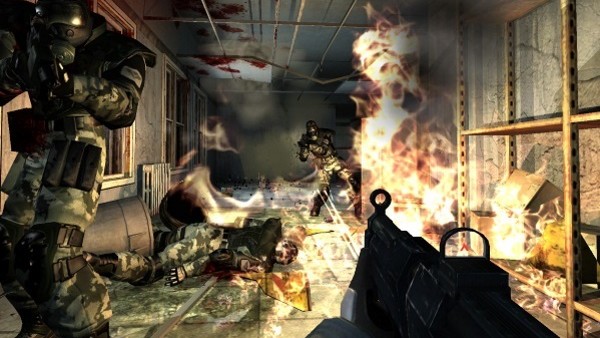
Shooters were rife during the millennium, making it difficult for even the best titles to leave an impact.
And yet, F.E.A.R. made a major impression, thanks to its eerie sound design, combat mechanics, and astounding enemy AI. When Monolith Productions announced they were planning multiple expansions, it seemed like we had a winner on our hands.
Annoyingly, the supernatural shooter couldn't have deflated faster. Extraction Point was too overpriced for what was essentially a bonus campaign. Perseus Mandate was somehow worse, refusing to deviate from the formula in any way.
F.E.A.R. 2: Project Origin was a step in the right direction, but felt like a simplified version of the original. Ironically, the fear component was noticeably lacking, almost like the developers didn't understand what made the first game iconic.
F.E.A.R. 3 wasn't much better, coming across as a run-of-the-mill shooter. Another studio, Inplay Interactive, tried a different approach with F.E.A.R. Online in 2014, turning it into a free-to-play multiplayer experience. Unfortunately, the whole operation was shut down within a year, while still in a beta state.
With Monolith Studios being closed down in 2025, the chances of F.E.A.R. making a comeback is deeply unlikely.
6. Madden NFL
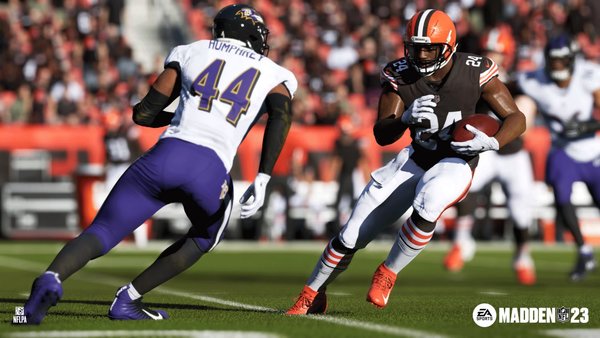
Madden NFL was the pinnacle of American football video games, thanks to its emphasis on team management, customisation, accessibility, and strategy.
But what made Madden truly remarkable was its output. Major changes regularly occur in the sporting world, encouraging EA to release a Madden entry every year, which reflected new players, teams, rule adjustments, while also offering enhanced graphics and mechanics.
Although Madden's output helped define its reputation, it eventually became a detriment. Even though a new Madden is still released annually, the later instalments are noticeably more buggy, due to the complexity of modern video games. If a new game was released every two or three years, it would give the developers more time for testing. Instead, the developers cut corners and make minimal updates to hit deadlines, transforming Madden into a dwindling franchise in the process.
No doubt, Madden 21 was the nadir of the series, suffering from rampant glitches, underdeveloped modes, and heavy micro-transactions. Though later instalments mildly improved, EA are unabashedly pushing the micro-transactions more than ever.
What's worse is Madden has no real competition, giving the property little incentive to improve, much to the frustration of its fanbase.
5. Dino Crisis

Although Dino Crisis could've been brainless action, Capcom's prehistoric title focused more on outsmarting velociraptors and T-Rexes instead of directly confronting them. Limited ammo drove players to rely on tranquillisers and evasive manoeuvres, keeping the tension sky-high.
Though Dino Crisis 2 favoured gun-toting action over subtle atmosphere, the sequel was a hit, due to its fast-paced gameplay, diverse puzzles, and surprisingly well-written story.
For the follow-up, Capcom ditched the action-adventure style and hired TOSE to work on a light-gun shooter called Dino Stalker. But the clunky controls and sluggish gameplay made this spin-off an unbearable mess. (You'd think the studio would've learned their lesson after how things turned out for their other light-gun spin-off, Resident Evil Survivor.) On top of that, Stalker was bereft of tension, resource management, and puzzles, making it feel like Dino Crisis in name only.
Then there's Dino Crisis 3. Although cynicism was justified when it was revealed the sequel took place in space, that wasn't the biggest problem. Dino Crisis 3's camera is so inconsistent and unreliable, it turns the most basic tasks into a hair-tearing chore. Along with the cheesy dialogue and lack of enemy diversity, the whole game should've been sucked out of an airlock.
4. Halo
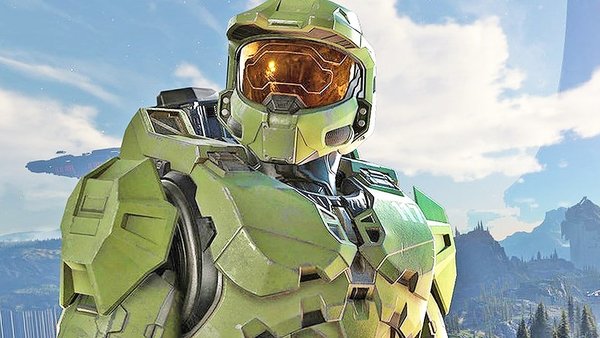
Considering Halo was the flagship for Xbox, Bungie and Microsoft had to ensure their cash cow never waned in quality.
Unlike many other entries, Halo's decline didn't happen in an instant. The initial trilogy thrived, emphasising tight arena combat, marvellous sandbox design, and a sci-fi story that balanced intrigue with scale.
But when Bungie handed the reins to 343 Industries, Halo's identity became increasingly blurred. Halo 4 leaned into over-the-top action and its multiplayer was criticised for imitating the structure of Call of Duty.
When The Master Chief Collection was announced, it sounded like a dream come true, as a more refined version of the first few titles would finally be available. But the compendium was launched in a broken state, eroding trust once again.
Though Halo had always prided itself with its overarching narrative and the complex ensemble, Halo 5 had a fragmented story and kept Master Chief on the sidelines for some inexplicable reason.
Halo: Infinite was a decent entry, but it didn't wow anyone the way Halo used to, due its lack of content, delayed features, and inconsistent live-service support.
Fingers are crossed for the Campaign Evolved remake, but there's no doubt Halo is on thin ice.
3. WWE Games

With 20 WWE titles under their belt, Yuke's is considered the most prolific company when it comes to developing wrestling games. Early entries like WWE Smackdown! and SmackDown vs. Raw were praised for their accessible gameplay, diverse rosters, and deluge of unlockables.
By the time we reached, WWE '12 and '13, it felt like each instalment had little to offer that separated them from what came before. Over time, the descent in quality became impossible to ignore.
When Visual Concepts took over the franchise in 2019, it was the perfect opportunity to repair the damage. Instead, the next release, WWE 2K20, was an unmitigated disaster, overflowing with game-crashing bugs.
Going into damage control mode, Visual Concepts wisely skipped 2K21 entirely so 2K22 would have an extra year of development. (They did however churn out a lighthearted spin-off called 2K Battlegrounds, which was also terrible.)
Even though the last few games are inarguably better than 2K20, they are lightyears behind the golden age of WWE gaming.
2. Medal Of Honor

Created by Steven Spielberg, Medal of Honor was once hailed as a pioneering military shooter, mainly for its authentic World War II settings and hard-hitting storytelling. The early entries, particularly Allied Assault, set the standard for immersive shooters by combining tense combat and compelling narratives.
Sadly, nothing lasts forever. Rising Sun felt unfinished and Vanguard was torn apart for its poor graphics and enemy AI. Heroes and Airborne was competent but didn't bring anything new to the table. There was the odd gem like Pacific Assault, but MoH was noticeably suffering more misses than hits.
Disappointingly, things went from bad to worse. The 2010 reboot shoved in contemporary warfare, clashing with players' expectations. The campaign felt generic, the storytelling lacked emotional weight, and technical issues marred the whole experience.
When Warfighter was released, it was hailed as the worst title in MoH's history, due to its egregious micro-transactions and repetitive modes. By removing all historical authenticity and tension, it was undeniable that Medal of Honor had become another derivative shooter.
Formally revered as a genre-defining property, Medal of Honor is now seen as a warning to all gaming franchises who deviate from the formula that defined them.
1. Batman: Arkham
The Batman: Arkham series stood leagues ahead of every other superhero title, thanks to its superb storytelling, groundbreaking combat, and staggeringly sized open world.
Arkham Origins and Arkham Knight had a few gripes (*shudder* the Batmobile), but they were still tremendous entries in their own right.
Despite the fact Arkham Knight seemingly served as the closing chapter, Bataholics were keen to return to the Arkhamverse. So when it was announced Suicide Squad: Kill the Justice League would take place in the same universe, it sounded too good to be true.
And it was. Though the combat, gameplay, and mechanics were mind-numbingly laborious, the biggest problem is Kill the Justice didn't feel like an Arkham game. Rather than being gritty and grounded, the world was cartoonish and silly, undermining the world-ending stakes. Iconic characters, like Superman and the Flash were sidelined, while Batman was unalived in the most anticlimactic way possible. (His death was inevitably reversed, but the masses had stopped playing by that point.)
Sure, the recent Arkham Shadow was awesome, but it's currently locked to MetaQuest, preventing the Batman brand from expanding.
Even if a true Arkham sequel is released, the one-bitten twice-shy crowd are sure to look upon it with cynicism rather than awe.