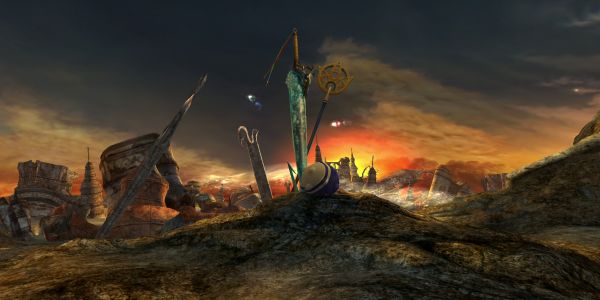
10 Ridiculous Final Fantasy Things We Just Had To Go With

Surprisingly, Final Fantasy XIII doesn't make up every entry on this list.

If the name wasn't enough of a giveaway, Final Fantasy is a highly fantastical game series; realism was thrown out of the window a long time ago (and then awkwardly brought back for Final Fantasy VIII). Is that a bad thing? Of course not. It's led us to some of gaming's greatest stories, set in incredible worlds with characters we grew attached to almost immediately. Yes, there's been some MMO-shaped roadblocks along the way but every main series Final Fantasy game has had something about it that fuels out imagination and creativity. Of course, they also tend to have something to bring us back down to earth with a thump. No game is perfect and sadly, that includes Square's RPG series. There are certain elements of Final Fantasy games that were simply too irritating or ridiculous to gloss over. There are occasional technical errors which serve only to break our immersion within Final Fantasy's worlds; there are fundamental problems with some of the gameplay in the series; there are design choices which are simply baffling; and perhaps, worst of all, there's Cait Sith. Biased character choices aside, the ten entries on this list were elements in Final Fantasy games that we found difficult to accept (but, reluctantly had to as, well, the game was in our hands). Some are isolated incidents, focused solely on one problem within one game. Some are problems which pop up across the series, perhaps showing underlying problems with Square's once magical formula. Of course, nothing here completely ruined our enjoyment of the series (well, let's hope not anyway) but in hindsight, you have to wonder why Square made these bizarre choices which could have potentially destroyed great games. Of course, everybody has their own grievances with the series, so feel free to add your own selections in the comments below.

10. Items That Are Near Impossible To Get
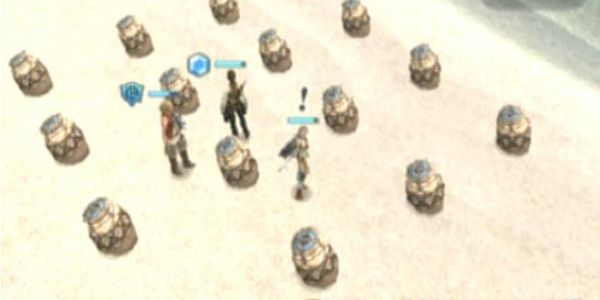
Lucky for us, we live in an era where walkthroughs, cheats and tips are merely a few clicks away. Back in the day though, that sort of information wasn't too easy to access; if your parents had access to the internet and a printer loaded with paper, congrats, you could simply print off the walkthrough and grind your way through. The rest of us had to suffer, making some items in the series near impossible to get. Putting aside items that are only obtainable through painful mini-games (more on those later), there are several items throughout the Final Fantasy series that are very easily missed. A notorious example is the Zodiac Spear in Final Fantasy XII. It's the most powerful weapon in the game but in order to get it, you need to not open four specific treasure chests. That's right, you need to leave them alone. One is right near the beginning of the game too, so chances are, without the fore knowledge of the Zodiac Spear, you've already lost your chance to grab it. Similarly, in Final Fantasy IX, the Excalibur II (again, the strongest weapon in the game) can only be obtained by reaching a specific area of the game's final dungeon within twelve hours. It's easily the hardest weapon to obtain in the entire series; rushing through this lengthy game in such a short timespan is an unbelievably difficult challenge and again, is almost impossible without the use of a walkthrough or a lengthy guide. On top of that, you have items that are only dropped from enemies on rare occasions that are necessary for earning the best gear. For example, the Adamant Armor in Final Fantasy IV requires Pink Tails from Flan Princess enemies; the drop rate is so incredibly low though that it's barely even worth the effort. If you've ever completed these games fully on a blind playthrough, you're either a liar or some sort of Final Fantasy playing god.

9. Poor Translation

Translating games from Japanese into English is a tough job and unfortunately, someone has to do it. Throughout the series, there's a range of small translation errors (it's fair to say that pretty much every game has a line or two which simply don't make sense) but there's also some pretty unintentionally funny ones too. A classic example is found in Final Fantasy IV when Tellah battles Edward (the prince who ran off with his daughter); as the battle begins, Tellah berates Edward for being a "spoony bard", an archaic phrase which really doesn't make a whole lot of sense given the intensity of Tellah's rage. Fortunately, this blemish has actually paid off somewhat; it's become a fan-favourite phrase and has appeared outside of Final Fantasy in games like Phoenix Wright. Another infamous example of translation errors is found in the crown jewel of the Final Fantasy series - Final Fantasy VII. Early on in the game, while exploring Sector 5 with Aeris, you can stumble across a room housing a dying man but before you enter, Aeris will announce that "this guy are sick"; apparently English wasn't one of Aeris' favourite lessons in school. It's not the only translation blunder in Final Fantasy VII either; the first boss fight of the game tells you to "Attack while it's tail's up!" even though doing so leads to a vicious counterattack. The whole line is supposed to read something like: " attack while its tail's up, it'll counter attack with its laser." In game, it leads you into thinking that you need to attack it before it uses the laser, making the game's first boss battle seem like an incredible struggle. Of course, poor translation is a problem in most games and while it isn't too offensive in Final Fantasy (it's actually far more entertaining), it's still a problem that we simply had to deal with.

8. Final Fantasy X-2

Final Fantasy X-2 was groundbreaking for several reasons; not only was it the first full sequel to a Final Fantasy game, it was also the first to only feature female protagonists. Mainly focused on Yuna (having left her summoner ways behind her in Final Fantasy X) and her adventures with Rikku and Paine (a brand new character introduced to the world of Spira here), X-2 is most notable for being incredibly light-hearted, especially in comparison with X. Here's a very easy comparison to begin with: Final Fantasy X opens with Sin destroying an entire civilisation and killing thousands; Final Fantasy X-2 begins with Yuna performing in a pop concert. The tone for this game was set immediately; it's silly, it's over-the-top and it's fun. Mostly. While Square could be praised for using an all-female cast within a game, there's also some creepy fan-service moments that creep in. There's a scene in a hot spring which is just... bizarre. Let's just say there's an awful lot of subtext. There's also a mini-game where Yuna has to massage LeBlanc (your in-game rival) while she makes some inappropriate noises... As a kid, it was definitely the sort of game that required turning down at points so your parents wouldn't get suspicious. Final Fantasy X-2 has a wonderfully weird reputation and that's okay. It makes sense that the serious, dramatic tones that ran through Final Fantasy X were stripped away to embrace the funner elements of life in Spira, given Final Fantasy X's climax. Still, it can be a little embarrassing to play, given the game's out of left field tendencies. It's worth a play (the game's battle system is top notch) but don't expect it to be a completely comfortable journey.

7. No More World Maps

In order to traverse the many worlds of Final Fantasy quicker, the World Map (or Overworld) was designed, allowing the player to cross the world quicker while still being able to control their own path. Encompassing the entire world of that game, the World Map serves as the path between towns, dungeons and locations and is usually soundtracked by the game's Main Theme (which, in most cases, is one of the highlights of the soundtrack). Every main series Final Fantasy game up to Final Fantasy X featured a World Map, adding a vital sense of exploration and scale to the games. Then, Square just stopped. Final Fantasy X allowed you to jump around the globe using the Airship (when it was acquired near the end of the game) but there was never a true World Map to explore. Final Fantasy XII followed a similar format, although there were far more wider spaces to explore as a compromise. Final Fantasy XIII completely did away with the concept though; you could argue that Gran Pulse has similar qualities but it's really just one large area. It seems strange to lament the loss of the World Map, given that the majority of them are quite vacant, simply serving as a hub world of sorts. Still, leaving Midgar in Final Fantasy VII and realising it was merely one tiny piece of something much larger is a magical moment. Speeding across the globe in an airship having slogged through it all on foot earlier in the game is a joy found in most Final Fantasy games. Final Fantasy IX's World Map even featured NPC airships which flew overhead, bringing life to the game's world too. Reportedly, Final Fantasy XV will feature an overworld of sorts, though whether this will be a true World Map or a menu to jump from area to area is unclear. Hopefully it's the former, as while the loss of the World Map hasn't damaged the series in anyway, it's an important element in creating an immersive, fantasy world.

6. Summons

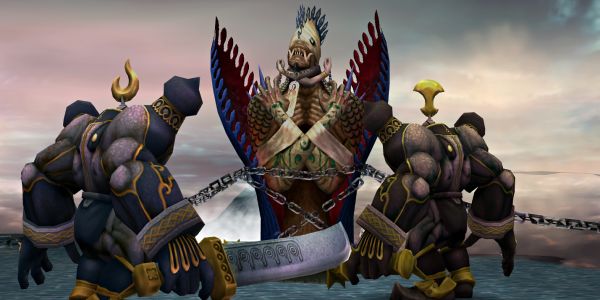
Summons were first introduced in Final Fantasy III and they've since been included in every main series game since in some fashion. Essentially, summons are massively powerful magic abilities; your party character summons a monster which unleashes a magic spell upon the enemy. In some games, summons can be used to fight instead of your party, giving you an awesome new being to control and battle with; they're like souped-up Pokemon. All that power comes at a price though. As the series moved onto the more powerful consoles, Square became more elaborate with their designs, making beautiful looking CGI cutscenes. This also led to more indulgent summon sequences too as the monster emerged in a blaze of glory, unleashing attacks that would shake the earth in some cases. Of course, the problem arises when you want to use summons constantly; suddenly, these beautifully crafted scenes are actually a complete waste of time. In Final Fantasy VIII, this problem was solved somewhat by the introduction of the Boost mini-game, where hammering Square during the Summoning cutscene allowed you to boost the Guardian Force's (the in-game name for the summons) power. Still, you would be excused for avoiding the use of summons throughout the series, just so you didn't have to sit through the same sequences time and time again. On top of that, in several games, Summons are so powerful that they actually feel broken. Guardian Forces in Final Fantasy VIII can be spammed endlessly, making the game an absolute cakewalk if you so wish. Aeons in Final Fantasy X replace your party (preventing them from taking damage) and can deal max damage well before your party members. In summary, they're cheap but effective and if you can stand to watch the same sequences time and time again, you'll have no problems crushing any challenge in the series.

5. Painful Mini-Games

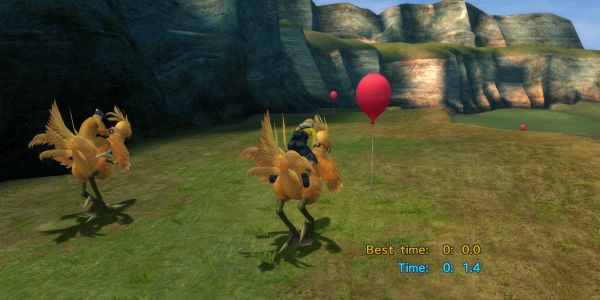
Mini-games are almost as important to Final Fantasy as the actual battles. Nearly every main series game features a mini-game of some description and they range from mildly amusing/entertaining to excruciatingly painful; there's almost no middle ground. Oddly, Final Fantasy X introduces a lot of mini-games and annoyingly, they're tied to acquiring the Celestial Weapons for certain characters; if you want to get the most out of your party, you'll have to endure some absolutely torturous mini-games. One that is certain to wind you up is dodging lightning bolts in Thunder Plains. It requires an extraordinary amount of reflex and focus to dodge one, but to get the Venus Sigil to improve Lulu's ultimate weapon, you need to dodge 200 consecutively. Yep, 200 in one go, without getting hit once. It's entirely optional, of course, but if you're a completionist? Get ready for some frustration. That's not Final Fantasy X's only crime against fun though. Butterfly Catching? The Chocobo Racing? Even leaving Blitzball out of the conversation (which is as loved as it is hated), there's some truly awful mini-games you have to put up with in Final Fantasy X. Of course, the rest of the series isn't much better. Final Fantasy VII's Golden Saucer features some awfully tedious moments, like the Mog's House visual novel game; quite why it exists is beyond us. Another 'favourite' is the clock puzzles from Final Fantasy XIII-2; one of the most pointless additions to an otherwise solid game. Triple Triad in Final Fantasy VIII is a popular one to hate while other mini-games spread throughout the series are a bit of a waste of time, to put it politely. Of course, not every mini-game is mandatory but Final Fantasy X is particularly irritating when it comes to them; if you want to go out and defeat the toughest enemies in the game, you'll have to endure your way through chocobo racing and lightning dodging to gear your characters adequately. While mini-games in the rest of the series may not have such major implications on the remainder of the game, they're still tedious and annoying rather than fun and enjoyable; that in itself is a pretty big crime.

4. Drawing Magic In Final Fantasy VIII
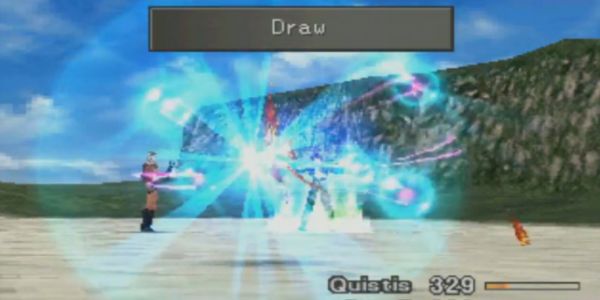
Final Fantasy VIII is one of the more complex games in the series; not just in storytelling or themes but also in its core gameplay. As your party levels up, so do the enemies, making the game consistently difficult. In fact, your enemies stats grow at a more significant rate, making the game much harder if you choose to level to maximum. In order to balance this out somewhat, the Junction system was created. It allows you to junction a magic spell to a character's stat, improving it according to which spell was used. For example, you can add Curaga to a HP stat to increase it dramatically, boosting it by several thousand hit points. Spells in Final Fantasy VIII work differently too; instead of simply owning a spell and using MP to cast it, each spell has a maximum stock of 100, so using a spell will literally use it up like an item. Junctioning 100 of a spell to a stat gives the maximum boost possible, so gathering as much magic as possible is an essential part of the game. So why is it such a massive pain then? Magic (for the most part) has to be gathered from enemies using a move called Draw. This draws a random number of a particular spell from the enemy and deposits it in your inventory. With each enemy having at least one spell to draw and everybody in your party requiring 100 of each for Junctioning purposes, it becomes a massive chore which slows the beginning section of the game down. Expert players will know that there are far easier ways to get magic (such as refining them from items) but for beginners, it's an unenviable slog.

3. Stupidly Easy Bosses

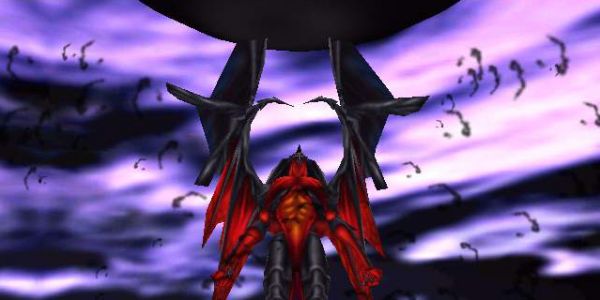
A boss battle is supposed to be difficult; it's supposed to test you as a gamer, to see just how good you really are. Final Fantasy has a wide variety of bosses, ranging from the typical "defeat them to leave the area" bosses to hulking "I hope you've spent hundreds of hours grinding" superbosses. Not every boss is going to have you reloading a save fifty times over, of course, but some bosses throughout the Final Fantasy series have been so easy, it's hard to even classify them as bosses. Typically, any boss that's undead is incredibly easy to defeat as healing effects damage them. For example, Gi Nattak (fought in Cosmo Canyon in Final Fantasy VII) can be killed by using one X-Potion or Phoenix Down on it. There's plenty of other examples of undead bosses going down in one items use though. Other bosses looked intimidating but actually ended up being walk overs. Diablos in Final Fantasy VIII is fought when you use the Magical Lamp item; the game even warns you to save before using it. Still, for whatever reason, Diablos can be inflicted with Blind, rendering his physical attacks useless. With that out of his arsenal, he spams Demi which lowers your party's health by 25% each time, lowering your health constantly but never killing. With Final Fantasy VIII's battle mechanics, this actually aids you as your party can spam Limit Breaks with little fear of being killed. It's cheap but effective. The final fight of Final Fantasy X - Yu Yevon - is actually impossible to fail too, providing a big anti-climax. For whatever reason, your party has Auto-Life cast on them permanently, meaning they'll revive automatically upon death, making the fight impossible to lose. There's plenty of other examples of boss battles which ended up being easier than they really should have been but thankfully, there's also plenty of harder bosses out there to balance it out.

2. Corridors

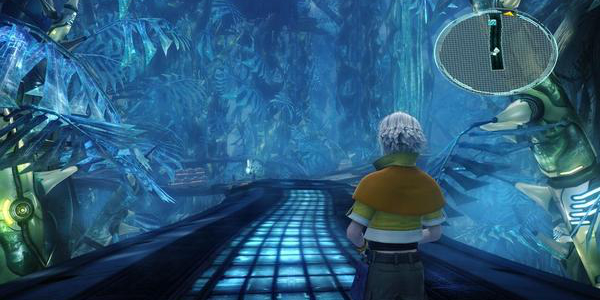
It's fair to say that Final Fantasy XIII's reception was mixed at best. The characters were thoroughly unlikable; the gameplay was far too easy and allowed you to coast through the game with an Auto-Battle system; and the story was mainly told through an in-game index, forcing you to read through various entries to understand what the hell was going on. Worst of all though, it stripped away the sense of exploration that the series is renowned for, essentially turning the first twenty hours of the game into one, long corridor. Pretty much every level in Cocoon consists of one long path which you need to traverse, broken up by the occasional battle or cutscene. Sure, there are a few branching paths, but they still all lead down the same road eventually. This also means that the world feels remarkably empty; there's no towns to explore, no shops to purchase from and very few NPCs to interact with. You want to take a break from the main story and explore or complete some side missions? Too bad. You'll have to wait till you arrive in Gran Pulse and by then, you'll probably just want to get the game over and done with. It's astounding that Square Enix would choose to limit the player in this manner, especially considering the RPG genre had gone through something of a resurgence with the immense popularity of the likes of Mass Effect and Skyrim; two games that make exploration a key feature of both the gameplay and story. Perhaps Square decided that they simply wanted to tell Final Fantasy XIII's story before allowing the player to make their own gameplay choices, but whatever the reason, it backfired dramatically.

1. Ridiculous Weapons

Final Fantasy isn't a series that takes itself too seriously. As a result, it has a range of over-the-top characters, all unique and interesting in some fashion. Some of those characters prefer traditional weapons like swords and guns in combat, while others are decidedly more bizarre in their choice of equipment. Some are more fantastical versions of real-life weapons like Squall's Gunblade in Final Fantasy VIII. It's a sword that also manages to shoot bullets, bringing the nonsense "Two Dead Boys" poem to life. Some characters prefer to swing their fists at whatever enemy is in their path, like Zell (also from Final Fantasy VIII) and Tifa (Final Fantasy VII). Against small enemies, it makes sense for these martial arts experts to literally lay the smackdown; against bigger, hulking enemies, it's a bit harder to believe. We're only just scraping the surface though. Lulu from Final Fantasy X uses a stuffed doll to attack her enemies (how/why it comes to life is a mystery); Rinoa (Final Fantasy VIII) has a limit break that involves launching her dog from her pinwheel bow; Edward (Final Fantasy IV) as a bard uses a harp (we guess harming an enemy's hearing is technically doing damage?); and Setzer (Final Fantasy VI) steals a trick from Gambit's book and throws playing cards at enemies. You almost couldn't make it up. Let's look at two of the biggest offenders though. Quina in Final Fantasy IX is nearly impossible to describe (in fact, s/he doesn't even have a gender). One thing is certain though; s/he loves to eat. Quina can gain enemy skills by using his/her attack command Eat, killing the enemy and gaining any abilities they have to teach. It only makes sense to equip Quina with a giant fork then; it might look ridiculous but at least it's somewhat practical. It does make you wonder whether there's an in-game company that specialises in making giant cutlery though. Most infamously of all though is Wakka (Final Fantasy X) and his ball. Not only is it one of the strongest weapons in the game, thanks to Wakka's high strength stat, but he always manages to catch it on the rebound, even if he's thrown it miles; the guy could be making a serious amount of money in the NBA. Perhaps the real weapon is the rocket arm he apparently possesses to throw a simple ball so hard; this is never actually referenced in game but having seen Wakka's abilities, there's definitely something powering that arm. Of course, as ridiculous as these weapons are, they're all part of what makes Final Fantasy so enjoyable; it would be amazingly dull if everybody in game was using standard blades. So we salute you Wakka, Quina and all the others who dared to think outside the box and bring your ridiculous weapons to the fore; Final Fantasy just wouldn't be the same without you. Agree? Disagree? Is there something about the Final Fantasy series that bugged you? Something that didn't make sense even in a fantasy world? Leave your thoughts in the comments below.

Contributor
Contributor

I have an addiction to achievements, a craving for new bands and a dream to become Captain America. I once finished second in a Mario Kart 7 tournament so I'm kind of a big deal.