10 Ridiculous Reasons Video Games Were Blamed For Failing
Calling potential customers cheapskates is a bold strategy alright.

The video game industry sure is a tough business - it can be tricky to predict what players will respond to, and there's never any guarantee that a quality game will turn out both a critical and commercial success.
Failure can mean different things depending on the circumstances - a game can get panned by reviewers and fail to sell, or sell well despite poor reviews yet fail to prove itself worthy of a wider franchise.
The possible reasons for a game failing to meet expectations one way or another are countless, from publishers oversaturating the market, to picking a poor release date, or most commonly, simply putting out an inferior product that failed to connect with gamers at large.
And yet, these 10 failed video games saw publishers and developers performing extreme feats of mental gymnastics in an attempt to explain why their new releases reviewed poorly, fell short of sales projections, or both.
Obviously publishers want to save face for their shareholders above all else, but to anyone paying attention it was outrageously clear that these unconvincing "explanations" were pure PR spin...
10. World War II Fatigue - Call Of Duty: Vanguard

The latest Call of Duty received some of the weakest reviews in the series' history and failed to meet Activision's sales expectations, prompting them to blame the commercial underperformance on the game's World War II time period.
In their recent annual investors report, Activision said the 1940s setting "didn't resonate with some of our community," yet with the WWII shooter becoming an increasingly crowded space, it really felt like a convenient place to plant the blame.
After all, the primary criticisms of Vanguard had nothing to do with the time period it takes place in, but rather the short and unremarkable campaign, embarrassingly lackluster zombies mode, and standard fare multiplayer suite.
Simply, there wasn't much of an incentive to pay top dollar for another garden variety Call of Duty game that didn't present a unique experience when they could just play Warzone for free instead.
WWII-themed games are still performing well outside of Vanguard, so it's clearly more a problem with this specific game than the setting. Oversaturating the audience while failing to offer majorly compelling content is the real issue.
9. Too Much RPG Competition - Mass Effect: Andromeda

Mass Effect: Andromeda certainly had one hell of a rough launch, with critics and players alike lambasting its array of technical issues, comically janky facial animations, and uneven story.
Though ultimately a commercial success, analysts widely perceived it as underperforming compared to the two prior games in the series.
Long-time BioWare employee Mark Darrah, who worked on the game, attempted to carry out some damage control shortly after release, claiming that Andromeda suffered primarily from releasing in a crowded market. Darrah said:
"I think it came out in a really really busy window in March, perhaps the busiest window in the history of the gaming industry where five RPGs released in the same month. It came out in the same month as Zelda."
Yet it's difficult to see where Darrah is finding five RPGs released within the same month as Andromeda - yes, The Legend of Zelda: Breath of the Wild and Nier: Automata, but the slate wasn't nearly as crammed as he suggested.
More to the point, Mass Effect is a hugely popular IP, and had it been up to the expected standard there's absolutely no chance it would've markedly underperformed against anything.
8. Developers Not Working Hard Enough - Overkill's The Walking Dead

If all else fails, just blame the developers themselves, right? That's what Overkill Software ex-CEO Bo Andersson did when Overkill's The Walking Dead was a critical and commercial flop back in 2018.
When Andersson resigned as CEO in the wake of the game's failure, he sent a final e-mail to the dev team making his feelings on the matter abundantly, horrendously clear:
"Personally though I lost all my money, my family in divorce and my kids custody through the toil over the last 2-3 years working 100 hour weeks for Starbreeze and keeping you devs paid and in the game… With less and less developers willing to put in the extra care in a product it clearly limits the possible result of enough quality in time."
Andersson was widely criticised for the e-mail, which ran counter to claims from the developers that they were fighting with an awkward engine from the very start of development, and had worked intense crunch periods leading up to the game's release.
The project was also characterised as mismanaged and damaged by a creeping scope, making it clear there simply wasn't a coherent, confident vision for the game from the higher-ups, rather than its failure being the fault of the employees doing the programming, art, sound design, and so on.
7. Halo Infinite's "Very Polished" Multiplayer Launch - Battlefield 2042

Battlefield 2042 released late last year to aggressively mixed reviews that were by far the mainline series' worst to date, while players were considerably more vitriolic, loudly lamenting the abundance of bugs, lack of launch content, and removal of classic franchise features.
A petition demanding players be granted refunds across all platforms is currently sitting on 230,000+ signatures, indicating just how dissatisfied players were en masse with a product that was clearly rushed out the door to appease shareholders in the pre-holiday period.
Responding to the lackluster reception both critically and commercially, EA not only blamed pandemic-related production constraints - a convenient excuse for any sub-par title of this era - but boldly declared Halo Infinite's surprise multiplayer launch as instrumental in Battlefield 2042's downfall.
Infinite's multiplayer suite unexpectedly launched four days before Battlefield 2042's release, and in a townhall meeting held back in February, EA said that Infinite's "very polished" state was "not a favourable comparison" to Battlefield.
Really, the pandemic excuse was a lot more persuasive than blaming the competition for simply putting out a more compelling - and, admittedly, free - alternative.
6. PC Piracy - Unreal Tournament 3

Once upon a time, Unreal was an absolute juggernaut of a tentpole FPS franchise, scoring both rave reviews from critics and strong sales.
But then Unreal Tournament 3 was released for PC and consoles in 2007 and, despite solid reviews, absolutely died commercially on PC, selling just 33,995 copies in almost an entire month of release.
A few years later in 2010, developer Epic Games blamed the underperformance of several of their games on piracy, a claim which might've seemed more persuasive had Unreal Tournament 3 posted gangbusters sales on PS3 and Xbox 360.
And yet, the game ultimately limped over the 1 million sales line, shifting barely half of what 1999's legendary Unreal Tournament sold years earlier despite its console release getting a massive marketing push.
Furthermore, the primary attraction of the Unreal Tournament games is undeniably the online multiplayer, which piracy would largely have locked players out of anyway.
In reality, Unreal Tournament 3 failed to connect for a number of reasons: its muddy, dark art-style, lack of launch content, lackluster campaign, and the general feeling that it didn't offer enough of a leap from Unreal Tournament 2004.
With Halo dominating the sci-fi FPS space at this point in time, it just wasn't good enough, and players summarily voted with their wallets. Piracy is an all-too-convenient boogeyman on which publishers regularly try to hang their failures.
5. It Was Too "Woke" - LawBreakers
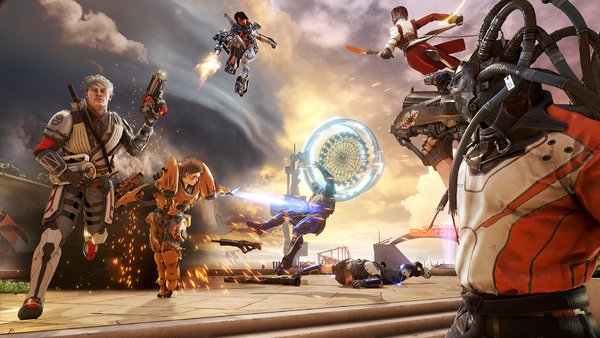
LawBreakers was an attempt by legendary Epic Games developer Cliff "CliffyB" Bleszinski to break into the hero shooter genre, which received broadly positive reviews yet failed to hit commercially, resulting in its player-base falling off a cliff in the months following release.
Less than a year after the game's summer 2017 bow, Bleszinski's Boss Key Productions label was dissolved, and a few months later LawBreakers' servers were switched off.
The game's failure clearly frustrated Bleszinski deeply, who later claimed it suffered from him making it too "woke." In a rather deranged statement, Bleszinski said:
"One big epiphany I had was that I pushed my own personal political beliefs in a world that was increasingly divided. Instead of the story being 'this game looks neat' it became 'this is the game with the 'woke bro' trying to push his hackey politics on us with gender neutral bathrooms.' Instead of 'these characters seem fun' it was 'this is the studio with the CEO who refuses to make his female characters sexier.' Instead of 'who am I going to choose' it became 'white dude shoehorns diversity in his game and then smells his own smug farts in interviews' instead of just letting the product... speak for itself. It's okay to be political when your company or studio is established for great product FIRST. But we were unproven and I regret doing it."
Yet the game being diverse and "woke" really had nothing to do with its failure. The biggest strike against LawBreakers is that, compared to a similarly themed game like Overwatch, its heroes simply didn't have particularly distinct aesthetics or personalities.
No hero shooter can succeed without iconic characters, and so it wasn't long before players lost interest in the game and its whitebread roster.
4. "Anomalous" Reviews - Mafia III
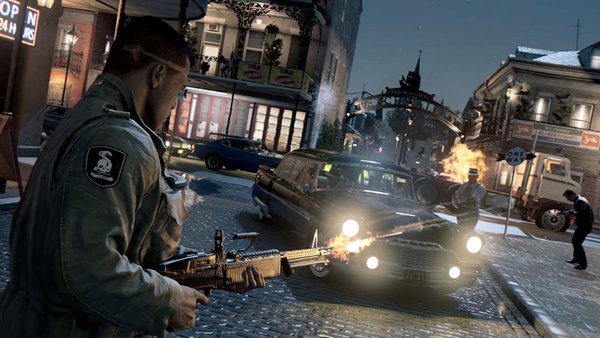
Believe it or not, Mafia III is actually the best-selling entry into the action-adventure franchise, shifting an impressive 7 million copies - a feat that's all the more laudable given the utter disinterest from critics.
Mafia III received wildly mixed reviews for its repetitive missions and clunky gameplay, with the PC version being especially dinged for bugs and performance issues, as well as the fact that it was locked to a mere 30 FPS on launch.
Despite solid sales, many fans of the series viewed the game as a huge disappointment compared to its predecessors, and so developer Hangar 13 ultimately put plans for Mafia IV on the back-burner.
Shortly after Mafia III's release, parent company Take-Two Interactive bizarrely blamed the game's reception on "anomalies" in the reviews process. In an earnings call, they said:
"The scores are lower than we would have liked, but there are a lot of stellar reviews, and I think the most prominent reviewers really loved it, and recognised that what we’re doing, from the story, art, characters and excitement perspective is really unmatched in the marketplace. So I think we and our competitors are seeing some anomalies in the reviews system."
This was a thinly-veiled attempt to put down any reviewers who had a bad word to say about the game, while claiming to shareholders that those who did praise the game were the biggest and most respected review outlets. It was a painfully transparent attempt to hand-wave mediocre reviews.
3. Players Didn't Like "Authentic" Combat - Medal Of Honor: Warfighter

Don't feel bad if you don't really remember Medal of Honor: Warfighter, a near-non-entity of an entry into the once-vaunted FPS franchise that came and went with barely a peep back in 2012.
Critics savaged the game for its confusing story, atrocious AI, generic gameplay, and unacceptable excess of bugs, while sales were "poor" in EA's own words, prompting them to put the franchise on ice where it's largely remained ever since (aside from 2020's VR spin-off Medal of Honor: Above and Beyond).
Despite this, then-EA COO Peter Moore called the game "solid" and opined that it wasn't so much a quality issue as players failing to connect with what it was going for.
Moore said that "the focus on combat authenticity did not resonate with consumers," and even slung mud at critics for good measure, adding that review scores were "frankly lower than deserved." Yikes.
No, Peter, it was just a poorly conceived game from the ground up, and one which following a glut of franchise-dullitingly mediocre offerings was the straw that broke the camel's back. The camel being the consumer in this analogy, obviously.
2. People Not Buying It Full Price - Days Gone

Though open-world zombie game Days Gone was a solid commercial hit for Sony, reviews were wildly mixed compared to almost all of PlayStation's AAA first-party offerings of the period.
This was reportedly a primary reason for Sony's decision not to proceed with a Days Gone sequel, which Bend Studio pitched to the publisher after the original's release.
But the game's writer and co-director John Garvin ultimately felt that a sequel would've been produced regardless had the game sold more, and while appearing on a podcast hosted by God of War creator David Jaffe, went on to blame frugal and budget-conscious gamers. Garvin said:
"I do have an opinion on something that your audience may find of interest, and it might piss some of them off... If you love a game, buy it at f**king full price. I can't tell you how many times I've seen gamers say 'Yeah, I got that on sale, I got it through PS Plus, whatever.'"
Obviously decrying players who waited for a sale to play the game - a game that, again, received mixed reviews - is totally silly, and ignores the fact that Days Gone simply wasn't received as the high-caliber AAA title that PS4 owners were expecting.
That doesn't mean it's a bad game, because it isn't, but that Sony ultimately felt it clearly didn't have the makings of a franchise IP.
1. Poor Release Timing - Homefront: The Revolution

If you can't come up with a genuine explanation for why your game cratered critically and commercially, just play the semantics card.
That's what Deep Silver, the publisher of Homefront: The Revolution, did back in 2016 when the reboot-sequel to 2011's forgettable FPS Homefront flopped with critics and general players.
The publisher blamed the game's ill-timed release, and though you might assume they were referring to a crowded calendar filled with hefty AAA competition, that's actually not it at all.
Deep Silver said that they'd received considerably stronger feedback about the game since patching it in the months following its release:
"We're getting a lot of positive feedback compared to when we launched, so timing was probably the biggest lesson we have learnt there."
What they really mean, but clearly didn't want to say out loud, is that the "timing" issue equates to releasing the game before it was even nearly ready. They rushed the game to market, in the midst of a troubled development no less, and the results were unsurprisingly terrible.
Then again, even with the various patches it received, Homefront: The Revolution is still far from a good game, and it's not exactly easy to believe that another year or two of development would've changed that.
Sometimes it's just worth admitting that a game is bad, cutting your losses, and moving on.