20 Worst Game Breaking Bugs & Glitches
These bugs stranded your characters, killed your save files and, uhh, deleted your hard drives...
As video gaming has become more immersive across the past forty years, it has become less obvious that we’re playing something developed and coded using software and hardware, and more like we’re stepping into fully formed worlds supplied by benevolent techno-gods. But the occasionally painful truth is that there are massive teams of people behind each game we play, hard at work and as prone to error as anyone else.
Glitches and bugs are the common result of good, old fashioned human error, and there isn’t a game out there that doesn’t have a sharp edge somewhere, even if it’s just a tiny gap in the game environment, a stutter in a cutscene, or an invisible snag your character gets stuck on. Unfortunately, there are also a whole lot of bigger issues that make it through development and out into our world, many with the potential to bring the whole gaming experience to its knees.
Great games, terrible games and everything in between - for some the game breaking bug is a sweet release, for others it is the miserable ruination of something spectacular. These ten games feature glitches that stop you dead in your tracks, render the game unplayable, make your save file worthless, or in the worst cases wipe your hard drive altogether...
20. Mission: Impossible - Impossible Mission (1984)

Despite the absence of modern consoles like the PlayStation or Xbox, the eighties is seen as the foundational decade for modern video gaming, giving us Super Mario, Donkey Kong and other all-time classics that have lived on far beyond their 8-bit origins. But progress continues in spite of those it leaves behind, and the decade saw many casualties in both game IPs and the consoles they were played on.
One such relic of the mid-eighties is Impossible Mission, a roguelike game that definitely, no way, wasn’t at all based on the hit TV show Mission: Impossible - and shame on you for suggesting as much. Originally released on the Commodore 64, the game lets players step into the shoes of a secret agent tasked with preventing evil genius Dr Elvin Atombender from blowing up the world, with just six hours on the clock.
Impossible Mission was well received by gamers and critics alike, so much so that the game was ported to other systems in the years following release, including the Atari 7800. Unfortunately for players in the NTSC region (the Americas), the game is genuinely impossible. It features a bug that places some of the cards required to complete its puzzles behind computer terminals, which can’t be searched (you are forced to access the terminal instead). And as it’s a stage-based game, if you can’t get past any mission or puzzle, you can’t continue playing.
19. MissingNo. - Pokemon Red and Blue (1996)

Red and Blue are the Pokémon games that started it all, igniting a thirty-year-and-running fascination with an ever-growing list of fictional creatures that trainers capture, collect and battle, and spawning a franchise that has sold more merch than just about any other IP on the planet.
Red and Blue set us down in Pallet Town for the first time, as a young trainer just setting out on their journey with a starter Pokémon and dreams of making it to the top. Journeying around the Kanto region (Inspired by Japan), you have the opportunity to pursue 151 original monsters and eight different gym bosses before heading to Victory Road.
But one Pokémon you encounter along the way is not like the others. On the east coast of Cinnabar Island lives a pixelated creature called MissingNo., whose powers are mysterious and presence inexplicable. And that’s because it was never meant to be included in the game. A glitch in the game’s programming created MissingNo., and an encounter with it while prosperous for some can be deadly for others. The popularly known side effect of facing MissingNo. is for the sixth item in your inventory to be replicated 128 times, but a rare side effect also sees the accidental Pokémon corrupt your game data, rendering it unplayable…
18. For Chrysler's Sake - Parasite Eve (1998)
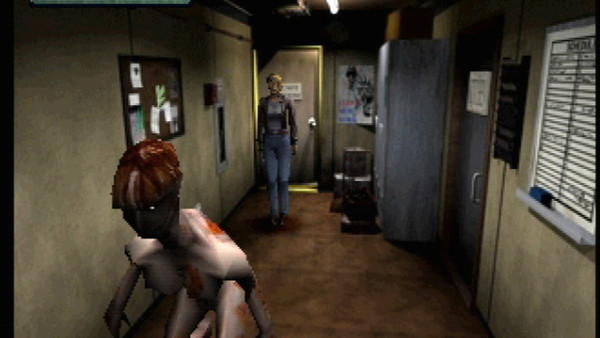
In the mid-to-late ‘90s, Resident Evil was the big horror game for the PlayStation, but with great success comes plenty imitation, and it wasn’t long before other developers were popping out their own demon-slaying offspring left, right and centre.
Parasite Eve is one such title, developed by Square Enix, in which NYPD officer Aya Brea attempts to stop Eve, a woman with supernatural powers who seeks to destroy the human race by causing them to spontaneously combust. The game features a driven story, picking up from a precursor novel of the same name by Hideaki Sena, packs a killer minimalist soundtrack by Yoko Shimomura, and brings everything fans of sci-fi, horror and combat gameplay look for, with plenty of weapons and challenging levels - including the Chrysler Building.
The Chrysler Building is a skyscraper featuring 77 floors of largely randomised content, which allows you to save just once every ten floors, and only after defeating a boss. This may sound like a lark, but it opens itself up for the potential of some game-buggering glitches. And boy did they come.
The building has the potential to hit players with all manner of glitches, most of which seem to occur only once you have laboriously progressed quite a ways up the maze-like structure. This includes some of the bosses essentially becoming immortal and unbeatable, as well as glitches that strand players in boss battle mode with no exit or menu options.
17. 86 Your Save - Brutal Legend (2009)

Brutal Legend was big news for a hot minute back at the end of the noughties, taking the seemingly unstoppable musical comedy juggernaut Jack Black and inserting him into a metal infused video game all of his own.
Set in a fantasy open world, you play as Eddie Riggs, a hard-rocking, JB-voiced roadie who finds himself unexpectedly transported into a heavy metal-themed world, in which he must use his knowledge of guitar and his brute strength to cast spells and battle his way out. The spells snagged the Guitar Hero/Rock Band note-matching style right at the height of its popularity, and cameos by heavy metal heavyweights including Ozzy, Lemmy, Rob Halford and Lita Ford helped propel the game to legendary status.
However, players who really dedicated themselves to the game found one major snafu along the way. An appropriately brutal glitch meant that when you reached somewhere above the 85% completion mark, the game corrupted your save file and you had to start over - for no apparent reason! EA eventually released a patch to deal with this, but chances are anyone playing it straight out the box today will run into the same nightmare scenario.
16. Frozen in Moria - The Lord of the Rings: The Fellowship of the Ring (2002)
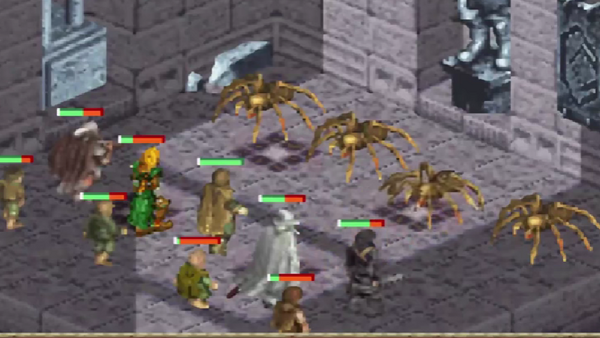
The Lord of the Rings has a mixed history in gaming. Since the release of the films, there have been numerous games, developed by myriad studios, of wildly varying quality. And right near the beginning of it all came the GameBoy Advance version of The Fellowship of the Ring.
The isometric action-adventure game puts you in the shoes of Frodo Baggins and company as they get out of the Shire and begin the long journey to Mordor. Unfortunately, it uses none of the imagery or iconography of the films, and adapts the book at length. For the most part, it's a slow shuffle through the tedium of Tolkien's long-winded prose, with forays into overwrought, laborious, turn-based combat. But that's not nearly where the fun ends.
Fellowship GBA is plagued with progress-hampering bugs and technical issues including challenges progressing between locations and characters getting stuck or never turning up in the first place - which would be bad enough if it weren't for one game-breaking flaw. The game ends prematurely when compared to the film, but even avid players who actually stick with it to later levels will find it impossible to progress beyond Moria, where a glitch freezes the whole game and prevents you from continuing.
15. The Infernal Machine - Indiana Jones and the Infernal Machine (1999)

1999 may seem in retrospect like an odd time to release an Indiana Jones video game, given the film series had concluded its original run a decade earlier, and was still almost a decade away from any future instalments. But Indy never really went away, being kept alive in pulp novels, toys and the Young Indiana Jones Chronicles TV series in the nineties.
Indiana Jones and the Infernal Machine was developed by LucasArts and has all the hallmarks of that studio’s output, including a blockbuster scale and infuriating mechanics. In an original story, the titular explorer races against the Soviet Union to find a mysterious Babylonian power source, while collecting pieces of the Infernal Machine, an ancient device which can open portals into other dimensions.
The N64 port was handled by Factor 5, but whatever they did, they didn’t do it right. The N64 version features random lock-ups and freezes throughout, alongside numerous other action-based glitches. These prevent players from progressing through puzzles by consistently freezing on certain actions, and while it’s theoretically possible to complete the game, it’s a minefield to do precisely the right action on each level and progress without being forced to abandon the game and start over. Infernal machine indeed.
14. Hero Stash Crash - X-Men Legends II: Rise of Apocalypse (2005)

Even over two decades on from their release, it’s safe to say X-Men gaming never got better than Legends. Divorced from the plots and characters of the films - which were frequently on shaky footing - Legends allows us to drop into the action with a self-selected squad of four mutants, using each of their unique styles and abilities to tackle enemies and challenges in infinitely playable and rewarding environments.
Although the Marvel Ultimate Alliance games picked up the torch afterwards, this mutant-focused game series ended too soon with the Legends sequel, Rise of Apocalypse, in which the X-Men and Magneto’s Brotherhood come together to take on ultimate ancient mutant villain Apocalypse. It’s a fantastic game and would have gone out on an all-time high, if it weren’t for one thing…
In Legends, you accumulate special items in your Hero Stash, and while in theory you can hold a king’s ransom of loot, in practice you’re better ditching the lot. That’s because having too many items causes the game to turn on itself at later stages, freezing and crashing at random. While jettisoning your items generally fixes the issue, most players never got the memo and had to leave the game unfinished.
13. Pathetic PC Port - Deus Ex: The Fall (2013)
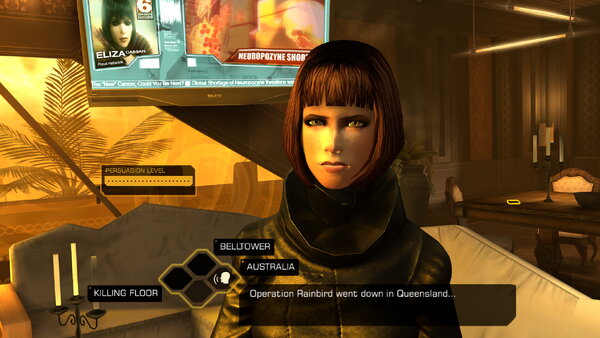
Never has an announced video game's title been so damned appropriate. Spinning off from the cyberpunk Deus Ex series, The Fall was announced in 2013, just two years after the much-hyped third entry into the franchise, Human Revolution. But this time, it was for mobile only.
Needless to say, fans were less than enthused. Anyone incredulous about Eidos-Montréal releasing another game so soon was doubly surprised when they discovered the release was developed for mobile, and triply confounded when the initial release was only for iOS, meaning only iPhone users could play it. Why take such a popular and well-regarded game and destroy all its players’ good will in one fell swoop (or, indeed, fall)?
After Android users begged for their shot at it, the game was ported to Android and then Windows in 2014 - but they should have been careful what they wished for. The PC version of The Fall suffers not just from being a port of a mobile game, or even a poor port of a mobile game, but from some serious game-hampering issues. This includes unresponsive controls in menus and a straight-out failure to launch in some cases, freezing and crashing upon load-up and not letting players get beyond the menus. It all depends on your OS and hardware, but even if you manage to play the game without it crashing, it probably isn’t worth your while.
12. Permanent Time Out - Blade Runner (1997)
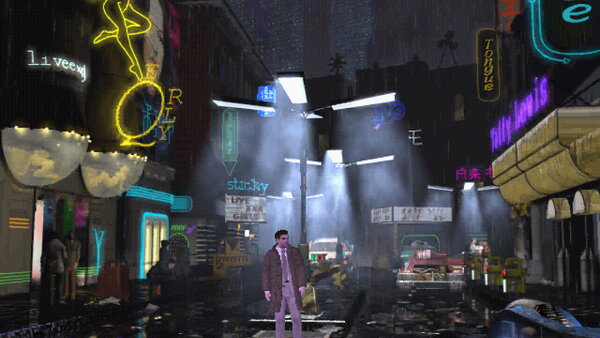
While Ridley Scott’s existential sci-fi Blade Runner received a tepid response when it first hit cinemas, it gradually grew first into a cult classic, then a bona fide all-time Hollywood great - so much so that in 1997, a decade and a half after the film’s original release, it got its own Windows video game.
Rather than just re-tread the film’s plot, we get an original piece of storytelling, set simultaneously to the film, but built around the exploits of detective Ray McCoy, as he hunts down his own group of rogue, bioengineered, android replicants. It’s a point-and-click adventure, but don’t let that put you off, because it is also deeply immersive and progresses in real time.
But it’s real-time gameplay is also its Achilles’ heel. The original version of the game was designed for the hardware of the time, which needless to say was much, much slower than anything used since. Developer Westwood Studios unfortunately didn’t factor in the rapid advancements in technology going on around the turn of the century, and tied some of the game’s timed encounters to the speed of the player’s CPU. This means that if you play the game on anything made after the mid noughties, the game is impossible to progress through.
11. Old Hardware Is A Bust - The Matrix: Path of Neo (2005)

The definitive main story game for The Matrix franchise, Path of Neo lets players step into the leather boots of Keanu Reeves' iconic character and relive the most action-packed moments of the entire Matrix trilogy.
Rather than just a straight take of the films, Path of Neo streamlines the sprawling and often disjointed Matrix world into a single, focused, unified story from the beginning of Thomas Anderson's journey to his final destiny as the One. We are with him from his initial encounter with the Agents at the office through to his ultimate boss fight with Smith, bringing balance between the human and machine worlds and settling the generations-long war once and for all.
Unfortunately, certain PlayStation 2 users were never able to jack in in the first place. Slim users are generally good to go, but many of those with the original, chunky PS2 console find that the game takes them to the pre-menu green code screen and that’s where their gaming experience ends. A quirk in the development kit used by Sony on this and a handful of other games means the game has always had compatibility issues with certain, older hardware straight out of the box.
10. Chronicles of the Save File - Soulcalibur III (2005)

Fantasy fighting game series Soulcalibur had an epic two-decade run at the forefront of the scene, rivalling Tekken and Mortal Kombat for epic 1v1 combat. And while we haven’t seen a new title in the series since 2018’s Soulcalibur VI, we have a plethora of trusty titles across the console generations to fall back on.
Soulcalibur III - the franchise’s last game for a sixth-gen console, releasing exclusively on PS2 - was an especially memorable title, with lightning-fast gameplay and excellent graphics (at least it felt like this at the time!), with two exciting new modes: Tales of Souls and Chronicles of the Sword. The former is an immersive story mode, the latter a real-time-strategy (RTS) mode allowing us to take our created souls through a series of mapped objectives, with gameplay split between fighting on the RTS board and in traditional Soulcalibur matches.
That’s all good and well, except that when we look back fondly there is a big bloody stain staring back at us. Because the game has a fatal glitch associated with the Chronicles save file. If you move any of the save files on your memory card, Chronicles becomes corrupted and unplayable, and it has the added potential to corrupt the rest of your Soulcalibur data too…
9. Victim of Your Own Curiosity - Tomb Raider: Legend (2006)

The seventh entry in the Tomb Raider franchise, Tomb Raider: Legend, wasn’t ready yet to totally redefine Lara Croft’s aesthetic (as later games would), but it was ready to give the series a good shake and a bit of a rethink after the disastrous Angel of Darkness.
The game sends Lara on an epic quest to find King Arthur’s sword Excalibur, taking on presumed-dead former pal Amanda Evert to get there first. As ever, we are expected to guide Lara through puzzles, battles and feats of physical daring to progress through levels and reach the big bosses waiting for us at the other end.
However, some of these puzzles - and bosses - are impossible to get past, if you do things in the wrong order. Journeying through King Arthur’s Tomb in England, you pass through a room in which you later fight the serpent boss, and if you break any of the levers in that room, these have for some reason not been programmed to respawn when you need to use them to drop cages on and defeat the boss later on. Unfortunately, there are several checkpoints between the first time you enter the room and the last, so you’re permanently stuck with whatever fate you accidentally make for yourself.
8. One Wrong Save And You're Dead - Batman: Arkham Origins (2013)

The Batman: Arkham series features some of the best superhero games ever developed, from 2009’s Batman: Arkham Asylum through to 2015's Batman: Arkham Knight (and, no, we’re not counting Suicide Squad Kill the Justice League). Each new instalment gave us better graphics, gameplay, villains and storylines, building an authentic Gotham we could live and breathe.
While 2013’s Batman Arkham: Origins is not the best of the series, it features everything we would want from a prequel entry, set years before the first Arkham game. The story is built around a gang war between a pre-mutation Bane and a healthier Joker, and offers us access to aspects of Bruce Wayne’s younger life never before seen in the series.
Sadly, then, Origins was hampered by glitches and technical issues from its launch. It wasn’t uncommon for the game to crash or freeze, and falling through the scenery became a quirk of a long gaming session. While generally this bugginess was possible to play around, there was one deadly flaw: if the game glitched, froze or crashed while it was saving, the save file was corrupted and it was game over. WB Montreal released some patches and fixes to deal with this, but not only was way too little attention afforded to it, they gave up on this kind of technical support within the first year of release.
7. The Curse of Lumiose - Pokemon X & Y (2013)
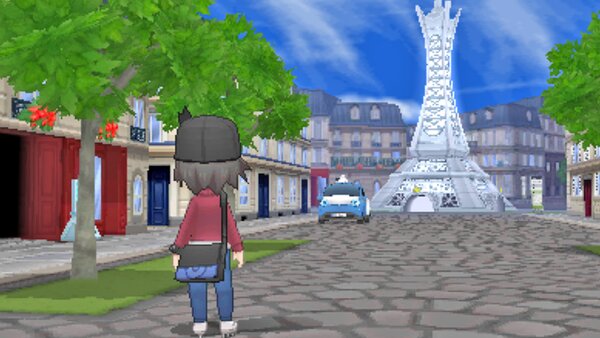
The initial instalments in the Pokémon games’ sixth generation, X and Y, ushered in 72 new Pokémon species, introduced us to Fairy type, and changed the aesthetic of the franchise forever, updating the graphics to become the first games in the series with a fully three-dimensional environment. But, underneath all that, these are classic Pokémon games at heart, sending us off on another adventure as a young trainer seeking to make it big while working to foil the nefarious plots of Team Flare.
The journey through the Kalos region takes us out of Japan and into somewhere suspiciously French looking, with its Prism Tower (Eiffel Tower) and Lumiose Art Museum (the Louvre). As ever, you battle your way around the region, catching Pokémon, making pals and earning gym badges, until you face the Elite Four - the most powerful trainers around.
While not the best games in the franchise, X and Y are a solid good time - apart from one glaring and unfortunate issue. Players who stop off in Lumiose City, save their game and load up again face the potential of running into a game-breaking bug that corrupts your save file for good - no take-backsies. Best to steam on through Lumiose and out the other side if you want to keep your hard-earned Slurpuff.
6. Cutscene Clowning - Spider-Man (2000)

Spider-Man games have a strong track record this century, managing in most cases to meet and then go on to exceed player expectations, with only a few duds between them. And it all began with Neversoft and Activision’s Spider-Man, which arrived before any of the films and has a certain untouched purity as a result that means it tacks closely to the aesthetic and broader sensibilities of the comics rather than Raimi’s Spidey or the MCU.
The game lets us take full control over the web-slinger in a new adventure that sees him framed for a crime he didn’t commit, becoming a wanted criminal, and foiling the symbiote invasion orchestrated by Doc Ock and Carnage, all while battling through the classic rogue’s gallery of villains from the comics, including Rhino, Venom and Mysterio. Phew. The fighting flows nicely, the web slinging is great, and the writing and delivery of the thing feels totally on brand with Stan Lee’s comics.
But not everyone gets to enjoy Spider-Man in all his glory. Initially released for PlayStation, the game was ported to Windows in 2001, and that’s where the problems began. The PC version uses game engine physics in cutscenes, meaning he can actually die and the game will end. Modern PC players will find that the variations in timing associated with the pre-programmed control inputs cause Spidey to plummet to his death while chasing Venom in a cutscene that is unskippable, making the game literally impossible to complete.
5. Scrub Your Hard Drive - Myth II: Soulblighter (1998)
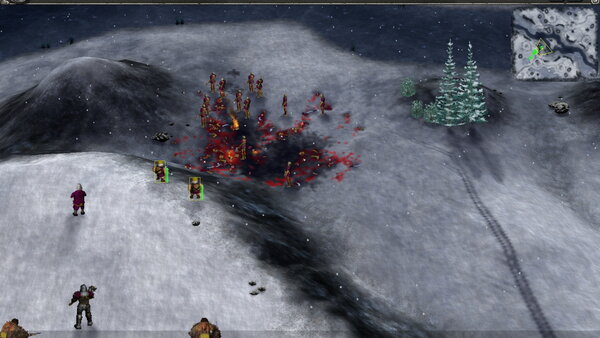
Bungie brought us the Halo and Destiny games, in the noughties and tens respectively, but while their successes have been major, their failures have been almost equally as huge. And the developer’s Myth sequel, Myth II: Soulblighter, almost brought everything crashing down - which would have meant a whole different gaming landscape today.
Soulblighter is a real-time tactics game that returns us to a time of peace and prosperity, sixty years after the Great War of the Fallen Lords game, but one not made to last much longer. The titular Soulblighter - one of the Fallen Lords - has survived, and resurrects the flesh-eating Myrkridia to wreak his vengeance on the world. The only thing that stands in his way is Alric, the King of the Province.
The game features solid graphics, gameplay and monumental worldbuilding, but these feathers in its cap were set aflame by Bungie missing a serious bug for the Windows version of Soulblighter: uninstalling the game wiped the user’s entire hard drive. Meaning players couldn't even install the game, never mind play it - not if they wanted to keep everything they had ever done on their computer. Bungie had no choice but to recall 200,000 copies of the game, suffering not just the cost of the recall but costs associated with the shutdown of production, missed deadlines with retailers, and the repackaging of completed units. And it nearly bankrupt the company.
4. Dead Battery, PAL - WWF No Mercy (2000)
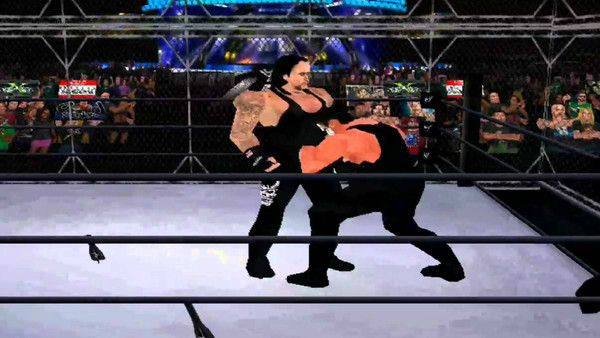
Back before it was taken down by the hardmen at the World Wildlife Fund, WWE was known as WWF: the World Wrestling Federation. And anyone who was young in the nineties and early noughties remembers their video games with a sense of joyful abandon.
Back when Dwayne Johnson was The Rock, Donald Trump was a goofy celebrity and Vince McMahon was not yet the subject of a federal investigation into sexual trafficking, there was WWF No Mercy, THQ’s final pro wrestling game for the N64. You can play as The Rock, Edge, Andre the Giant, Chyna, Tori, Kane and Mankind, with a massive roster of wrestlers and wrestling-adjacent figures and an expansive Championship mode that makes it endlessly replayable.
But despite the game’s vast improvements on its predecessors, its astonishing sales record, and the memories you made along the way, there is one major issue. The PAL version of the cartridge was released with a glitch that could wipe your save data completely, apropos of nothing but rumoured to stem from poor quality battery systems. So if you’re thinking about dragging out the old Nintendo and getting stuck back into your custom rassler, you might be forced to think again.
3. The 27% Club - Far Cry 2 (2008)

Each entry in Ubisoft’s Far Cry anthology franchise has sat comfortably in most gamers’ collections for over two decades and counting, supplying us with expansive, textured open-world action that rewards perseverance and comes with an ever-increasing roster of features and surprises (who would have guessed we’d one day be accompanied on missions by a giant hog?). But it was way back when Ubisoft first acquired the series, and developed Far Cry 2, that they almost brought the whole thing crashing down.
The second game was the breakout title, testing the capabilities of the seventh gen consoles with an FPS that allows us to explore territories in a fictional African country engulfed in civil war. We play as a mercenary assigned to kill the Jackal, an arms dealer whose profit motive keeps the conflict burning, and we are invited into an open world with all the factions, missions, weaponry and clever mechanics we could hope for from a game like this.
So far so good, except a major flaw arose when some of the game’s avid player base hit the 27% completion mark. Inventively titled “the 27% glitch”, this infamous issue prevents crucial NPCs from spawning or areas from opening, meaning you can’t complete the associated missions. If you can’t complete the missions you can’t progress to the next district; and if you can’t progress to the next district you can’t complete the game.
2. Expelli-auotsave - LEGO Harry Potter: Years 1-4 (2010)

LEGO Harry Potter Years 1 - 4 rounded up the best moments of the Potter franchise and gave us not our first opportunity to play them, but perhaps the most comprehensive. It does what it says on the tin, putting players into action as Harry, Ron and Hermione around the grounds of Hogwarts and the plotlines of the first batch of films, before Voldemort comes back for good and things get serious.
While the game is as fun and well-conceived as any of the LEGO franchise adventures (save for the Star Wars Saga game), Windows users suffered for their choice of hardware. The PC version of the game is super glitchy throughout, not just crashing randomly but featuring several scenarios that either break the game outright or make it not worth playing anymore.
These include a bug where you can collect the Voldemort token before scoring all 200 gold bricks, but which has the unfortunate double-effect of locking you out of Hogwarts - and thus the additional goals you haven’t yet completed. That’s bad enough, but it’s the glitches relevant to your save point that really break the game. Some of the game mechanics don’t function as intended and leave you stuck in certain areas - for example, a sub-classroom dungeon section where a dragon ejects you at the end, except when it doesn’t. And if the autosave has already triggered, there is no way to get the dragon to trigger again, meaning it’s game over.
1. Dark at the End of the Tunnel - Assassin's Creed: Brotherhood (2010)
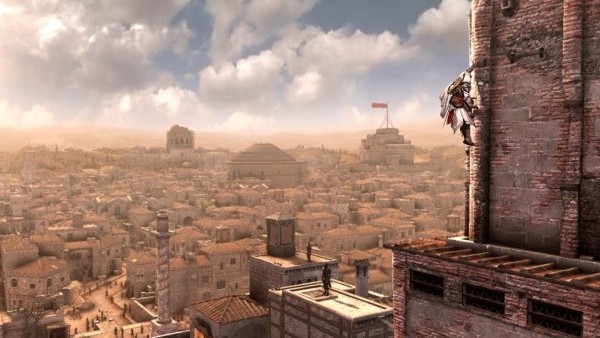
Assassin's Creed: Brotherhood may be inferior to its magnificent predecessor, but it nonetheless held the line and proved that there was still value to be had in this game series’ world before the beginning of a patchy track record. In the years following, the games became copies of the same template, the quality and duration of gameplay diminished, and the rich story and characters floundered.
Brotherhood continues the story of Ezio Auditore da Firenze from II, this time taking place during the Italian Wars, from 1500–1507. Ezio battles the Templars in Rome and attempts to rebuild the Assassin Brotherhood, wresting control of the city from the Templar-aligned Borgias family. This is a formidable foundation for a great game, but the speed of its development meant a number of bugs and glitches went either unnoticed or unattended to, resulting in a series of ugly stains on its otherwise strong reputation.
It is not uncommon to endlessly fall through the scenery into that black, sub-game void we all know and hate - with the only way out to restart the game. But the real game breaker was the tunnels: before Ubisoft released a patch, entering the tunnels resulted in several undesirable effects, including being ejected (making tunnel-based missions impossible), the game freezing up and forcing you to reset, or being desynched with the Animus (the machine you use to enter the past) and getting caught in a permo desynch loop. But it's still better than Revelations or Rogue...