10 Things Nintendo Want You To Forget About Zelda

The Hero Of Time has some skeletons in his closet...

Nintendo have a knack for creating lovable, memorable characters; Mario, Donkey Kong, Fox... The list is near endless, and easily one of the most enduring is Link; he's maintained amazing levels of popularity for nearly thirty years now and he's not even the titular character of his series! The Legend Of Zelda is easily one of the biggest series in the history of gaming and impressively, the sheer number of phenomenal titles that it has produced is overwhelming. Ocarina Of Time is often regarded as the best game ever made; A Link To The Past is basically the 2D version of Ocarina (it's even better, according to some people) and even the more off-beat games like Wind Waker and Majora's Mask are beloved by many. The Legend Of Zelda title has fast become a sign of quality gaming. Let's be frank here though, certain elements of Zelda are a bit... weird. For a bright and colourful series, there are some seriously dark moments; who can forget the first time they came across a ReDead? Still, these are experiences Nintendo want you to remember; they want Hyrule to be a bright, vibrant place with dangerous undertones. What about the things that Nintendo would much rather we all forgot? Over the years, Zelda has drawn some controversy. Admittedly, it's never been as notorious as Grand Theft Auto; nobody has ever demanded a Zelda game be withdrawn from sale. There are a few things that flew under the radar though; issues and problems that could very well have sparked major controversy had they not been picked up quickly by Nintendo. There are other interesting details that Nintendo would rather just forget about too; this article isn't just about controversial inclusions or errors. Some examples on this list show how much the series has changed over the course of its lifespan; it could have turned out very differently. If you have any more examples of things Nintendo would much rather we all forgot about the Zelda series, please leave your thoughts in the comments below.

10. It Was Originally Called 'The Hyrule Fantasy'
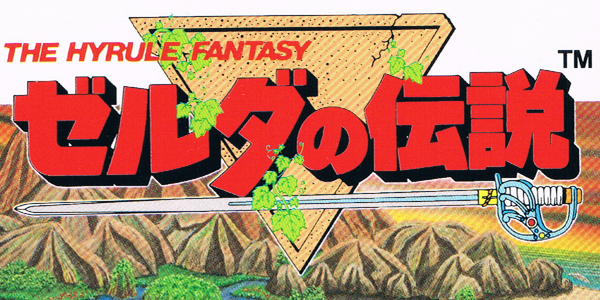
There's a long running series of jokes about the Legend Of Zelda and, to be more precise, the name of the series. After all, here is a game that proudly promotes a character's name, yet you never control the titular female character (aside from a few scenes scattered across the series). Instead, the hero is always Link, leading many to the assumption that Link is actually called Zelda (false) or that the series simply has a stupid name (possibly true). Nevertheless, it's an iconic name nowadays. Anything adorning the Legend Of Zelda stamp will be an instant bestseller; that's just the way the world works. However, the series could have had a different name entirely. In Japan, the first game was titled: 'The Hyrule Fantasy' with the Legend Of Zelda originally existing as a tagline to the game. For whatever reason, by the time the game arrived on American shores, the Hyrule Fantasy name had been removed entirely. It's hard to judge which would have been the better name for the series. Obviously the name of the series has done it no harm but the Hyrule Fantasy does seem more apt; at the very least, it would have solved the "why am I not playing as the main character" confusion.

9. Link's Design Is Based On Peter Pan

It seems fairly obvious, given their penchant for wearing green, but Link's design was heavily inspired by Disney's version of Peter Pan. When Miyamoto set about creating Link, he came up with the idea for the character to have long ears and a hat; apparently, at the time, combining those two features is an immediate Peter Pan reference. It makes sense, given that Miyamoto has always been very open about his love for Disney. Is it possible that the Ocarina Of Time features a very subtle hint towards this origin too? At the start of the game, Link is a member of the Kokiri Tribe, having been raised among them from a very young age; the Kokiri wear green clothes and never age, remaining as children. Sound familiar? It could all be a coincidence (after all, Disney hardly invented the idea of a group of children who don't age) but it could very well be a subtle hint to a major influence for the series. Of course, this is all based on visuals and design alone; Link and Peter Pan are two very, very different characters. Still, it's interesting to see that game designers aren't afraid of taking influence from recognised characters when seeking to create something new.

8. The CD-I Games

Back in the 90s, Full Motion Video was all the rage and interestingly, given how everything played out, Nintendo were pushing the technology more than anyone. In fact, they originally agreed a deal with Sony (!) to create the SNES-CD, also known as the Nintendo PlayStation (!!!); a device which would attach to the SNES and allow for larger games, featuring FMVs. It's kind of weird to think how gaming would have changed had this actually worked out. As you're probably well aware, given Sony's current role in the gaming market, it didn't work out. Nintendo broke their agreement and instead developed with Phillips, leading to the creation of the CD-I. However, when the Sega CD came out and flopped dramatically; Nintendo pulled all interest in the idea, leaving Phillips to develop the console on their own. However, in order to break away from the venture, Nintendo had to allow Phillips to use the Zelda license for three games, allowing them to use five characters from the series. What followed is genuinely considered a gaming travesty. The animation was horrific (although it was widely praised at the time) and the actual gameplay was based off of Zelda II: The Adventure Of Link; one of the more divisive titles in the series. All three games in the CD-I series (The Faces Of Evil, The Wand Of Gamelon and Zelda's Adventure) are monstrosities in the eyes of many; it's highly unlikely that Nintendo disagree with that.

7. The Series Has Been Accused Of Racism
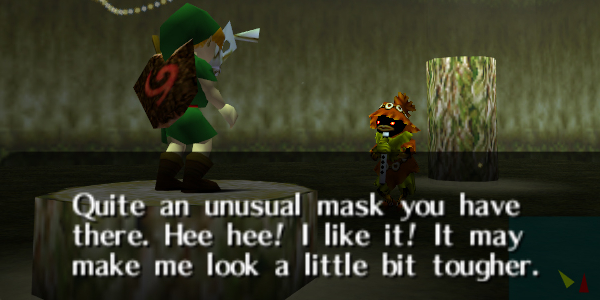
While the Skull Kids have little impact in Ocarina Of Time's narrative (especially when compared to the follow-up, Majora's Mask), they were still featured enough to cause a bit of controversy for the game. As a character with black skin and pronounced lips, they are very reminiscent of the "Golliwog" stereotype; generally considered to be a racist attack on those of African descent. Obviously Nintendo weren't out to promote racism within Ocarina Of Time; the Skull Kid was never designed to cause harm, undoubtedly. Still, for Majora's Mask (and subsequent releases of Ocarina), the design was changed; the character seen in Majora's Mask looks completely different. If this all sounds familiar, it's because Nintendo faced similar accusations with another character - Jynx in Pokemon. Similarly, Jynx also saw a redesign to prevent further offence. Some point out that there is also a theme of xenophobia running through the series, citing that generally, the Gerudo (a desert dwelling, dark-skinned race) are portrayed as the bad guys. It's a theory worth debating but it's difficult to imagine that Nintendo crafted Ocarina Of Time simply to portray a superior white race; the series would have been found out (and rightfully punished) long ago, were this the case.

6. The Series Has A History Of Religious Content
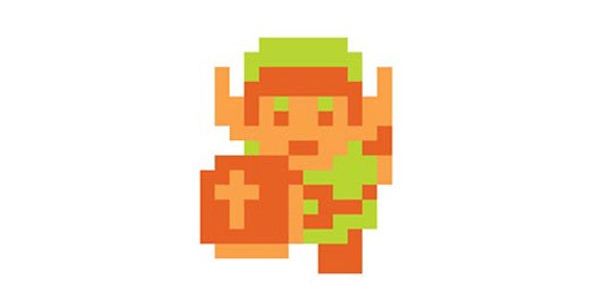
You might not be aware of this but Nintendo of America has a strict "no religion" policy in its games. Basically, it doesn't promote any real-world religious ideals or iconography in order to keep a neutral playing field. The Legend Of Zelda has toed the line a lot of times though; in fact, it's outright broken this rule several times. The original Zelda, in particular, features numerous references to Christianity; unsurprising since the religion was originally meant to feature within the game. The Book Of Magic (an item Link acquires on his journey) is called the Bible in the Japanese version of the game; this was then changed for the International release. Link's shield also features a Christian symbol - a cross. On a similar note, it is possible to find a Cross in Zelda II; it's actually a usable item here. On top of that, A Link To The Past is called Triforce Of The Gods in Japan, referencing the in-game Triforce and it's creation by the three Golden Goddesses. Even the great Ocarina Of Time features religious references; the Gerudo symbol is considerably similar to the Star and Crescent, prominent within Islam. The symbol appears on many switches, blocks and items within the game (notably the Mirror Shield) and was edited out in later releases, replaced with a newer version of the symbol which is deemed less offensive. So, despite Nintendo of America's stance, real-life religion has still managed to influence Zelda in one way or another. It's important to note that none of these issues have created major controversy; Nintendo has been quick to change these issues themselves before they came under close scrutiny.

5. The Timeline

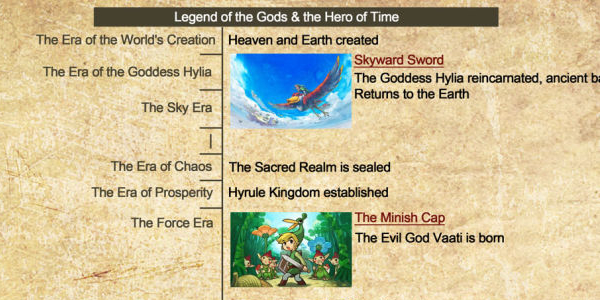
While a Legend Of Zelda game is almost never a direct sequel (Majora's Mask is one of few exceptions), for years, many believed the series to be on a consistent timeline. The games themselves featured references to historical events within the Zelda universe and many used these (plus a good deal of guesswork) to piece together a timeline of sorts. For example, the Wind Waker and Twilight Princess are both clear sequels to Ocarina Of Time; Ganondorf was sealed away prior to the events of Wind Waker and Twilight Princess is set after a series of events where Ganondorf is executed. Honestly, the whole thing is pretty confusing and it was hotly debated by fans for years and years. Then, Nintendo announced a book entitled Hyrule Historia; an encyclopedia of sorts for the series. Crucially, the book outlined an official timeline, giving every game in the series a specific spot. Finally, we had a definitive answer... Or so we thought. In fact, releasing an 'official' timeline might have caused even more furor. Now, we have people debating whether the 'official' timeline is accurate or not, hunting down every little inconsistency hidden among nearly thirty years worth of games. The problem escalates when you consider further releases within the series. Now, every release will immediately be carved open and thoroughly checked to ensure it remains consistent with the timeline; possibly even before it has its own spot! Perhaps with Hyrule Historia, Nintendo tried to give gamers a definitive answer to the Zelda Timeline mystery, hoping they would move on and worry about it less. If that was their intention, it backfired dramatically.

4. It Was Almost Never Released In America

The name Minoru Arakawa (pictured above, left) might not be immediately familiar to people but as the first President of Nintendo of America, he played a huge part in Nintendo's considerable success for years. He was at the helm of Nintendo of America for twenty-two years, overseeing every major console release in America up until 2002. His marketing skills and persistence are seen as key reasons for Nintendo gaining a foothold in the American console market; the company is clearly indebted to him. The Legend Of Zelda was created during his tenure but initially, Arakawa was skeptical about whether the game was suitable for the American public. According to Steven Kent's "The Ultimate History Of Video Games", Arakawa worried that the game would be too complicated for Americans. He trialed the game with a small group of Americans (aided by Japanese translators) but he was worried by their inability to grasp the game quickly; despite all those who tested it giving it high marks, Arakawa felt that it took them too long to understand and enjoy the game. Of course, his concerns were understandable. After all, Zelda was a brand new title at this point and there was very little else like it around. As a marketing man, Arakawa might have been concerned with how he was going to advertise the new game too, especially given the instability of the video game market at that time. Obviously, the game was released on American shores regardless; even if it hadn't, it's unlikely that the series would have remained exclusive to Japan for long anyway.

3. The "Dangerous To Go Alone" Scene Almost Didn't Exist
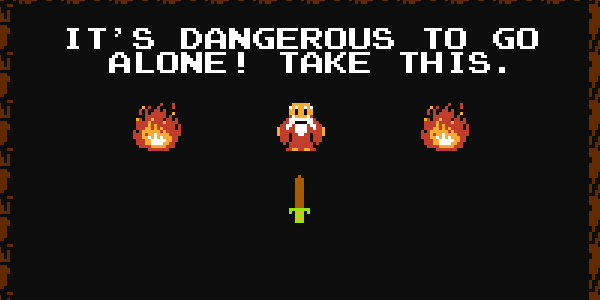
There are several iconic scenes throughout the Legend Of Zelda series but one of the most well known comes right at the start of the very first game. When Link appears in Hyrule for the first time, he's weapon-less. A quick trip into the nearest cave quickly solves that as an old man hands him a sword, stating: "It's dangerous to go alone! Take this." Link greedily grabs the weapon without a word of thanks and leaves; a series is born. Despite being a short, throwaway scene, it has developed its own legacy. The bizarre nature of an old man handing you a sword is strange enough but for him to pronounce that it's dangerous to go alone at the same time; that's the stuff of legend. Given how everything vaguely popular in this world nowadays gets parodied instantly, you'll find plenty of "dangerous to go alone" humour out there... Perhaps a bit too much. Interestingly though, this scene was never in Nintendo's original plans. Link was ready to begin life in the Legend of Zelda with a sword equipped; it was only when Miyamoto decided to make the game more difficult (amusingly due to testers complaining that it was too complicated) that the sword was hidden from plain view. Apparently there's a bit of an evil side to the great man. From the outside looking in, it would seem weird to be so interested in one very small scene but grabbing the sword in Zelda has become an iconic moment in its own right; the fact that it almost never existed at all is quite shocking.

2. The Muslim Chanting In Ocarina Of Time's Fire Temple

https://www.youtube.com/watch?v=OOmOzWdHzHU Remember when we discussed Nintendo's inability to keep religion out of Zelda? There's actually a far bigger example of Nintendo having to remove something post-launch to prevent causing a massive upset and amazingly, it happened in the Ocarina Of Time. One thing that nearly always receives critical acclaim when a new Zelda is launched is the soundtrack; the Ocarina Of Time is no different. Still, it was a song on the soundtrack that could have put Nintendo in hot water had the problem become better known. The Fire Temple is visited quite late on in the game and the song that accompanies the dungeon, unknown to Nintendo, contained a series of Muslim chants. The chants were taken from an online audio library and Nintendo were unaware of their religious origins. When the issue was pointed out, Nintendo were quick to edit the game for future versions. The issue never became a widespread concern (Nintendo never came under pressure to remove the song) but it was still a pretty silly error on Nintendo's behalf. Annoyingly, the original Fire Temple song is incredibly atmospheric and eerie; it's a real shame it was removed over a problematic clip. The issue isn't exclusive to the Zelda series (LittleBigPlanet famously had similar problems) but now that Nintendo has openly given their comments on the matter, it's probably something they want to move on and forget completely.

1. The Swastika Dungeon

As we've seen already, there are a fair few blemishes on Zelda's reputation; things that Nintendo would much rather people just move on and forget. The biggest of them all lies in the first game though; more specifically, Level 3 of the First Quest. For whatever reason, the layout of this particular dungeon is shaped like a swastika. Yep, the infamous symbol used by the Nazis. Well, actually, it isn't. It's actually a manji; a left-facing symbol (denoting good fortune or peace) which has deep roots within Japanese culture. On a very base level, the symbol has absolutely no connection to Nazism. However, it still caused a stir when the game was moved to America where the manji is pretty much non-existent. Given the number of changes made by Nintendo of America to launch Zelda in the States, it seems weird that they would leave the manji in the game; after all, no matter which way it's facing, nowadays a swastika is nearly always associated with nazism. Again, the controversy over this dungeon never reached critical levels - there were a few complaints but it was never a massive ordeal. Still, if Nintendo were to ever go back and rewrite parts of Zelda's history, it's a fair bet that they simply wouldn't bother with the shape of this dungeon again; one quick look around the internet and you'll find people are a lot less understanding about the shape of this level. Agree? Disagree? Are there any other examples of problems or issues with the Zelda series that Nintendo would rather we all just forgot? Let us know in the comments below.

Contributor
Contributor

I have an addiction to achievements, a craving for new bands and a dream to become Captain America. I once finished second in a Mario Kart 7 tournament so I'm kind of a big deal.