10 Video Game Crazes You Forgot Were A Thing
These trends were not built to last.

In an industry as multifaceted and ever-changing as that of video gaming, it's not surprising that success can be hard to come by. After all, while many franchises have stood the test of time by sticking to a working blueprint, many more have fallen by the wayside after becoming viewed as dated and uncool by the consumer market.
It shouldn't be a surprise, then, that when a game is a smash hit, developers scramble to try and replicate their competitor's success to satisfy demand, and draw every pound possible out of a burgeoning trend. This is particularly the case if a game is able to capture the attention of the wider public and become popular with the vaunted "casual gamers" demographic who aren't normally interested in sitting down to play a traditional title.
However, while certain formulas have proven timeless as big sellers over the years, many once-popular concepts are immediately thrown by the wayside the second their profitability wanes. With that in mind, let's take a look at some trends, fads, and crazes that gripped gaming before disappearing seemingly into thin air.
10. Cheap Wii Sports Cash Ins

During the mid-2000s Nintendo managed to capture the imagination of the casual market to an unprecedented degree with the DS and Wii, and by creating a series of video games for people who didn't normally play video games.
The pinnacle of this came with the tie-in for the hugely popular home console, Wii Sports. With over 82 million copies sold, Wii Sports proved to be a massive success by keeping things simple and utilising motion controls to appeal to the widest audience possible.
In the wake of the game's success, developers realized they could target the same demographic by creating similar experiences comprised of multiple games in one. However, while Wii Sports had a level of charm in its simplicity, many of these titles were little more than soulless cash grabs that were ultimately resigned to populating the shelves of none gamers.
Several of these X-in-one games also promoted the use of useless plastic peripherals to make the Wiimote look more like a baseball bat, gun, or even kitchen utensils, a gaming crime in and of itself.
9. Needlessly Including Motion Controls

With the enormous success of the Wii in the mid-2000s, motion controls were the newest industry trend, making gaming significantly more accessible for casual players, and therefore opening up the potential consumer market to a far larger audience.
Catering to a more casual demographic was all well and good when it came to pedaling simplistic party games, but the popularity of the Wii had the unintended effect of seeing motion controls included in a series of new releases around the same time where they just weren't needed.
Instead of simply pressing a combination of buttons to stop a murderous Nazi shoving a knife in your chest on Call of Duty 3, you literally had to wave your PS3 remote around like a lunatic, which was just totally unnecessary.
The issue wasn't motion controls themselves, but more the ham-fisted implementation in games that didn't need them solely to follow the trend. Though the PlayStation Move and Xbox Kinect were not resounding successes, at least including motion controls in those systems made sense.
8. Tamagotchi

Though painfully simplistic by today's standards, Tamagotchi digital pets were some of the most sought after video game toys in the late '90s and early 2000s with over 80 million having been sold worldwide since their initial release.
Housed in a small egg-shaped plastic case with only three buttons, it may be hard to understand exactly what made catering for every whim of your cyber-pet so enthralling, but people got really attached. Those who owned a Tamagotchi can attest to the pain of coming home from school to find out that your beloved virtual pet has passed away in your absence, forcing a press of the reset button.
Despite being nowhere near as popular as it once was, Tamagotchi has adapted to the needs of the modern market, and is currently available as a mobile app while maintaining the main gameplay tenets from the original models.
7. Rhythm Games

With over half a decade having passed since the release of a main line Guitar Hero or Rock Band game, it can be hard to remember just how popular both franchises were in the latter part of the 2000s.
At the peak of the trend, the intuitive playstyle made playing both easy and fun and saw families everywhere forming groups in their living rooms. What made the games truly successful however were the peripherals, with both series generating inordinate amounts of money as people flocked to buy a whole band's worth of plastic instruments.
Despite both titles attempting a comeback around 2015, neither proved to be nearly as successful as their predecessors, with Guitar Hero Live being derided by fans who were forced to purchase a license for many of the game's songs, that was only valid for ten plays.
With a new generation of consoles on the horizon, it seems unlikely that guitar-based rhythm games are set for a comeback anytime soon.
6. Facebook Games

With the rise of Facebook in the late 2000s into a social media behemoth, gaming flourished on the site as something users could do between contacting old acquaintances and wasting time at work.
Of all the games that saw success on the platform though, none were quite as popular as Farmville, a basic agricultural simulator that everyone had either played, or received hundreds of incessant notifications to play. Other titles such as Candy Crush also enjoyed a period of massive success on the platform but at the time of writing gaming on Facebook is nowhere near as popular as it once was.
But why?
One of the main reasons for the decline of social network gaming is that the rise of smartphones has fulfilled a very similar niche, with much of the userbase migrating over to mobile gaming, providing the unintended benefit of leaving everyone's timelines that little bit less clogged up.
5. WW2 Shooters

In recent years, shooters set in World War Two have made something of a comeback, with EA DICE and Activision releasing Battlefield V and Call of Duty WW2 respectively. However, the recent surge of titles based on one of the deadliest conflicts in human history has nothing on the popularity of the genre in the mid-2000s where you couldn't go two minutes without seeing the latest quest to defeat the Nazis released for the PlayStation 2.
Call of Duty, Medal of Honour, and Band of Brothers were the most famous, but not the only series repeatedly including tropes that were already tired from overuse in war films. And, to be fair to them, storytelling with the conflict is considerably easier with WW2 as there are far fewer shades of grey when it comes to who the real villains were compared to other wars.
The craze wouldn't even disappear, but instead, thanks to the success of Call of Duty: Modern Warfare, it evolved into games loosely based on the current conflicts, with America doing battle with groups of nonspecific nefarious terrorists across the Middle East.
4. Sky TV Games
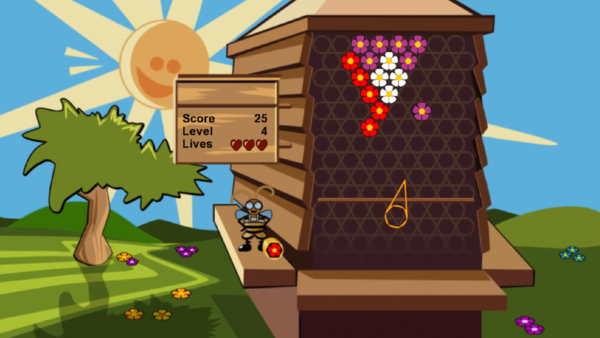
Prior to the popularisation of the internet, a quick and easy way to get a gaming fix was through digital games included in the SKY TV's interactive services.
Many of the games included on the platform were pay-to-play or at least had a barrier stopping the player from progressing too far without dropping some cash, with only a scarce few being truly free to play.
Of all the titles featured on the service, none ever came close to the popularity of Beehive Bedlam, a basic puzzle game that was a staple of many a British living room back in the day.
The service would ultimately be discontinued at the start of 2015, though it is probably fair to say that by this time the popularity of such titles had already waned significantly since their peak around a decade prior.
3. Pong Variants

The first video game created for home consoles to achieve widespread success, Pong, released in 1972 over a decade before Super Mario Bros was even a thing, was a massive commercial hit and put Atari on the map as the first video game colossus. Though the gameplay was as simplistic as you'd as expect from the early '70s, Pong was, and still is, genuinely fun to play.
Proving that developers repurposing popular ideas to cash in on a current craze is as old as console gaming itself, a wealth of Pong-clones hit the market in the years that followed both in arcades, and on home consoles.
The most ironic part about all of this is that Pong wasn't even an original idea, with Atari being taken to court due to the game's similarities to Table Tennis, a game released on the Magnavox Odyssey that predated Pong, but somehow escaping with only having to pay a one-time licensing fee.
2. Extreme Sports Games

With the release of Tony Hawk's Pro Skater in 1999, video games had made their first successful foray into the extreme sports market. The THPS series became an annualised giant, and at least for the first few years, new titles were met with both critical and commercial acclaim. Skateboarding as a sport even received a boost in popularity from the franchise, and Tony Hawk became embedded in popular culture as the personification of skating.
With the unprecedented success of the THPS series, developers began looking for another extreme sport that could be brought to home consoles, with titles based on surfing, snowboarding, wakeboarding and BMX released in the years that followed, with none managing to replicate the masterstroke of Neversoft's series.
Despite being seemingly untouchable at the top of the extreme sports gaming pile, THPS would eventually be dethroned by EA Black Box's Skate series, which removed the arcadey style gameplay in favour of a more realistic approach. However, the Skate's reign as the leader of the genre would be relatively short-lived with no signs of a sequel despite a decade having passed since the release of Skate 3.
1. DOOM Clones

Like so many of the other titles on this list, the original first-person shooter craze was born out of the success of one game, in this case, id Software's 1993 classic DOOM. DOOM may not have been the first game to be classified in the genre, but it was so ubiquitous that the term DOOM clone was more frequently used than FPS when describing similar titles for much of the decade.
And there were a lot of similar titles.
Much like the following decade would see a slew of games from a variety of developers based on the Second World War, DOOM had laid the foundations for the early '90s trend of games featuring a near-unstoppable protagonist and based in space.
Like so many other fads though, while the DOOM franchise that served as the inception would remain strong in the years that followed, countless DOOM clones did not come close to emulating the success of the original becoming extinct in the process.