Back in the days before the internet killed publishing from encyclopedias to periodicals, gamers had only two sources for game news: expensive gaming magazines and word of mouth. As far as the magazine went, you had staples like Gamepro and Nintendo Power, and later Game Informer and Playstation Magazine to provide walkthroughs, reviews, secrets, and letters from the community. For the most part these were reliable, but only because by-and-large the information came directly from the game publishers as a form of native advertising. Even then, information was occasionally wrong or changed later. It was a slower, simpler world where published magazines were almost unto tomes written in stone. Many still refer to Nintendo Power about Super Mario 3 to crush the Card Flip game. As for word of mouth... it was much more exciting and, maybe, even credible to a degree. We all had a friend, with a cousin, who saw a guy get 99 lives and a crown in Super Mario Bros. Everybody had an older brother or cousin that could beat Ninja Gaiden, and in one life no less! Most of these however, nobody ever seemed to have documented... but everyone believed was true. These were before the "pics or didn't happen" days of gaming and a great many of these stories became myths - the El Dorados, Atlantises, and Holy Grails of Gaming. We believed in them, we searched for them, and we ground our thumbs to the bone for them. Unfortunately, we now know that for many of these just weren't true - or were only slightly true and then crazily exaggerated. And for the most part, they couldn't be true - at least not without massive cheating and glitching. But we stupidly believed in them anyway...
10. Killing The Dog In Duck Hunt
Playing Duck Hunt was a rite of passage. The feel of that trigger, the echoing ping of the shot, even the satisfying weight of the grey or orange light pistol are nostalgic memories of a simpler time when guns came with video game systems for the purpose of hunting. Catching those ducks with a laser-beam quick bullet and watching the tube blink was as exciting as if we were really hunting. The harder the game got, the more frustrated gamers became. In fact Duck Hunt probably holds the title as one of the most frustratingly taunting games of those early days because of... the Dog. Man's best friend, indeed, if you nailed a few quackers he happily applauds you by displaying your kill... but if you miss he snickers with an 8-bit laugh devised by the devil himself, holding his pixilated belly in amusement. Sooner or later, the inkling would come to shoot the damn dog. SHOOT HIM DEAD.The laughing would drive you to hate the otherwise friendly digital pooch. And some kid out in the schoolyard always knew exactlyhow to show that K-9 who's boss. "Oh well, you've gotta get to Level 99," "Oh, didn't you ever play the arcade version?" that kid had a million ways. A million lies. You can't shoot the dog... it didn't work then and it wouldn't now (assuming you have a tube television and not a plasma screen - the Zapper won't work on those). Of course, that won't stop you. Once you start getting laughed at you're gonna try and blast that dog to bits.
9. If You Beat Metroid Fast Enough You Can See Samus Naked
1986's NES classic Metroid was a game changer, literally. Touting an innovative password system, and incredibly open and continuous world, and a highly engaging and difficult world to navigate. Metroid also boasts one of video gaming's first female protagonists... of course we didn't know that at first. By every indication, Samus was male. The in game story even referred to her as him, however as we progressed towards the end of the game it became clear that Samus was indeed a her. Whether it was through the use of the infamous "Justin Bailey" code, or by sweat and toil to get to the end of the game Samus' true gender is revealed. In fact, the intended method of the reveal is the source of a particularly preposterous (in retrospect) rumor surrounding Metroid. Depending on the speed in which you complete the game, there are varied endings for the state of dress Samus is in the game ending screen. At slower times she is merely without her helmet showing off her "Alice from Dilbert" haircut. Faster times reveal her to be in a bikini... for some reason. While the amount of chauvinism in video games is ever-present, it is particularly disappointing that speed amounts to bikini in the first action game starring a female. This led to the only logical conclusion undersexed male brains could come to: fastest time = naked girl. Suffice it to say that thousands of hours were wasted while many young men attempted their best and only shot at seeing a naked girl in their living rooms. As the years went on, and we learned all about Nintendo's "family friendliness" even the shadow of this rumor is impossible... but back in those innocently not-innocent days anything was possible. Even pixelated nips.
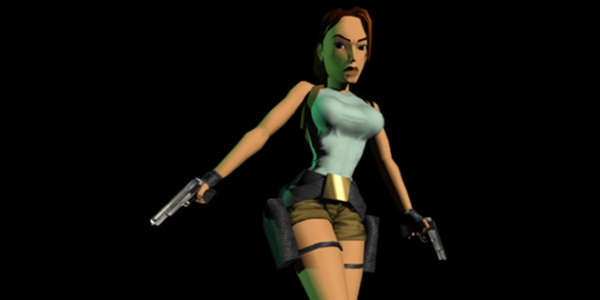
8. Any Path To A Naked Lara Croft
Ten years after Samus blasted her way into the gaming world, Eidos Interactive offered us a new digital ingenue... and her name was Lara Croft. In Tomb Raider, gamers were treated to an adventure heroine in the same vein as Indiana Jones, whose travels and quests saw us guiding her through temples, caves, and of course a few tombs. Unlike Indiana Jones, however, Lara took us through that world in short-shorts and a t-shirt tightly wrapped around digital cleavage that clearly suggested there was a way to see more. However, back in the original Tomb Raider for the Playstation, PC, and Sega Saturn, Lara Croft wasn't as highly rendered as she is today. Her more womanly aspects were rather triangular and yet she still managed to have a figure that would have made a Barbie Doll blush, and legions of anxious youngsters couldn't wait to see... well... it's hard to say what they would have seen, given the limitations of the graphics. Despite the almost immediate rumors that there was some sort of trick or code to get Ms. Croft nude and skulking around dangerous and exotic landscapes with guns and wolves, it just isn't so. This didn't stop the new school yard of the internet from proliferating the lie like mad though. It seems that every time the hunt had been debunked - even through game hexing - hope sprang eternal that somehow there was a way to get to the Tomb Raider's literal naughty bits. Of course nowadays you can just find a hack or something.
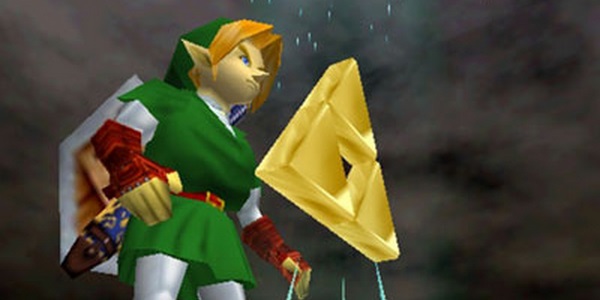
7. Obtaining The Triforce In Legend Of Zelda: The Ocarina Of Time
In most installments of the Legend of Zelda franchise, rescuing the titular Princess Zelda also involves obtaining the legendary Triforce. The Triforce is a divine artifact representing and containing the ultimate power of the Land of Hyrule and is defined by its pieces: courage, wisdom, and power. In the Nintendo 64 title Legend of Zelda: The Ocarina of Time the history, creation, and avatars of the Triforce are explored most than any title before it, and arguably since. It is surprising then, that unlike in previous installments of the series the game's ending did not include actually obtaining the Triforce. It was so surprising, especially given the game's multiple endings, that gamers didn't believe it. There were a variety of claims from around the internet stating that there were indeed choices one could make in order to obtain an ending with the Triforce. The most famous of which involved a number of screenshots and required a "Song of Sages" that led to the "Temple of Light". These reports were all fabricated of course. It simply isn't a part of the game, however the multiple endings in OoT does lead into the next Legend of Zelda myth...
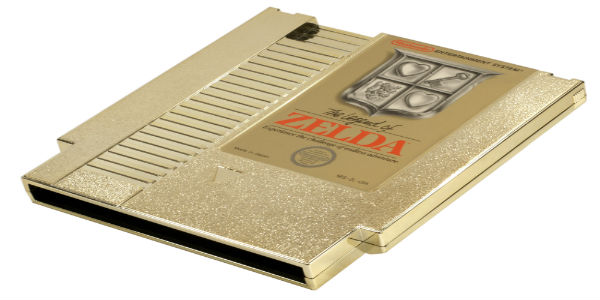
6. A Real Zelda Timeline
Back in the 1980s, there were two only installments of the Legend of Zelda, and the sequel came chronologically after the original. However, when the series made the jump to the Super NES in the 1990s, it appeared to be a retelling of the same story, only on the new system and using a variety of new gameplay and storytelling options available... only according to Nintendo, it wasn't. The title of the Super NES installment "The Legend of Zelda: A Link to the Past" hinted that either the game was a reboot or that there was some sort of jumping though time occurring. After all, in the NES sequel, The Adventure of Link, it was established that many Princesses had been named Zelda... so maybe this was just another Link and Zelda? As more games were released, some of them clearly retelling the Legend of Zelda's story in different ways while others told side journeys or additional tales, major speculation began as to whether or not these games were actually... ahem... linked. It was only in 2011 that Nintendo finally released what they had teased as their grand plan all along: a three pronged timeline that relies on the player's earned ending in Ocarina of Time to make all the games kinda-sorta work chronologically. While some felt relief that the timeline was finally revealed, those more cynical fans feel that it was thrown together to appease the rapid continuity hungry gamers out there. After all, a widely divergent and unnecessarily complicated timeline doesn't exactly scream "well planned for almost 30 years."
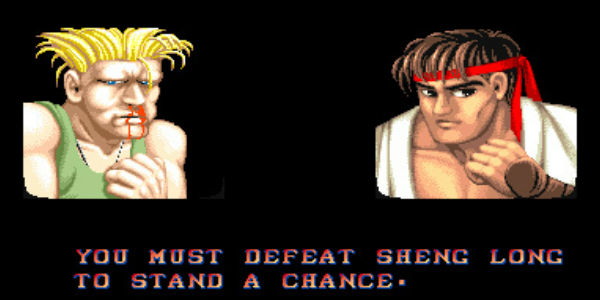
5. Fighting Shen Long In Street Fighter II
Remember when we said the gaming magazines were highly reliable sources of information back in the 80s and 90s? Well, they were mostly reliable. Back in April of 1992, Electronic Gaming Monthly (EGM) decided to play an April Fool's Day prank on its readers by declaring a secret character in the original Street Fighter II named Shen Long. Contributing to this myth was the fact that, since EGM was so reputable, other publications picked up on this story and republished it without fact or source checking. The myth exploded and, having been verified by a number of credible sources, was widely believed to be true as scores of gamers set out to fight the mystery fighter. The joke itself stems from confusion over one of Ryu's post-victory taunts "You must defeat Sheng Long to stand a chance." The declaration left many gamers wondering just who in Hades Sheng Long was. Sheng Long is the Chinese translation of Rising Dragon Punch, or the "Shoryuken" attack we've all tried to use with terrible results in real school yard fights. For some reason Street Fighter II was translated for Chinese before English and "Sheng Long" came along for the ride in localization. Capcom had never intended for there to be a character by the name, though the myth did have a hand in the creation of Akuma and Gouken.
4. Kano As A Playable Character In Mortal Kombat II
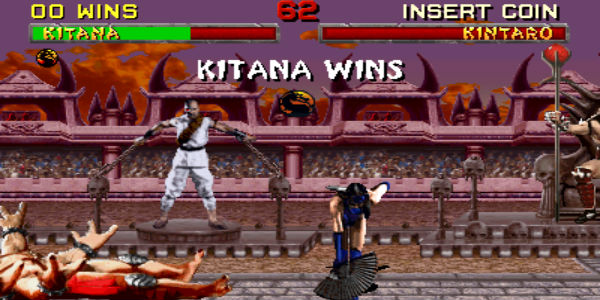
Mortal Kombat really broke a lot of barriers down for fighting games in the early 1990s. The bloody take on the 2D fighter was a departure from the suddenly friendly seeming Street Fighter. It's "realistic" character designs, brutal fighting style, and dark storyline made it stand out in a decade where "extreme" ruled supreme. When the sequel hit arcades and later, home consoles, fans were surprised to see that world take a darker path as the realm of Outworld and its emperor the skull-masked Shao Khan have begun an invasion of Earth. Khan, among other deadly and dastardly deeds had captured fan favorite characters Sonya Blade and her nemesis Kano and keeps them chained on the sides of his throne in the arena. Fans, desperately wanted to believe that Kano was a playable character in the game because everyone one loves laser eye-beams. Especially considering the inclusion of Shang Tsung, the shape shifting master of the previous game, as a playable character in the game, gamers searched for a way to control the Aussie criminal. Many speculated that the "Toasty" pop-up that leads to the ninja Reptile was a way to get to Kano. As it turns out, while his character does exist in the game, it is only to provide animation for the captured Kano in the arena. He does however appear in later installments.
3. Playing As Luigi In Super Mario 64
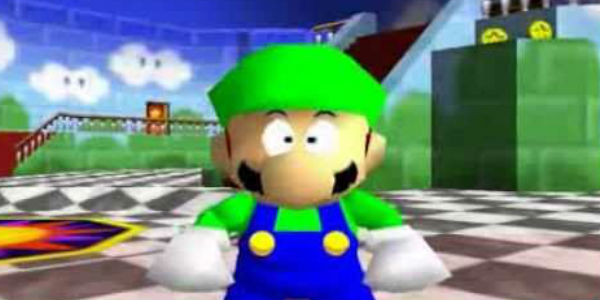
Luigi was only ever intended to be a color swapped version of Mario, but following Super Mario Bros. 2 (USA) giving him a distinctly different gameplay, years of successful cartoons, and millions of younger siblings being forced to play second, he was embraced by the fans on his own merits. However when Super Mario 64 offered no second player option, but did offer a rather large world full of secrets, a generation of gamers started to wonder and theorize about the lost brother. "Where is Luigi?", "All you have to do is find all the secret stars and you can play as Luigi." The Luigi theory was given some credence by a particular easter egg in the game... Once we all learned that you can find Yoshi at the top of the castle, the rumors really started to fly that there was a way to play as the younger Super Mario Brother in the uber-successful N64 launch title. Alas, there isn't... at least not in the original cartridge. It doesn't matter how many stars you collect, which order you do them in, or what cannon you shoot yourself from - there is no Luigi. However, if you really want to play the game in green you can pick up a copy of the Nintendo DS port Super Mario 64 DS in which you can play as Yoshi, Mario, Luigi, and Wario. Or you can just get a hacked version... but that Luigi will look awful.
2. Super Mario Bros Flagpole
The flagpole in Super Mario Bros. is the source of one of the most oft-attempting tricks in gaming history - jumping over the flagpole. Now, it is actually possible to jump over the flagpole in two very controlled situation. One involves a glitch on World 1-1 that abuses the vertical and horizontal looping that occurs when playing the game on a widescreen TV and the other, less "cheaty" way, involves using a platform on a string on World 3-3. However, the myth that we all believed about the flagpole as kids was that this amazing leap could be accomplished at the end of any given level at any time. This simply wasn't and still isn't true. Hours of frustration at failed attempts at leaping over the pole any-old-where were really for naught. We could have been saving the princess in another castle or trying to get into the "Minus World" or the hidden 256 levels in the game.
1. Bringing Aeris Back In Final Fantasy VII Final Fantasy VII raised the bar for both its franchise and its genre in terms of optional side quests, storytelling, customizing, and more - no two play throughs ever had to be the same while following the same plot points and major events. One such major event is the death of Aeris, one of the protagonists, Cloud's, main love interests in the game. Aeris' character was warm, forgiving, friendly, and knowledgeable so when the villain Sephiroth unexpectedly kills her at the end of disc one of the game it was not only shocking, but painful as you couldn't help but love the pixelated sweetheart. In a game with the scope of Final Fantasy VII, it isn't a shock that fans would immediately begin to search for a way to resurrect their fallen comrade - after all when a character is felled in a battle you need only employ a Phoenix Down to revive them. With Aeris we went through all the stages of grief and denial lasted the longest. Gamers relentlessly searched for ways to bring her back, aching for clues on how to do it. Aeris has a final "Limit Break" that would require a lot of work to attain only on disc one, she foreshadows being in other parts of the game asking to be on an Airship one day (an event which doesn't transpire until after she's gone), and also the main character's general heartbroken nature following her demise just to name a few clues. This emboldened the quest. Suffice it to say, Aeris cannot be brought back. There is a tease of her revival at the end of the game where the player can see Aeris against a black background waiting expectantly... but it doesn't mean much. This fact is all but confirmed in the FF7 franchise follow-ups Dirge of Cerberus where Aeris is mentioned but never seen, and the movie Advent Children where she continually returns as a ghost. It seems the intended result was for gamers to be taught a terrible life lesson about falling love with half-blooded psychic girls from the slums of dystopian cities in our battle against our mentors turned arch nemesis during our quests to save the world from maniacal aliens and looming magic meteors. A useful lesson indeed.
Brandon grew from the awkwardness of his youth into the awkwardness of his adulthood. He is the author of the Eat Your Serial Press title "Ten Years Gone: Pomp and Circumstance" and is a contributor on Maglomaniac, Polite on Society, and What Culture.