10 Video Game Plots Nobody Fully Understands
Come on then fanboys, make these make sense.

Throughout history, stories have had a huge impact on us lowly humans, and even though they havent been around for nearly as long as books or films, games have slowly but surely evolved to become a medium that tells them like no other. More than anything else, a deep, fulfilling, satisfying plot makes a game memorable, and it's no coincidence that the best titles are those that manage to seamlessly weave narrative and gameplay together. However, this advancement is not without its dangers - particularly when games try too hard to be as deep and complex as possible, and instead end up with plot threads left unresolved and stories going off the deep end without any explanation whatsoever.
Writers can get so caught up in the story they want to tell that it becomes incomprehensible to the player, as revelation after revelation is thrown at you, and theres a plot twist around every corner. In same (rare) cases, you can even see the writers just give up and abandon ship, leaving the player to try and figure out for themselves what on earth is going on in the twisted plot-wreckage they've left in their wake.
At least with the Internet around, people can come together and make theories - one last, desperate attempt to make some sense of the chaos. So here is a run-down of some of the most maddening plotlines in gaming history. Before we go on, a warning - given the nature of this article, there are spoilers where appropriate.
10. Assassin's Creed Series

At this point, who honestly knows whats going on in Assassins Creed? The first game in the series was straightforward enough - even though were never given any context for Desmond the Incredibly Generic Human - but ever since then, it's been a downward spiral of nonsense. For a start, theres Ezio, who is great and everything, but somehow literally forgets that he's an Assassin at the end of AC2 and doesnt kill Rodrigo.
Then we get introduced to Minerva and the Precursors and from then on, things really start to go off the wall (and into outer space). After talking to these ancient people though Ezio (it's never really explained how this happens), Desmond learns theres a solar flare coming which will destroy the Earth, unless it's (somehow) stopped by special Vaults, which can only be opened with a special amulet; so we have to go back into Connors memories to get it.
Except that stopping the solar flare releases the Precursor Juno into the world for some reason and also kills Desmond, so now were playing as a random Abstergo agent, going through the Great Age of Pirates looking for the Sage, who is a human but also a Precursor, and... you know what? Never mind, stabby-stabby stealthy-stealthy, right? As exciting as Syndicate looks, it's only going to make this mess of a plot even more complicated.
9. The Souls Series (And Bloodborne)
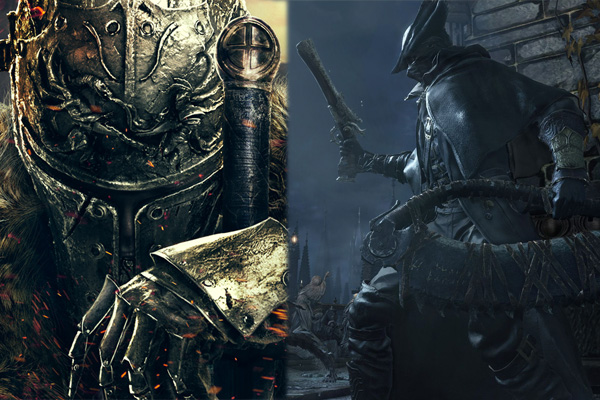
The Souls series of games, and now Bloodborne to a similar extent, don't necessarily have the most complicated or ridiculous plot around like other entries on this list. However, they do deserve their place here because of the way that the plot is presented.
Theres very little actual exposition in the games, and it's very much up to the player to find and fit together the nuggets of information that they can draw from the world around them. Even then, information isn't exactly easy to come by, and when it is found most of it is open to interpretation. Dialogue, the few cutscenes that there are, even descriptions of items you find in game need to be thoroughly examined if you want to make any sort of sense of whats going on.
A different sort of complicated, but no less difficult to comprehend, how much you understand about the Souls universe depends entirely on how much you want to pore over the minimal snippets of data available to you.
8. Indigo Prophecy/Fahrenheit

Indigo Prophecys plot is somewhat infamous within gaming circles, and not for good reasons. On one hand, the first half of the game is actually really immersive theres a murder mystery to be solved, with interesting and realistic characters, an unnerving atmosphere and a protagonist (and by extension, the player) seemingly succumbing to the dangers of failing mental health.
On the other hand, however, the second half of the plot is (to put it mildly) a bit different, and youd be forgiven for thinking youd stumbled into an episode of DragonBall Z. From nowhere, the game suddenly introduces an ancient mystical cult and a child who may or may not be the reincarnation of the Messiah - all as the protagonist pulls previously-undiscovered psychic powers from where the sun don't shine.
Just for good measure, theres also an ancient Mayan flying around, for no particularly well-explored reason other than 'let's have a random rooftop fight'. Even though Prophecy is almost the poster child for ridiculous plot progression, it's still a pretty good game, despite it being one of David Cages more trippy ventures into the industry.
7. Bioshock Infinite

Bioshock Infinite was one of those games that divided people right down the middle; some people absolutely loved it, others absolutely hated it. One thing that people do agree on, though, is that the plot is very complicated. Without going into the nitty gritty science behind it, theres a lot of talk about the Multiverse, a theory in quantum mechanics in which every single outcome of every single event ever to happen causes a branch in time and space, leading to an infinite number of universes.
If that doesnt sound mind-bending enough, this includes a universe where Hitler won World War 2, as well as a universe where you put your left shoe on first this morning rather than your right - y'know, all the changes, from big to small. These parallel universes are a key element of Bioshock Infinite and that leads to a whole host of confusing circumstances, as you find universes where youre already dead, amongst other crazy things. But the ending is where it starts to get really weird, and without wanting to spoil too much, it will leave you questioning your own reality.
After all this, there are still audio logs to find which provide more - but not all - information that you have to process. It's virtually impossible to grasp even after playing it a few times, let alone on the first playthrough, so good luck if you attempt to explain it in the comments below!
6. The Legacy Of Kain
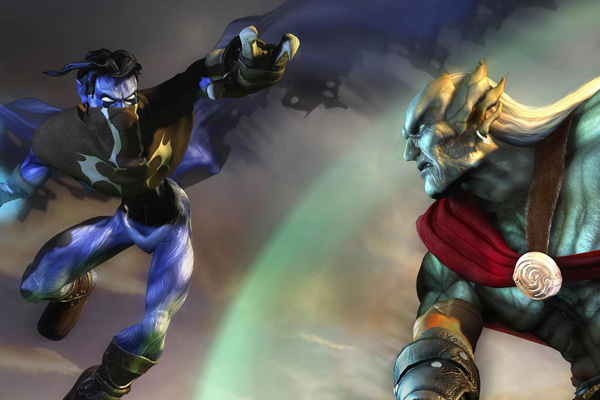
On the surface, Legacy of Kain appears to be a pretty straightforward story; a vampire lord wants to restore his true destiny, as well as his sons, in order to save the world. Simple. However, dig even a little deeper under that and theres a world of bewilderment awaiting you.
As youd expect from a gothic sort of setting, there are vampires, demons and other creatures of the night lying about. What you might not expect is everything else: the gods and false gods, the time travel (naturally) which leads to a bunch of paradoxes that by and large never get resolved, the memory loss - and the resurrections. Thats not even mentioning the various baffling debates the game conducts about free will versus destiny, which is a running theme throughout.
All in all, it's more of a philosophy lecture than a form of entertainment - complete with a test at the end. Despite all this, the original Legacy is still fondly remembered; just be prepared to feel very stupid for a lot of it.
5. Final Fantasy XIII (And Its Sequels)
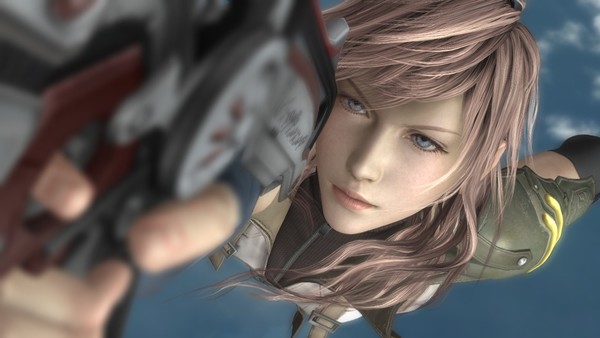
It's a given that Final Fantasy games have grand and elaborate storylines thats what sets them apart from other games in the genre. However, Final Fantasy XIII and its sequels really do take the cake in this department.
Throwing you in at the deep end right from the get-go, XIII immediately starts spewing out lore terms (FalCie, anyone?) in abundance, so anybody thats even slightly unfamiliar with the universe needs to start learning a new language before they can begin to understand the significance of anything thats happening. Even when things do start happening, nothing becomes any clearer, as Eidolons (whatever they are) and allies come and go - and so do realities - because of course theres a bunch of time-travel and dimension-hopping involved later to confuse matters further, or it just wouldnt be as fun otherwise.
Theres just so much to take in, and everything is linked intricately together (or at least it seems to be, it's difficult to tell) it's actually quite a daunting prospect to be able to figure it all out by yourself. The Final Fantasy XIII games are probably the most difficult to understand in the series, and that is saying a lot coming from a collection that contains Final Fantasy VII.
4. Chrono Cross
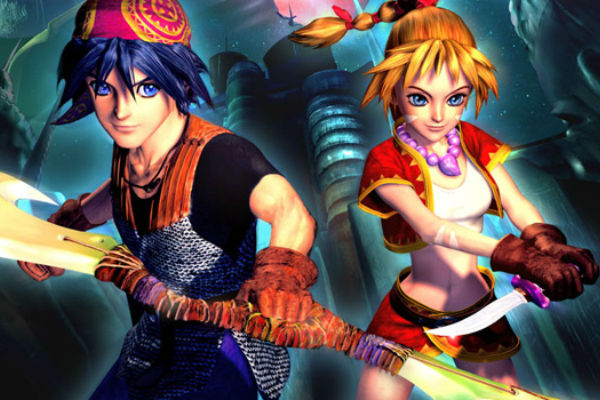
Chrono Cross is the sequel to the much-loved Chrono Trigger, one of Squares most critically-successful titles, as well as one of the best RPGs ever produced. Sadly, its successor never quite hit the same heights, thanks in part to its mind-bending trainwreck of a plot. Well, maybe plot is a bit generous. Chrono Cross plays around with alternative realities and dimensions, as well as a huge cast of playable characters (over 40 of them) including dragons, aliens, robots, a turnip, a voodoo doll and a luchador.
I am not making this up. Most of these guys arent particularly relevant to the overarching story but have expansive, sprawling backstories regardless, just because they can. All of this makes for a stupidly complicated plot, where you don't know whats going on or why at any given time, or whether youre about to suddenly switch viewpoints to someone totally different and seemingly unrelated.
This happens several times, and it never gets any easier to follow. Even the developers must have thought so, because they had program in ghost children to explicitly explain what was going on right before the final boss. It's just a shame that the players brain had probably melted before then.
3. Xenosaga Series
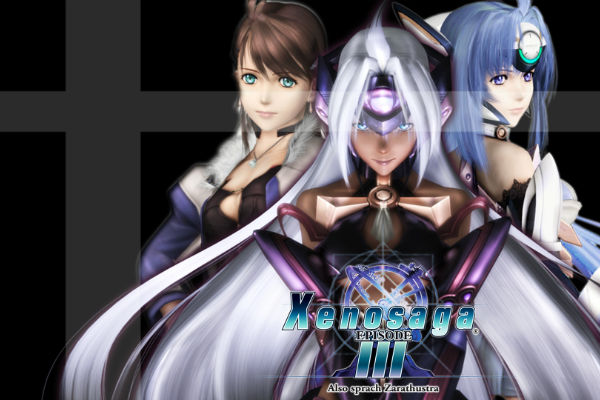
Theres something about Japanese games and craziness that goes hand in hand. The Xenosaga series is a beautiful example of this, being a total cluster-fruitcake of a plot. Things don't exactly get off to a flying start: in the far future, it turns out that humans have lost the Earth. Not lost as in been invaded humanity literally cannot find their home planet, and it's been wiped off the star charts.
Start as you mean to go on, apparently. Things don't get much better with the introduction of KOS-MOS, a bio-robot who apparently fluctuates between good and evil with the movement of the tides; evil invisible aliens who are trying to exterminate humans for no particular reason; a scientist breeding artificial humans to be super-weapons, ancient artefacts, giant robots, the evil Space Pope and the not-Robocop who wants to be more Robo and less Cop.
Oh, and all of this is all goes back to Jesus Christ and Mary Magdalene from the original Earth (which humanity can't find, remember) because... well, thats obvious, isn't it? There are enough ideas for about twelve different stories all crammed into this one series, which is admirable in its own right, but that doesnt make it any more comprehensible.
2. Metal Gear Series
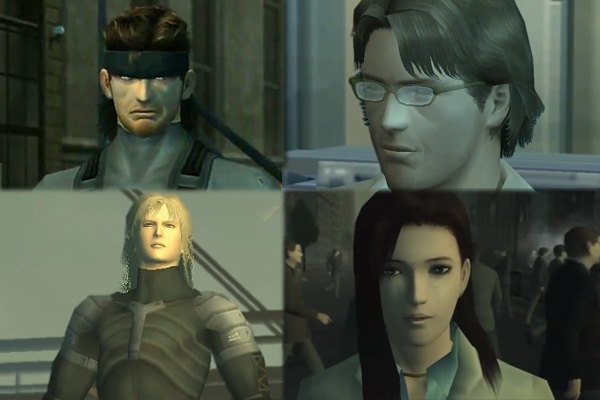
Hideo Kojima has always been the master of the mind-screw and whether you think he's a genius or not largely depends on whether or not youre a fan of the Metal Gear series. The first game was pretty self-contained, but the same cannot be said for the myriad of sequels, prequels and other -equels in the franchise.
Sons of Liberty in particular threw fans for a complete loop when the protagonist turned out to be Raiden rather than Snake, and the following conspiracies created by the Patriots and their far-reaching revelations made for utter chaos. Theres more of the same in subsequent games, with double and triple-crosses a thing of the norm, talking ghost-arms, clones, supernatural soldiers and nuclear warfare, as well as several different protagonists at different points in the series, each basically the same but with different motivations and different backstories. By the time you reach the final game, youll need a notebook just to keep up, and with MGS V only really adding to the confusion, it's time to get that out again to run through one more time.
It isn't possible to talk about complicated plots without mentioning Metal Gear, and even staunch defenders of the series won't deny that maybe, just maybe, our old pal Hideo could make things a little bit clearer next time.
1. Kingdom Hearts Series

When Tetsuya Nomura, the mastermind behind Kingdom Hearts, was asked what he thought the most important part of creating a story was, he replied by saying Making it surprising.
That fact alone encapsulates everything about the sprawling, twisting, infamously complex plot running throughout - one that thinks the best way to answer a question is by asking six more questions to distract you. True to his word, there is certainly no shortage of surprises in Kingdom Hearts. In fact, there are so many, it's a surprise in itself when something goes the way you expect. You constantly have to be on your toes, waiting for the next revelation; and then you have the cast of characters who almost universally have clones of their darker halves, or are clones themselves of someone else - or have half their hearts concealed in other people for protection so they arent actually technically themselves.
Add to that many different spin-offs across a whole host of different platforms, each one integral to the overarching plot, and you have a vast, intricate tangled web of plot threads, each of which is intricately linked to every other thread. It takes a lot of effort to even come close to understanding these games, and with KH3 on the near horizon the surprises are sure to continue long into the future.
--
Are there any of these crazy plots you can actually explain, and which game story of your own have you given up trying to comprehend? Let us know in the comments!