10 Video Games That Only Get Better With Age
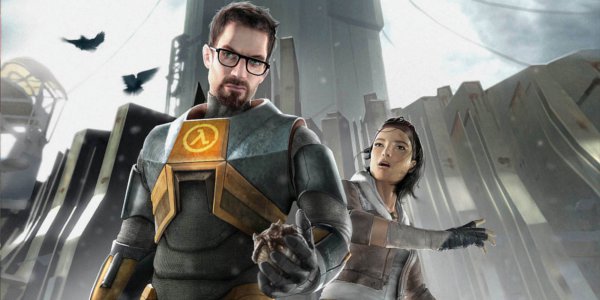
Half-Life-2 As a kid in elementary school playing Nintendo for countless hours in the 1980s, I never imagined that it would actually happen, but it has: video games have hit the big time. Gaming and gaming culture have reached a level of public consciousness that is now shared by film, music, and literature. Video games are seemingly everywhere nowadays - on people's smart phones in hundreds of millions of homes worldwide, on T-shirts, in the media, and even in university classrooms. They've been praised, criticized, and analyzed from every angle, and as this relatively young medium of entertainment continues to mature, so does its place in history. With video games evolving at a dizzying, yet exciting pace, the need to preserve and appreciate gaming's rich history becomes more and more apparent. An exhibit at the Smithsonian, documentary feature films, and an increasingly large number of books on the subject are solid testaments to gaming's important role in culture over the last 40 years. Yet when looking at the history of video games on an individual, game-by-game level, there is a key trait that separates them from their peers in the film and music world. Video games, for the most part, don't age very well. Movies have generally followed the same formula of creation since their inception - actors acting in front of a camera with a director calling the shots. Music has followed similar suit since the advent of recorded sounds, and books have been collections of words and sentences on paper for thousands of years. Innovations such as computer-generated special effects, word processing software, and digital recording equipment have allowed practitioners of these mediums to add new ingredients to the pot, but at the end of the day, the process of cooking the meal really hasn't radically changed all that much. Video games, however, are another story. Video games are a 100% technology-driven medium. Developers of video games can only create within the constraints that the hardware allows them to. With computer technology evolving at a speed so fast that it is actually difficult to comprehend, a game that pushed the limits of what video games can do can actually be outdated within a couple years of its release. It is a sad, but inevitable, reality of our beloved hobby. While old movies, books, and albums are often products of their time from a cultural perspective, old video games have to deal with being products of their time from both a cultural and technological perspective. Every once in a while, though, something unusual and special happens. A game is created that seems to defy age and transcends its technological limitations into something that is truly timeless. These games strike a unique balance between presentation, gameplay and mechanics that just hits all the right notes, and forms an experience so pure and enjoyable, that it never gets old. These games continue to be played by successive generations of gamers long after their release, as well as continuing to influence the design of modern games. Here are 10 games, in no particular order, that have broken free of the limitations of their medium, and continue to age as gracefully as a nice Bordeaux.

10. Chrono Trigger

http://www.youtube.com/watch?v=Kfm2QtA6IiM Along with side-scrolling platformers, the classic sprite-based JRPG's (Japanese Role Playing Games) seem to be one of the more age-proof genres of video games. The formula is tried and true, which typically includes a strong focus on narrative, management of a party of characters, and some sort of variation of turn-based combat. From some of the earliest JRPG's on the orignal Famicom/NES, right up through recent releases like Xenoblade Chronicles and Ni No Kuni, these games have struck a chord with gamers worldwide, particularly those that grew up with Super Famicoms and Playstations in their homes. Yet of all the great RPG's that came out of Japan in that glorious era that was the 1990's, perhaps none is more beloved and timeless than Chrono Trigger. Pick up Chrono Trigger today on the multitude of platforms it's available for, and it won't be long before you realize why this is. You are immediately pulled in to a fascinating tale involving a charismatic cast of characters that are surprisingly well-written and developed. You become emotionally invested in these characters' well-being, an astonishing feat considering that this was well before the days of facial animations and voice acting in games. The game's time travel mechanic is a wholly original and brilliant feat. You were able to explore the main continent on the back of a pterodactyl in prehistoric times, in decimated undergrounds of the distant, post-apocalyptic future, and many points in between. Despite the game's main narrative following a somewhat linear path, this ability to travel through time, as well as the ability to pick up side quests in each era, gave the game a sense of openness and freedom that separated it from other JRPG's at the time. Perhaps what makes Chrono Trigger stand out above all else is its incredibly deep and exciting battle system. While you eventually amass a group of playable characters, you can only play with three at a time. Each character learns special abilities called Techs, and they can be combined with other characters' Techs in battle to create unique special attacks, some which do more damage to certain enemies/bosses than others. The amount of potential for battle tactics is seemingly limitless, especially once you have a full roster of high level characters to choose from, and it will keep you constantly tinkering with your lineups in between battles. Instead of random encounters, enemies appear in the overworld, allowing you to avoid fighting if you so choose. You'll spend very little, if any, time level-grinding your characters, as the game is wonderfully balanced. The beautiful 16-bit sprite graphics, as well as a soundtrack that easily ranks among the best ever created in the history of video games, are just icing on the cake. Chrono Trigger is a game for the ages that plays as well today as it did back in 1995. And with all the platforms it's available on (I personally recommend downloading it from Nintendo's Virtual Console), there is no excuse not to play this gem.

9. Super Metroid

http://www.youtube.com/watch?v=ls5uo4xidwQ Metroid came out of nowhere in 1987 and absolutely rocked my young brain in a way that no other game had up to that point. Unlike the other platformers I was devouring at the time, Metroid was non-linear, open, and extremely creepy. I spent hours upon hours exploring the corridors of Zebes, feverishly drawing maps on the graph paper that my father was using in his engineering courses. I spent more time with Metroid than pretty much every other game in my collection. By the time the 90's rolled around, the 16-bit era taking off, and I had put my NES away in favor of the greener pastures that were the Sega Genesis and the Super Nintendo, and the Metroid name had become nothing more than a fond, nostalgic memory. Then all of a sudden, the heavens opened up, and down came Super Metroid. Super Metroid was, and remains to this day, the definitive example how to evolve a gaming franchise without taking away anything that made it special in the first place. The game world was bigger and filled with more secrets than ever before. The atmosphere was even more haunting and claustrophobic. New weapons and enemies were spread all across the map. Bosses were huge, and battling them were epic, unforgettable experiences. The graphics were amazing and varied, giving each area a distinct feel. The soundtrack fit and enhanced the game's atmosphere perhaps more than any other soundtrack ever had up to that point. The game felt and controlled perfectly. It was an absolute masterpiece. And it still is. Super Metroid remains delightfully playable today. The creepy environments, stellar soundtrack, and meticulously constructed game world have not aged one bit. The open-ended nature of the game, as well as the tight, responsive controls that seemingly all first party Nintendo games were known for, have transitioned well into the era of modern gaming. The game's influence has been particularly well-represented in the exploding indie scene in games such as Shadow Complex, Outland and Insanely Twisted Shadow Planet. If you've yet to play Super Metroid, be sure to give it a try. It is likely that you'll be surprised as to how much of its qualities you'll see in today's modern games.

8. Ico

http://www.youtube.com/watch?v=A-zXhIBO27k Ico released to hardly any fanfare back in the early days of the PlayStation 2. Gamers who spent some time playing the game upon its release were intrigued by this minimalist, mysterious puzzle/adventure game, myself included. But admittedly, it is a game that may have gone over many of our heads, despite the positive reviews the game received in the media upon its release. Looking back, this may have to do with the same affliction that affects a select number of video games every so often - Ico was ahead of it's time. The evolution of video games as art in recent years has allowed for a reevaluation of Ico, seemingly bringing a greater level of widespread respect to the game. The core of the game involves the relationship between two characters, the player-controlled boy named Ico, who has horns growing out of his head, and the girl, mysterious and ghostly Yorda. Ico must guide Yorda out of a huge, seemingly abandoned castle while occasionally having to protect her from sinister beings, whose sole purpose is to violently drag Yorda underground through dark portals. The game succeeds in transplanting the strong emotional bond between the two characters into the player, and as the game unfolds, the emotional attachment becomes stronger and stronger. By the end of the game, if the game affects you like it is meant to, you feel a strong sense of personal responsibility towards Yorda, and the game's emotional climax is extremely powerful, to say the least. We've recently seen a flood of excellent games that have taken this concept of instilling powerful, personal emotional experiences alongside the core game mechanics, and have found great success. Games such as Journey, The Unfinished Swan, and even Telltale's The Walking Dead all owe a debt of gratitude to Ico for it's innovations. Best of all, aside from being a powerful emotional experience, Ico is an excellent-playing game as well. The huge castle is a marvel of video game level design. The environmental puzzles that must be traversed recall the brilliance of the old point n click adventure games of the 90's, as well as the dungeons from from Nintendo's The Legend of Zelda franchise. It is a short but challenging game, and its minimalist design and simple controls have allowed the game to age gracefully. Copies for the PS2 are rare and can be pricey, but thankfully the game was recently re-released in a beautiful, new high definition remaster along with the subsequent game by the same developers, Shadow of the Colossus. Shadow of the Colossus, a similarly emotional roller coaster of a game, was much more popular and a greater commercial success than it's predecessor, but it is the opinion of this author that Ico remains the more timeless, playable game today.

7. OutRun

http://www.youtube.com/watch?v=01xOv1FvZMI The oldest game on this list, OutRun is also the most simple one. However, after nearly three decades in existence, OutRun remains one of the most enjoyable arcade games ever made. Throw a coin into the machine next time you see one, and tell me that this isn't true. The smoothness at which the high-speed, pixelated graphics fly towards the screen still packs a thrilling rush, and the different songs that you can select to accompany your ride are perfect. But most importantly, OutRun is a game that just feels g00d. Control of the car is tight and responsive, and when you crash your car, it never feels unfair, even as the roads get narrower, more winding, and more congested the further in you get. OutRun is as close to arcade perfection as you can get, which probably explains why the game has continued to be a worldwide favorite after all these years. The game was ported many home consoles around the time it released, but none of them, not even developer Sega on their own home consoles, seemed able to capture the feel of the original arcade cabinets. As racing games continue to evolve into some of the the most detailed, complex, and photorealistic games in the entire medium of video games, it is a pleasant reminder to have OutRun to remind us of the pure essence of what makes video games so much fun.

6. Super Mario World

http://www.youtube.com/watch?v=naD6mNeHIsE Gamers LOVE to argue about Mario games. It's a testament to the geniuses at Nintendo that nearly every Mario game that has ever been made, from 1985's Super Mario Bros. right up through 2010's Super Mario Galaxy 2, can be in contention for the crown. Yet whenever I get that urge to revisit the classics from my childhood, more often than not, I almost always reach for Super Mario World. Nintendo was onto something when they created Super Mario Bros. 3 for the Famicom/NES. Giving the player the ability to navigate the overworld, discover secrets, and at times choose their own path forward, gave the game a sense of scope and freedom that the first two games lacked. SMB 3 became an instant classic and a favorite to many, many gamers of that era. However, when Super Mario World came packed in with the 16 bit powerhouse that was the Super Famicom/Super Nintendo, that is when the floodgates really opened. Super Mario World was like a fantasy come to life. It resembled SMB 3 in it's structure, but the world was so much bigger, brighter, and more colorful. The music was rich and layered in a way that no other game on any platform, including Sega's Mega Drive/Genesis, could match. The graphics were stunning, showing off the console's breathtaking scaling and rotation abilities that basically said, "Welcome to the Future". The game itself was as much of a step forward as the technology it showed off. The level design was superior than that of its predecessors. Mario's main power-up, the cape, never achieved the iconic status of SMB 3's raccoon tail, yet it was the most versatile and useful tool that had ever appeared in Mario's arsenal. Allowing for both more strategy in overcoming levels, as well as for more secrets to be hidden and discovered, the cape remains to this day among the best power-ups in Mario history. And then, there was your new companion, Yoshi, who ate turtle shells and spit them out in the form of his own unique power-ups. What more needs to be said? After Super Mario World, Mario moved on to become a pioneer of the 3D gaming revolution with Mario 64, and from that point on, Nintendo always seemed to throw their prime talent behind the 3D outings on subsequent consoles as well. Nintendo did attempt to recapture the Super Mario World magic with the New Super Mario Bros. series that has now spanned 4 platforms, but despite being very enjoyable games in their own right, the nostalgia feels fleeting. Super Mario World's beautiful colors still shine as brightly as they did in the early 1990's, and the soundtrack remains one of the best of the series. But ultimately, it is the game's eternal playability, and the enormous fun factor that accompanies it, that has not aged one bit, and retains Super Mario World's status as the ultimate Mario game for the ages.

5. Half Life 2

http://www.youtube.com/watch?v=UKA7JkV51Jw While some may say it's a bit too early to say that Half Life 2 is getting better with age, one thing is certain. The plethora of first person shooters that have released since the dawn of the seventh generation of consoles have only reinforced what an amazing game Half Life 2 is. Half Life 2 wasn't necessarily an innovative game. The credit for innovation has to go to its predecessor, 1998's Half Life, which changed the landscape of not only first person shooters, but of all video games. What Half Life 2 did do was take Half Life's formula, and refined and improved it in every way possible, resulting in the most thoughtful, meticulously-constructed first person shooter that had ever been made. What is truly surprising, and astonishing, is that nearly 10 years after its release, it arguably still holds this title. There has been no first person shooter released this generation who's level design has touched Half Life 2's. Think about how it felt waking up in City 17, and seeing the alien occupation going on around you, with people cowering in burnt out buildings while those towering Striders patrolled the streets. Entering the Ravenholm area suddenly turned Half Life 2 into a horror game, with some of the most tense action sequences ever seen in a video game. Other stages, like the massive bridge that tested your platforming skills as well as the strength of your stomach, and the beaches infested with antlions that you were soon able to harness and use against the Combine, only further serve to reinforce the brilliance of this game's design. The climax in the Citadel is a peerless work of sci-fi brilliance. From beginning to end, there is never a doubt that Half Life 2 was a labor of unadulterated love. The same went for the excellent storytelling, the memorable characters, the arsenal of gadgets (gravity gun - best weapon ever??), the clever puzzle segments, and the rock-solid gameplay. Being a 3D game that is nearly a decade old, don't expect Half Life 2's shooting and vehicle section controls to perform as well as shooters that have released in the last couple of years. With that said, Half Life 2's controls have somehow managed to hold up quite well today, and by no means should this game be missed by fans of first person shooters. Half Life 2's most enduring quality is it's extraordinary craft. It should be a textbook study for video game designers in creating tone, variety, and pacing in video games. A few first person shooters this generation have approached Half Life 2's brilliance - Bioshock with it's amazing environments and literary tinge, Far Cry 3 with it's all-enveloping open word and epic scope, and Call of Duty 4 with its epic cinematics all come to mind. Yet while these games may approach the summit of Mount Half Life 2, the majority of this generation's first person shooters are merely sitting in the shadow. Half Life 2 was, and still is, one of gaming's greatest moments.

4. Tetris

http://www.youtube.com/watch?v=yWEJ41vTqQE Casual gaming has arrived with a vengeance, and is here to stay whether we like it or not. Each day, the number of people on Earth that own some sort of smartphone or portable device grows, giving game makers the largest install base that this hobby has ever seen. As literally hundreds of casual games hit a wide variety of marketplaces on a daily basis, the role Tetris played in this seemingly unstoppable trend cannot be understated. Despite Tetris having been available previously on home computers, it was on Nintendo's classic GameBoy portable gaming system where the game sealed its legacy. Millions of people all over the world became addicted to the puzzler for its brain-teasing gameplay, which was simple to learn yet complex to master. Tetris may have not been the first "casual" game (whether it's a casual game at all can be debated) but it laid the foundation for the model that we are seeing today by embodying the three qualities that make these types of games succeed: It could be played in small doses. It was portable. It was addictive. Tetris and its catchy songs seem almost synonymous with Nintendo's little black and white console. To this day, Tetris remains one of the finest portable/casual games on the market, with core mechanics that have not aged one bit and remain as fun and addictive as they were almost 30 years ago. What is also interesting is how many of today's mobile games use the "clear the rows before space runs out" template that Tetris pioneered. Most likely, there is a device within an arm's reach of you that is capable acquiring and allowing you play Tetris within a matter of minutes. Oh yeah, did I mention playing Tetris makes you smarter?

3. Final Fantasy IV

http://www.youtube.com/watch?v=IT12DW2Fm9M Many of gaming's most celebrated franchises solidified their place in gamers' hearts during the 1990's, and of all these franchises, it is difficult to top the incredible breadth of gaming goodness that Square Soft delivered with their beloved Final Fantasy franchise. The original Final Fantasy had been out in Japan on the Famicom since 1987, but however, it didn't make it's way west until 1990. Over the course of the next decade, nine numbered entries in the main series, as well as a number of spin offs would be released on Nintendo's consoles as well as the Sony Playstation. Each game in the series was quite stylistically distinct from the one that came before, despite retaining certain sets of core features that bore the uniqueness of the Final Fantasy name. While Final Fantasy quickly became an influential series since its inception, it is a widely-accepted opinion that it is when the fourth game in the series was released that Final Fantasy truly became great. Releasing on the 16 bit Super Famicom, and later on the Super Nintendo (where it was renamed Final Fantasy II, as the real Final Fantasy II and III had never been released in the West, making it only the second game in the series to appear outside of Japan) Final Fantasy IV was a revelation. Never had a RPG on home consoles looked so good, sounded so good, and had such a large scope. The game introduced the Active Time Battle system, which was hugely influential, and each character was locked into a character class, forcing players to utilize strategy in the party-based battles like never before. Where Final Fantasy IV really stood out, though, was with its epic story, and it is Final Fantasy IV's story that keeps the game relevant and fresh today. Video games has never seen story like this. In the first 5 minutes of the game, you witness Cecil, Dark Knight of the Red Wings and the character you control throughout the entire game, slaughter a group of innocent villagers who are protecting a powerful crystal. It is a very poignant, shocking moment even today, but in 1991-1992, it was downright disturbing. These types of things didn't happen in video games up until that point. From that moment on, an epic tale of redemption unfolds over the next 60 or so hours that you spend with the game. Characters you grow to love are taken from you, sometimes violently. There are moments of deceit and treachery. But there are also moments of glory, laughter, and utter bliss. It is, quite simply, one of the greatest stories ever told in the medium. I remember very clearly, after beating the game for the first time, realizing that video games had changed as of that moment. They were now capable of so much more than they had ever been. The legacy of Final Fantasy IV has endured and is clearly evident throughout the world of gaming, as it is one of the most reissued and remade video games out there. Most recently, an excellent 3D remake appeared for the Nintendo DS in 2008 (see the trailer above), and 2011 brought an enhanced edition of the original sprite-based version to the Sony PSP, which can be downloaded from the PSN onto the Vita as well. Final Fantasy VII may be the most influential game in the series, and Final Fantasy VI may be the most beloved, but it is Final Fantasy IV that was the real game-changer, and remains one of the most playable games in the series to this day. It's not perfect. A bit of grinding may be required (don't even try to fight the final boss unless your at, or close to, level 60!) and some of the more minor scripted moments in the game go on a little longer than they should, but it's a small price to pay for the great experience that comes with this game. Cecil and company's journey to save the world, as well as his soul, is a tale for the ages.

2. Castlevania: Symphony Of The Night

http://www.youtube.com/watch?v=S8dUbR597C0 "Metroidvania" is the term for a sub-genre of 2D platforming games that is quite often heard around the gaming community. The "Metroid" portion of the term (surprise surprise) indicates a game that, like Metroid and Super Metroid, has a series of interconnected areas that give the player a sense of freedom by allowing them to explore in a non-linear fashion. Also, many parts of these in-game areas are inaccessible until a certain item, weapon or ability is gained, encouraging backtracking and thorough exploration. The "Vania" portion of this term comes from Castlevania: Symphony of the Night, the first, and still the best Metroidvania game of all time. Castlevania: SotN was a unique game. For one thing, this was a 2D side-scrolling game releasing in 1997. This was in the midst of the 3D gaming revolution, and 2D platformers were not exactly a hot commodity at the time, hence the relatively timid commercial reception the game received. Secondly, this was a different style of Castlevaina game. The layout of the castle you are exploring was much more open-ended and non-linear, resembling the structure of Super Metroid as opposed to that of any previous, more linear Castlevania game. And thirdly, the game added elements of action RPG's into the mix, allowing you to level up your abilities, get stronger weapons and armor, cast magic, and even shape shift. The game did all of this while still maintaining, and even improving upon, the near-flawless gameplay of the previous games in the Castlevania series. The end result was Symphony of the Night, one of the most influential, timeless, and greatest video games ever created. Castlevania: SotN is a shining example of a game that gets better with age. The massive castle and its surroundings are still very easy on the eyes. The soundtrack by conductor Michiru Yamane, who also scored the amazing music for the Suikoden games on PS2, remains one of the best soundtracks in all of gaming (notice how this is a common trend for most of the games on this list?). The gameplay hasn't aged a bit. Exploring that impeccably-designed castle with Alucard and his wide range of weapons and abilities is as joyous as it's ever been. Even the game's cheesy cinematic sequences still retain quite a bit of charm - this was the early days of voice-acting in games, after all. Disc copies of even the Greatest Hits re-release on Playstation are rare and fetch a very high price. Luckly, the game is available on the PSN and XBLA. It was my very first digital purchase upon entering the PS360 era, and continues to be a game I replay every couple of years. You really can't go wrong with any of the post-Symphony of the Night 2D Castlevania games, especially the excellent trilogies on the GameBoy Advance and the Nintendo DS. But Symphony of the Night is the granddaddy of them all, and remains well worth your time.

1. The Legend of Zelda: A Link To The Past

http://www.youtube.com/watch?v=gG2V8roVv9o After the radical departure that was Zelda II: The Adventure of Link, early screenshots from the next game in the franchise indicated that Nintendo was returning to the spirit of the original game for its debut on the Super Famicom/Super Nintendo. Expectations were obviously high for the game, but what Nintendo delivered was far and beyond even the highest of those. A Link to the Past felt like suddenly stepping into a portal and being transported into the colorful land of Oz. From the very beginning, with that rain beating down on Link's house as he's awakened by a strange woman's voice in his head, the game set the tone for something epic, and boy did it deliver. A Link to the Past is one of the most flawlessly-executed games ever made. You can try to nitpick the game and find flaws, but you'll have a very difficult time. Everything about the game just seems to fall into place. The graphics are colorful and beautiful. The music, in typical Zelda fashion, is majestic. The land of Hyrule is vast, diverse, and full of mysteries to be uncovered. And just when you think you've uncovered the entire land, you find out that there is a whole other Hyrule that must be explored - The Dark World, a dark doppelganger to the colorful land you'd become accustomed to. It is in this dark world that the game's true strength is on display, and that is in the unabashed creativity of the puzzles. In a series that is known for having some of the best mind-twisting puzzles in the entire industry, A Link to the Past's still stands as arguably the best in the series. Aside from the standard dungeon puzzles, many of the game's most mind-bending moments involved manipulating objects in one world, which would transform them in the other. A magic mirror allowed you to transport between the two worlds, and created some of the most brilliant and complex scenarios the series has ever seen. A pure stroke of genius. The game library of the Super Famicom/Super Nintendo contains many of the most timeless, eternally playable games that have ever been created. The fact that A Link to the Past often tops lists of the best games on this console says a lot. After A Link to the Past, the franchise would go on to change gaming forever with Ocarina of Time. It may be an eternal battle among gamers as to which of these two is the best Zelda game, but it's hard to argue against the notion that A Link to the Past remains the more age-proof game. It hasn't lost an ounce of it's charm, and still plays better than even the newer top/down Zelda titles that have released on Nintendo's portable devices, in this author's opinion. Rumors have been swirling about a remake of A Link to the Past showing up on the 3DS, including a statement from Shigeru Miyamoto himself. Regardless of how you play it, give it a whirl sometime soon, whether you've played the game before or not. You'll be treated to not only a sublime example of game design, but also to one of the most mysterious, challenging, and enjoyable experiences gaming has ever produced. A video game that gets better with age is something of an anomaly. I should make it clear that by no means do I feel that a video game that hasn't aged well is a bad game. These works are at the mercy of the technology that creates them, and due to this, they shouldn't age well by nature. For that reason alone, it is even more necessary to acknowledge these games that do age well, and make sure successive generations of gamers are aware of them. The part they play in the rich history of gaming as each year passes is an important one. So be sure to give these games a try, especially if you haven't played them before. If you have played them before, take it from me - the feeling you get when you realize your nostalgia wasn't due to rose-colored glasses is a nice one. Cheers, friends, and happy gaming! Which games do you think only get better with age? Let us know in the comments section below.

 
Posted On: 
Contributor

Lifelong resident of Chicagoland and lifelong gamer. Video games are my passion. Also love reading, watching films, playing /listening to music, and traveling whenever I can.