10 Video Games That Reused Enemies (And Made Them WORSE)
Basilisks could kill you with a single spit of smoke in Dark Souls - and they were STILL useless.

Boss battles are a cathartical part of video games.
There's an indelible feeling that comes with playing them; the coup de grace that you've spent a sizeable chunk of a game working your way towards. Whether fighting a brute of a humanoid, a horde of security drones, or your average Joe, boss battles are a genuine make-or-break facet of gaming.
So often, though, developers will bring a boss back. These are usually discernible budget-cutting motifs to save a few notes but hey, sometimes the boss-in-question is actually better the second or third - or fourth... - time around. We recently detailed precisely that.
But what about on the other side of the fence?
The recycling of video game bosses can be tremendously repulsive, either because they've been reused SO much, or because a boss becomes a laughing stock of their former selves.
The Final Fantasy series is notorious for this, as for every delectable, recycled incarnation of Final Fantasy VIII's Seifer, there's the first form of the Emperor from Final Fantasy II, who returns later in the game to a whimpered fanfare, less potent and powerful than he once was.
He's not the only one…
10. Sahelanthropus (Metal Gear Solid V: The Phantom Pain)

Sahelanthropus is the main boss in The Phantom Pain, the fifth instalment in the Metal Gear Solid franchise. The series’ most potent boss, Sahelanthropus displayed a deft presentation with bipedal limbs that previous Metal Gear models lacked, despite Sahelanthropus chronologically coming before them.
Hideo Kojima's out-of-order errors aside, Sahelanthropus’ first appearance was largely revered as a genuinely difficult boss battle.
At first, players had to weave around the fighting area, evading Sehalenthropus’ assorted attacks for several agonising minutes as they worked out a plan of attack. Your best bet was to gun it down from a rigged-out helicopter as, naturally, this gave Eli a better vantage point.
If you didn’t realise this, though, the beefed-up tank proved an arduous task for Metal Gear Solid V players.
By the time Sahelanthropus returned in the final mission, its intimidation factor was massively depleted, given that you’d already defeated it, and the manner in which to do so again was far more obvious: Throw everything you’ve got at it, making the process a lot simpler.
It’s this Sehalanthropus appearance that gives Metal Gear Solid V the tainted moniker of being a great video game ruined by its calamitous third act; a terrible final mission in every degree.
9. Bloater (The Last Of Us)

The Last of Us’ Bloaters are The Infected at their most dangerous, with their mutilated build acting almost as a shield, and are thus routinely difficult to kill.
The first Bloater you encounter - in the gymnasium during chapter four, Bill's Road - is a juggernaut compared to its successors, being tougher to incapacitate and can withstand plenty of shotgun shells and molotov cocktails, providing Joel with one of his toughest challenges of the entire award-winning title.
You'll notice that every Bloater after this has a strangely reduced health bar, in spite of the creatures being physically identical to each other, which itself, naturally, makes it easier to slay. You've also got a more extensive dispensary of weaponry at your disposal that, although not unlimited, is enough to make the intended intimidation of each subsequent Bloater ineffective to your progress.
Bloaters were clearly designed to provide a daunting challenge on your Last of Us quest and Naughty Dog did a fabulous job of conveying this the first time. There's nothing overtly daunting about a Bloater which you can kill so easily and so rapidly.
A shame, really, as they're one of the franchise's most dynamic enemies.
8. Pyramid Head (Silent Hill 2)

There is an almost eternal list of synonyms that can be used to describe Pyramid Head from the Silent Hill series: powerful, dominant, robust, capable, and Oh my God, will you just die already?!
A long-standing source of acrimony, Pyramid Head's appearance in Silent Hill 2 is perhaps its most rage-inducing. Implemented as a weapon of psychological torment for protagonist James Sunderland, you're tasked with fighting the egregious enemy a number of times.
At first, it's portrayed as a durable creature, as you're made to shoot it a number of times within a time limit, though it'll leave you alone afterwards. This bizarre encounter leaves you on the edge of your seat in anticipation of its return, made to feel like you'll eventually finish what you started.
Your second and third encounters with it involve running down a hallway and around a maze, unable to kill it as it needs to reappear later, but as the biggest slap in the face, Pyramid Head kills itself! It renders a large portion of the game inconsequential, robbing you of what could've been an iconic moment.
Pyramid Head battles are usually notorious for being almost un-winnable; so formidable are the creatures, but this was notorious for entirely different reasons.
7. The Icon Of Sin (Doom II)

Doom is another franchise renowned for its recycling of assets, dating back as far as December 1993's debut; even in the most recent release, Doom Eternal, the Doom Hunter is first introduced early in the story as a boss but after you kill it, two more come out immediately.
It was in Doom II, though, that the developers made their most flagrant error.
The goat-like Icon of Sin serves as the final boss of the base game, having previously been able to spawn a glut of demonic monsters. Players must shoot what appears to be the severed head of John Romero impaled on a pole to finish the level and, thus, the game.
The Icon of Sin returns at the end of map fifteen of Master Levels, a Doom II expansion pack. Due to the diminutive size of the map's walls, the once-fearsome monster is now much easier to kill, given that you're in a more convenient spot to target its weak point.
It's a shame that id Software felt the need to bring The Icon of Sin back for a second go-around as, in the base game, it was a genuinely decent and believable final boss who provided a wholly convincing battle that rounded off Doom II's story brilliantly.
6. Eddie (Raging Justice)
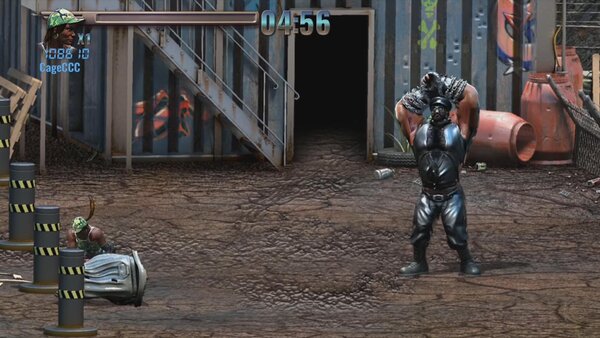
Released in May 2015 straight out of May 1990-something, Raging Justice focused on a group of do-gooding individuals keen to restore justice to a city. The Streets of Rage-like title was a solid game worth picking up, but it, too, fell victim to this egregious trope.
The game relies on this notion throughout, but it's Eddie, the colossal brute from the junkyard level, who catches your eye. The globular beast requires a ton of damage to be beaten, dropping only a smidge of his health with each blow. Coupled with the arrival of his cronies and the infrequent dropping of steel on your head, it's an excruciatingly tough level to pass that establishes Eddie as a formidable boss.
The same cannot be said for when Eddie later returns as, in the circus-themed level, he's now a one-shot-kill, eradicating the sinister presence he once oozed. There was no explanation for this, either. He didn't come into the level with a reduced health bar, nor did he lack any of his original abilities.
Given his bulbous appearance, it wouldn't have been a stretch for Eddie to remain one of the staunchest bosses in the game.
5. Lizalfos (The Legend Of Zelda: Ocarina Of Time)
The Legend of Zelda is a franchise infamous for relying upon the same enemies throughout a single release.
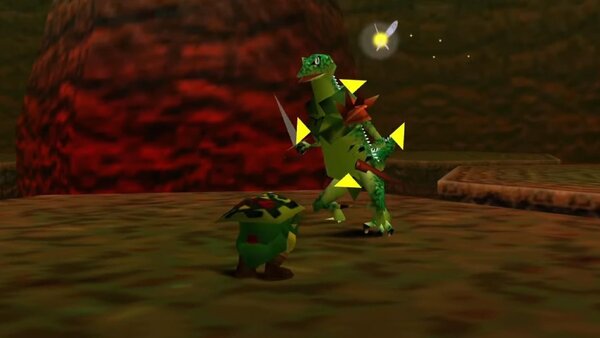
In Ocarina of Time, it's the Lizalfos' turn. Debuting in The Adventure of Link, the reptilian warriors are tasked with slaying Link, proving unsuccessful.
When they reappear in Ocarina of Time, they've been promoted to mini-boss status, now more agile and brandishing swords, coming with more of an aggressive aura that should make Link - and the player - fight more cautiously.
Battling in Dodongo's Cavern in pairs of two, the Lizalfos tactically switch roles when one takes sufficient damage, meaning Link isn't fighting all of them at once, but crucially meaning the fight is more time-consuming than others.
The first time, anyway.
When they return in the Spirit Temple to fight adult Link, the Lizalfos have been demoted back to regular enemies, and can be taken out in just two hits if Link opts for the Biggoron Sword.
Their authoritarian presence evaporated, granted adult Link is stronger than child Link, but it's still a nefarious error of judgement from Nintendo.
4. El Gigante (Resident Evil 4)
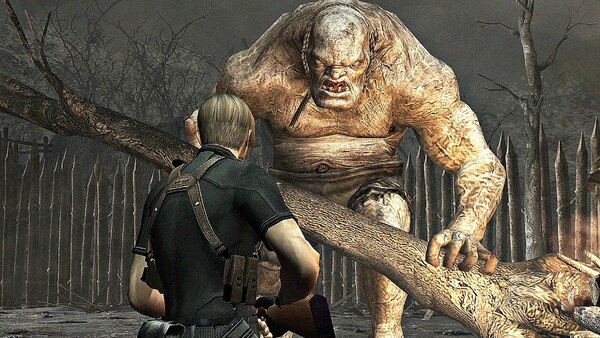
El Gigante, a creature with a more imposing stature than the ill-fated WWE herculean Giant Gonzales, was introduced in Resident Evil 4 as an outrageously forceful mutated giant.
When Leon first encounters him, El Gigante can be best beaten by saving a dog from a bear trap earlier on. Although Gigante is an all-powerful brute, his lack of basic intelligence means he's constantly distracted by the charming pup, allowing Leon to duck out of harm's way on the regular. Fail to save the dog, though, and Leon will be in for one of his toughest challenges opposite this menacing meatball.
Facing two of these brutes at once (one being a normal El Gigante, the other being a Grazed type) in Chapter Four, Leon will find that Los Gigantes have now become pushovers.
With enough ammunition to handle more than one at a time, the player will fly through this meeting with ease, particularly when you factor in having the ability to lure them over a trap door that causes one to be eliminated immediately.
Be careful here, though. Straying too close to the lava pit as you knock one in will see El Gigante grab Leon's foot, dragging him to his death alongside.
3. The Tripod (Dead Space 2)
Dead Space 2 is known for a lot of things. It's an objectively well-put-together survival horror that continues the journey of Isaac Clarke, following Dead Space: Ignition, encountering a plethora of challenging foes throughout.
The Tripod being one of the most tenacious.
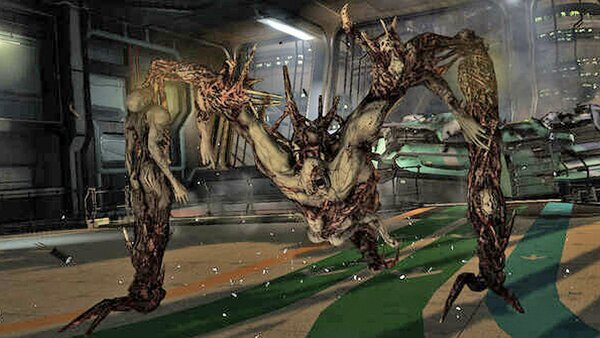
First introduced at the crux of chapter one, the stealthy, long-armed Necromorph is nearly invincible. Able to repel a significant amount of damage, Isaac will take a few minutes before he's able to logistically conquer the brute, given the enemy's elongated limbs can grab you from virtually anywhere.
Shooting Tripod's arms is a proven method, but even then, it's an arduous task to come out on top first time. Still, this is part of what makes fighting this fun - that and the fact it's a game of strategy.
You must stay on the move, or else.
Further on, however, Isaac is able to thwart multiple Tripods at once, with one even running away. These Tripods are statistically no less robust than the original, fighting with the same abilities and with the same protruding wingspan, they just... don't go as hard.
Isaac hasn't grown in power, so why exactly this fight was much easier is a mystery.
2. Basilisks (Dark Souls)

Dark Souls is enamoured with the concept of returning bosses. Few in the latter titles are actually freshly-created creatures, instead being direct copies of previous characters or a slight variation. This can be fine - but then you see the Basilisks.
One of the franchise's most infuriatingly irritating bosses, the googly-eyed creatures have appeared in every Dark Souls game to date, and have caused the majority of stress-related incidents for players.
At first, they ambush you in swathes, obscuring your vision with a thick cloud of smoke that depletes your health bar so fast the words 'YOU DIED' appear almost immediately.
Later on, though? Make yourself a nice hot cup of tea, put your feet up, binge-watch that Netflix show you've been putting off, and come back later on. Your character will still be standing, because they become useless.
Basilisks' standard non-smoke attacks do very little damage and they can be killed quite easily - but this only makes them more infuriating. Why have these gluttonous frogs been able to kill you with one spray of smoke when they're able to be one-hit killed later on? Make it make sense, FromSoft!
1. Various (Elden Ring)
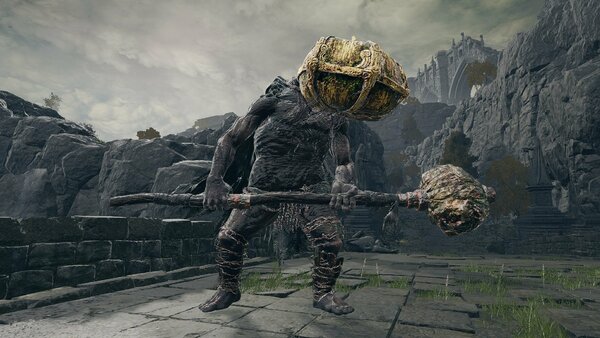
Elden Ring loves a good reused boss. Though these models may, at first, have traditional health bars across the screen and a unique battle arena, but you'll soon be doing a double take as they spawn as common enemies, now being nowhere near as strong.
Take the Pumpkin Heads. The boss version, Mad Pumpkin Heads, yields an impressive level of strength with assorted weapons, and although they're optional bosses, they're still worth a gander for the sake of defeating them. As a common enemy, though, they're known as Lesser Mad Pumpkin Heads, and are far less strong than their Mad counterparts, though they're able to summon spirits for aid.
Other common examples of this trope include the Stonedigger Trolls, the Guardian Golems, and the Scaly Misbegotten. The reusing of so many bosses wouldn't be an issue if it weren't for their constant presence. Having the bulk of common enemies be variants of past bosses strips them of a uniqueness that otherwise would've presented them in the best possible light.
Fighting the same models gets pretty tiring after 100+ hours.