10 Video Games You Didn't Realise Secretly Bombed
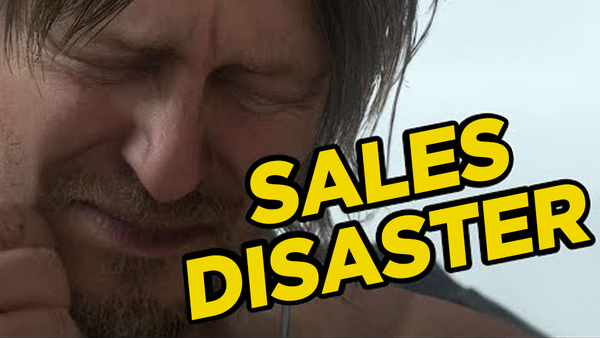
Death Stranding started strong and fell off a cliff.
Sadly not every great game can be a stonking commercial success too, and we're all familiar with the likes of Grim Fandango, Shenmue and Psychonauts - cult classic games that, despite receiving strong critical acclaim upon release, failed to break out where it mattered most.
But what about those games whose commercial difficulties were a little more low-key? These 10 games, each of them praised by critics, nevertheless released to quietly soft sales, all while many fans didn't even notice.
In many instances this is a case of the publisher either intentionally not reporting poor sales, or more daringly deciding to roll the dice on a sequel regardless of the mediocre sales, seeming to suggest that it actually sold just fine.
While few would erroneously hold these games up as storming sales hits, each nevertheless managed to (mostly) avoid the bad press associated with a poor launch, and so to all but the most eagle-eyed players, they seemed to be profitable. Oh, how wrong we all were...
10. The Legend Of Zelda: Skyward Sword

You'd be right to assume that The Legend of Zelda franchise was effectively commercially bulletproof, with the series having sold an estimated 109 million units across the last 30+ years.
But there's one major outlier, and that's 2011's Skyward Sword, which is not only the worst-selling 3D Zelda game of all time with a mere 3.67 million units shifted, but it's also one of the worst-selling mainline Zeldas in the series' history.
Many likely presumed that it sold well by sheer virtue of being a critically acclaimed Zelda game, yet Skyward Sword's commercial prospects were dented severely by both Nintendo requiring players to purchase the MotionPlus peripheral to play it, and releasing the game at the tail-end of the Wii's life.
Despite the Wii having an install base of around 95 million in 2011, Skyward Sword's sales were eclipsed by The Legend of Zelda: Breath of the Wild in just two months, despite releasing on the bomb that was the Wii U and the newly-launched Nintendo Switch simultaneously.
9. Batman: The Telltale Series
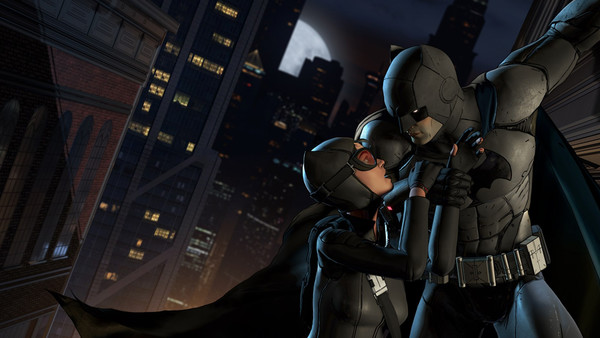
For many, many years, it was simply accepted that Telltale Games was too big and smart to fail.
Their The Walking Dead series was of course a stonking commercial hit, and considering the evidently low costs of producing their various episodic adventure games, it was a sure thing that they were all ranking in the dough hand-over-fist.
But with Telltale's shock closure in 2018, the company's dire financial straits were laid bare, revealing that The Walking Dead's first season and Minecraft: Story Mode were their only episodic titles to actually turn a profit.
Given that they had numerous critically acclaimed and high-profile releases over the years such as The Wolf Among Us and adaptations of name IP like Game of Thrones, Borderlands, and especially Batman, it was truly jaw dropping that they all flopped so thoroughly.
What proved particularly surprising was the revelation that Batman: The Telltale Series was reportedly one of Telltale's biggest flops, even with a hugely successful brand name and the clear ease with which the Dark Knight's detective antics could slot into the Telltale formula.
8. Control

Remedy's Control was one of 2019's best-reviewed games, to the extent of receiving a heap of Game of the Year nominations and being passionately championed by fans and critics in year-end discussions.
Despite its firm rep, however, the psychedelic action-adventure game failed to chart in the NPD Top 20 in its month of release, even being eclipsed by The Dark Pictures: Man of Medan, which released on the penultimate day of the month with decidedly average reviews.
Though Remedy claimed that Control didn't need gangbusters sales due to its modest €30 million budget - and being paid €9.49 million for Epic Games Store exclusivity probably didn't hurt - it's painfully obvious that the game was yet another critically acclaimed commercial disappointment for Remedy.
At least if the rumours about Control heading to Xbox Game Pass in the near-future are true, they should be able to mitigate their losses somewhat.
7. Resident Evil Remake

Capcom's 2002 remake of their survival horror classic Resident Evil remains one of the most acclaimed games ever released for the GameCube, and while its legacy endures as one of the best video game remakes in history, it was also a disappointing commercial dud during its original run.
The problem, inexorably, was the GameCube's low install base, with the hardware's lifetime sales topping out at a paltry 21.74 million, placing a severely low ceiling on the game's commercial prospects.
With just 1.42 million units sold, REmake was an acclaimed flop, which in conjunction with its follow-up Resident Evil Zero selling an even worse 1.25 million copies, prompted Capcom to take the franchise in a more action-centric direction for Resident Evil 4.
Though RE4 sold only 1.6 million units on the GameCube, it was quickly ported to the PS2 and eventually other platforms, ensuring it became solidly profitable.
There was at least a happy ending of-sorts for Resident Evil Remake, though, as it was itself ported to the Wii in 2008 and received an HD remaster in 2015, with the latter becoming Capcom's fastest-selling digital title in history.
Still, for a solid decade, the game's profits never even got close to reflecting its brilliance.
6. Wolfenstein II: The New Colossus

Though the Wolfenstein games have never been commercial juggernauts, there's been a fair assumption among fans that they routinely perform well within their loyal fanbase.
2014's Wolfenstein: The New Order seemed to reinvigorate player interest in the franchise after 2009's reboot flopped, and 2015's prequel Wolfenstein: The Old Blood also performed well on PS4 in particular.
There wasn't any reason to believe, then, that 2017's Wolfenstein II: The New Colossus would be anything but a commercial hit, especially after effusively positive reviews dropped.
But Bethesda made the extremely ill-advised decision to release the game the same day as both Super Mario Odyssey and Assassin's Creed Odyssey, and also just a week before Call of Duty: WWII. Needless to say, if most players had to axe one of these four games, the majority would pick Wolfenstein.
As such, The New Colossus tanked throughout holiday season with so much competition in its midst, and leaked sales data sadly seems to confirm that the game was indeed a poor seller across platforms.
At least Bethesda has already expressed their commitment to keeping the franchise alive, what with two spin-off games releasing since and the promise of a mainline sequel to come in the near-future.
5. Grand Theft Auto: Chinatown Wars
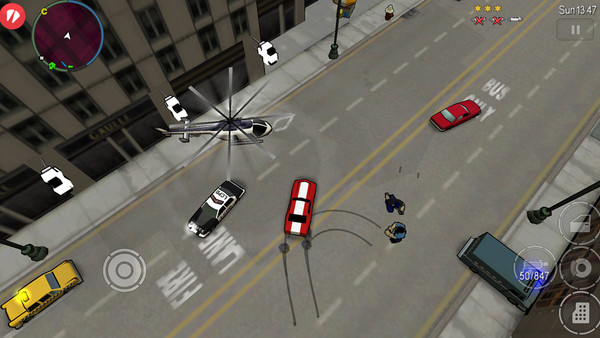
Grand Theft Auto is one of the most commercially successful video game franchises in history, and most fans would quite understandably presume that anything with the GTA name on it would be giddily gobbled up by players.
Except, that is, for the series' handheld title Grand Theft Auto: Chinatown Wars. Originally released for Nintendo DS in 2009 and PSP later that year, the game received near-universal critical acclaim, and remains one of the best-reviewed titles on either platform.
However, Rockstar failed to translate the rave reviews into commercial success, with Chinatown Wars struggling right out of the gate, selling less than 90,000 copies during its first two weeks on release in the U.S.
Granted, giving a GTA game a day-one exclusive release on a Nintendo handheld perhaps wasn't the smartest move, though the game didn't fare any better when it landed on PSP seven months later, again failing to crack sales charts.
Chinatown Wars was at least re-released for iOS and Android devices in the years that followed, even if it likely hasn't ever been a commercial success for Rockstar. At least with the billions in revenue they've made from Grand Theft Auto V, they can take it.
4. Bayonetta

It's no secret that PlatinumGames' Bayonetta 2 was a critically acclaimed commercial disaster upon release, hamstrung by the Wii U's commercial struggles. Despite this - and the game's Switch re-release also posting lukewarm sales - a third game is nevertheless deep in development.
It's nothing short of a miracle that Bayonetta 3 is a thing, honestly, because not only did the second game bomb, but the original 2009 hack 'n slash game wasn't a commercial success either.
Though well-reviewed by critics, even with the PS3 version's infamous technical issues, Bayonetta barely cracked 2 million copies sold across PS3 and Xbox 360, and was by PlatinumGames' own admission a financial disappointment.
The game did at least enjoy a tidy sales boost when it finally hit PC in 2017, though the existence of a third Bayonetta can best be attributed to Nintendo, who provided funding on the condition of Switch exclusivity.
In pure number terms, though, no game beyond the first should really have happened.
3. Max Payne 2: The Fall Of Max Payne

Much like Bayonetta, the Max Payne series enjoyed a far longer innings than it probably should have.
Though the groundbreaking 2001 original was a strong commercial success, the sequel, Max Payne 2: The Fall of Max Payne, was a baffling bust despite strong reviews and no major genre competition in its midst.
As a result, publisher Rockstar Games' parent company Take-Two Interactive had to re-forecast their finances for the following year, and the Max Payne franchise seemed to effectively be dead.
Surprisingly, though, a third game did finally release almost an entire decade later in 2012, and despite strong acclaim and seemingly solid sales, its colossal $105 million budget ultimately prevented it from becoming a commercial success.
Less than two months after the game was released, Rockstar shuttered the Vancouver studio that worked on the game, though mercifully offered all affected employees jobs at other Rockstar studios.
As much as fans would love to see a fourth Max Payne game, why would Rockstar dare risk three flop sequels in a row?
2. Death Stranding

Death Stranding was one of the most unique - and admittedly, divisive - games of 2019, and despite the strong commercial track record of gaming auteur Hideo Kojima, it was still considered one of the most ambitious and risky projects of the entire generation.
The early word seemed to suggest that the gamble had paid off, with reports emerging that Death Stranding had sold incredibly well in Japan, where it landed the biggest debut of any new IP in this gaming generation.
But sadly, this success wasn't replicated in most other territories, because despite strong initial sales in countries such as the UK, Death Stranding took a steep drop in subsequent weeks, with physical sales falling a shocking 71% in its second week in the UK alone.
This was likely due to both the game's polarising nature and one of the most stacked late-year periods in recent memory. The fact that Sony has been largely radio silent on the game's performance seems to suggest it performed below expectations.
Hopefully it won't deter them from supporting singular artists like Kojima in the future, though.
1. Metroid: Samus Returns

Despite being one of Nintendo's flagship franchises, Metroid has never been much of a seller, enduring largely due to its critical success and the sheer passion of the fandom.
Even so, when Metroid: Samus Returns was announced for a 2017 release on the Nintendo 3DS, a platform with an install base of over 75 million, there wasn't much reason to be concerned about its prospects. And because it's not exactly a card-carrying AAA game, its commercial failure largely fell under the radar.
At last report, it's estimated that Samus Returns ended up selling only around 600,000 units worldwide across physical and digital platforms, making it one of the worst-selling games in the franchise and an absolute commercial dud.
Given that this marks the third straight flop in a row for the Metroid series, following Other M and the wretched Federation Force, Nintendo is surely crossing all their fingers and toes that the upcoming Metroid Prime 4 finally breaks the streak.