10 Ways Dark Souls Made All Video Games WORSE
Listing negative Dark Souls facts is the Dark Souls of internet posting.

Dark Souls (and, well, by default, Demon’s Souls) certainly changed the way the industry approached the third-person action adventure.
For years, the formula had started to stagnate - with a growing focus on cinematic set-piece action, on trying to emulate the action blockbusters of the movie industry and leaving gamers so far removed from a sense of grounding that even the most realistic-looking game just felt like going through the motions.
When Dark Souls grew in popularity, it did so in response to those games, but in turn brought a few... quirky flaws of its own, like throwing out an old pie that was way too salty and replacing it with a curry with raisins in it.
I personally... do not like the Dark Souls formula. I can understand the appeal in theory, but to me, it represents a number of steps backwards in a number of crucial game design principles. Whilst I can absolutely appreciate a lot of aspects of the series - environmental storytelling, architectural art and so forward - there’re a ton that stick in my teeth like... curry raisins.
God, I hate raisins in curry.
So, putting my own neck on the line, here are ten ways Dark Souls made all videogames... worse!
10. Calling Everything “The Dark Souls Of...”

Hey, did you lot know that Riesen Chocolate Chews are the Dark Souls of chocolate bars? And ironing is the Dark Souls of household chores? And that Dark Souls is the Dark Souls of Dark Souls?!
Seriously, you lot - I know it’s a bit of a meme by this point, but most of the time, this phrase is uttered in earnest, normally to describe a game as difficult or particularly trying, but now it’s oozing like Nickelodeon Gak out into other walks of life, infecting the vernacular and making your great uncle ask “what’s the Dark Soul?” on Facebook.
Things can just be “tricky” without being anything to do with Solaire. Getting those huge boots on that you only wear to your “special interest” club? Just say they’re “a pain in the **** to get on” like a normal person, instead of side-smirking and remarking that they’re “the Dark Souls of footwear”.
9. Normal Mode Is The New Easy

Whether you regard it as a good thing or a bad thing, the perceived difficulty of games in general has changed.
Before the rise of Dark Souls, the hardest games we could play would be those occasional NES and ZX Spectrum titles that popped up as bonuses in those Best Of The 1980s compilations - archaic and flat-out disrespectful games from a time where designers hadn’t fully understood the nuances of how to create for consoles, not arcade machines.
Games - particularly AAA games - had been getting easier (both in general, and thanks to contemporary quality of life updates thanks to advances in both technology and design), and so every game that followed Dark Souls would appear not just easy, but insultingly simple by direct comparison.
Now, almost ten years on, action games have tried to up their general difficulty level (with some going so far as to make “hard” the recommended difficulty level for “people who play action games”), often trying to emulate the Dark Souls style of difficulty through artificial means (removing the HUD, one-hit-kills, and so forth).
Playing on normal difficulty is now, for Dark Souls veterans, just too easy to enjoy... even passively.
8. The Prevalence Of Stamina Meters

Dark Souls wasn’t the first game to introduce a stamina meter, but you’d likely struggle to find a game that uses them with such prevalence. If memes and difficulty were the first thing you think about when you think of a Souls game, the chances are, stamina maintenance is likely to be the second.
Yet, they’re demonised in many ways, and for good reason - in a game like Dark Souls, they work as a way to increase the already-high pressure, but their inclusion elsewhere is often largely arbitrary (have you ever played a game with a huge open world and yet, you can only sprint for ten seconds before you have to watch a little bar charge up again?)
With an ever-increasing focus on stamina management (often without a bespoke place in the grander design), stamina meters have popped up all over the place - likely as a result of the popularity of our favourite piece of sun-praising media.
Why does Adam run out of stealth punches in Deus Ex: Human Revolution? Why do Final Fantasy 15 boy band superheroes run out of energy when running through the wilderness? I can understand when it literally limits character progression (such as Breath of the Wild) - that serves a design purpose.
But when a stamina bar/limitation exists simply to inconvenience the player... maybe just... don’t?
7. The Removal Of Crucial Gamified Elements
As games evolve, so too do all sorts of 'Top Secrets You Didn’t Know Designers Add To Games To Make Them More Enjoyable '. Elements that aren’t usually all that noticeable, yet make a major difference to your gaming experience.
These are things like Coyote Time (the brief window of leeway you get in a platforming game which allows you to still jump even if you’ve left the platform) or Last Stand Health (where your last little bit of health is actually worth significantly more than your other health points).
They allow players to have a more enjoyable experience by eliminating more “real” factors in favour of more fun ones. Sometimes this can be called “gamification” or “being gamified”, by really rad people.
Dark Souls does not enjoy gamification.
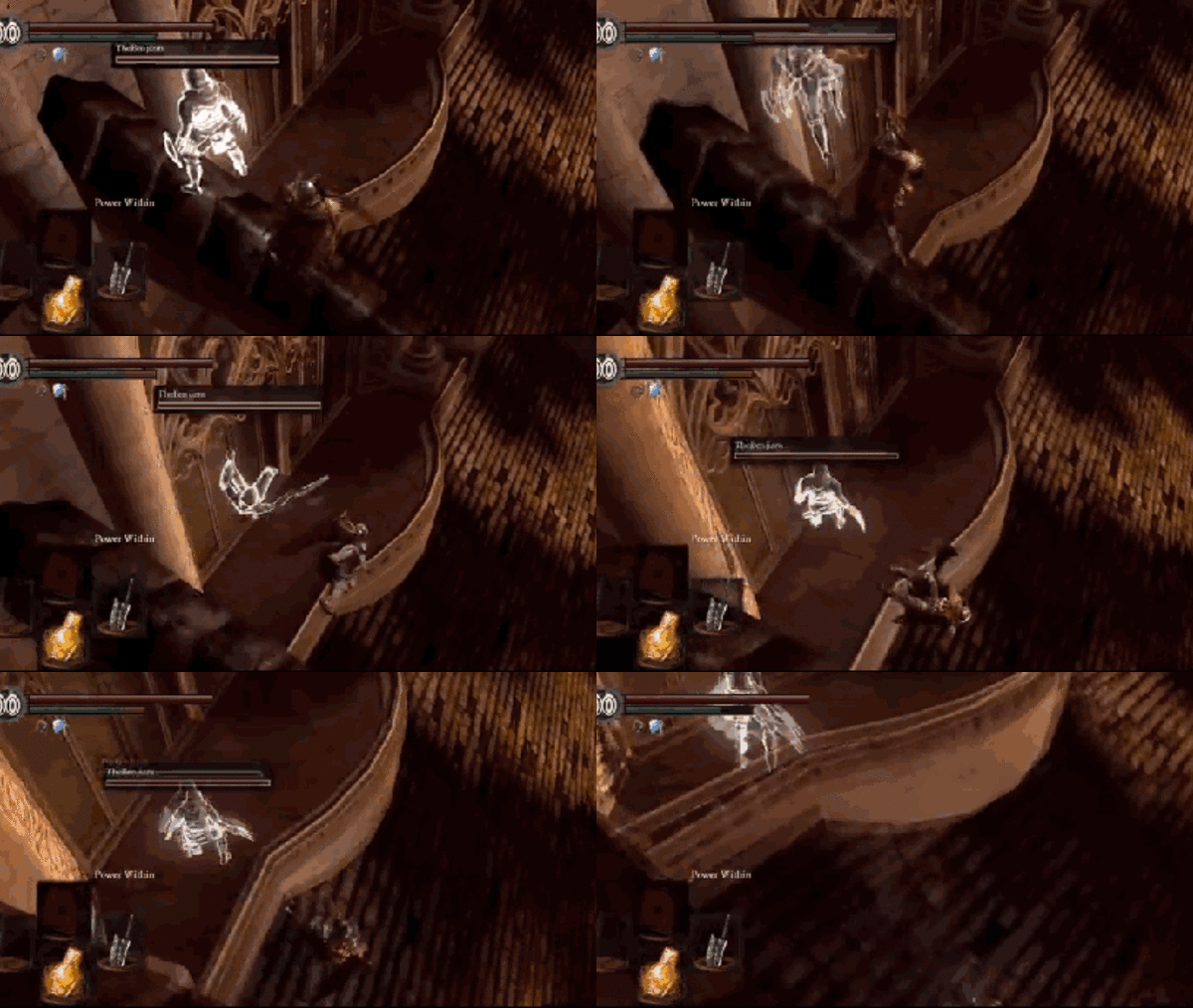
In fact, it seems to relish the idea of omitting those elements entirely - falling off ledges into chasms happens immediately and without collision leeway, nor any kind of ledge-grab.
The player’s weapon snags on walls whilst enemies appear to be immune to most animation interruptions. The player’s health is offered no special boosts when low... this is a game which in no way adopts the covert-yet-key gamification that other contemporaries do.
As a result, more recent titles have tried to follow suit, ditching these player-focused boons in favour of making the experience more raw.
Because hey, who the hell needs a second chance to rectify your mistakes when you can have a brutal, unforgiving experience?
6. A Resurgence In Elitism

“What, you played Doom on NORMAL difficulty? Pfft, I thought you were a REAL gamer”, said the worst person in the room.
There’s an old saying that my grandpa used to say: “some of the folk in the mob believe in the cause, some of them just came along for the ride, and the rest of them are just there to cause trouble”.
He wasn’t talking about Dark Souls meme culture (because that would’ve been a touch bizarre, seeing as he died about twenty years ago), but it’s definitely applicable.
Some of the meme-tastic Souls fans are definitely there to spread the meme around and have a good time. “Git gud, scrub”, they giggle, posting in the YouTube comments for a cake-making tutorial. But, for every person saying it with a tongue firmly planted in cheek, there’s another hiding in the shadows, believing these toxic, smug words.
It’s pervading into pretty much all of gaming now - this elitist nature that drives some of the Souls fanbase to deride and debase gamers in the name of smugness. To mewl “just get good, loser” to every poor player who couldn’t master the Sekiro parry system or get past Father Gascoigne in Bloodborne.
Everyone likes a laugh, and everyone likes a meme. But this particular subset of Souls fan? The one who claims personal superiority for playing a game real good?
Nobody likes those.
5. Oppressive, Hopeless Atmosphere Becomes The Cool Norm

In the 1990s, we as gamers indulged in some of the most gaudy and colourful games ever created - it was a time of The Crystal Maze and Fun House, and the mascot platformer ruled the gaming roost. Sonic the Hedgehog, RiStar, Cool Spot... er... Zool...
Every colour of the rainbow, and stories drenched in such hope and optimism. You could’ve choked from the levity of it all.
Fast-forward a few decades and everything’s getting grey. Gears of War’s brown-aciousness completely eclipses the more colourful shooters like Halo, and countless games attempt to follow suit.
Then, of course, we reach 2011, and, as if the brown-grey palette of before wasn’t quite dingy enough, Dark Souls ramps up the dark with a morose, overwhelmingly dark gothic experience, which oppresses the player’s spirit and crushes any semblance of hope they may have had.
It didn’t take too long for other games to mimic not just the mechanics... but the tone and imagery, too.
Whilst some only tried to keep it a little bit gothic nightmare, others like Salt and Sanctuary or Blasphemous went above and beyond with the oppressive spirit and barbarous symbolism.
There’s no denying the influence Dark Souls has had on the games that followed it, and I for one am already a bit sick of the dark and dismal visuals.
4. “Punishing” And “Cheap” Are Now Mutually Exclusive

I was playing one of those browser platformers where it appears simple enough, but then an invisible spike appears out of nowhere and you die instantly.
After you’ve memorised where the spike is, you can jump over the place where it materialises, but then a pitfall opens up and you fall to your death anyway.
”This game’s cheap”, cackles one of the comments.
“It’s not cheap, it’s just punishing”, replies angry man.
”Git Gud”, smirks the original poster.
”Cheap”, in fighting games, is when a technique or ability is disproportionately effective compared to the effort it takes to pull it off. In single-player games, it normally refers to when an AI enemy does an unreasonably powerful attack with comparatively few startup frames (or warning of any description).
”Punishing” is when a player error results in disproportionate punishment (like when my flatmates stole my milk, so I defecated in their stew pot). Basically, huge, telegraphed means huge damage, but you wouldn’t expect big punishment from Beige Regular Attack.
Dark Souls players abhor hearing something is “cheap” in their game, instead preferring the term “punishing”, like it’s somehow more honourable. Yet, by the actual definitions of the two terms, Dark Souls can actually be... both punishing and cheap.
The two terms are not mutually exclusive - some games are both! There’s no prize for being defensive about arbitrary terminology - unlike me, who takes the medal for defending the distinctions between the terms “punishing” and “cheap”.
3. Normalising UI As An Afterthought

I don’t care how much you adore Dark Souls as a series, there’s an element of its production that pretty much everyone agrees on: The user interface is pretty damned gross.
The thing is, no matter how grotesquely presented the UI elements are, or how unintuitive the menu flow is, it doesn’t affect the enjoyment Dark Souls’ fans have with the product - they love the game in spite of its gross UI.
And that’s... well, that’s a bit of a problem, because it’s normalised the idea that you can implement any old user interface, because people don’t care either way.
UI is so important, because it functions as a bridge between the player and the game world, and that means enhancing comprehension, feedback, and general good-feelinginess. I’ve never played a game that wasn’t enhanced and uplifted by good user interface - you tend not to notice great UI, but bad UI really does stick out like a sore thumb.
Making excuses for Dark Souls’ poor UI isn’t a great idea. It just opens the doors for other games to presume leaving UI as an afterthought (or just considered as relatively unimportant), when UI should be developed simultaneously (with as much importance) with other elements of the game.
2. Making It Okay To Sell A Remaster Which Spits On The Community

One thing that you can’t fault about the Dark Souls community is their dedication (for better, or for worse).
The modding and multiplayer scene was, for a time, one of the more active and passionate you’d find for a game of this genre, and there were some truly talented individuals patching a lot of the original game's more "divisive" features.
So, by the time the remastered edition of the game arrived seven years later, the PC community had already fixed all the issues with the base game.
If you had been playing the game on PC for all those years and, understandably, updated your base game with these bountiful upgrades, Dark Souls Remastered will have been quite the wet fart. A full-priced title which looks and plays worse than the version you already have.
To really shovel the faeces into the players’ pillowcases, though? Activision stopped selling the original version of Dark Souls on PC, meaning you either “upgraded”, or you remained a part of a rapidly-diminishing, split player base.
Clearly, Activision noticed the strides the community had made and wanted to grab control back, finding Dark Souls Remastered as the way to do so, and thought console players were happy with what they got, the PC community were understandably pretty miffed.
The sales figures just go to show that it’s okay to spit on your community - as long as a thing’s popular enough, it’ll sell regardless.
1. The “Learn AFTER You Die” Style Of Game Design, Revived From The 1980s

In the 1980s, arcade games were hard as nails. They were often skewed towards unfairness, which worked well - the player would have to lose in order to learn, which meant spending more money.
As we moved to home consoles, games simply emulated this type of “punish to teach” approach, not because it was the best technique - games like Ninja Gaiden or Contra were hard... because they didn’t know any better.
Nowadays, we’re more savvy when it comes to teaching the player. No longer do we drop a piano on the player from a blind spot of the ceiling and say “oh, you’ll know there’s a piano there for next time” - we offer more contemporary challenges and solutions.
One of my senior designer friends once noted that “when a game starts punishing the player for trying to learn, you’ve stopped designing how to test skill, and you’ve started designing how to test patience”. A boss that can kill you in a single hit will almost certainly require you to die a few times to get used to its patterns, and what happens when it miraculously learns a plethora of new moves partway through the battle? You die, you learn, you repeat again.
Bosses can be tough, tricky to understand, brutal, satisfying to beat and relentless without resorting to serving the player up a Game Over screen after every brand new attack it decides to unleash.
Sometimes, it’s just more satisfying when you see the piano before it lands on your head.