15 Best Ubisoft Video Games Of The 2000s
Prince of Persia, Splinter Cell, Far Cry, Assassin's Creed?

Although they've taken a lot of flack since the most recent generation kicked into gear, Ubisoft are still one of the best big publishers in the video game world. They're not without their flaws of course, and visual downgrades, a love of DRM and shoving the same franchises down our throats without bothering to keep them fresh have dogged the company's reputation in the past few years.
Away from all that though, Ubi are one of the only companies willing to take chances on interesting new properties and experiment with different genres, leading to some of the best games, well, ever. From Far Cry 3 defining the open world titles of the early 2010s to the initially-struggling Rainbow Six: Siege transforming into one of the most engaging multiplayer shooters of the decade, Ubisoft's impact on the industry shouldn't be understated.
The 2000s in particular was a strong decade for the company, as they matured into the powerhouse they are today. The years where the majority of their biggest franchises were born, the publisher took chances and stuck to their guns to create seminal titles that are still talked about today, but only one deserves to be heralded above the rest...
15. Assassin's Creed

With just how ubiquitous the franchise has become, it's difficult to remember how big a splash the first Assassin's Creed made when it debuted in 2007. Taking players back to the Middle Ages and putting them in the shoes of a deadly, free-running killer, the original title introduced intense combat and movement mechanics that the industry has proceeded to rip off ever since.
Unfortunately, while the foundational mechanics were indeed strong, the title's mission variety and overall story structure was severely lacking. With the entire single-player boiling down to repeating the same activities - be it interrogating people for information or sneaking into enemy compounds - that built towards an eventual assassination.
Every single mission played out more or less the same, and while you did gain new weapons and abilities as you progressed, they didn't solve the flaws of this repetition. Still, as a pure sandbox experience, there was literally nothing like Assassin's Creed at the time, and it completely changed the game when it came to what players could expect from their open world titles.
14. Rayman 3: Hoodlum Havoc

Rayman became a lovable mascot thanks to a tough-as-nails platformer back in the PS1 days, but it was the second game, which transitioned from the two-dimensional realm into the third, that cemented him as a household name.
While that game would have made it quite high on this list had it come out a few years later, its 2001 sequel was more than a worthy successor. Building upon the same stellar platforming and effortlessly charming story, the sequel iterated on the foundations of the previous release rather than shaking things up too much.
That's not too much of an issue, but the problem a lot of people had with this follow up was that it moved into more outright comedic territory than its predecessors. Indulging in self-referential jokes and meta humour, the platformer etched a new identity for itself which was doubled-down in on in subsequent spin-offs and sequels.
The gameplay and characters were still as solid as ever though, and despite not enjoying the same success as its predecessors, was undeniably a brilliant cap to an essential trilogy.
13. Rainbow Six: Vegas 2

A part sequel, part prequel, Rainbow Six: Vegas 2 continued the counter-terrorism action popularised in the original game, only this time to combat the rising success of Call of Duty and Battlefield, opted to introduce a much larger focus on cinematic storytelling and straight-forward gunfights. It resulted in a single-player that, while not bad, moved away from the core tactical shooting the franchise was known for.
Fortunately, nobody was really interested in the Vegas games for their winding stories, but rather for their tough-but-fair combat which was still gloriously brought to life both online as well as in Terrorist Hunt.
The glitz and glam of the Vegas setting made for some truly memorable and unconventional battlefields as well, and while they weren't as novel as they were in the first game, still resulted in explosive areas to go toe to toe in.
12. Splinter Cell: Double Agent
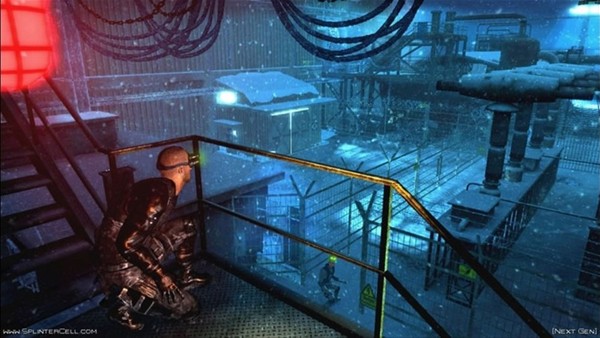
2006's Splinter Cell: Double Agent actually had two completely different versions depending on which console you were playing on, but it was the Xbox 360 release that was by far the most memorable.
The game introduced an interesting central mechanic, which, as you can probably tell from the title, had players going undercover as a terrorist cell, completing missions for both sides of the law. Genius in theory, the implementation of this structure was a little clunky, but attempting to retain the favour of both sides while still completing missions to the best of your ability perfectly complimented the waning - but still amazing - stealth.
Double Agent began the evolution of the franchise's move away from the methodical stealth that fans knew and loved, and while that led to some teething problems, it resulted in a faster, leaner game that was still Splinter Cell through and through.
11. Ghost Recon Advanced Warfighter

Although it might not look like much now, at the time, Ghost Recon Advanced Warfighter was one of the first mind-blowing next-gen releases of the Xbox 360 era, not only in terms of the game's scale but the polish of its visual presentation and spectacle.
While it looked and felt amazing though, a couple of holdovers from the previous generation of action games meant the tactical gameplay wasn't as revolutionary as its visuals, and by the time other major shooters like Gears of War dropped, Ubisoft's title felt a little outdated.
Still, these antiquated features meant that players had to rely on planning and pin-point shooting to beat the impressive A.I., marking it out from the plethora of arcade shooters from the era. Throw in a surprisingly compelling story and excellent level design which made use of the winding streets of Mexico City, and GRAW was able to put the ageing Tom Clancy franchise back on the map in a big way.
10. Call Of Juarez: Bound In Blood
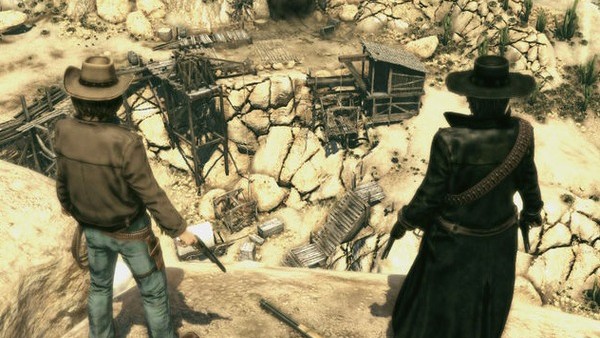
The Call of Juarez games (bar the terrible third one) have always been under-appreciated gems, but it was this first sequel in particular which stood out the most. Refining the ambitious scope of the original into a game who's technical prowess is still impressive to this day, the Wild West shooter's brand of slow-mo gunfights and inspired stealth sequences gave it a variety that very few titles in the genre had at the time.
The world itself was the most memorable aspect though, as shootouts through bars and scaling the desolate mountainsides that extended seemingly into space made for a genuinely impressive setting to get lost in. Likewise, the modern-military boom was happening around the same time, meaning that Bound in Blood provided players with a great alternative that most, sadly, didn't jump on.
The combat wasn't as refined as it could have been and the story was pretty sub-par, but Call of Juarez 2 was a flawed gem that captured the mythology of the Wild West like few others games ever have.
9. Prince Of Persia: Warrior Within

The darker, edgier older brother to the original Prince of Persia, Warrior Within built upon the excellent time-bending platforming of the first title, only this time with added decapitations.
Not only did the darker tone work with the newly-refined - and far more visceral - combat system, but it made for a pervasive, ominous atmosphere that haunted the entire game. A suitable choice, considering the Prince spent the whole sequel on the run from a seemingly unstoppable beast.
Much larger than the previous game in the series, WW unfortunately took a lot of flack for its new combat system, which admittedly was clunkier than the stylish, gory finishers made it out to be.
Likewise, fans were split on the new direction of the franchise in general, with some enjoying the more mature tone and others longing for the whimsical fantasy of the original. For my money the latter is admittedly better, but that doesn't stop Warrior Within's daring new approach from working in its own right.
8. Splinter Cell: Pandora Tomorrow
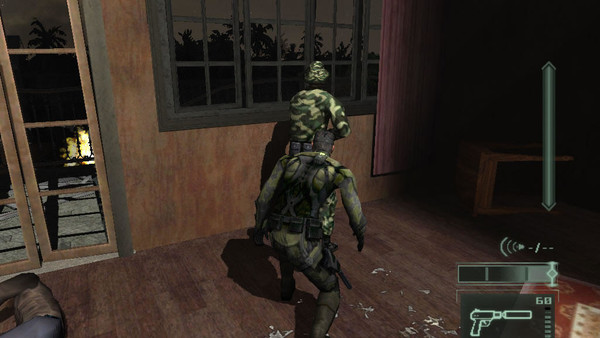
Despite not being made by the same core team behind the original Splinter Cell and its seminal sequel, Chaos Theory, Pandora Tomorrow was still a hugely worthy follow up that gave players the chance to jump back into the sneaking shoes of Sam Fisher.
The core stealth is pretty much unchanged from the original, with a few welcomed tweaks to make the gameplay that bit more intuitive. Unlike the clunkier first effort, players could now carry bodies through doors, make use of a proper aiming reticule and - a personal favourite - fire a handgun while hanging upside down. They're minor details, but they contributed to a stealth system that was already amazing to begin with.
It's as good as it ever was, but the lack of substantial change and overfamiliarity of Pandora Tomorrow stops it from climbing higher on the list. A bloody solid, always intense stealth game that rarely puts a foot wrong, Pandora Tomorrow feels little like Splinter Cell 1.5 rather than a true sequel, but it was certainly enough to keep people interested until Chaos Theory rolled around.
7. Rainbow Six Vegas
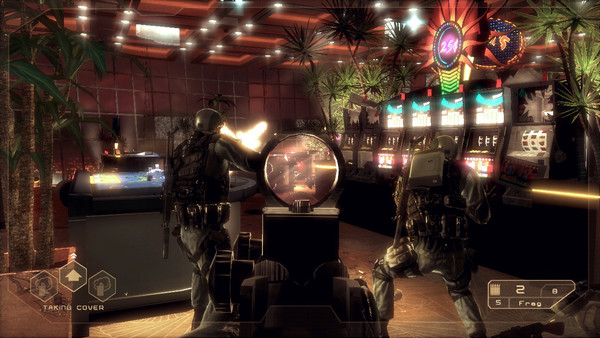
After a few solid entries that pleased the die-hard PC shooter audience, the Rainbow Six franchise was in desperate need of a shake up. Attempting to compete with other shooters while retaining the tactical, high-risk-high-reward gameplay that made the series popular, Vegas introduced an elaborate single-player story mode, adopted contemporary mechanics like regenerating health and punctuated shootouts with explosive set-pieces.
It was risky, but the new approach balanced the best of both worlds. The tactical awareness of the old games was still there, and a mix of third-person gameplay and standard first-person shooting helped distinguish the title from a whole host of modern-military games that were flooding the market at the time, allowing the sequel to properly break into the mainstream.
The Vegas setting was a stroke of genius as well. Unlike the high-stakes missions found in the original games, the layout of expansive casinos as well as the streets of the city itself made for an unpredictable and challenging landscape to navigate, and awarded the sequel with an instantly-recognisable identity.
6. Assassin's Creed II
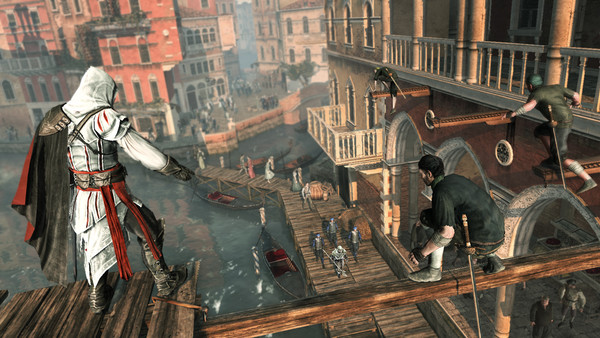
While the original Assassin's Creed introduced a bevy of new ideas, it wasn't quite the full package that many expected. The core mechanics were there, but just about everything else, from characters, setting, and plot were all lacking.
Fortunately, Assassin's Creed II was a step up in every conceivable way. Moving forward in time to the Italian Renaissance and opting to tell a much more ambitious plot that spanned decades, the sequel cast players as Ezio Auditore and chronicled his rise to the top of the Assassin's Brotherhood.
Unlike the original game though, which dealt with lofty sci-fi tropes and mythical good-versus-evil tales, this follow up filtered all of these elements through a deeply personal story, and it paid off in spades.
Likewise, not only was the narrative a huge step up, but the gameplay itself had been refined to a tee, made even better thanks to the introduction of brand new mission types and activities. It was such an impressive evolution that it became the franchise's unwavering formula for years, but that hasn't stopped AC 2 from still being a rewarding sandbox game to jump back into today.
5. Rainbow Six 3
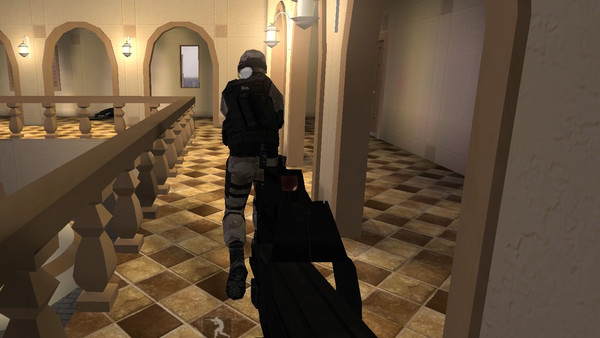
The hardest of the hardcore, Rainbow Six 3: Raven Shield's brand of unrelenting first-person shooting absolutely dominated the PC space in the early 2000s.
Putting players in charge of their own counter-terrorism squad as they embarked across the globe to save hostages and eliminate targets, the low health of the player and high damage of enemies meant that every single mission had to planned down to the footstep if you wanted even the chance of making it through a strike unscathed.
Three games in, the intense combat was as refined as it could be, while the exhaustive planning once again resulted in runs that ended in a satisfying, skin-of-your-teeth victory. At a time where action games were in competition to be the most over the top, Rainbow Six 3 sold itself as being the thinking man's shooter, and it more than lived up to that moniker.
Slightly more accessible than the releases which preceded it, Raven's Shield was the swan song for this incarnation of Rainbow Six, ending a lauded era for the long-running series.
4. Far Cry 2
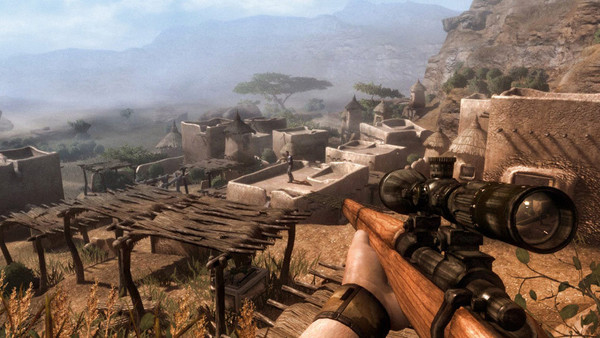
Although its sequel would popularise the framework for a whole generation of open-world shooters, Far Cry 2 was actually where a lot of those features were first implemented.
The incredible combat loop of scouting out dynamic enemy locations and storming bases however you wanted was pretty much the entire crux of the shooter, balancing the original Far Cry's hardcore approach to combat with more satisfying and modern action controls.
However, the sequel's biggest strength was just how alive its world felt. Not only were enemies littered all over the place, but there was a whole animal ecosystem that you had to deal with. Throw on top of this the ability to use nature to your own advantage, with a huge focus on causing wildfires to funnel enemies into chokepoints or cause a series of explosions, and the devs were able to create a world that not only looked pretty, but directly influenced the way the game played.
Sure, the central narrative wasn't anything to write home about, and major drawbacks like respawning enemies, a botched malaria mechanic and constantly-degrading weapons weren't great, but they didn't take away from the sheer ambition or fun to be found otherwise.
3. Beyond Good And Evil

Gaining a cult status since its release in 2003, Beyond Good and Evil has become something of a mythical figure in the gaming world. Thanks in part to a sequel that was announced all the way back in 2009 but remained in a state of constant mystery until its bombastic re-reveal in 2017, the original action-adventure release has gained a reputation for being one of the best games of all time.
While that might be a bit hyperbolic, Ubisoft's ambitious title is still one of the best action-adventure titles of the sixth generation. Michel Ancel has a knack for creating vivid fantasy worlds that just sweep you up from the mundanity of everyday life and transport you somewhere exciting, and Beyond Good and Evil exemplifies this talents like little else.
Going back to it now, it's clear that the core gameplay, particularly the stealth segments, haven't aged as well as other releases from the time, but the world, the characters and the environments more than make up for any of these minor shortcomings.
2. Prince Of Persia: The Sands Of Time

Puzzle-platformers were a dying breed back in the early 2000s, but Prince of Persia's trial-and-error gameplay, which saw players literally turning back the clock on their mistakes, gave the fledgling genre a new lease of life. The Dagger of Time the Prince wields completely changed the way players approached difficult sections, allowing the devs to introduce more ambitious and complex level design than fans were used to.
The time-bending mechanic was intrinsically tied to combat as well, with the enemies the Prince killed refilling his abilities and giving him more resources to play with. Unfortunately, fighting these reanimated monsters was by far the weakest element of the game, but the basic duels, combined with a few combat-specific powers, still made for enjoyable reprieves from lengthy bouts of puzzle-platforming.
As an action-adventure title, PoP swept players up in an invigorating swashbuckling fantasy, revolutionising a genre in the process and inspiring a whole generation of releases that attempted to ape its hugely enjoyable style.
1. Splinter Cell: Chaos Theory

One of the best games of its generation, Chaos Theory is where the Splinter Cell series peaked. Unlike Pandora Tomorrow which was more of a stopgap release than a true sequel, this trilogy capper completely overhauled the core gameplay, arguably perfecting it in the process.
Introducing a dynamic A.I. system, a brand new approach to close-quarters combat and even more weaponry, sneaking around high-security compounds and striking your prey from the shadows was more intuitive than ever, propped up by an unsurprisingly winding Tom Clancy plot.
It helped as well that it shipped with one of the most unique and engaging multiplayer suites ever, tasking two teams of two with being either shadowy spies or gun-wielding mercenaries.
The asymmetrical mode was unbelievably tense (with a good team, anyway), and it's a shame that later entries moved towards an action-heavy incarnation, losing the perfect, unique balance found here in favour of something more mass market.