15 Most Important Video Games Of The Decade (So Far)

Groundbreaking storylines, BAFTA awards, sensitive subject matter - it's all here.
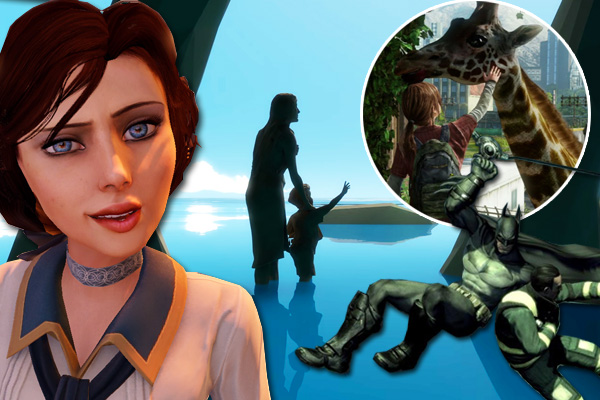
What makes a game a landmark achievement, or an important one? Gorgeous graphics? An immediately timeless character? A unique plot twist? Perfect game mechanics? Maybe all the above and more? It's easy to forget just how good things are in the industry overall, as it feels like the top-tier consoles are struggling to maintain exclusivity libraries, instead falling back on multiplayer-only shooters, half-baked HD upgrades and arbitrary third-party releases. The reality though, is gaming as an expressive artform is more accessible and expansive than ever. We may have lost the 'mid-tier' of development across the last generation (your THQs, Acclaims and the like) as budgets for triple-A titles number into the tens of thousands just to get them off the ground, but to judge the medium's output by things like the latest Halo or Star Wars Battlefront remake, is to miss the point entirely. To some degree, indie titles have become the new mid-tier; a middle ground of production values comprised of studios positively bursting with new and creative ways to express themselves. Many smaller studios or individuals simply just want you to play their creations, far removed from the budgetary hamstrings of higher-tier agreements that insist every title must have guns, gruff protagonists and loot grinds all for the sake of 'guaranteeing' recouped funds once they hit shelves. Back to that opening question, and it's clear many games regardless of scale have within them all sorts of important attributes. Whether it's because of the aforementioned qualities, something more unintentionally negative or another entirely unique trait, the following games dared to dream in all sorts of different ways, but whether it paid off, is up to you...

15. The Walking Dead

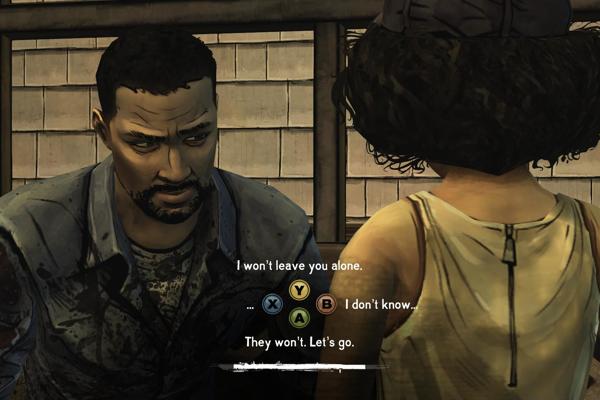
It's hard to remember a time when Telltale weren't the master of all things dialogue-driven. The push towards narrative adventures started way back in 2012, and from the second their first licensed property modernised the age-old point n' click, the studio hit upon a formula that skyrocketed them to a level of success that hasn't abated to this day. Without this proof-of-concept first instalment, you wouldn't have everything from their own string of properties that span everything from Back to the Future to Game of Thrones and Batman, 2015's Life is Strange or even the recently-released Firewatch. From the incredibly intense story that appealed to non-gamers and watchers of the show alike, easily accessible gameplay mechanics and an episodic release that helped the impact of every cliffhanger ending hit home, Telltale set a new standard for story-driven games that will continue for years to come.

14. To The Moon

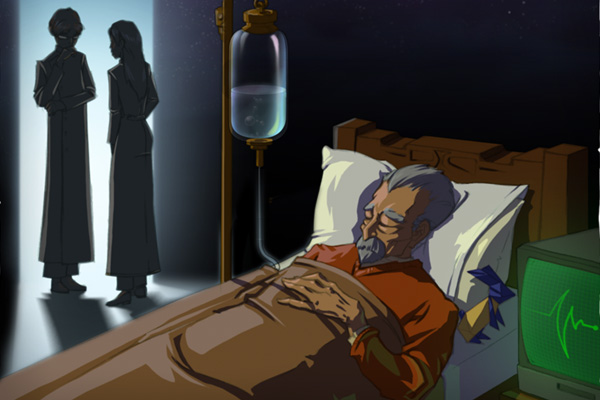
Developed by one-man powerhouse coder Ken Gao, To The Moon is a heart-wrenching tale of an old man's dying wish, and the means by which to grant it. Already the subject matter may strike a nerve depending on your own past experiences, but Gao takes a very frank and honest approach, weaving a tale that's at times humorous, but also brutally unforgiving in its detailing of Johnny's life as it led up to his deathbed. The core story setup is similar to the movie Inception, as a pair of scientists fulfil Johnny's wish by planting certain memories in his mind, thereby making him believe he's achieved the impossible. The absolute beauty of the story comes in detailing Johnny's relationship to wife, River, as the mystery of why he even wants to visit the moon itself is the heart of the entire thing. To say more would be to spoil just how well the entire tale is told, but sufficed to say when the credits roll, you'll have an emotional gut-punch so memorable, you'll be telling any who'll listen.

13. Mass Effect 3

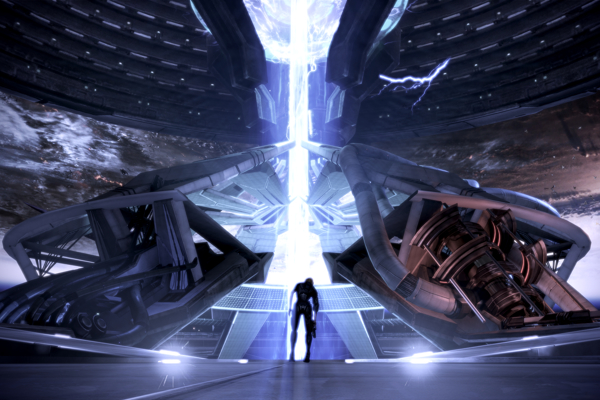
Not all of these entries were going to be positive, you know. No, Mass Effect 3 earns its place in the gaming history books for being a timeless, catastrophic example of what happens when a development team are completely strangled by the purse strings of their publisher. Thanks to all sorts of post-release info leaking out, all details were laid bare about ME3's development, confirming fans' worst fears about how the game came together. We found out that plot-centric character Javik was intended to be on-disc from the beginning, but thanks to EA demanding the game be released earlier, was reconciled as paid DLC. Multiple chapters you require to make the story even make sense were also held back as paid 'extras' (and remain so, to this day) with the main thread of the story also being chopped and changed multiple times. The whole thing was about as pleasing as John Carpenter's The Thing is handsome, the end result tarnishing Bioware's portfolio to the degree where many of the team have now left. EA were branded Worst Company in America thanks to armies of keyboard warriors making their voices heard by the Consumerist website, and it resulted in Mass Effect being put on hold until... well, that remains to be seen.

12. Papers, Please

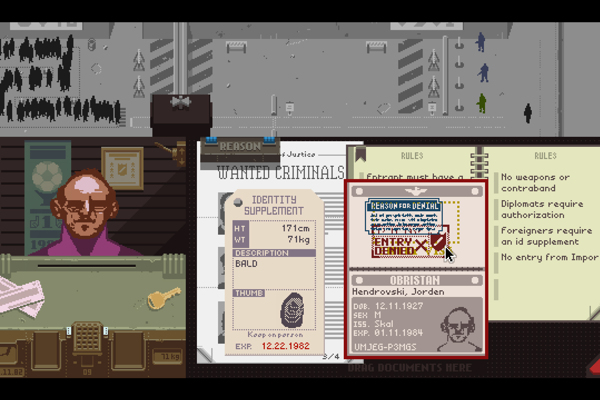
Seriously?! A game about passport control?! Look, just... just go with it for a paragraph. You'll be hooked, I swear. Still here? Good. So here's the thing; the whole 'you're a dude in a booth' thing isn't the hook. The hook, is deciding how well you value your own morals when it comes to deciding who will be allowed citizenship into the fictional state of Arstotzka, a Cold War-era nation where you will be severely punished and quickly fired for getting anything wrong. Your job entails puzzle-like elements as you match up symbols between verified documentation and whatever the people in front of you present to gain admission, and how this dictates whether or not you let people slide for all sorts of reasons, is where Papers, Please sinks its teeth in. You might see a husband present the right papers, only to realise his wife does not. Do you let them through and face repercussions (mistakes mean less food and medicine for your own ailing family), or split them up and live with your decision? That's just the tip of the iceberg, and there are a lot more instances as the game advances. Scores of games have done moral choices and consequence, but Papers, Please's own brand of dour cerebral engagement makes you realise precisely how far you'd go to save your fellow human, which in itself is a truly special trait.

11. Gone Home

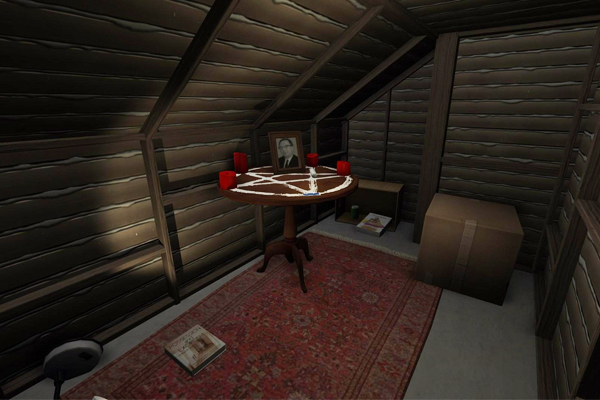
Like Telltale's The Walking Dead, Gone Home would inadvertently herald in a smattering of narrative-driven games, all with minimal (if any) mechanics, and all aiming to tell a particularly weighty tale. Cult-smash Slender Man definitely played a part in the whole 'first-person exploration' genre's proliferation, but it was the mature themes and storytelling elements on display here that really elevated it above the rest. Being many critics' Game of the Year for 2013, you're cast as one Kaitlin Greenbriar, a returning gap year student who approaches her new home, only to find her family missing and a note pinned to the front door from her sister. What follows is a brilliantly introspective look at how we explore video game worlds, the assumptions we have when a certain genre label is attached or assumed, and ultimately, it's an experiment with how video game stories can be told - one that pays off in every respect. You have Gone Home to thank (or blame) for the likes of Everybody's Gone to the Rapture, The Stanley Parable, Ether One and Firewatch - even to some extent, the next game on this list...

10. The Witness

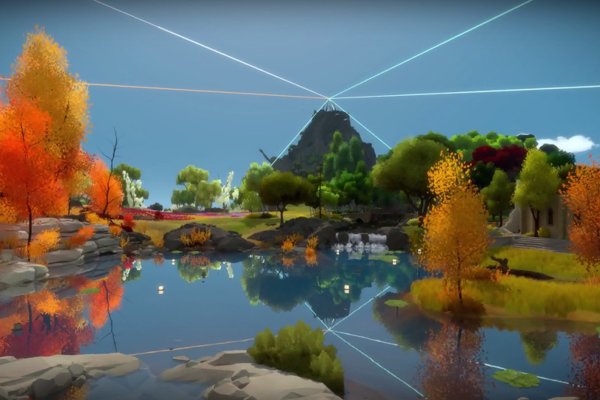
You're either going to be up for a pretentious deep-dive into heavy thought processes and puzzle-solving that makes you contemplate the very idea of gaining knowledge - or you won't. Hopefully if you're the former, you'll already have played The Witness, Jonathan Blow's newest game released in January 2016, as it's one that rewrites the entry on video game genius. Blow decided after finishing 2008's time-twiddling platformer Braid, to reinvest the considerable amount of money it made into another project. The following seven years would be spent creating one of the most genuinely mind-blowing experiences you can ever have, actually managing to teach you a 'language' of puzzles that's only as complex to apply with as it is to initially comprehend. In terms of narrative or purpose, you're cast on a mysterious island, tasked only with exploring and locating various areas comprised of rulesets that you can then hop between at will. It's lusciously serene, and as each puzzle factors into the next, helps culminate in an experience that'll make you feel like the dumbest person alive one minute, before then making you feel like an absolute genius for pulling everything together the next. Puzzle games certainly aren't for everyone, and the small pockets of social commentary within The Witness are designed to be controversial, but what's here is an absolutely outstanding achievement in game design nonetheless.

9. The Last Of Us

When you've just put your name to one of the best, most enjoyable and downright loved trilogies of all time, Naughty Dog surely knew they'd only top Uncharted with something truly special. Lucky for them, scriptwriters Neil Druckmann and Bruce Straley were on-hand to deliver exactly that; providing not only a solid zombie apocalypse backdrop, but a weighty, impactful narrative that rightfully has been labelled as gaming's 'Citizen Kane moment'. The story sees the unlikely pair of Joel and Ellie matched up in an attempt to get the latter to safety, but the result is an ending that has the sheer BALLS to climax on a spectacularly atonal note - one that's been interpreted multiple different ways - truly showing the genius behind the game's entire premise. Whilst you can debate the pros and cons of the 'Citizen Kane' label until you're blue in the face, the result is that TLoU features some of the best voice acting in the medium, cutscenes that are shot with the deftness of a high-budget indie flick, and the aforementioned core narrative that manages to weave multiple meanings together into one hell of table-turning finale.

8. The Elder Scrolls V: Skyrim

Even after we got our hands on the phenomenally-detailed world of Fallout 4, there was just no comparison to Skyrim; Bethesdas Tolkien-esque fulfilment of a genre they'd been iterating on for the prior two decades. Where TES II: Daggerfall was just a touch too big and Oblivion a touch unrefined, this fifth instalment hit the sweet spot, providing the next logical benchmark in open-world game design since GTA III. NPC A.I. routines went about their day across the entirety of the world, enemy creatures could spawn randomly and would be yours for the taking (and skinning), hulking dragons scorched the earth from above and the story itself was an epic tale of discovery and exploration. It's the world that's the hook though - a real testament to Bethesda's work ethic in that they were somehow able to design an literal world of content to swim around in. The best part is the game actually designs quests and objectives for you based on places you haven't been - essentially giving it an inbuilt sense of replayability that nothing else has come anywhere close to.

7. Batman: Arkham City

Whilst almost every Arkham fan has a different favourite instalment, the reason City is worth highlighting comes down to the performance of Mark Hamill as the Joker - or more importantly, the fact he was the first actor to get a BAFTA for a voice acting performance in a video game. It's a slight knock that the guy is an established film actor and not someone who truly cut their teeth on video games like Troy Baker or Jennifer Hale, but still a major win for the medium overall. Arkham Knight would also see Hamill return yet again, but it's this appearance in City that featured the character in one of the most shocking twists in Batman's entire history. Spoilers for the close of Arkham City, but outside the delivery of Joker's forever-cackling persona, he actually bites the big one, succumbing to the toxin in his blood by inadvertently causing Batman to drop the cure. It marked the highpoint of the trilogy, where both characters are encapsulated perfectly through dialogue alone; Batman states "After everything you've done, I still would have saved you", and Joker slowly dies, mumbling "That actually is... pretty funny." Brilliant.

6. Red Dead Redemption

Red Dead makes this list not because it's a solid open-world game or even because it's the cream of Rockstar's outside-GTA output, but because it dares to see if you'll carry out an act of revenge, completely of your own volition. Yes, the ending twist that John Marsden doesn't actually make it out of RDR alive was one of the biggest shockers of the year, but bigger still was when the game booted back up, only to reveal you were playing as his son, Jack. From there you could - completely optionally - travel to the town of Blackwater, where your father's killer Edgar Ross was known to work. By talking to a new mission-giver, you'd kickstart a string of interactions with friends and relatives of Mr. Ross, to which you'll eventually find him camped out by a riverside. As he 'innocently' fishes, you approach him and make like The Princess Bride's Inigo Montoya; reminding him of his father-killing ways, before emptying a full clip and watching the lifeless body float off down the river. It's then that the game pops up and states 'Red Dead Redemption'. You just don't get a more perfect only-in-videogames moment than that.

5. Middle-Earth: Shadow Of Mordor

Shadow of Mordor gets a mention because its phenomenal Nemesis mode seems to have been forgotten about already - most likely because the game was released in the barren wasteland of glitches and disappointment that was 2014. The feature itself was deemed too complex and intricate to even be included on the older generation versions of the game, consisting of an interweaving plethora of orcs, all of which could be influenced in various ways to build your own army. You'd do this by turning some to your side, branding and convincing others to fight higher-ups and claim their positions, and just remixing the world as and when you saw fit. In addition, any time you died, your killer would be upgraded, making that your main 'nemesis' to track down and exact revenge. The combination of this constantly-changing mix of allegiance and vengeance was incredible, and elevated Monolith's otherwise basic Assassin's Creed-lite release into far greater territory. At the time, many critics thought everybody and their digital granny would start iterating on the system, seeing similar nemesis-like modes in every game under the sun, but... nope! The one truly original and innovative feature of the new generation has potentially been forgotten about - but that doesn't make its existence any less awesome.

4. Her Story

Another one for the indie-hating, "Is it a game?" brigade, Sam Barlow's masterful Her story casts you as a no-name detective of sorts, thumbing through an archive of interview clips, depicting a woman who's being charged with murder. The real ramifications of who this woman is and what actually went down over the years prior to the final interview (the clips are from multiple time periods) is part of the fun, but the coolest thing is the core game mechanic itself; which is to say, Barlow has found a way to make Google a video game. Dialogue from every clip has been transcribed, meaning that thanks to the 90s computer interface you're presented with, you have to use keywords that will give you better search results. Say the on-screen Hannah starts talking about 'holding a knife', perhaps 'knife' was then used in a number of other clips, uncovering more of the plot in the process. Slowly you start to jot down words and phrases, take notice of speech patterns and facial ticks - over time Her Story makes you feel like a hard-boiled detective burning the candle at both ends, chugging down caffeine in the pursuit of 'a new lead' or 'a new clue'. It may not be for everyone, but if you revive that old-school gamer itch to simply try something completely different, it's immensely rewarding all the same.

3. This War Of Mine

In a rare move that surely left many developers going "Why didn't we think of that?!", This War Of Mine focusses on the aftermath of what could be any battle (although it's inspired by the Sarajevo Conflict from the mid-nineties), letting you play as a variety of civilians trying to survive in a bombed out, war-ravaged city. Naturally, the subject matter is immediately harrowing and impactful, but developers 11 Bit didn't stop there; gameplay is an engaging mix of Sim-like people management (looking at happiness levels and ensuring everyone is eating at least once a day), but also a great element of survival as you send out members to scavenge for supplies every night. Leaving more people behind means better defence against the other citizens resorting to increasingly desperate measures, but also means you may not stand a chance against whatever forces you come up against. Suddenly you start thinking of what you'd do in this situation. Do you try and craft a weapon and raid a supermarket, knowing its popularity would mean potential resistance? Target the homes of innocent people and hope you can barter with them; perhaps threaten them to give up their supplies? It's a supremely bleak setup for a game, but manages to dabble in delicate subject matter with just the right amount of weight; the end result being an emotional experience that will make you question your own morality at every turn.

2. Bioshock Infinite

In every respect, Bioshock Infinite was a landmark release. Not only was it the final entry in the series from industry legend, Kevin Levine, but hype-levels were through the roof pre-release, not to mention the final game provided an insightful commentary on American patriotism and underlying racial tensions, all while weaving a mind-bending tale about parallel universes, reframing the original two games in a whole new light. No tall order, then. On PC in particular, the entire floating city of Columbia looked absolutely stunning, with the general plot setup of a city literally breaking away from the American staples of the 1910s highlighting everything that was industrially proliferous and socially constrained about those times. In the opening scene alone you'll wander through a utopian vision of vintage Americana, breathing in the draped flags and sunshine - only for a horrific scenario to play out where you're asked to partake in abusing a multi-racial couple. For many, Bioshock's wondrous tone that mixes Disney-esque spectacle with a truly dark core of religious zealotry and socio-political musings elevates it into the upper echelons of the industry, and even if you couldn't get away with the fairly simplistic shooting, the story is one simply everybody must play.

1. The Witcher 3: Wild Hunt

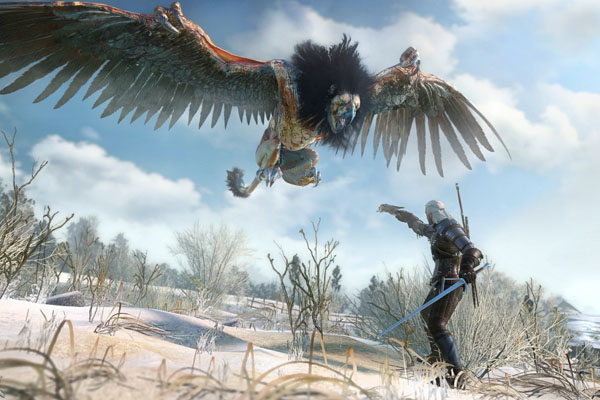
For the top spot, a game that should be held aloft above the entirety of the gaming public, Simba-style, before being proclaimed appropriately as the one true title that everyone needs to own. It's a Skyrim, a Red Dead Redemption, a GTA III. Hell, it's almost a Super Mario Bros.; CD Projekt RED not only respected their fans' wishes throughout development, keeping us abreast of any changes and later supplanting owners with free DLC for a matter of weeks, but the game itself is hands-down the most impressive open-world game every made. Protagonist Geralt affords the player just the right amount of agency and inbuilt intention, and the world itself is absolutely ridiculously detailed. NPCs and villages have their own stories to tell, creatures have a handful of written books' worth of backstory to flesh out how they came to be, the main thread that details Geralt's hunt for his faux-daughter Ciri is very well told with plenty of twists and turns - and that's without saying how much fun simply exploring feels ever time. Melee combat has a breadth of tactical options, weapons and armour combos number into the tens of thousands, being a Witcher in-world means you're encouraged to seek out the deadliest creatures and slay them - it's just one HELL of a package. Even the paid DLC, Hearts of Stone was a more worthwhile piece of content than the vast majority of full price games, and it reinforces just how much this is a confident developer firing on all cylinders, very much at the top of their game. Literally every title and developer going forward needs to learn from The Witcher 3, and I can't wait to see where we go from here. Let us know in the comments what your most important game since 2010 is, be it storyline, game mechanics, subject matter or something else entirely!

Gaming Editor
Gaming Editor

WhatCulture's Head of Gaming.