20 Beloved Video Games That Have Aged Terribly
These games are best enjoyed in your memory.
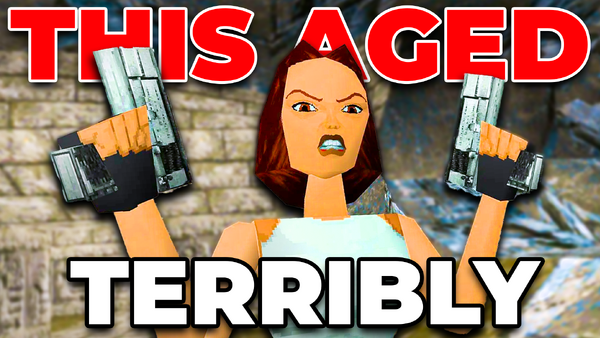
The term "masterpiece" gets thrown around a lot in gaming circles, and some titles have enjoyed being the top dogs for decades, being praised as the absolute best in their respective genre.
However, while the legacy and impact of such games cannot be denied, the gaming industry is an ever-evolving market, where old formulas are improved, and what was once considered cutting edge can suddenly feel completely outdated.
Including all of the games die-hard fans consider masterpieces.
If you ever picked up a beloved game after a long time and didn't find yourself having fun, then you have experienced this very problem. Unfortunately, even the greatest releases can struggle to stand the test of time, and when it happens, what you used to love painfully turns into the subject of disappointment.
The following titles undoubtedly deserve a spot in the gaming hall of fame, but these days you probably won't enjoy playing them. They just don't meet the expectations of modern players, and as much as you would like for it to be otherwise, they won't give you the same magical feel they used to.
20. Hitman Codename 47

Hitman: Codename 47 is the first title in the iconic assassination series that put the franchise on the map thanks to its amazing storytelling and novel gameplay that set it apart from other games in the year 2000.
Sadly, those who were wowed by Codename 47 back then will not be so easily impressed with it twenty-six years later.
Codename 47 is a game that doesn’t hold up not only by modern standards but also by the standards of older Hitman games.
The game’s AI is way too aggressive, punishing you for even the smallest mistake or even just standing around at times. Stealth is virtually impossible on later stages, and combat is awkwardly paced, with slow-flying bullets and unsatisfying brawls with endless hordes of enemies.
Even the game’s story has surprisingly aged like milk. Although the origin of 47 is intriguing, it was also clearly written at a time when games didn't take their storytelling completely seriously.
The first few levels might be worth playing for the nostalgia factor, but afterward the game becomes unplayable, which is why if you want the old-school Hitman experience, you’re better off starting with Hitman: Contracts, which vastly improved the early Hitman formula.
19. Banjo-Kazooie

Banjo-Kazooie is a beloved collectathon platformer by the legendary studio Rare that defined the 1998 era of video games.
The game’s charming visual style and exploration-focused gameplay inspired many “clones” of Banjo-Kazooie, like Ty the Tasmanian Tiger or A Hat in Time in recent years, that followed its formula to a tee.
But while this may speak volumes about the quality of the first Banjo-Kazooie game at the time of its release, it unfortunately doesn’t mean that the game holds up.
For starters, Banjo-Kazooie suffers from the same camera issue as many other N64 titles. The camera movement is slow and janky, making the once fluid-looking motions of the characters appear slow, grinding the pace of the game to a halt and casting light on another issue that emerged with Banjo’s age—the shallow gameplay.
By today’s standards the challenges in Banjo-Kazooie are just too simplistic. Most of the game consists of just moving around and fighting the camera to find your next objective.
The game also appears to have a lot of different movesets, but when you look at them from the modern perspective, most just appear to be stylistically different versions of the same few running and jumping actions.
The game still holds up stylistically, but behind the appealing cartoony graphics, there’s barely any substance by today’s standards.
18. Mario Kart 64

It’s undeniable that Mario Kart 64 was a complete game changer for the video game industry as a whole. While it may not have been the first racing game in history, or even the first Mario Kart, it was the first 3D Mario Kart game, and it set the standard for all racing games with plenty of iconic mechanics that are utilized in the genre to this day.
The game introduced Blue Shells into the Mario Kart series, for Pete’s sake.
The thing is, as much of an impact as Mario Kart made back in the day, the limitations that came with the title at the time of its release are really obvious to those who try to play it these days.
The driving in the game feels incredibly slippery by today’s standards, which perhaps wouldn’t bother people who grew up with the game if the poor handling came with a decent variety of tracks to awkwardly steer through.
Unfortunately, Mario Kart 64 is quite light in this department, too, featuring a measly 16 tracks (about a half of Mario Kart World and less than a quarter of other modern titles). Worst of all, most of these tracks are poorly designed, turning any quick trip down memory lane into something comparable to ice-skating inside a giant labyrinth of pain and misery.
Yes, it’s really that bad.
17. The Elder Scrolls III: Morrowind

The Elder Scrolls fanbase is stuck in a never-ending war over which title in the series is the best.
Fans of older titles, especially Morrowind, will bicker with “Skybabies” over how Skyrim has oversimplified the plot and mechanics of the classic Elder Scrolls games, and while this may be true, to say Morrowind has aged without a flaw is also a strange hill to die on.
The Elder Scrolls III: Morrowind is undeniably the best Elder Scrolls in terms of story and immersion. The fantastical and strange territory of the titular homeland of the Dark Elves is the most original in the entire series, and it’s filled with all manner of memorable and iconic characters.
However, the game’s combat is simply abysmal. Attacks don’t seem to connect most of the time, not just because they are based on hidden dice rolls, but also because your swings don’t provide any feedback about your strike.
While this attributes-based combat made sense in Morrowind’s day, these days it’s simply unsatisfying, and it can really kill your immersion when you, the prophesized hero, keep dying to low-level enemies that you can’t even hit with your sword.
That’s not to say Morrowind is bad. It’s just that there's no point in suffering with its terrible combat when you can download a few mods to fix it.
16. Banished
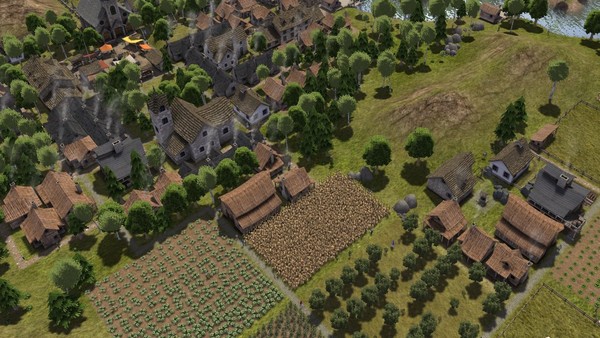
Banished is a survival city-builder about maintaining your own small colony on the outskirts of civilization. The game made its debut back in 2014, quickly gaining popularity within the city-builder community thanks to its harsh but fair difficulty and intuitive economy.
The game was fun to play, even if most of the time your people were starving or freezing to death. The difficulty of it was part of its appeal, and for a while no other game could come close to Banished in this regard.
However, it has been twelve years since Banished's release (even if it feels like yesterday), and there have been many competitors in the survival city-builder genre. A lot of these titles have borrowed from Banished, like the recently published Manor Lords, for example, and each made its own contribution to improving upon the game’s base mechanics.
With so many different options and upgrades over the years, when you come back to Banished in 2026, the game feels incredibly basic.
It can still be a lot of fun, but if you’ve been following the city-builder scene over the years, Banished probably won’t be able to capture your attention for more than a couple of hours.
15. Uncharted: Drake's Fortune

The Uncharted series is a non-stop adrenaline rush of globetrotting treasure-hunting adventures. Nowadays the games are mostly associated with stunning graphics and dynamic action sequences that keep you hooked on Nathan Drake’s story all the way to the end credits.
A similar sentiment was held for Nathan’s original adventure in Uncharted: Drake's Fortune once, but ask anyone who has tried coming back to the game in recent years, and they will be quick to tell you that the game has aged terribly.
Unlike the fluid and carefully choreographed action sequences of present day, Uncharted 1's level design is a relic of the past. The combat is slow and unsatisfying, with enemies acting as bullet sponges with perfect aim that can kill you in an instant, and the platforming and puzzle sections are not any better.
Instead of blending into the rest of the game like their modern counterparts, the puzzles and obstacles are jarringly disconnected from the story, killing any momentum the game manages to build. They are way too unintuitive thanks to the outdated camera movement, making them somehow more deadly than combat and twice as frustrating.
It feels like a completely different franchise, devoid of all the fun and action everyone loves the Uncharted series for.
14. Grand Theft Auto: Vice City
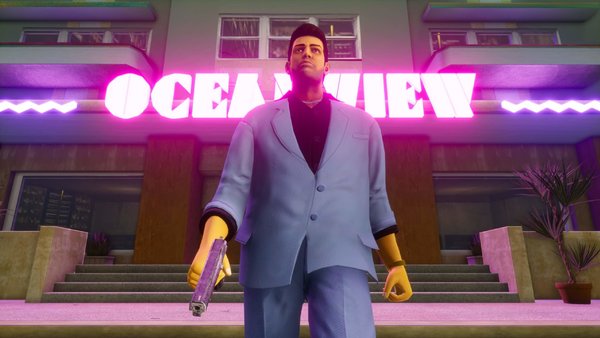
Most Grand Theft Auto titles used to be technological marvels at the time of their release. Many fans would admit, however, that this reputation does not hold up for some of the older titles.
The most painful example of this is probably Grand Theft Auto: Vice City.
When it first released in 2002, Vice City was considered a masterwork of open-world titles. The game’s map felt huge and brimming with all sorts of unique areas to explore, coupled with thrilling missions presenting the criminal underbelly of the titular caricature of Miami and plenty of side activities to do in your spare time, such as taxi driving or capturing criminals in a police vehicle.
Unfortunately, these days when you boot up Vice City, it becomes painfully clear that the game’s expansiveness didn’t stand the test of time.
The map is tiny compared even to San Andreas’, which came out just two years after Vice City, and the mission design is not only primitive but also incredibly buggy (anyone who played the horrible RC helicopter missions can attest).
The game is still beloved, of course, but most people coming back to relive their nostalgia usually close the game shortly after, deeply disappointed.
13. Tony Hawk Pro Skater 1

The original Tony Hawk's Pro Skater was a massive cultural phenomenon when it released in 1999. The game did not only manage to bring the skateboarding genre to the top of the sales charts, but it also exposed the broader mainstream culture to skateboarding itself, solidifying its status as the definitive sport of the 90s.
The game definitely deserved to be one of the best-selling titles, especially since its gameplay was unlike anything that was available on the video game market at the time. However, several Tony Hawk titles and plenty of other skateboarding games later, the first Pro Skater just doesn’t hold up anymore.
The once fluid and satisfying controls of the game feel jarringly stiff compared to later titles, but this obvious outdated design aside, the game suffers from a much bigger issue that renders it impossible to enjoy for the modern audience.
Simply put, the game’s content is very bare-bones. There are only a handful of maps to choose from, and the available tricks that you can perform on your skateboard pale in comparison to the huge library of the different kickflips, backflips, and other stunts of the later titles.
It makes Pro Skater 1 feel like an unfinished demo of its sequels.
12. The Witcher 1
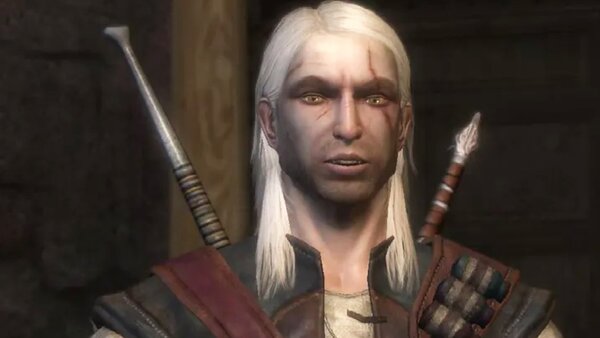
With the recent announcement of the Witcher 3 getting another DLC years after Blood and Wine, a lot of fans are getting nostalgic for the series as a whole and feel tempted to play all three Witcher games one after another.
However, while the Witcher 2 and 3 are great experiences even to this day, the first game is rough around the edges, to say the least.
While the Witcher 1 is beloved for its storytelling and its introduction of Geralt into the gaming world, it is vastly different from its successors due to its age, and these differences do not play well with a modern gamer’s palette.
The Witcher 1’s combat is the biggest obstacle in the way of enjoying it. The swordplay feels very clunky and unresponsive, even though the game expects you to perform perfect parries. There is also not a lot of variety in how you can approach combat, compared to the sequels, which is why most people feel tired of it all after just a few hours of gameplay.
The game’s story might be considered some of the best writing in the series to date, but the outdated combat that makes up a good half of the game makes nostalgic playthroughs insufferable.
11. Final Fantasy VII
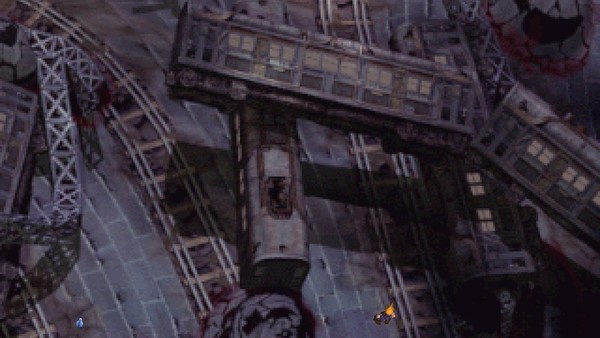
Adding Final Fantasy VII to a list like this is highly controversial, seeing how massively popular the JRPG was back in 1997 and how much of an impact it made on the entire video game industry.
The game is basically the definition of the JRPG genre that has established tropes used by other turn-based games to this day, and yet, it needs to be said—if you play the original Final Fantasy VII these days without having prior experience with it, you’re not going to have a good time.
This criticism has nothing to do with the core design of Final Fantasy VII. The turn-based combat and levelling system still hold up to this day, as they’re virtually the same as the mechanics of the hundreds of other JRPGs Final Fantasy inspired.
The biggest flaw of the game for the modern-day audience is its stylistic choice. While the 3D-style levels of Final Fantasy VII might have been stunning to look at in the past, for the modern eye they are an unreadable low-resolution mess.
Unless you have the maps memorized, you will spend hours trying to figure out which parts of the maps are interactable, passable, or yet another obstacle that you will hopelessly bump into.
10. Wii Sports

Few games can boast about their international fame as much as Wii Sports can. As the Wii’s signature title that came with the console, the game was not only present in every single household that owned a Wii, but it also managed to amass a huge audience made up of hardcore gamers and casual players alike, becoming so famous that even your grandma probably knows about it.
The game was praised for having one of the best utilizations of motion controls, which made its many sports-themed mini-games so memorable and enjoyable.
However, as is the case with most groundbreaking tech, if you were to boot up your old Wii these days, the once super-responsive Wii Sports controls will start showing their age.
While Wii Sports might have had the best use of motion controls in its heyday, with the rise of VR tech and other motion-based devices, the Wii system really loses its charm.
Games like Wii bowling or tennis that used to feel almost like the real deal seem really clunky and unresponsive by modern standards.
You might think the nostalgia factor might be enough to look past these issues, but with so many great modern alternatives, Wii Sports is unfortunately a relic of its past.
9. The Sims 1
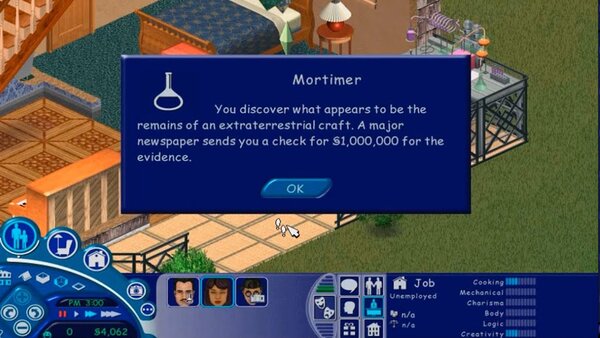
The Sims is one of the most beloved and best-selling franchises of all time. The charm and creativity of the original game have managed to captivate people and usher in decades of Sims mania that doesn’t seem to stop, even with the ever-disappointing existence of Sims 4.
The uniqueness of The Sims is undeniable, but as much as it might hurt to admit this, going back to the first game after experiencing all of the quality-of-life improvements of its successors makes playing The Sims 1 simply unbearable.
While the unique quirkiness is still there, the Sims 1’s mechanics are very primitive, and it takes a toll on its gameplay. The Sims are significantly needier here compared to later games, requiring constant attention and micromanagement, which saps all fun away from exploring the world.
You can’t visit a public lot for even a few minutes without your Sims suffering a mental breakdown from not being able to sit or eat, and the constant interruptions of interactions make it painful to socialize or build up your skills.
Although the first game might have been the peak of simulation in the year 2000, these days you’re better off making Sim families in the sequels.
8. Baldur's Gate 1
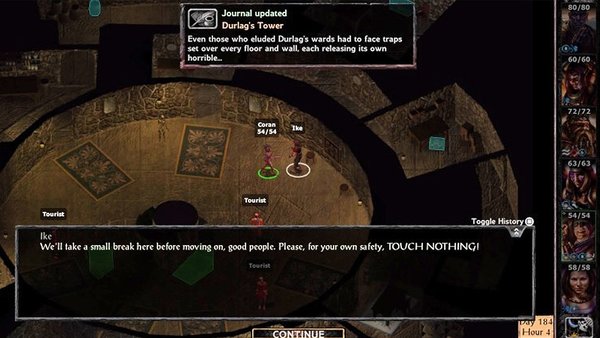
With the huge success of Baldur’s Gate 3, more and more new fans of the series feel tempted to try out the original two games.
After all, since they’re also critically acclaimed masterclasses of storytelling and roleplay, they have to be good even decades after they came out?
The painful lesson many newcomers to the Baldur’s Gate series learn is that transitioning from the new game to the older ones is not for the faint of heart. Not only that, even those who revisit the first game decades later might find it frustrating to play.
The problem of Baldur’s Gate 1 is not with its story or characters, or even its somewhat dated mechanics. The main issue that turns most people’s nostalgic return to an agonizing slog is that the game follows a completely different type of pacing compared to modern releases.
Traversing the map, the combat, and even dialogue can take a long time, dragging on with no means of fast-forwarding or skipping.
When you’ve been spoiled by the convenience of modern releases, this old-timey approach to open-world exploration can feel dull and sap all the fun out of the game.
Everything you’ve loved about it is still there—it’s just stuck behind an incredibly slow pace that might kill the fun for you.
7. Far Cry 3

Far Cry 3 is easily the most beloved entry in the franchise and a title that introduced so many innovative things into the open-world genre that traces of its impact can still be seen in modern games to this day.
Most people in 2012 were completely blown away by how immersive and liberating the game was. It felt like you could do anything and go anywhere you want on Rook Islands, which coupled with the amazing writing of Jason’s and Vaas’s characters made for a true action-packed spectacle.
These days, however, the open-ended gameplay of Far Cry 3 feels very dated. Painfully so.
Although taking over bandits' camps and hunting animals might have felt like endless fun back in the day, after more than a decade of similar and improved mechanics in other open-world games, including later Far Cry titles, the same activity feels more like a slog than an adventure.
Liberating enemy outposts and hunting tasks are pretty basic, if not downright repetitive when coming back, which is why most returning players quickly start avoiding them whenever they can.
The problem is that you need to do the side activities to make combat easier, so one way or another, you’re going to suffer the same boring combat with the same pirate enemies over and over again.
6. Super Mario 64

Everyone who has been a part of the gaming community at any point within the past thirty years knows of Super Mario 64. As the first 3D Mario game, the title was a trailblazer in so many different areas that defined gaming going forward.
However, it shouldn’t be a surprise to anyone that being a precursor to something doesn’t mean you’re the best at it forever.
Super Mario 64’s once groundbreaking introduction of 3D environments feels more frustrating than amazing nowadays. One can still appreciate it from a technical and even graphical standpoint (the polygonal models hold up thanks to being stylized), but the same cannot be said about the gameplay.
The N64 camera controls are utterly unbearable to use. Shifting between moving the camera and moving Mario is way too awkward for comfort, and it makes the platforming sections a lot less satisfying than you might remember.
It also doesn’t help that playing the game on modern consoles makes the controls more sensitive, meaning that the already frustrating camera-to-character switches become even harder to control the way you want.
It takes a lot of patience to play Super Mario 64, even if everyone can agree it’s one of the most influential games of all time.
5. Sonic Adventure
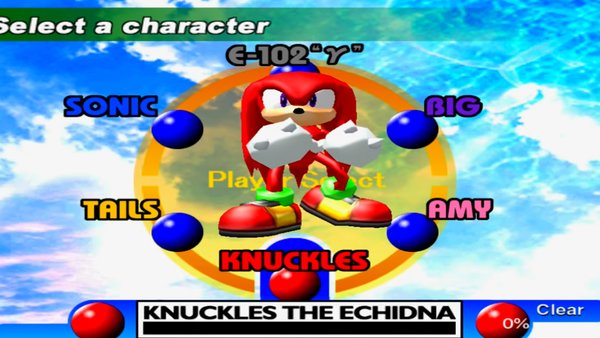
As the first 3D Sonic game, Sonic Adventure suffers from similar issues as the hedgehog’s plumber rival’s first 3D debut, Super Mario 64.
Only in Sonic’s case has time been somehow even harsher.
Those who grew up playing Sonic Adventure remember it as a fast-paced, action-packed fun that became the quintessential Sonic experience. The 3D environments were designed for running through at neck-breaking speeds, and story-wise, it was the first Sonic game that gave you the ability to play and experience the story of five other characters aside from Sonic.
To a fan of the blue hedgehog, it was everything they could hope for and more, but even the most diehard fans of the franchise have a hard time defending the gameplay nowadays.
As Sonic games advance and Sonic Adventure keeps ageing, the buggy design of the 3D debut’s levels becomes more and more noticeable.
The bad camera controls don’t pair well with Sonic’s speed, making you crash and die all the time, either because you can barely see what’s happening on the screen or because one of the game’s many bugs got to you.
To top it off, the game’s once advanced graphics are now really ugly, with the characters' mouths moving as if their facial animations were turned up to 300%.
It’s a title best enjoyed in your memory.
4. Assassin's Creed 1

People like to rag on modern Assassin’s Creed games for their mediocre gameplay and bugs while singing praise about the original titles about Altair and Ezio.
However, most people who come back to Assassin’s Creed 1 are quick to remove Altair’s debut from this list.
Assassin’s Creed 1 has obviously aged, but only those who have played it in recent years realize that it has aged like milk.
Compared to the refined parkour mechanics of even the Ezio games, climbing and clearing obstacles in the first game is painfully slow, as if Altair were constantly moving through an invisible wall of molasses.
The gameplay also doesn’t feel very innovative, as most of your activities are limited to repetitive sneaking sections and searching for collectibles on a very small and barren map.
The game still holds up with its story and characters, both of which are arguably some of the strongest in the entire franchise, but having to trudge through the outdated gameplay sections to experience them is a horrible experience few are willing to subject themselves to.
3. Borderlands 1

Most fans of the Borderlands series like to harp on the recent releases, whether it’s for the lacklustre storytelling of Borderlands 3 or the hellish optimisation of Borderlands 4.
This said, the first Borderlands game is also not without its flaws, and those who come back to it with rose-tinted glasses tend to learn this the hard way.
Borderlands 1 was definitely the biggest looter shooter of its time, so much so that it pretty much defined the genre, inspiring the gameplay of many similar titles that came out after 2009.
The game felt quite big at the time of its release, featuring a huge map and a nearly infinite set of procedurally generated weapons.
Perhaps if you never experienced any other Borderlands game, the feeling would still be there. However, if you played Borderlands 2 going forward, the scale of the original will feel minuscule almost immediately. The map is tiny in comparison with later titles, with barely any variety in biomes and enemy types.
Most of the game looks very bland and colourless, and gameplay-wise, the combat is very simple and bare-bones, lacking the many improvements of later titles.
It’s not a bad game by any means, but these days the only reason you’d come back to it is to experience the story.
2. GoldenEye 007

To this day, GoldenEye 007 is still praised as one of the best first-person shooters of all time, and this is largely because GoldenEye was one of the first truly 3D first-person shooters.
It’s also why a lot of people are willing to look past the game’s very outdated mechanics… right until they experience them on their own skin, that is.
Although it’s undeniable that the team behind GoldenEye created something truly incredible for the standards of 1997, the game just doesn’t feel the same to people who have been spoiled by the plentitude of improvements and quality-of-life features of modern FPS titles.
The shooting in GoldenEye doesn’t feel as intuitive, its framerate is abysmally low, and the game’s AI is frustratingly stupid, perhaps best evidenced by your in-game companion Natalya, who constantly runs into your line of fire, dying and causing game overs.
The game’s only saving grace in modern days is that its multiplayer mode can still be fun to play with friends, but then again, the poor shooting mechanics will make even the most nostalgic player want to switch to a different game after a few rounds of awkward combat and gliding character animations.
1. Perfect Dark

Perfect Dark is Rare’s 2000 first-person shooter that was one of the early FPS games on N64.
The game was praised for its innovative and immersive combat, as well as its different multiplayer modes, including versus and cooperative modes, that made it feel bigger and more extensive than its spiritual predecessor, GoldenEye.
These days, however, the general consensus is that Perfect Dark is almost completely unplayable.
The game has aged badly in pretty much every single area you can think of. It’s stuck in an extremely low frame rate, the controls feel tanky despite the game’s combat aiming to be fluid and dynamic, and its once revolutionary graphics and AI seem primitive for the modern player.
The only way you could remotely enjoy Perfect Dark these days is through its PC port or its 2010 remaster, but even those don’t fully fix its age-related issues, such as its outdated mechanics or stiff controls.
The game is a perfect example of something that was truly revolutionary at its time but feels entirely obsolete in the current day and age.