20 Recent Games That Pissed EVERYONE Off
These games didn't go over well.
2025 has been a (mostly) incredible year for video games, but of course, not everything can be a stone cold hit that's entirely free of controversy or launch day woes.
Gamers can be an entitled bunch, for sure, but there are also many times over the past year alone where they've made justified, vocal complaints about the state of a new release.
That is to say, each of these 20 recent games ended up pissing off a huge swath of players and suffered quite the loud backlash for it.
The reasons are of course myriad - perhaps the launch was mired in technical issues, maybe the developer backtracked on promised content, or the game just fell short of reasonable expectations in just about every possible way.
Whatever the reason, these games got absolutely dragged on release, and while some of them were thankfully later "fixed" by the developers, others continue to be majorly problematic to this very day.
Hell, perhaps the launch reception was dire enough that even die-hard fans did that most unexpected of things and voted with their wallets...
20. Skate
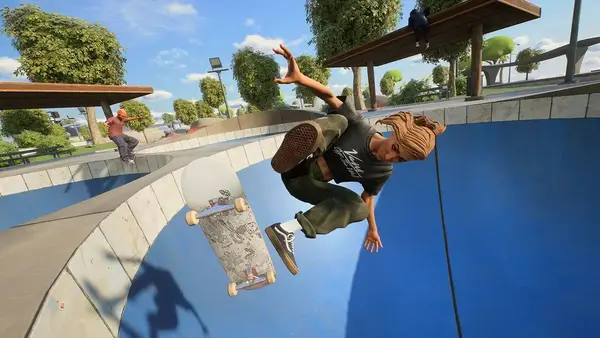
Though fans of the Skate franchise were eager to see it make a long overdue return this year, there were certainly a few things that raised eyebrows pre-release - and, predictably, pissed everyone off once the game was out.
For starters, Skate is an always-online experience that can't be played offline, and as expectedly as the sun rising tomorrow, server issues on launch made it difficult for many folk to actually play the game.
But even those who were able to enter the world of Skate were largely left unimpressed by its visually drab presentation, utterly dull open world, and general lack of interesting things to do.
Throw in excessive monetisation as part of the game's free-to-play model - including an embarrassingly bad $35 Dead Space skin - and it became abundantly clear that the new Skate was a cynical corporate cash-in rather than a genuine attempt to resurrect the beloved franchise.
And honestly, considering the abundance of decent skating games released this year - especially Tony Hawk's Pro Skater 3 + 4 and Skate Story - there's little excuse to give much time to this one.
19. Call of Duty: Black Ops 7

After Call of Duty: Black Ops 6 marked a serious return to form for the series, it was easy to have faith in Black Ops 7, only for Activision to immediately flush that goodwill down the bog.
Black Ops 7 launched to mixed reviews from critics but more scathing notices from players, who resorted to review-bombing the game in order to register their intense dissatisfaction.
The issues? For one, the campaign was criticised for being an always-online experience without checkpoints or the ability to pause, to say nothing of its nonsensical story.
Elsewhere the game was widely pilloried for featuring player banners containing "art" very obviously created by generative AI, to say nothing of the frustrating performance issues on launch.
Though the multiplayer suite and Zombies mode were more warmly embraced, overall Black Ops 7 was one of the worst-received entries in the storied franchise, resulting in sales that were catastrophically down on Black Ops 6.
18. Little Nightmares III
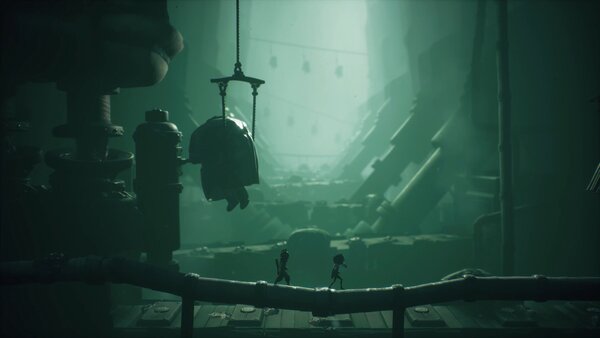
Little Nightmares III released to relatively mixed reviews, critics and fans alike noting the lack of innovation in the series' well-trod formula, its short-but-padded length, and excess of gameplay jank.
None of this was hugely surprising considering that Supermassive Games took over development from franchise creators Tarsier Studios, but what proved more unexpected was the game's utterly ridiculous approach to co-op multiplayer.
Little Nightmares III was the first game in the series to feature co-op gameplay - an enticing prospect for sure, albeit one which was utterly sunk by one design choice.
Upon launch, players were shocked to discover that the game only had online co-op functionality, meaning there was no way for two friends to play local "couch co-op" together.
It felt like a mind-boggling oversight for a game clearly intended to be played with two people - imagine if Split Fiction, for instance, launched without couch co-op.
As a consolation prize, though, it's worth noting that Tarsier's next game - the very Little Nightmares-inspired Reanimal - already has couch co-op confirmed.
17. Mortal Kombat: Legacy Kollection
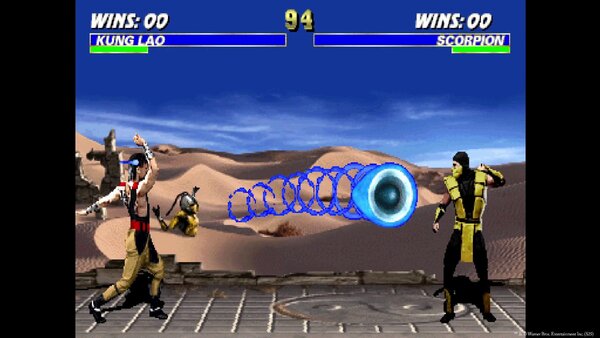
On paper, Mortal Kombat: Legacy Kollection seemed pretty damn great - a value-rich compilation of 11 core Mortal Kombat games produced between 1992 and 2003, with online multiplayer functionality, a bevy of quality-of-life features, and a trove of behind-the-scenes content.
Though generally well-received by critics, the launch day experience was considerably less favourable for punters, who swiftly noted input lag that made online multiplayer basically unplayable, while basic online features like crossplay, private lobbies, and an invite system were absent, and a glitch also caused audio to randomly distort.
This prompted many players to seek refunds for the Kollection, and though developer Digital Eclipse did swiftly release a patch to remedy some of the issues, more than a month after release there is still significant input lag when playing online.
It's infuriating that, for all of the care Digital Eclipse put into packing this anthology with interviews and retrospectives, they flagrantly disregarded the moment-to-moment gameplay basics.
16. Escape from Tarkov
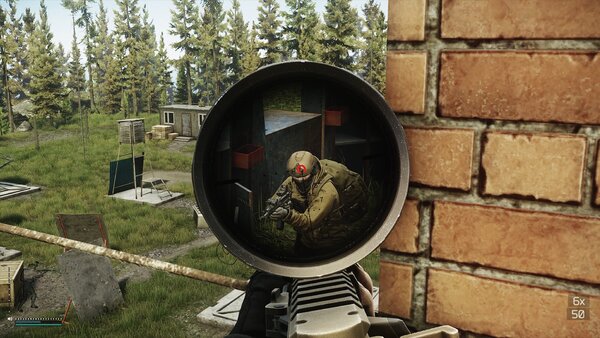
After more than eight years (!) in early access, ultra-popular first-person extraction shooter Escape from Tarkov finally had its 1.0 release back in November, and one might reasonably assume that such a lengthy development cycle positioned Battlestate Games well to deliver a quality end product.
But the game was bombarded with negative reviews out of the gate due to players being unable to actually connect to servers and play at all, and even those who could were faced with hour-long queues to get into a match.
Elsewhere players reported being unable to update the game or progress past the tutorial alongside loading screens lasting upwards of 20 minutes. This is without even getting into the many bugs reported during actual gameplay.
Game director Nikita Buyanov ultimately apologised for the launch woes, and though patches have been released post-launch, to many players it still hardly feels like the sturdy 1.0 version of the game they were promised.
It hasn't harmed Tarkov's popularity too much, though, as it's still regularly pulling in more than 20,000 concurrent players on Steam, even on weekdays.
15. Borderlands 4
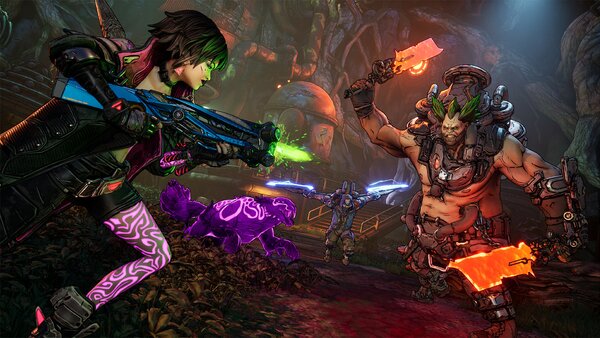
Though Borderlands 4 received largely positive reviews for its actual content, the launch was an abject disaster for general players.
The key issue was that developer Gearbox Software failed to sufficiently optimise the Unreal Engine 5 sequel, ensuring that even players with beefy gaming rigs struggled to run it well at a consistent framerate.
Input lag, stuttering, and crashes were common issues at launch, and amid the controversy, Gearbox CEO Randy Pitchford offered the typically tone-deaf response that Borderlands 4 was a "premium game made for premium gamers."
Considering that Gearbox ultimately launched the game a week earlier than planned over their apparent confidence in its readiness, it's maddening that the vast majority of PC players were unable to get satisfactory performance out of it.
Though Gearbox has released patches to address performance, it's still a major issue for many three months after release, likely contributing to the sequel's "soft" launch sales.
14. Nintendo Switch 2 Welcome Tour
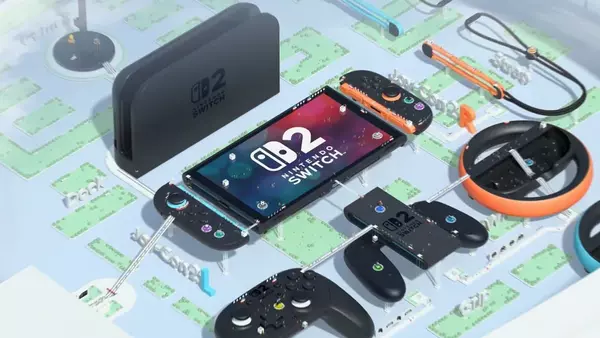
When Nintendo first announced that the Switch 2 would launch alongside a companion mini-game collection, Nintendo Switch 2 Welcome Tour, most folk understandably assumed that it would be a free pack-in with the console.
And so many eyebrows were raised when Nintendo announced that it would actually be a paid $10 title.
$10 may not be much, but considering that the game is effectively a brief whistle-stop tour of the console's hardware features, most saw it as sublimely cheeky of Nintendo to charge money for it.
After all, the PS5 launched with the immensely high-quality free pack-in game Astro’s Playroom, making the asking price for Switch 2 Welcome Tour seem that much more baffling.
Unsurprisingly the game was largely panned by critics as excessively basic, but most opinions of the game's quality were largely drowned out by the outraged discourse over Nintendo daring to charge money for it at all.
13. Monster Hunter Wilds

Though Monster Hunter Wilds was an eye-watering commercial success, selling over eight million units in just three days, it appears that a good portion of those players were left frustrated by what they got.
On launch the PC release was widely dinged for performance issues, where even powerful gaming rigs struggled to run it at a steady clip, many citing poor optimisation work on Capcom's part.
This was compounded by the general perception that the game wasn't nearly visually impressive enough to warrant such performance issues, some even calling it downright ugly.
Performance complaints still abound to this very day, while elsewhere Wilds has been criticised for its lack of content and also its noticeably lowered difficulty compared to Monster Hunter Worlds.
Though critically well received, the player response was considerably more fractious, some citing it as a textbook example of a complacent sequel to a hit game.
And while Wilds was an undeniable sales juggernaut on launch, its commercial performance fell off a cliff in the months that followed, likely due to so much negative word-of-mouth.
12. Killing Floor 3
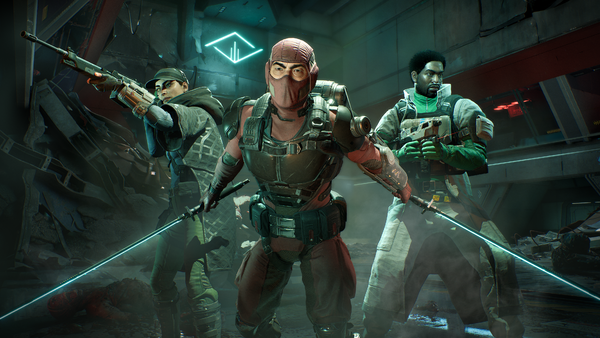
Considering that Killing Floor 3 arrived almost an entire decade after the second entry in the popular FPS franchise, expectations were hella high to say the least.
But the sequel was met with vitriol by fans, citing the lack of maps on launch, changed gameplay systems, missing features, and bugs, ultimately feeling that it lacked the soul that made the first two Killing Floor games so phenomenally popular.
Given how long fans had to wait for a new Killing Floor, what a crushing outcome this was.
Within weeks of the game's release its concurrent player count was overtaken by Killing Floor 2, confirming just how thoroughly the sequel was rejected by the frustrated fanbase.
At the time of press, Killing Floor 3 has barely 10% of the concurrent players that the second game does - as damning an outcome as one could possibly imagine for one of the year's most anticipated shooters.
11. Destiny 2

It's quite the understatement to say that Destiny 2 players have had a love-hate relationship with the game over the last eight years, pinballing between glee and rage depending on what Bungie decided to do with each new patch and expansion.
But player morale is currently at an all-time low following a slew of underwhelming expansions, enough that in early October the game posted its lowest concurrent Steam player count in history - a paltry 16,067 players.
The Edge of Fate expansion released this past July was especially criticised for both its new "Portal" landing page and the introduction of a new currency, Unstable Cores, which proved so wildly unpopular that Bungie ultimately agreed to remove it.
The general sentiment around Destiny 2 has never been bleaker, with player apathy reflected in both its player counts and the utter lack of enthusiasm for each new content drop.
It remains to be seen what will become of Destiny 2 in 2026, but without a major course-correction it's likely going to slow-coast into the abyss of once-great live-service games.
10. Fallout 4 Anniversary Edition

Fallout 4 is one of the most beloved games of the past decade, and so when Bethesda announced an Anniversary Edition remaster to celebrate its 10th birthday, it seemed like an absolute slam dunk.
But corporate greed strikes once again, as many took umbrage with Bethesda charging a stonking $40 to upgrade the base version of Fallout 4 to the "definitive" new Anniversary Edition release.
Beyond that, those who did throw down the cash to buy the game were met with egregious performance issues on launch - hardly a new trick for a Bethesda game, though less expected on a remaster project.
Worse still, the Anniversary Edition ended up breaking many popular mods, resulting in disgruntled players review-bombing it into the Earth's core, where recent reviews have a "Mostly Negative" consensus.
Though Bethesda has released some hotfixes to combat the issues, a month post-release many players are still extremely unhappy with the state of the remaster.
9. Football Manager 26
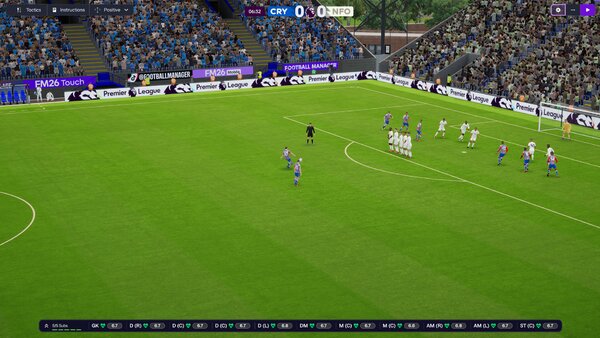
Football Manager fans were shocked when the 2025 edition of the game was cancelled last year. Developer Sports Interactive cited issues with switching over to the Unity engine, prompting them to instead take an extra year to develop the 2026 edition.
It was assumed that the additional year would result in a polished experience, then, but Football Manager 26 ultimately released to "Mostly Negative" reviews on Steam.
Fans cited numerous issues which made the game difficult to play - a confusing and unintuitive new interface, an abundance of bugs, and performance issues out the wazoo, ensuring those shiny new Unity visuals were largely for nought.
Considering that Sports Interactive had two years to cook FM 26 and instead released what's easily the consensus-worst game in the series, it's little surprise that long-time fans are supremely dissatisfied with the state of the franchise.
Needless to say, the 2027 edition needs to be an absolute banger to restore player goodwill.
8. Vampire: The Masquerade - Bloodlines 2

Even the most optimistic of fans surely appreciated the strong prospect that Vampire: The Masquerade - Bloodlines 2 would be a failure.
After all, the long-awaited sequel took 21 years to finally come out, and its strained, lengthy development saw original studio Hardsuit Labs be replaced by The Chinese Room, who have no prior experience in action RPGs, being best known for their walking sims like Dear Esther and Everybody's Gone to the Rapture.
Toss in a number of delays and the initial decision to lock two of the game's most prominent clans behind the Premium Edition - which they later backtracked on - and there was plenty of pre-release hand-wringing.
Ultimately Bloodlines 2 launched to wildly mixed reviews, many concluding that it was a passable action-RPG but a terrible Bloodlines sequel, and confirming the suspicion of many that The Chinese Room were in over their heads with such an ambitious project.
Even though a lot of fans saw this coming, they naturally still hoped for better after more than two decades of waiting, and were left crestfallen by the unsatisfying end product.
7. S.T.A.L.K.E.R.: Legends of the Zone Trilogy
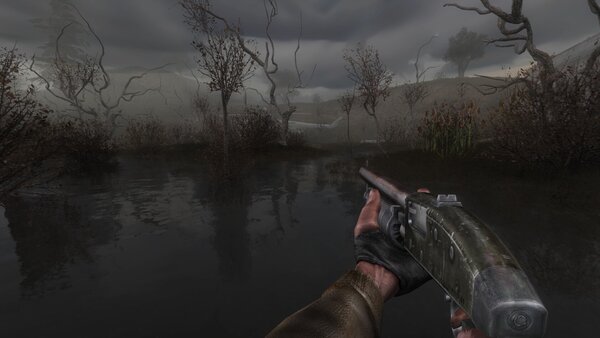
Back in May, developer GSC Game World released a remaster trilogy of the first three games in the S.T.A.L.K.E.R. franchise - Shadow of Chornobyl, Clear Sky, and Call of Prypiat.
Despite the series' intense fandom and clear desire to see these classic games given a new lick of paint, the trilogy was panned by players on launch.
First and foremost, a launch bug caused the game's visuals to appear muddy and blurry, which was later fixed by GSC Game World.
Something that hasn't and presumably won't be changed, however, was the contentious decision to remove all Russian voice acting, localisation, and even Soviet imagery in the game world from the trilogy.
Given that GSC Game World is a Ukrainian studio this isn't the most surprising outcome, and that's absolutely their prerogative as artists working and living in a Russia-invaded country, though it did nevertheless frustrate some players who felt that it detracted from the trilogy's original aesthetic and overall atmosphere.
Whether you agree with that or not, the complaints about the trilogy's technical presentation were pretty much universal.
6. Wuchang: Fallen Feathers
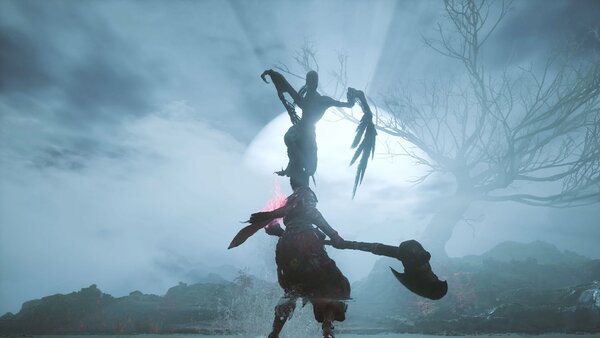
Though Wuchang: Fallen Feathers was largely well reviewed, the wider launch was marred by - you guessed it - performance issues, with this being yet another Unreal Engine 5 game that had no mercy whatsoever for more modest gaming PCs.
As such, Wuchang launched to "Mostly Negative" Steam reviews, though developer Leenzee did at least iron most of these issues out post-release.
What's proven more contentious, though, is the decision to "censor" the game following backlash to certain content in mainland China.
Several weeks after the game launched, Leenzee released a controversial patch which now made it impossible to kill certain bosses based on real people who actually existed in the Ming Dynasty.
Pre-patch these characters would die after being defeated like any other boss, but in response to national backlash, the decision was made to now have the bosses in question faint instead.
Furthermore, some of their dialogue was altered to ensure the plot still made sense without them dying.
The change was widely decried by players who criticised Leenzee for kowtowing to nationalist pressure rather than sticking to their original vision for the game.
5. Tomb Raider IV-VI Remastered

After Aspyr did a decent enough job remastering the first three Tomb Raider games, few were expecting major issues with the follow-up collection for the next three entries in the series.
But shortly after the launch of Tomb Raider IV-VI Remastered, some fans noted that some of the game's French dialogue sounded suspiciously stiff and robotic, prompting accusations that Aspyr had used generative AI to replicate the voices of Françoise Cadol and Lene Bastos - the French and Brazilian voice actors for Lara Croft in the games.
Cadol ended up issuing a cease-and-desist notice to Aspyr, prompting the studio to offer a formal apology to the voice actors and subsequently release a patch to removal all AI-generative lines of dialogue from the game.
The use of gen AI slop nevertheless killed interest in the remaster for even many die-hard Tomb Raider fans, who were left irate that such artless practises seeped their way into their beloved franchise.
4. Civilization VII
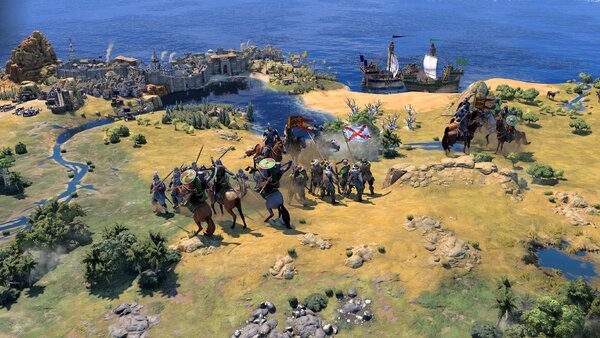
Expectations were naturally high for Civilization VII, considering both the near-decade-long wait for a new entry and how consistently well-received every prior mainline installment has been.
But Civ VII was sadly the first game in the series to endure a more lukewarm launch reception, for though its presentation and overhauled diplomacy system were praised, many found the sequel lacking in key areas.
A major sticking point was the game's user interface, which many found so clunky and awkward to navigate as to feel unfinished, while elsewhere there were complaints that Firaxis had excessively simplified gameplay in an attempt to make the game more broadly appealing.
The decision to divide games into three ages was especially criticised for fragmenting gameplay, and there was enough overall dissatisfaction with the game that its Steam player count was surpassed by the two previous games within two months of launch.
Unsurprisingly as a result of all this, initial sales were later reported to be slow.
3. Tony Hawk's Pro Skater 3 + 4

Though the Tony Hawk's Pro Skater 3 + 4 remake collection received largely decent reviews, the general consensus was that it fell short of the polish and care afforded to the previous 1 + 2 collection.
There were two key issues which raised the hackles of many fans.
Firstly, there was the decision to remove the free roam-style career mode from Pro Skater 4, replacing it instead with the more conventional timed runs from Pro Skater 3.
And there's the fact that most of the original songs have been replaced with new ones, and considering the soundtrack is such a pivotal part of the personality of any Tony Hawk's Pro Skater game, it left a huge void in its wake.
Hawk himself responded to the soundtrack criticisms by revealing that he had personal input on picking a new selection of tunes to better reflect the modern era - a statement that didn't exactly pacify those upset by the omissions.
2. Mindseye
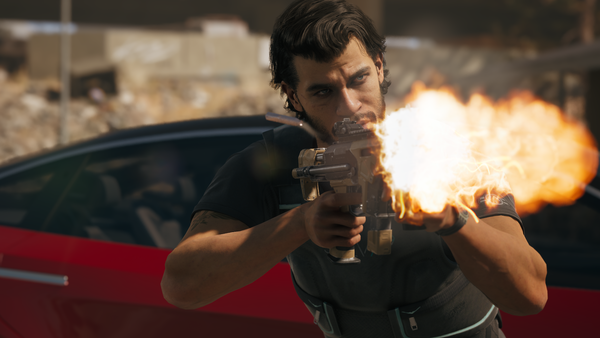
No video game this year has had a more embarrassing, calamitous launch than MindsEye - a new sci-fi action sandbox game directed by Grand Theft Auto producer Leslie Benzies.
Even though many were suspicious that the AAA game's marketing campaign didn't really kick into gear until mere weeks before release, there was still a fair expectation that MindsEye would be merely mediocre rather than genuinely terrible.
But MindsEye was panned by critics and players alike for almost every aspect of its content, and to make matters worse, it was also rife with bugs and performance issues on launch.
Worse still, employees of developer Build a Rocket Boy were even reported asking people to stop streaming the game on release day, seemingly in a last ditch attempt to prevent potential customers from discovering just how bad the game was.
Players angry at the effectively broken launch requested refunds in droves, ensuring that within two weeks of MindsEye's release, the financially imperiled Build a Rocket Boy began the redundancy process.
Employees at the company consequently criticised the studio's poor management and toxic workplace culture, and the outfit was later sued by the Independent Workers' Union of Great Britain for mishandling layoffs.
Needless to say, none of this did a single thing to endear anyone to this soulless dud of a game.
1. MultiVersus

Few games have had a more predictably calamitous failure than MultiVersus - a free-to-play fighting game in the style of Super Smash Bros. featuring Warner Bros. properties.
And honestly, it wasn't bad at all for a free game, but Warner Bros. Games categorically bungled its rollout in a way that thoroughly pissed off those who actually dug it.
A lengthy open beta period ran from July 2022 to June 2023, and considering how polished this version of MultiVersus was, many were surprised when the publisher promptly took the game offline for almost an entire year ahead its 1.0 launch.
At this time, many opined that Warner Bros. shot themselves in the foot by pulling the game rather than simply continuing to iterate on it while keeping it live.
And this was proven true, as after a brief surge in new and returning players upon its May 2024 relaunch, the player count quickly cratered to disastrous levels, with the game ultimately being shut down just a year later.
It was a woefully predictable result for anyone following the game's bizarre development, and a heartbreaking one for anyone who thought that Warner Bros. actually had something here.