20 Ridiculous Reasons Video Games Were Cancelled
The deeply bizarre and stupid reasons you'll never get to play these games.
Games development is one hell of a precarious business, enough that bringing any game to market - big or small, good or bad - is basically nothing short of a miracle.
And it's a process that's only getting tougher, costlier, and longer with each passing year, as evidenced by the increasing number of AAA games which take close to a decade to reach our screens.
And of course, there are dozens and dozens of games cancelled every single year too, from majorly high-profile, much-hyped titles to those which the general public wasn't ever supposed to know about.
While games are often cancelled for reasons like changing market trends, publisher bankruptcy, and so on, sometimes the rationale gets a little more puzzling, and you have to wonder whether those in charge really thought much about the business decisions they were making.
These 20 games were all cancelled for utterly baffling reasons, from foreseeable technical issues to cowardly publisher politicking, childish in-fighting, and even a Twitter beef.
Despite the clear potential all of these games had, they sadly ended up being scrapped for totally head-scratching reasons...
20. An Open-World Spy Game "Wouldn't Work" - Agent

Agent was a Cold War-set stealth-action game from Rockstar Games that was formally announced in June 2009, though despite considerable interest from fans of Rockstar's AAA back catalogue, the publisher went radio silent on the project in the years that followed.
A trademark renewal in 2016 triggered rumours of an imminent re-reveal, though it was later allowed to lapse and Rockstar then stopped maintaining the official Agent website.
By 2023, a former technical director at Rockstar North more-or-less confirmed that Agent had been cancelled years prior, partly due to a desire to focus resources on Grand Theft Auto V.
Back but in October we got a more substantive update, when Rockstar co-founder Dan Houser revealed that Agent went through numerous failed iterations before they surmised it wasn't possible to make a "good, open-world spy game."
While Houser and co. clearly know a thing or two about games development, it was nevertheless an unsatisfying answer to fans, because of course there are many, many players who would love to play an open-world game centered around espionage.
To say that it just couldn't work seems a bit defeatist.
19. The Developers Chose The Wrong Engine - Batman: The Dark Knight
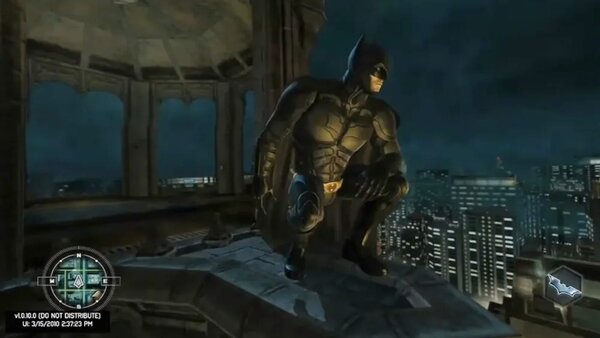
It made all the sense in the world to develop a game based on Christopher Nolan's hit Batman movie The Dark Knight, and indeed, Pandemic Studios began making the game before Nolan's film had even started shooting.
Rather than a linear movie tie-in, it was intended to be an ambitious open-world game - the first of its kind featuring the Caped Crusader, in fact - with the film's central cast all locked in to lend their voices.
The big issue was Pandemic's insistence that they use their own bespoke engine for open-world games, Odin. This wasn't decided until many assets for the game had already been created, and importing them into Odin was a technical nightmare.
In turn this caused huge delays, all while EA pushed for the game to release by December 2008, in time for the movie's home video release.
By October of that year, it was painfully clear the game wouldn't be ready, and so EA pulled the plug.
While there's obviously a vested interest here in releasing a movie tie-in in timely fashion, the operating issue was the commitment to using a problematic in-house engine rather than a more popular industry mainstay.
18. A Twitter Argument - Fez 2
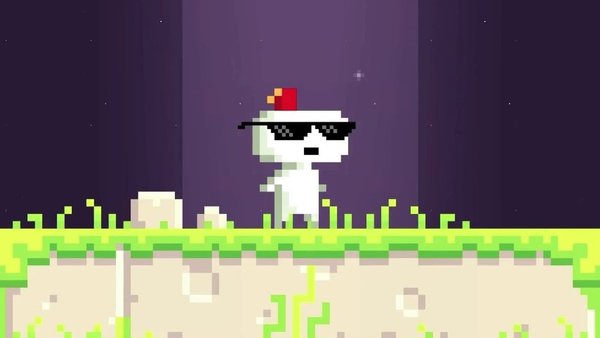
2012's Fez was one of the cornerstone titles in the indie game revolution of the 2010s, with designer Phil Fish becoming something of a cult figure thanks to his appearance in the brilliant 2012 documentary Indie Game: The Movie.
Fez's enormous success led Fish to announce a sequel at E3 2013, but a mere month later the game was abruptly cancelled following a Twitter argument between Fish and games journalist Marcus Beer.
Fish concluded the exchange by expressing his disdain for the gaming industry's negativity, before announcing both the cancellation of Fez 2 and his own exit from the industry as a whole.
This was a decision Fish made unliterally without first informing his employees at Polytron Corporation, and the suddenness of the cancellation sent shockwaves throughout the industry.
Fish did later work on the 2016 game SuperHyperCube, but has largely stayed outside of games development for the past decade, and in a 2023 interview admitted that he had little enthusiasm for Fez 2, with the Twitter beef being an easy "out" for him to nix the game.
A developer dropping one of the most acclaimed games of their era, swiftly cancelling the sequel and then peacing out is virtually unheard of, but if Fish is happy with the work he produced and the money he made - as the recent interview suggests he is - then good for him.
17. The Marketing Team Didn't Know How To Sell It - TimeSplitters 4

After the release of TimeSplitters: Future Perfect in 2005, it was simply assumed that the fourth entry into the hugely acclaimed FPS franchise would come along within a few short years.
However, TimeSplitters 4 was put on hold after developer Free Radical Design was bought out by Crytek in 2009, and the dire response to the developer's previous game, Haze, was also said to have dented publisher interest in a new TimeSplitters.
In the years that followed the game was considered shelved, and in July 2013 franchise co-creator Steve Ellis revealed that a big sticking point was the lack of a single marketable protagonist, given the series' focus on more than 100 playable characters.
Free Radical's marketing partners simply didn't know how to sell a new TimeSplitters without an iconic hero to put on the box.
But this really feels like less an indictment of the game itself than the marketing team's patent lack of imagination.
Is it really that hard to sell a long-awaited entry into one of the most beloved multiplayer shooter series of all time? In the age of the hero shooter no less?
Though an attempt to resurrect TimeSplitters 4 was made in 2018, this imploded in 2023 when Free Radical was shut down by its parent company, Embracer Group.
16. "Creative Differences" Between Konami & Hideo Kojima - Silent Hills

One of the most maddening gaming "what-ifs" of all time is Silent Hills, the reboot of Konami's hit survival horror franchise as was set to be directed by the dream team of Hideo Kojima and Guillermo del Toro, with Norman Reedus playing the protagonist.
The game was revealed at the end of the iconic P.T. demo released in 2014, and considering the franchise had been in a funk for many years by that point, Kojima seemed like just the visionary talent to bring it back to prominence.
But Silent Hills was ultimately killed in April 2015, reportedly due to conflict between Konami and Kojima during the development of Metal Gear Solid V: The Phantom Pain, which ultimately caused him to part ways with the publisher in October of that year.
Though we don't know the full details of the spat, the fact that Konami spoiled one of its most fruitful creative and business partnerships is absolutely infuriating, to say nothing of the huge amounts of money left on the table by letting this project go.
15. It Violated Nintendo's "Code of Honour" - Super Mario Spikers
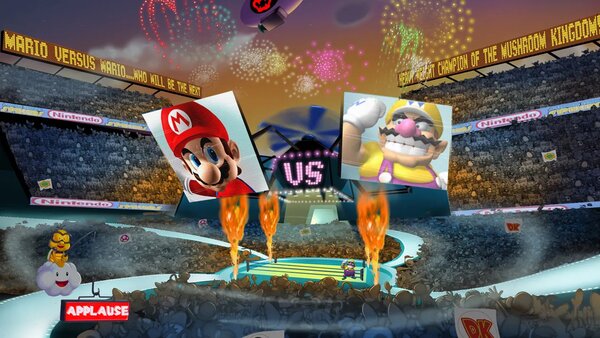
Super Mario Spikers was a new sports-themed Mario game from Next Level Games, the developers behind Super Mario Strikers and sequels Mario Strikers Charged and Mario Strikers: Battle League.
While the Strikers games were based on football, Spikers was intended to be an enticing hybrid of volleyball and wrestling, with a format taking the guise of a game show.
Nintendo greenlit the bold concept, and though Next Level got it to the prototyping stage, Nintendo ultimately pulled the plug after seeing how violent it was.
Furthermore, Nintendo apparently felt that the content violated their own "code of honour" as a video game publisher.
Now, even accepting Nintendo as the small-c-conservative company that they are, that seems excessively cautious.
From the few slivers of leaked gameplay we've seen of Super Mario Spikers, it doesn't seem massively more violent than what you'd expect to see in, say, Super Smash Bros.
14. The Original Game Was Too Popular - Among Us 2

The dream scenario for pretty much any developer is to produce a game that's successful enough to launch a franchise, and though it released to little initial attention in 2018, social deduction game Among Us became an absolute phenomenon in 2020 as players en masse sheltered in place during the pandemic.
The game was enough of a hit that developer Innersloth announced Among Us 2 in August 2020, yet just a month later they backtracked on this, stating a desire to continue improving the original game instead.
And so, Among Us 2 was effectively scrapped, with all of its planned features instead being put into the existing title.
A publisher not exploiting a hit game to the full extent of their capability is virtually unheard of in the industry, but there's also something to be said for not splitting the player-base between two games, which could so easily have killed the cash cow in short order.
And while Among Us isn't nearly as popular as it used to be, it's generated more than $100 million in revenue for Innersloth - a figure they surely could've never imagined back in 2018.
13. The Lack Of An Online Mode - Eight Days

If you thought that publishers cancelling single-player games without a monetisable multiplayer component was a new phenomenon, it sure ain't.
Case in point we have Eight Days, the frankly fantastic looking action game from Sony's London Studio which was first announced at E3 2006.
Even though the reveal footage looked so good it left many questioning its authenticity as true in-engine gameplay, there was considerable interest in the title between both its high-octane set-pieces and game map spanning eight American states.
In June 2008, however, Sony abruptly cancelled the game, with SCE President Shuhei Yoshida later admitting that a major reason for its canning was its lack of an online mode.
With Sony beginning to move towards producing more online-supported games at the time, Eight Days' strict single-player focus flew in the face of that.
It seems like an odd excuse considering the number of single-player focused AAA games Sony has released in the 17 years since, but such was their prevailing logic at the time.
12. The U.S. Political Climate - Assassin's Creed: Civil War
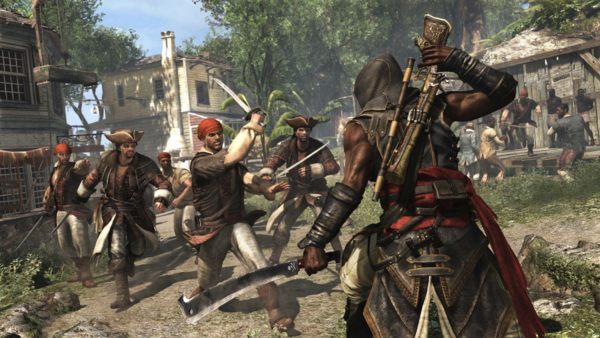
Earlier this year, it was reported that a bold new entry into the Assassin's Creed franchise had been cancelled.
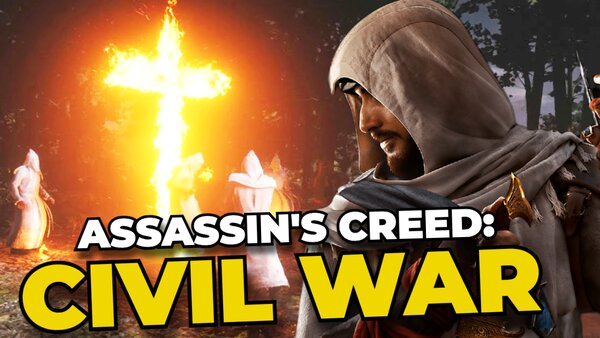
This game would've been set in post-Civil War America in the 1860s and 1870s, with players taking control of a former Black slave who returns to the South to fight for justice and, eventually, confront the Ku Klux Klan.
However, this installment was ultimately cancelled for two apparent reasons - the backlash to Yasuke, the African samurai protagonist of the recent Assassin's Creed Shadows, and the tense political climate in the United States.
One source simply told Gamefile, "Too political in a country too unstable."
While it's hardly surprising to see a AAA publisher make a politically conservative decision, considering that this sounded like the most interesting setup for an Assassin's Creed game in many years, if not ever, it's a damn shame that they didn't have the courage of their convictions and follow the idea through to release.
Ultimately Ubisoft bent the knee to the worst people in the Assassin's Creed fandom, and we were potentially robbed of something very special as a result.
11. EA Found It "Too Violent" - Thrill Kill
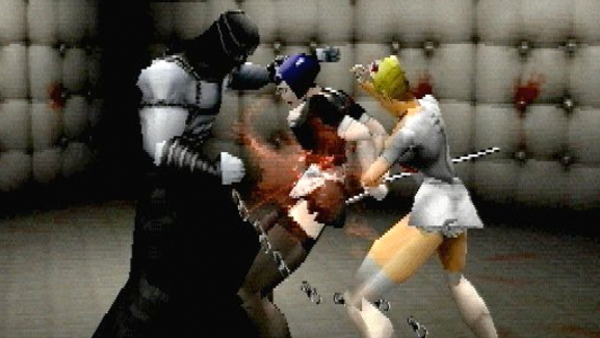
Thrill Kill was an ultra-violent fighting game developed by Paradox Development for the PlayStation, and was originally scheduled to be released by Virgin Interactive in October 1998.
However, after EA acquired part of Virgin's business operations, they in turn gained the publishing rights to Thrill Kill - a title they had little interest in actually releasing.
This was reportedly due to EA's desire to avoid publishing violent content which the media could easily use to stigmatise video games, and also their political connections to Senator Joe Lieberman, a staunch campaigner against violent games.
But EA not only refused to release the game, they also refused to sell it to anyone else, meaning that despite Thrill Kill being feature-complete, it was formally cancelled and has never been officially released.
Pirate copies of the game nevertheless found their way online shortly thereafter, and EA ultimately repurposed the gameplay for the 1999 game Wu-Tang: Shaolin Style.
All the same, EA's pearl-clutching over video game violence feels a little rich given that they later profited handsomely off extremely violent games like Dead Space, Dante's Inferno, Bulletstorm, and Battlefield - the latter being a franchise entirely centered around the glorification of brutal warfare.
At least sell the game's rights off to someone else, dammit.
10. The First Game's Mixed Critical Response - Days Gone

It was extremely clear that Sony released 2019's open world action game Days Gone with the intent of launching a new franchise, but in 2021 it was revealed that Sony rejected developer Bend Studio's pitch for a sequel, largely due to the mixed critical response to the first game.
Sony has proven they care deeply about the critical perception of their first-party titles, and while Days Gone's PS4 Metacritic score of 71 isn't great, it's also fair to say that Sony Bend massively improved the game with post-launch patches.
More to the point, Days Gone sold 7.32 million copies on PS4 alone, just a sliver below Bloodborne's 7.6 million, and that's without even counting its PC release or the recent PS5 remaster.
Days Gone is far from a perfect game, but to toss away a potentially lucrative franchise because of its so-so Metascore, when the game is in a much better state today and has sold very well despite the reviews, seems absolutely ludicrous.
9. To Focus On A Tron Game Instead - Pirates of the Caribbean: Armada of the Damned

Pirates of the Caribbean: Armada of the Damned was an open-world action-RPG based on Disney's hit blockbuster movie IP, and set roughly a decade before the events of the first film, The Curse of the Black Pearl, with Propaganda Games (2008's Turok) leading development.
The game was formally revealed at E3 2009 where early press previews were largely positive, and by late 2010 the game was said to be feature-complete, with a release intended for early 2011.
However, in October 2010, Disney announced a large restructuring initiative which would see more than 100 of Propaganda's staff laid off, with the remaining team put to work finishing up Tron: Evolution, another game Propaganda was working on at the time.
Because the movie Tron: Legacy was releasing that December, Disney desperately wanted Evolution to release alongside it for maximum brand synergy, but it came at the cost of Armada of the Damned's cancellation.
To bin a basically-finished game based on a franchise of hugely successful movies and then shift focus to a game based on a film series with limited cult appeal, was just a massive own goal by Disney.
Unsurprisingly Tron: Legacy fell short of Disney's box office targets while Tron: Evolution was neither a critical nor commercial success, making it all feel for nought.
8. The Developer's Wife Drunkenly Destroyed His Computer - Parasol Stars (Commodore 64 Port)
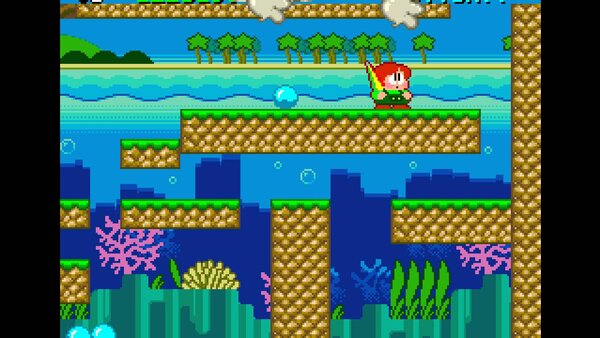
Parasol Stars is the third installment in the Bubble Bobble platformer franchise and was originally developed for the TurboGrafx-16, before ports were created for the Amiga, Atari ST, Game Boy, and NES.
A port was also planned for the Commodore 64, but publisher Ocean Software originally claimed that it had been cancelled because the port developer's computer was stolen.
However, it later transpired that this wasn't quite the case - rather, the freelancer working on the port had his computer destroyed by his alcoholic wife in a drunken rage.
Worse still, she also destroyed the backups of the port, and presumably not wanting to spend more time and money on restarting the port's development, Ocean simply cancelled it.
The online nature of modern games development thankfully makes such a scenario incredibly unlikely today, but back in the early 1990s the security of a video game mid-production was decidedly more precarious, especially where freelancers working from home were concerned.
But even so, losing a game to a drunken rampage is... something else alright.
7. Sony Overestimated The Live Service Market - All These Live Service Games

Though the PS5 is a fantastic piece of hardware, this generation has been an immensely frustrating one for Sony fans, considering how much time, money, and energy they've wasted chasing the live service gold rush.
In early 2022, barely a year into the PS5's life cycle, Sony announced plans to release a dozen live service games by 2025, but this goal was later halved to just six amid developmental turmoil.
Fast forward to late 2025, and Sony has since cancelled eight of its initial dozen live service titles, and only one - Helldivers 2 - has actually had a successful launch,
Some of the more notable cancellations include The Last of Us multiplayer game, Concord (which was shuttered mere weeks after release), and live service games based on God of War, Spider-Man, and Twisted Metal.
It's painfully clear that Sony has vastly overestimated the demand for and underestimated the time-money cost of live service games.
After all, most players tend to find just one or two games-as-a-service time sinks and stick with them - there simply isn't a player-base large enough to justify the expense of these titles.
And it was thunderously obvious to many when Sony first announced this initiative, ensuring the PS5 generation has been a woefully disappointing one for anyone expecting a steady drip-feed of first-party PS5 exclusives.
6. The Two Lead Developers Got Sick From Crunch - Sonic X-Treme

Ultimately the only thing "X-Treme" about Sega's first attempt at a 3D Sonic game was the utterly inhumane conditions which the key team members suffered through.
Sonic X-Treme began development in 1994, with Sega setting a December 1996 release deadline - a tight ask considering the trickiness of the Sega Saturn's hardware and the more complex nature of 3D games development.
Sensing the pressure, programmer Chris Coffin ultimately cancelled his apartment lease and moved into the development office, working up to 20 hours per day to try and finish the game.
By the summer of 1996, Coffin contracted severe pneumonia as a result of being overworked, while designer Chris Senn lost so much weight through exhaustion a doctor told him he could die within six months.
This hellish predicament dragged on until October 1996, when faced with the two most important team members out of commission, producer Mike Wallis finally pulled the plug.
And it's utterly absurd that the situation got this dire at all - the Christmas 1996 deadline clearly wasn't achievable, at which point the producers and Sega should've simply accepted that Sonic X-Treme would release in 1997 instead with its dev team happy and healthy.
5. The Olympics Explored NFTs & Esports Instead - Mario & Sonic at the Olympic Games Paris 2024
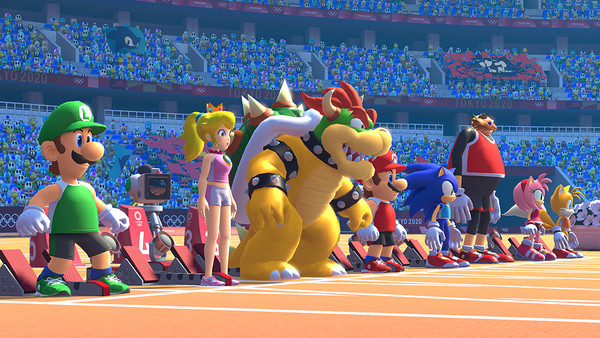
Mario & Sonic at the Olympic Games is one of those mainstay franchise that most assumed would just keep chugging along in perpetuity - a fun sports-themed mash-up starring two of the medium's most iconic platformer mascots.
But Mario & Sonic at the Olympic Games Tokyo 2020 actually ended up being the final game in the series, as a title expected to coincide with the 2024 Summer Olympics in Paris was quietly scrapped.
As the Olympics were getting underway, it was reported that the International Olympics Committee decided not to renew its license partnership with Sega and Nintendo, instead embarking on a new deal with nWay to produce content centered around non-fungible tokens (NFTs) and esports.
Basically, the IOC thought that they could make more money licensing the Olympics through other avenues, which while perhaps prudent from a financial perspective, does feel like a bit of a miserably soulless, corporate reason to put the kibosh on a classic franchise that lasted almost 20 years.
Was it really not possible to do the NFT nonsense and still make these games?
4. It Didn't Have Enough Fan Involvement - Mega Man Legends 3
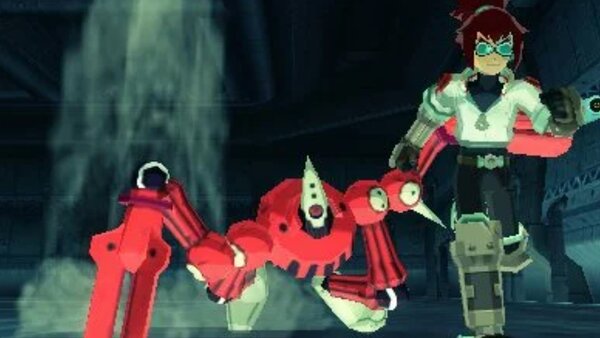
Capcom announced that Mega Man Legends 3 was in the works for the Nintendo 3DS in September 2010, and the development team expressed a desire to work closely with fans to ensure they delivered as satisfying a sequel as possible.
Capcom even invited fans to send in their own character designs for potential use in the game, and opened a "Development Room" - a website where fans could actively participate in the game's production by suggesting ideas.
But in July 2011, Mega Man Legends 3 was suddenly cancelled, with Capcom UK's Twitter account bluntly claiming that it was due to the lack of fan involvement in helping bring the game to fruition.
Capcom later apologised for the lack of tact in the tweets but nevertheless confirmed that they expected more fan participation in the Development Rooms, and took it as a sign that the interest in the game just wasn't there.
Fans were baffled enough that some created a Facebook group to prove their enthusiastic numbers, which by 2012 passed its goal of 100,000 members.
Capcom has never moved forward with Mega Man Legends 3, though, no matter that Mega Man has one of the loyalest fanbases of any IP owned by the publisher.
3. The Atrocious Response To WWE 2K20 (And The Pandemic) - WWE 2K21

WWE-branded video games have been all over the map quality-wise since forever, and the WWE 2K franchise is certainly no exception.
Since the brand launched with WWE 2K14, the series has been defined by promising gameplay undermined by outrageous amounts of bugs and a general lack of technical polish.
For years many fans suggested that 2K should take a "fallow year" to iron out the engine's kinks, but this was predictably ignored in favour of profit, quality be-damned.
Given that the WWE 2K games continued to sell well to an insatiable player-base, there wasn't much of an incentive for them to fix things.
But the wheels well and truly came off when WWE 2K20 was released in October 2019 to universal disdain from critics and players alike, with gameplay so thoroughly compromised by bugs as to be flat-out broken.
This was the first game in the WWE 2K series developed solely by Visual Concepts following the departure of lead studio Yuke's, and this failure made it clear 2K should've taken a year off for the studio change-over.
While WWE 2K20 was critically panned and also underperformed commercially, it wasn't until the pandemic hit in early 2020 that 2K finally admitted that the immediate development of a follow-up was a fool's errand.
As such, they announced they would be cancelling WWE 2K21, instead taking an extra year to make WWE 2K22.
It shouldn't have taken one majorly embarrassing installment and a global pandemic for 2K to finally agree to take a year off, but it did.
Thankfully the four WWE 2K games released since have all ranked among the series' best reviewed, proving the gap year was well worth it to get the technical fundamentals in place.
2. It Was "Too Linear" For EA - Project Ragtag

Project Ragtag was a third-person Star Wars-themed AAA action-adventure game from Dead Space developer Visceral Games - a story-driven heist-centric romp set following the events of Star Wars IV: A New Hope.
Even more promisingly, the game was being directed by Uncharted co-creator Amy Hennig, implying it would offer a high level of cinematic polish.
Project Ragtag was publicly unveiled in 2016 when it was already three years into development, though EA apparently began to lose interest in the project following the colossal commercial success of 2015's multiplayer-focused Star Wars Battlefront.
Resources were then siphoned away from Ragtag to work on Battlefront II, until Visceral itself was closed in late 2017.
At this point Ragtag was handed off to EA Vancouver, where Hennig's original version of the game was effectively scrapped, with a new version intended to be a less-linear, open-world title, per EA's declining interest in linear single-player games.
However, by early 2019 this iteration was also cancelled, as EA shifted to focus on the development of Star Wars Jedi: Fallen Order - a cinematic single-player game with a Metroidvania-esque level structure.
Much as publishers want to chase the open-world dragon for every last cent, there is absolutely still an audience for more linear narrative-led games that don't demand 50 hours of the player's time.
To see this frankly awesome-looking game canned because it wasn't following yawn-inducing trends was hugely depressing.
1. The Devs Blew The Budget On Booze & Strippers - Ant Simulator

Ant Simulator was a game developed by Erica Tereshinski, who managed to raise $4,400 in development funds through Kickstarter. Conceptually the game seemed rock solid - a simulation game centered around ants, an idea just about everyone can instantly understand.
However, in early 2016 Tereshinski claimed that her two business partners, Tyler Monce and Devon Staley, had spent the crowdfunded money and other development money having a jolly old time with booze, strippers, and restaurants.
The pair refuted the claims and considered legal action against Tereshinski, after which the matter went quiet and hasn't received any updates from any party involved.
The operative outcome was that Ant Simulator was summarily cancelled, with generous crowdfunders having quite possibly bankrolled some lavish nights out for a couple of dudes rather than funding the game they were interested in.
There's the obvious risk with crowdfunding that the end product may not be up to standards or even get released at all, and the legacy of Ant Simulator is a warning that the funds could also end up being possibly-embezzled instead.