20 Video Game Clones Better Than The Original
It's hard to hear but Pokemon is no longer the go-to animal-taming title.

All video games, grand and small, must be built on the foundations of an earlier model. Every platformer owes their existence to Super Mario. If it wasn't for Dragon Quest, role-players like Final Fantasy and Pokemon may not exist.
It's fine to draw inspiration from another game, but things get messy when developers flat-out steal the style, gameplay, or mechanics of a recognised property.
Although rip-offs can lead to legal trouble, it's not always a concern. After all, trailblazers like Overwatch and Gran Turismo left such an incontrovertible impact on the gaming world, it seemed unfeasible for the imitators to compete.
But as this list proves, it has happened time and time again. Even though some IPs were regarded as untouchable at one point, a similar title came along and stole their thunder, turning the once unstoppable force into a relic in the blink of an eye. In fact, some clones turned out so well, casual gamers mightn't realise they borrowed their whole shtick from another brand.
These 20 entries score zero points for originality, but it doesn't change the fact they've outperformed their predecessors.
20. Absolum (Streets Of Rage)
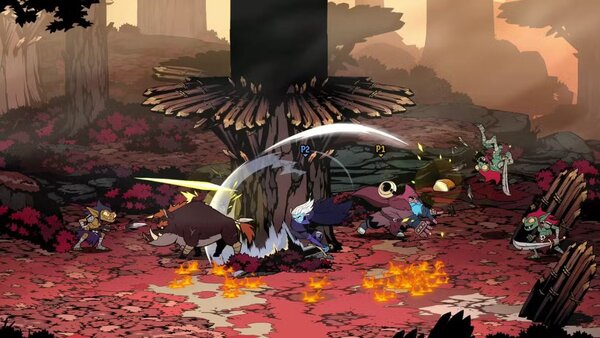
In 2020, Guard Crush Games and Dotemu launched Streets of Rage 4, reviving one of the most beloved beat 'em ups of the '90s. The long-awaited sequel had tight combat, hand-drawn art, co-op play, and modernised mechanics, while staying true to its roots. Basically, it felt like SOR4 was as good as beat 'em ups could get.
But this year, the same developers did one better with a brand new property called Absolum. Rather than following a linear path, the fantasy side-scroller incorporates branching paths, maximising replayablity. Each playable character can be upgraded and modified, so no two runs feel the same.
The D&D-themed setting provides more environmental variety than Streets of Rage's urban streets. Enemies have more diversity, since you're battling goblins, ogres, and monsters of all shapes and sizes rather than a never-ending wave of goons. The fighting system has more range, since you can unleash magical counters, elemental powers, complex parrying techniques, as well as standard combat.
Even though beat 'em up fanatics are pumped for Dotemu's next project, Marvel Cosmic Invasion, it's going to be tough to surpass Absolum.
19. Fast Fusion (F-Zero + Wipeout)
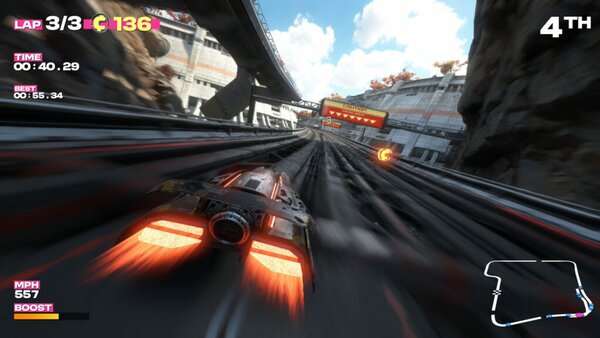
At a glance, it’s obvious the Fast series was influenced by futuristic racers, like F-Zero and Wipeout.
However, Shin’en’s supersonic saga stands out amongst its peers, due to its phase-shifting mechanic. Each vehicle can switch polarity, normally represented by orange and blue colours. Players need to match the polarity with boost pads to keep up with other drivers. If players mistime the polarity, they’ll end up slowing to a crawl. This simple mechanic adds a strategic aspect, since players need to time when to activate the polarity while also veering around rivals and obstacles.
Even though Fast has been around for over a decade, it’s only starting to get recognition, thanks to Fast Fusion, which was released for the Switch and Switch 2 this year. Running up to 4K resolution at 60fs, Fusion has never looked sharper or ran more smoothly.
Vehicles now have antigravity properties, allowing for alternate routes or shortcuts. Any two vehicles can be fused together, creating hundreds of potential combos, allowing players to devise the machine that best suits them.
Though Fast was once lagging in the back, Fusion has allowed the property to zoom to first place.
18. Paladins (Overwatch)

Though Overwatch rip-offs were a dime a dozen in the late 2010s, Paladins: Champions of the Realm managed to climb to the top of the pile.
It doesn't have as much content, but Hi-Rez Studio's hero shooter never felt lacking, since players can personalise their champions in depth. Before each match, players select from three talents that alter their champion's abilities. This encourages player to experiment with different combinations, keeping things fresh and compelling them to constantly adjust their strategy. Additionally, players can create custom card loadouts, enhancing healing, mobility, or damage resistance. Above all else, Paladins doesn't cost a penny.
It wasn't spectacular at first, but Paladins kept improving since it was constantly updated with new modes and content. Before long, nearly every factor had been tweaked to near perfection. (These expansions were also free of charge.)
Around the same time, the substandard Overwatch 2 literally replaced Overwatch, effectively killing off the game responsible for revolutionising live-service shooters in the first place. The minds behind Overwatch haven't done much to accommodate the fanbase's demands, letting Paladins slowly but surely take the mantle.
17. Blazing Chrome (Contra)

As is often the way, Contra had a rough transition to 3D, causing the bullet-hell series' quality and reputation to wane. Even when Contra went back to its side-scrolling roots, the run-and-gun was a pale imitation of what it once was. Although WayForward tried to rejuvenate the property with a remake of the original in 2022, Contra: Operation Galuga failed to capture the spark of its predecessor.
Blazing Chrome, on the other hand, matches the franchise in quality and style so flawlessly, the gun-toting gem could easily be mistaken as a genuine Contra game. While experiencing the crisp pixel art, tight controls, and killer chip-tunes, it's clear the developers at JoyMaster poured their heart and soul into this project.
Since Contra was infamous for its difficulty, it's reassuring (or trauma-inducing) to learn Blazing Chrome doesn't skimp on the challenge whatsoever. With insta-kill pits galore, an endless wave of bots coming from every direction, and screen-filling bosses to contend with, only hardcore players can complete this love letter to Konami's iconic saga. With that said, Contra veterans wouldn't want it any other way.
16. Resident Evil (Alone In The Dark)
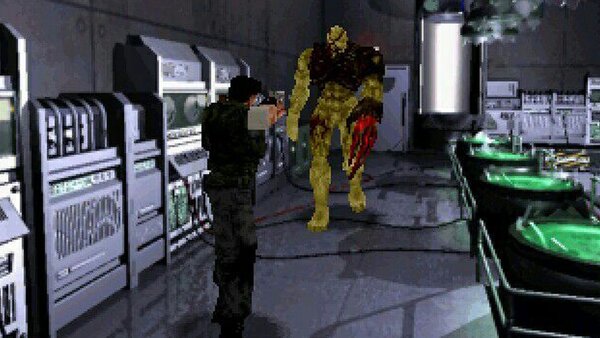
In 1992, Infogames released Alone in the Dark for the MS-DOS, which takes place in a spooky mansion. Identified as the first 3D survival horror, Alone in the Dark is responsible for pioneering an entire genre.
Which is why it's painful to learn the game itself isn't particularly great. Now, that's not suggesting Alone in the Dark was poorly put together. Despite oozing atmosphere and creativity, it was let down by the hardware limitations of the time.
As such, it wasn't difficult for Resident Evil to eclipse it. Not only did Capcom's zombie extravaganza mirror the survival horror of Alone in the Dark, it borrowed many basic elements, including fixed camera angles, pre-rendered backgrounds, limited resources, and inventory management. (It even implemented the terrible voice-acting.)
Alone in the Dark has attempted a comeback numerous times, including last year. Despite bringing the genre into the spotlight, the supernatural franchise keeps failing to live up to expectations. Meanwhile, Resident Evil is going stronger than ever, with a new instalment releasing next year.
Although rumours of the Resident Evil 1 remake proved to be false, the disappointment from the fanbase further highlights the lasting legacy the original instalment still has 30 years later.
15. Celeste (Super Meat Boy)
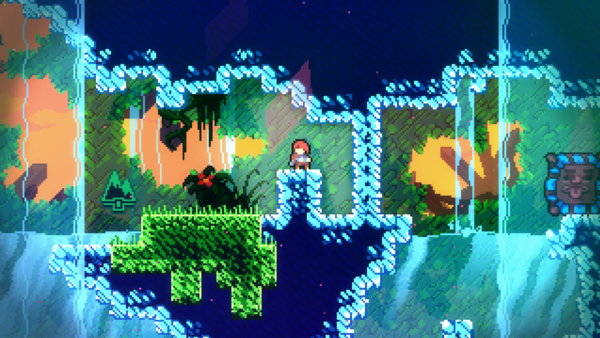
It didn't take long before Maddy Makes Games' Celeste to draw comparisons to Super Meat Boy, due to its tower-climbing structure, retro graphics, and masochistic difficulty.
Yes, the similarities are unmistakable, but Celeste takes things to the next level. The indie platformer comes with an Assist Mode, enabling players to adjust speed and stamina, making it easy to pick up without compromising the challenge. Rather than throwing a batch of traps and pits at you, the level structures emphasise flow, rhythm, and control. Each section feels purposeful and fair, teaching new mechanics through exploration rather than frustration.
But what makes Celeste stay with players is how it interweaves internal conflicts within the gameplay. The story isn't just told through cutscenes but mechanics, since every arduous climb feels like an emotional struggle. Climbing a mountain isn't just a physical obstacle, but a symbol of the heroine's journey of perseverance. This idea is compounded by Lena Raine's gorgeous soundtrack, which becomes more profound and thought-provoking as players progress.
Super Meat Boy is a technical masterclass in platforming, but Celeste elevates the formula into an art form.
14. Forza (Gran Turismo)

When Forza Motorsport debuted in 2005, it was the first time in years where a sim-racer could rival Gran Turismo.
While GT focused on authenticity and driving physics, Forza introduced a more dynamic and flexible experience, attracting a broader audience without sacrificing the core factors.
Gran Turismo remained on top at first, but Forza quickly caught up. Turn 10 and Playground Games maintained a steady cadence of follow-ups while GT entries often arrived years apart. Forza was later split into two sub-series, Motorsport for track-based simulation and Horizon for open-world exploration, expanding its demographic further.
The Horizon sub-series redefined what a racing sim could be, thanks to its ever-changing weather systems and extensive customisation, which Gran Turismo never embraced. The open environments are great for casuals, since you can take your vehicle for a spin with no destination in mind and enjoy the ride. Features like the livery editor and photo mode don't just enhance the driving experience but makes you feel like you're driving through a lived-in world.
Even though Gran Turismo is still incredible, there's no denying Forza has taken the lead.
13. League Of Legends (DOTA)

As MMORPG purists should know, the roots of League of Legends go back to a custom mod for Warcraft III: The Frozen Throne called Defence of the Ancients. Using Blizzard's World Editor, a fan-made map was created, combining real-time strategy mechanics with role-playing elements. Players controlled a single hero and fought alongside AI-controlled minions to destroy the enemy base.
The mod was a cult hit, but was limited by technical and accessibility limitations, since it wasn't a standalone. In 2006, the founders of Riot Games collaborated with DotA's creators to devise a spiritual successor called League of Legends. The joint effort simplified DotA's complex interface, while keeping its strategic depth, making it easy to learn but rewarding to master. On top of that, League introduced new champions, a solid matchmaking system, and a custom-built engine optimised for online play.
Despite having a small fanbase at first, League exploded in popularity, due to its free-to-play model, relentless patches, and community engagement, which set a new industry standard. Though the MOBA community is eternally grateful for DotA for leading the genre to the forefront, it was League of Legends that perfected it.
12. Freedom Planet (Sonic The Hedgehog)

As hard as it is to admit, Sega's golden boy, Sonic the Hedgehog, isn't pumping out the same quality he once did. Even when the spiky speedster returns to his 2D roots in titles like Sonic Superstars or Sonic the Hedgehog 4, it doesn't hit the way it used to.
But if anyone wants to re-experience that feeling, they should give Freedom Planet a go. Even though there are countless titles that try to replicate the feel of a 16-bit platformer, this Kickstarter marvel genuinely feels like a lost game from the Genesis era.
Freedom Planet dazzles with its pixelated art, energetic soundtrack, and fast-paced gameplay. Every playable character brings unique abilities, which provide different ways to navigate through each level. Speaking of which, the level design is rich with secret paths and clever challenges, ensuring players are rewarded for checking out every nook and cranny.
Though the classic Sonic titles were thin on plot, Freedom Planet constantly develops the story, delivering a surprising amount of emotional depth.
Sonic the Hedgehog may have once reigned supreme, but Freedom Planet gives the blue furball a run for his money.
11. Perfect Dark (GoldenEye 007)

Despite being revolutionary to first-person shooters, GoldenEye 007 hadn't held up well, considering the aiming mechanics are outdated and the frame-rate often dips below 20 frames per second.
Fortunately, its spiritual successor, Perfect Dark, has aged like fine wine. The futuristic spy game boasts sharper graphics, faster gameplay, drastically smarter AI, and intricate missions. Every weapon has a dual function, bringing more variety in combat (especially the FarSight, which can shoot through walls).
Instead of just fighting terrorists, our heroine must take on mobile drones and frickin' aliens. Enemies wield night-vision tech, forcefields, and cloaking devices, ramping up the challenge. With the addition of voice-acting, there's a better understanding of the characters' relationships and conflicts.
The missions are more fun and varied, especially when you get to team up with an extra-terrestrial called Elvis. (And let's be honest, you can never tire of hearing the little guy blasting baddies, while yelling, "Kiss my alien butt."
Even though GoldenEye 007 had some absolute bangers, Perfect Dark's soundtrack is equally phenomenal.
It wasn't a trailblazer like GoldenEye 007, but Perfect Dark still improved on its predecessor in almost every way.
10. Palworld (Pokemon)

Almost immediately after Palworld's release, Pocketpair found themselves caught in a spat with Nintendo, since their adorable sandbox game harbours many commonalities to Pokemon.
But another reason why Palworld made Nintendo panic is because the game is more engaging than Pokemon's recent output. After the disappointing Pokemon Scarlet/Violet, Palworld had little trouble becoming the top dog in animal-battling genre. Though the recently released Pokemon Z-A got decent reviews, the masses are growing weary of Nintendo churning out copy-and-paste instalments over and over.
Although Palworld wears its inspiration on its sleeve, it has a refreshing take on the monster-taming genre. Pals can craft materials, tend crops, cook, and mine, employing a huge survival factor. You can equip firearms and fight alongside your buddy in a non-RPG style, presenting more diversity and freedom in battle. The story is also daring enough to explore how Pals are exploited, which Pokemon has never attempted to do.
Another huge win for Palworld is how it launched with multiplayer support, letting you team up, build, and raid with friends.
It's still rough around the edges, but it's not impossible for Palworld to surpass Pokemon, especially if Nintendo doesn't step it up a gear.
9. The Messenger (Ninja Gaiden)

After a decade-long hiatus, Ninja Gaiden has made quite a comeback. In 2025, there's been Ninja Gaiden Black 2, Ninja Gaiden 4, and a throwback to the original line-up in Ragebound, all of which were well-received.
And yet, Sabotage Studio's clone, The Messenger, proved to be more innovative and enjoyable. Released in 2018, the action-platformer captures Ninja Gaiden's spirit by highlighting intense combat, wall climbing, and precise jumps.
However, The Messenger improves on every mechanic Ninja Gaiden is known for. Hitboxes, knockback, and input buffering are finely tuned, making the game feel challenging but fair, which is sharp a contrast to Gaiden's punishing unpredictability.
Although it imitates Ninja Gaiden's linear structure, The Messenger transforms into a Metroidvania at the halfway point, recontextualising earlier stages into an interconnected world. The “8-bit to 16-bit” time-travel mechanic changes the art style, music, and level layout, which is magnificent to experience.
As a bonus, The Messenger is surprisingly funny. The Shopkeeper details the lore with self-aware humour, often pointing out cliched tropes of the hero's journey. Not only are these conversations hilarious, they divulge important exposition in a way that doesn't feel forced.
Although fans should be enjoying Ninja Gaiden's resurgence, they need to be careful not to sleep on The Messenger.
8. Fortnite (PUBG)

Starting off as a co-op survival/crafting game, Fortnite employed a battle royale mode soon after, undeniably inspired by PUGB's model. PUBG's developers considered taking legal action against Epic Games, especially after its competitor took the world by storm.
Fortnite was significantly more accessible, due to the kid-friendly aesthetic and free-to-play model. Players can gather materials and build structures for defence and mobility, adding a whole new layer of gameplay. PUBG was notorious for bugs, lagging, and poor optimisation in its early years, while Fortnite runs smoothly on all systems.
But what really makes Fortnite excel is the relentless updates. In lieu of throwing in new weapons and modes every now and again, Epic Games makes each expansion feel like an event. Epic Games regularly implements pop-culture tie-ins and holiday themes (like horror icons during Halloween), keeping things fresh.
Even though PUBG is still immensely successful, Fortnite has become a global phenomenon, influencing dance trends, music, and media crossovers. With no sign of the hype wavering, the future of Fortnite is as bright as ever.
7. Warhammer: Vermintide 2 (Left 4 Dead 2)

When Valve released Left 4 Dead and Left 4 Dead 2 in rapid succession, it looked like the undead shooter was about to become the next big thing. But apart from a few DLCs over the years, the ghoulish saga has laid dormant.
However, anyone who misses the gameplay should check out the underrated Vermintide 2. The Warhammer spin-off follows L4D2's layout, delivering a co-op campaign where you must work together, fight monsters, and locate an exit.
Although Vermintide 2 doesn't reinvent the wheel, it builds and refines the model to a tee. There's a bigger emphasis on melee combat, immersing players in the thick of battle. V2 has 50+ weapons, offering many ways to dispose of beasts. The enemy AI is unpredictable, doing its best to continually throw new strategies at you. There is no sense of safety, making winning more satisfying.
The core mechanics are on point, including the gear systems, crafting system, and upgrades. You'll bag bonuses by pulling off risky manoeuvres in missions, encouraging players to step out of their comfort zone.
Although the follow-up, Darktide, didn't maintain the franchise's quality, it shouldn't detract from the innovation that went into Vermintide 2.
6. Unicorn Overlord (Ogre Battle)

Unlike other RPGS of the '90s, the Ogre Battle series utilised real-time strategy and focused on territory control. Instead of controlling party members in turn-based combat, you commanded armies on a large map, issuing orders and watching battles unfold.
It's a pity Ogre Battle never took off, but it did spawn a spiritual successor in 2024 called Unicorn Overlord. Better still, Vanillaware's tactical title superseded its inspiration in every conceivable way.
Unicorn Overlord retains Ogre Battle's structure but runs smoother, since it has faster movement and less downtime. The game auto-pauses after each battle, giving players the chance to regroup. You can set conditional behaviours (so soldiers automatically heal when their health is low), so you don't have to tirelessly monitor every part of the battle.
Although the graphics were expected to be dramatically better than a SNES property, Unicorn Overlord utilised a hand-painted art style, which looks gorgeous while still emulating the retro vibe. There's a heavy push on characterisation, so it hits harder when certain characters are lost in battle.
Ogre Battle may have fizzled away, but at least Unicorn Overlord allows the franchise to live on in some capacity.
5. Doom (Wolfenstein 3D)
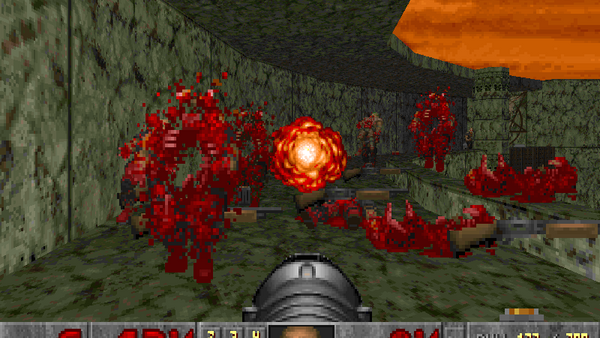
It's ironic how Doom rip-offs popularised the term "Doomclone" even though the game itself is a clone. One year before Doom changed the landscape of gaming forever, id Software released what's considered to be the first modern first-person shooter, Wolfenstein 3D.
The Nazi-blasting title wowed players with its fast-paced shooting, maze-like levels, and immersive perspective. Wolfenstein 3D introduced key mechanics, such as weapon variety, enemy AI, and health pickups, which became conventions in the genre.
Although Wolfenstein 3D is iconic, 1993's Doom cranked things up to 11. The demon-obliterating FPS showcased true 3D environments, higher frame-rates, smoother movement, multiplayer modes, a catchy soundtrack, and enemies with distinct designs and attack styles.
More importantly, Doom has remained one of the highest standard franchises in gaming history, while Wolfenstein has been pretty inconsistent. 2025's Doom: The Dark Ages received universal praise and reached three million players within the first week. Meanwhile, the recent Wolfenstein: Youngblood received horrible reviews, and is considered arguably the weakest entry yet.
Even though Doom started off as a carbon-copy of something else the developers made, the series has rarely had a misstep in the last 30 years.
4. Cities: Skylines (SimCity)

Few games have dominated their genre quite like SimCity. Will Wright's simulation series had so little competition for over a decade, it was easy to forget there were other city-building titles out there.
With that said, its rep was tarnished after 2013's SimCity suffered one of the most disastrous launches in gaming history. (Seriously, it made No Man's Sky debut look flawless.)
So, when the highly praised Cities: Skylines was released two years later, fans of the genre were relieved they could finally scratch that SimCity itch. Even if Skylines was bare-bones, it would still have a leg up over SimCity since it actually worked on launch day.
Luckily, the developers didn't half-ass it. Instead, Skylines had more creativity than its rival ever did, allowing players to build urban sprawls, small towns, or futuristic metropolises. Nearly every road, district, public transport, and service could be customised, creating a great sense of personalisation.
Skylines proved to be surprisingly educational, since players had to take road design, traffic flow, and other elements into consideration while adjusting their creations. It was tough work, but going through the process made construction deeply rewarding.
3. Shovel Knight (Mega Man + Ducktales)

Though the indie scene is rife with retro platformers, few nail the feel of an 8-bit side-scroller quite like Shovel Knight. The simplistic design, straightforward gameplay, and crunched chip-tunes are sure to satiate that nostalgic itch for old-school gamers.
Although parallels with Mega Man are apparent, Shovel Knight also took heavy inspiration from 1989's Ducktales, most notably with the way Scrooge McDuck uses his cane to hop around and bounce off enemies. Shovel Knight takes this simple mechanic and find countless creative ways to incorporate it into the gameplay.
Instead of having a limited life system, the titular knight loses a chunk of money when he dies, which he needs to purchase helpful accessories. Luckily, the shovel-wielding warrior can return to the spot of his death to reclaim his lost cash. The knight tends to die in enemy-crammed areas or instant-death pits, so players must decide whether to risk revisiting these hazardous places or take the loss, creating another strategic component to the gameplay.
After receiving universal praise, Shovel Knight spawned numerous expansions, some of which offered new gaming modes, including a fighting spin-off and an addictive card game.
With further expansions on the way, the adoration for Shovel Knight isn't going away anytime soon.
2. Stardew Valley (Story Of Seasons)

For the longest time, Story of Seasons (formally called Harvest Moon) was the quintessential farming simulator. With a staggering 32 games under its belt, (many of which are highly praised), it didn't seem possible for anything else in the genre to take the crown.
But all that changed in 2016. While in his 20s, Eric Barone served as the sole designer, programmer, artist, composer, animator, and writer for his first game, Stardew Valley. Although Barone hoped his open-ended farm life title would do well, he never expected his passion project to become among the most successful games ever.
Stardew Valley mimics Story of Seasons but offers more... well... everything. Instead of sticking players in a linear loop of planting crops and caring for animals, you can focus on whatever you want, whether it's fishing, foraging, combat, or exploring the social world.
Despite the cutesy aesthetic, Stardew contains an ever-evolving story, since every villager has their own background. Some subplots tackle serious problems, like alcoholism and depression, so you get deeply invested in their lives.
And with a wealth of customisation options, content, gameplay systems, and post-launch support, it's easy to understand why the love for Stardew Valley is still there almost a decade after its release.
1. Sonic Racing: CrossWorlds (Mario Kart)
With Mario Kart Deluxe being the fourth most successful game of all time, hype was through the roof for its inevitable successor. Being the new entry in 11 years, the buzz for Mario Kart World was through the stratosphere.
And the final product was... fine. There's nothing glaringly awful about the Switch 2 launch title, but it didn't exactly captivate the masses. This was extra disappointing, since World cost 80 freakin' dollars and wasn't available on a keycard.
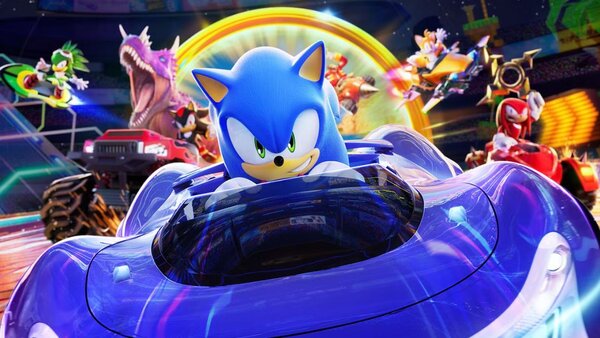
So when the most recent Sonic racing game, CrossWorlds, was declared as the superior of the two, it was unbelievable. Sonic racers have never been on par with Mario Kart, so this wasn't just shocking, but unprecedented.
Although CrossWorlds has a massive roster, tight controls, and customisation options up the wazoo, the Travel Ring system is the biggest selling point. After the first lap, racers pass through a ring that transports them into a new world, changing the terrain, obstacles, and shortcuts. The final lap has players return to the original track, but with further modifications, like new paths and hazards.
The lead racer chooses which Travel Ring to take, giving players further incentive to get ahead early, since it'll alter the rest of the race. Different portals change the landscape in different ways, so repeatedly racing on the same level rarely feels tiresome.
Even though Sonic racers have been sporadic, this gem pulled off the impossible and left Mario Kart in the dust.