20 Video Game Sidequests Better Than The Main Campaign
These quests aren't necessary but they're definitely worth checking out.

If players ever want a break from a game's central storyline, they can always roam around the world at their own pace, taking part in whatever activities tickle their fancy. These sub-quests often reap small rewards, which is why casuals may skip them entirely.
Now, since these little jobs aren't necessary, the developers don't have to put as much into them as the main objectives. If they're laborious or grind-heavy, players may only accept these goals to level up or obtain a helpful item rather than out of enjoyment.
But not only can voluntary deeds be a lot of fun, they might be the game's biggest highlight.
These superfluous expeditions may stand out, if they introduce a cool character or let you play around with an awesome mechanic that's surprisingly absent from the main campaign. On the other hand, you may find the optional mission so emotionally hard-hitting, you're bewildered why a similar experience didn't occur in the rest of your playthrough.
So much blood, sweat, and tears was put into these 20 side-quests, you have to wonder why the developers didn't make them obligatory.
20. Miracle On Tenkaichi Street - Yakuza 0

Look, anybody who's played Like A Dragon should be aware that Ryu Ga Gotoku studio love to juxtapose the serious drama with clownish buffoonery.
But Yakuza 0 was probably the first time where the developers pulled out all the stops with these goofy side-missions, especially when it came to Miracle on Tenkaichi Street.
In this sub-story, Kiryu must help out a pop-star named Miracle Johnson, who serves as a thinly veiled parody of Michael Jackson. As zombie actors invade the area, Miracle moonwalks around while Kiryu must clear a path and protect the acclaimed singer from the ghoulish horde.
As usual, Kiryu's stoic demeanour contrasts with the utter insanity of the scenario, elevating the humour exponentially. Watching the Tojo Clan member busting out his dance moves while remaining stone-faced is comic genius. Due to the mission's boundless quirkiness, it's easy to forget Yakuza 0 explores sincere topics, such as poverty, exploitation, and human trafficking.
Miracle on Tenkaichi Street is such a laugh-riot, it may compel players to accept Yakuza 0's other kooky side-quests, to the point where they neglect the actual narrative.
19. Bank Heist - Thief

Though 2014's Thief received mixed reviews, it would've fared better if the creative team put as much effort into the base game as they did with the DLC, The Bank Heist.
Echoing the bank mission from Thief II, this quest places our protagonist within Stonemarket First bank, with every corridor and office presenting new risks and opportunities. The building feels imposing and alive, with guards patrolling unpredictable routes and security systems humming with quiet menace.
Players are presented with numerous paths to complete their task, including ventilation shafts, upper balconies, or more overt approaches. Rooms interconnect in clever ways, rewarding exploration with shortcuts, hidden loot, and storytelling fragments that deepen the city’s lore. The freedom to experiment with tools and techniques encourages imaginative problem-solving, making success feel earned.
The tension is through the roof, since the slightest miscalculation or misstep can end everything in an instant. The facility is so deathly quiet, it's sure to get your pulse racing, since the slightest noise can alert the authorities.
In summary, The Bank Heist is impeccably crafted because it distills everything that makes Thief compelling into one tightly focused level.
18. Culex - Super Mario RPG

Super Mario has had many turn-based adventures, but his first dip into the genre is among the best. Super Mario RPG has accessible combat and intricate puzzles, while still maintaining the whimsical charm expected from Nintendo's moustachioed mascot. (Also, good luck getting those catchy tunes out of your head.)
Along with the main campaign, the Square-developed role-player has a slew of optional missions, many of which will result in the plumber's party picking up juicy rewards.
However, there's one side-quest that's an absolute must. By performing a series of tasks across the world, Mario will be able to unlock a secret room in Monstro Town, where he's challenged by a mysterious entity called Culex. If Mario accept, players will then take part in the hardest battle in the game.
Fighting Culex is memorable, since it perfectly emulates a Final Fantasy-styled super-boss, designed to test gaming purists. (Also, using a remix of Final Fantasy IV's boss theme for the fight was a nice touch.)
As a bonus, defeating the daunting foe will reward Mario's party with the best accessory, making the rest of Super Mario RPG significantly easier.
17. Befriending Iconic Fighters - Street Fighter VI

After Street Fighter V received middling reviews, Street Fighter VI felt like a return to form, boasting a diverse roster, endless content, and gameplay mechanics suited for newcomers and veterans.
The prized fighting title also offered a story mode, allowing you to traverse around the globe and scrap with rivals. Not only can you acquire a myriad of power-ups and level up in your travels, you should bump into recognisable combatants like E. Honda, Chun-Li, and Blanka. By training with these martial artists, you can summon them in battle and utilise their special moves.
However, the main incentive to interact with these classic fighters is to hear their anecdotes, which gives great insight into their lives. Ryu's inability to understand texting is funny and shows a surprisingly vulnerable side to the world warrior. Hearing why Sagat turned his back on his terrorist lifestyle or how Dhalsim's stretching powers got him banned from sports isn't just interesting but a great way to humanise these iconic characters.
Also, the fact you can receive emojis and text messages from the demonic Akuma or the psychotic Juri is pretty surreal.
16. The Game - Fable 3

Even though Fable 3 has a plethora of optional tasks to keep you busy, the majority of them revolve around combat trials or fetch-quests.
That's why The Game mission stands out, since it forces players to dive into a life-or-death gambling scenario, orchestrated by the enigmatic Juno. In this section, our noble hero must navigate through a luck-based environment and complete mini-games and puzzles, many of which involve dice or card mechanics.
What makes The Game particularly great is its blend of tension, humour, and player agency. It challenges players to think creatively and strategically, not only relying on character stats but intuition and risk assessment.
Additionally, the quirky dialogue and atmospheric design creates a cinematic experience that's incredibly suspenseful. The stakes are clear, yet The Game injects levity through its clever writing, making each win or loss satisfying.
Beyond mechanics, it reinforces Fable 3’s thematic focus on consequence and choice, reminding players that seemingly innocent capers can carry meaningful outcomes.
Overall, it’s a masterclass in how a simple concept can become an unforgettable experience through smart storytelling and immersive world-building.
15. Anju & Kafei - The Legend Of Zelda: Majora's Mask

In The Legend of Zelda: Majora's Mask, Link is transported to Termina, a land destined to be destroyed by the moon in 72 hours. With the help of magical masks and his time-travelling Ocarina, Link must do what he can to bring peace to the world.
Link develops strong connections with the citizens, knowing they're days away from their doom, elevating the stakes of even the most minor storyline. Even though the overarching narrative is nail-biting, casual players may have missed the most heart-wrenching subplot entirely.
On his adventures, Link may befriend a hotel owner called Anju, who's worried about her missing fiancee, Kafei. When Link locates him, he's shocked to learn the groom-to-be has been magically turned into a child. To reunite the lovers, Link must memorise the residents' day-to-day activities and complete specific tasks, many of which are only available for a short time. If Link fumbles any of these tasks, he'll have to reverse the timeline and start again.
Also, the fact this couple go to such lengths to get married, knowing the world is about to end is truly poignant. Even if Link achieves his goal and witnesses the couple's wedding, it means nothing unless the moon is stopped, pushing players further to save Termina.
14. The Nar Shaddaa Refugees - Star Wars: Knight of the Old Republic II - The Sith Lords
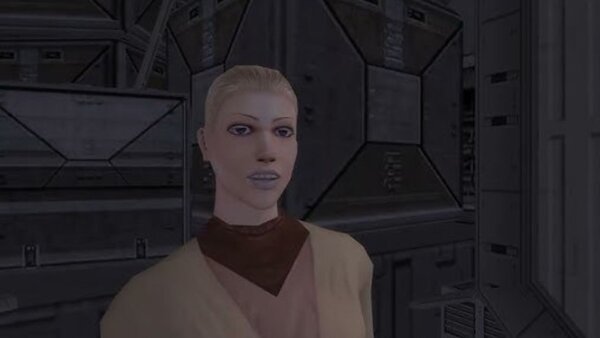
Knights of the Old Republic was such a work of art, it didn't seem possible for the follow-up to match it.
Sadly, it didn't. KOTOR II: The Sith Lords was noticeably incomplete on its initial release, with several plot-lines blatantly unresolved. For this reason, it's not hard to learn many of the inessential quests proved to be more enthralling than the central story.
Although there are several to choose from, the Nar Shadaa Refugees mission springs to mind. Set on a moon for smugglers, players can encounter outcasts who are struggling for survival amid the criminal underworld..
This section present tons of freedom, letting players choose to negotiate with the Hutts, guide the refugees to a safer location, or agree to appease their benefactors. Sticking with the Light Side is tough, since it requires careful negotiation and strategic decision-making.
Alternatively, the Force-wielding protagonist can turn a blind eye to injustice, actively harm the refugees, or demand a reward for your services.
Ironically, this errand explores moral ambiguity and delivers a satisfying payoff better than almost anything in KOTOR II's main story.
13. Moving On - Ni No Kuni: Wrath Of The White Witch
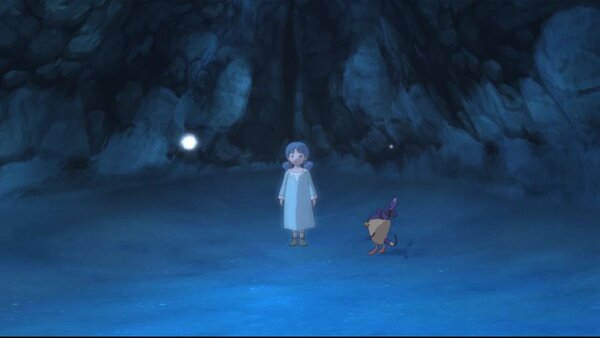
In Ni No Kuni: Wrath of the White Witch, a boy called Oliver is sent to another world, which he must restore to its former glory. As can be expected from a JRPG, Oliver and his allies can agree to side-quests, allowing them to assist the citizens of this strange land.
However, the way sub-missions works in Ni No Kuni is drastically different from other games in the genre. Using an ability called Emotional Transfer, Oliver can bestow Courage, Kindness, Love, and Enthusiasm on people who lack such qualities, giving them the inner strength to resolve their issues. Although Ni No Kuni has plenty of innovative puzzles and epic boss battles, it's usually more rewarding to help a stranger in need.
One of the most palpable errands has to be Moving On, which involves the ghost of a young girl who died in a blizzard. The girl's pet is in mourning, to the point where it refuses to leave its owner's corpse. Because of this, Oliver must foster the creature and level it up until it develops enough confidence to move on.
Even though requests like these bestow minor rewards, they're sure to resonate with players for a long time.
12. Hildibrand Adventures - Final Fantasy XIV

Although Final Fantasy explores serious themes, like free will, trauma, and corruption, Square's biggest IP has never been afraid to embrace wacky hijinks.
With that said, embarking on adventures with Hildibrand in Final Fantasy XIV has to be one of the zaniest and funniest sections in the whole series.
Centred on the bumbling inspector, Hildibrand Manderville, the quest incorporates slapstick comedy, visual gags, and over-the-top animations rarely seen elsewhere in the game. The writing is sharp and self-aware, poking fun at detective tropes and JRPG conventions while still honouring the ensemble’s sincerity. This playful energy offers a joyful tonal contrast to the intense narrative while showcasing exceptional storytelling and cinematic flair.
Rather than having a singular objective, Hildibrand boasts dozens of ludicrous missions, which should keep anyone entertained for hours on end. Hildibrand proved to be such a popular character, he was brought back in FFXIV's expansions. Even if these goals harboured no tangible rewards (which they do), they'd be worth it for the entertainment value.
If you need to pause from the main story's high-stakes drama, kicking back with Hildibrand is a nice way to unwind.
11. Sit In Judgment - Dragon Age: Inquisition
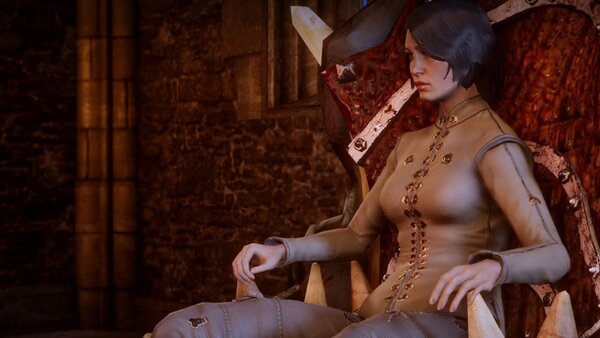
The hefty campaign of Dragon Age: Inquisition is sure to keep players occupied for 40+ hours without even dipping into the mass of side-content. Due to the time commitment, most players aren't expected to take part in everything.
With that said, Sit In Judgement is worth a look, since it offers a totally different gaming experience. After capturing notable enemies, you serve as an Inquisitor who then must pass judgment on them.
Throughout this section, each trial becomes a rich narrative moment that reflects the Inquisition’s values, alliances, and political standing. Even though you're sitting in a chair, you have more than power than on the battlefield, since you can spare or end a life with a single command.
Choosing mercy, exile, or execution carries political and emotional implications, making every decision have weight. Each choice address the player’s earlier actions, making the judgment feel earned.
Even if the condemned is guilty, hearing them mock or challenge the sentence can tug on your heartstrings. By placing players in the uncomfortable position of arbiter, you're forced to acknowledge the repercussions of each life-changing or life-ending decision.
10. Partnering Up With Da Vinci - Assassin's Creed II

In Assassin's Creed II, Ezio must take on the mantle of his brethren and complete the mission initiated by his predecessor, Altair. On his journey to defeat the Templar, he's assisted by none other than Leonardo da Vinci.
Though renowned for his art, the Renaissance polymath was known for being an amateur inventor. Da Vinci also has an unbridled passion for justice, so he's more than eager to let Ezio use his flying contraption to infiltrate the villain's palace.
Even after da Vinci has fulfilled his duty in the main campaign, players are likely to return to him time and time again. The Italian artist uses his vast knowledge to translate Codex pages, uncovering swaths of lore. He provides Ezio with new weapons and gadgets while trading witty barbs with the assassin, reminiscent of the banter 007 and Q have in the James Bond movie franchise. His flying machine is extremely useful, since it helps Ezio find treasure maps and unlock new blueprints littered across the nation.
Honestly, if Leonardo da Vinci was any more helpful, he could've been the main character.
9. Come Fly With Me - Fallout: New Vegas

If you want a break from battling ambushers or seeking out the platinum chip in Fallout New Vegas, you can take a jaunt at the REPCONN Test Site, which is populated by a ghoul cult called the Bright Brotherhood. Their deranged leader, Jason Bright, delivers impassioned speeches about how his flock will soon embark on a cosmic journey, causing the ghouls to grow restless.
Due to the members' grotesque appearance and abundant numbers, you expect to shoot your way out of this mess. But instead of fighting the walking cadavers, you negotiate with them and mediate their conflict with their rivals. Most importantly, you must gather rocket components for them so they can fly to heaven, which is a plan that's uplifting, tragic, and darkly funny.
By seeing the day-by-day activities of the ghouls, you develop a bond with them, making it more impactful when they inevitably launch themselves into the sky in their makeshift rockets. Even though the mission could've been too silly or too serious, the developers found the perfect balance of both.
Despite being voluntary, playing through every minute of Come Fly With Me is worth it.
8. Pestilence - Kingdom Come: Deliverance
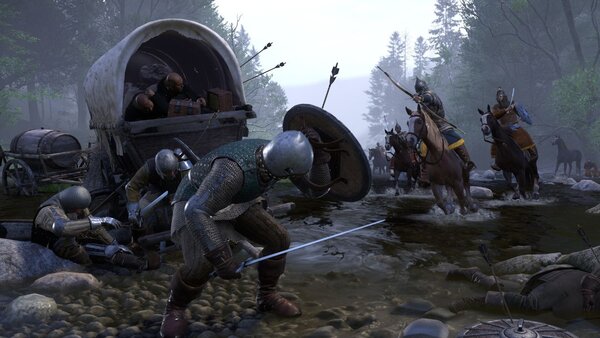
In Warhorse Studio's spectacular RPG, the protagonist, Henry of Skalitz, can stumble upon a small village, which is plagued by... well... plague. To avoid the disease from consuming the area, Henry must find a way to administer a cure. This is easier said than done, since the situation has caused the townsfolk to be gripped by fear and superstition.
Instead of focusing on combat, the Pestilence mission relies on careful observation and deduction. Henry must gather information from villagers, examine the sick, and decide how to handle the virus efficiently.
Although the quest is ambitious, it never feels like a chore, since it excels at creating a sense of atmosphere and urgency. The realistic depiction of medieval medicine, fear of contagion, and social dynamics draws players into the world.
It's also worth mentioning that failing to save the town doesn't result in a Game Over. Instead, you must continue on your quest, knowing your incompetence led to an entire town being wiped out.
If you managed to avoid the Pestilence side-quest, you can complete the main campaign unaware your intervention in the town was the only thing that could've saved it. As a result, the fact the developers made such a harrowing mission non-compulsory is more disturbing.
7. Lohse's Companion Quest - Divinity: Original Sin 2
Like its predecessor, Divinity: Original Sin II has flexible combat, deep RPG mechanics, magnificent artwork, and a vast world to explore.
However, the sequel surpasses the original by putting a bigger emphasis on character arcs and conflicts. You're invested in the main storyline more this time around because you get to know each party member thoroughly.
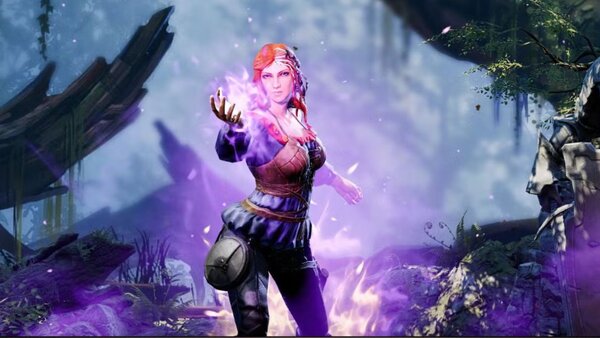
Ironically, the most personal character arc in the whole game can be avoided entirely. One companion you can encounter is a musician called Lohse. Though she initially comes across as vibrant and witty, she has her inner demons... literally.
After getting to know her, Lohse reveals she harbours an entity, who's attempting to possess her. This revelation transforms her from a comic relief character into a sympathetic figure, giving players a personal stake in her fate. Rather than being a straightforward mission, you can fight the demon, exploit it, or reach a compromise, with each choice having lasting consequences for Lohse and your party.
This encounter delves into themes of identity, autonomy, and mental health, presenting choices that aren’t clearly right or wrong. Due to its dense complexity, players will be missing out if they give this quest a pass.
6. Water Woes - Xenoblade Chronicles X
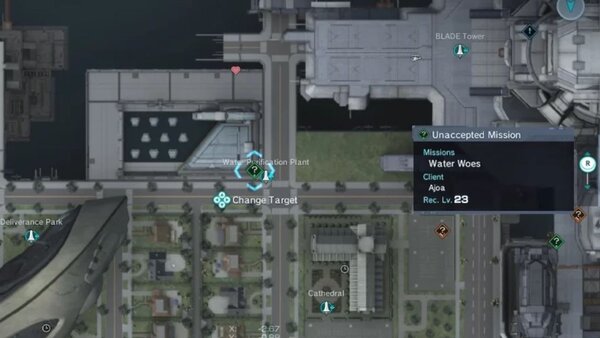
It's hard to admit, but Xenoblade Chronicles X's plot is a significant step below the rest of the series. Fortunately, this spiritual successor makes up for it with its phenomenal side-quests. Although there are many sub-missions to choose from, Water Woes deserves special mention.
In this section, our heroes must build a water purification plant for the city, after its supply becomes strained. The quest encourages strategic thinking and exploration rather than brute force, presenting multiple approaches to resolve the predicament. Watching how the limited water supply affects the civilians, foliage, and wildlife really motivates players to step up.
Players must venture into environments that are eerie and foggy, making it easy for the grotesque enemies to ambush you. The focus on jump-scares and atmosphere here gives off horror vibes, which is sure to throw off first-timers.
You get a great sense of each character's personality, making it more satisfying when you ultimately complete the plant's construction. The city’s infrastructure visibly improves, reinforcing the idea that optional errands can be just as meaningful as the main campaign, if not more.
5. A House Divided - Mass Effect 2

Mass Effect's A House Divided's mission is a blast, not just for expanding the main plot, but for re-contextualising its predecessor's storyline in a way that adds a huge amount of depth.
Basically, it forces players to confront long-held assumptions for one of the series' most enigmatic species, an AI race called the geth. A House Divided has Shepard and a geth called Legion being sent to a station where they uncover startling truths about the artificial race. Through Legion’s analytical explanations, the geth are reframed from mindless enemies into profoundly flawed but relatable characters.
Rather than dropping this bombshell in one cutscene, it's revealed gradually and organically. The whole operation makes use of environmental storytelling, including glimpses of geth architecture, data hubs, and quiet moments where Legion shares insight into his people.
But the most defining moment lies in the final choice, where a decision must be made whether to destroy the geth on the station or rewrite them. Neither option is morally clean, and both carry weight in Mass Effect 3, encouraging players to reflect before deciding.
There's no question A House Divided is one of the most riveting parts of the trilogy, which is why it's a shame it can be overlooked entirely.
4. Reuniting Eurydice And Orpheus - Hades

In Hades, the prince of the underworld, Zagreus, vows to escape from Hell to find his mother on the surface. Each time he fails, he's cast back to the House of Hades, which is ruled by his brooding father. While there, Zag can speak to gods, family members, friends, and other mythical figures. Bonding with these characters is recommended, since these little chats can reward Zagreus with boons that'll prove to beneficial in his quest.
Although these conversation are engrossing, the one that leaves the biggest impression is with Orpheus. Once a legendary singer, Orpheus' passion subsided after parting with his wife, Eurydice. After Zagreus repeatedly speaks to Orpehus' better-half in the main campaign, the divine musician will slowly regain his spirit and play poems again.
But that's not enough. After getting invested in the lovebirds' plight, you may find yourself focusing on their dilemma rather than your own. Sometimes, you don't even care when Zagreus die, since it gives you a chance to deepen your connection with the star-crossed lovers..
Having Eurydice and Orpheus reconnect isn't easy but it's worth it. Even though they have the voices of angels, hearing them sing as a duet to commemorate their reunion is a joy to behold.
3. Bonding With Futaba - Persona 5

In Persona 5, a high-school student called Joker discovers a dreamlike realm called the Metaverse, which allows him to change the hearts of corrupt adults.
About halfway through his otherworldly caper, Joker and his companions find themselves being assisted by Futaba, a hacker with crippling social anxiety. Joker appreciates Futaba’s intervention, since she went out of her way to help, despite her fear of the outside world.
If Futaba’s rank is levelled up, more is unveiled about her backstory, which explores grief, abuse, and gaslighting. The more players interacts with Futaba, the more they see her psychological growth.
Her agoraphobia is depicted realistically, so there's no moment where it's magically fixed. Instead, Joker needs to spend time with Futaba, make her feel heard and respect her boundaries to help her fears subside (although they never truly go away). Any time Futaba appears in a social gathering unannounced, it feels like a huge win, since it proves your compassion towards her paid off.
Although upping Futaba's rank massively helps on the battlefield, watching her come to grips with her greatest insecurity is the real reward.
2. Dark Brotherhood - Skyrim: Elder Scrolls V

Even though Skyrim is a masterpiece, its storyline is surprisingly simple. Basically, the unnamed hero must stop a godlike dragon from ruling the world. (The plot feels more hollow when you take into account how anticlimactic the final battle is.)
Paradoxically, the plots surrounding many of the excessive errands have more meat to them, especially Dark Brotherhood.
Unlike other faction quests that deal with honourable heroism or the Dragonborn prophecy, this subplot involves you playing from the perspective of a villain, slaughtering innocents instead of monsters or enemy soldiers. The narrative depth and internal conflicts makes the Dark Brotherhood feel more like a carefully woven thriller than an optional storyline.
Additionally, this section distinguishes itself through its flawless character development. Astrid, Nazir, and Cicero aren't just generic NPCs, but fully realised personalities with distinct motivations, making every interaction with them engaging. Though this bunch could've been forgettable, they ended up being among the most beloved characters in the entire game.
Dark Brotherhood isn't necessary but it should be considered a part of the main campaign, since it's utterly captivating from start to finish.
1. Family Matters - The Witcher 3: Wild Hunt
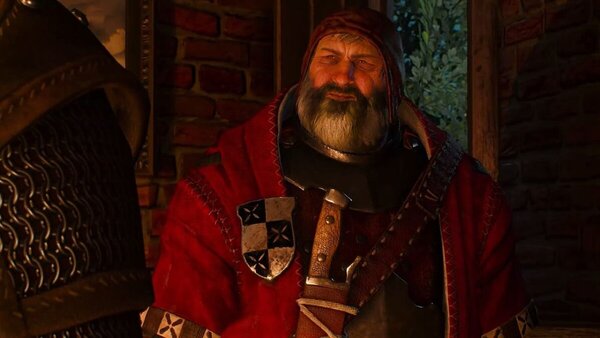
One of the things that makes the Family Matters side-quest in The Witcher 3: Wild Hunt so powerful is how simply it starts. The mission begins with Geralt of Rivia agreeing to help a Baron find his family.
However, the task evolves into a complex exploration of secrets, unresolved grief, and trauma. Though the Baron comes across as domineering, he's exposed as a tragic figure, whose questionable actions are shaped by personal hardship and regret.
The defining moment of the assignment is when Geralt encounters a demonic stillborn called a Botchling. This creature isn't just a terrifying sight to behold, but a representation of the Baron's guilt and the emotional scars within his family.
Amplifying the tragedy further, Geralt must choose between fighting the accursed being or turning it into a household spirit, serving as a permanent reminder of the Baron's sins.
Furthermore, Geralt's choice influence future storylines, creating a gargantuan ripple effect. Through its rich storytelling and haunting atmosphere, the sub-story exemplifies how The Witcher 3 turns non-compulsory sections into profound experiences.
Although the main campaign is enthralling, nothing hits on the same level as this sorrowful tale.